Key Takeaways
The number one nutrition job for a teen athlete is eating enough, not cutting anything. A growing body and a training schedule are two demands at once, and both run on food.
Carbohydrates are the main fuel for sport. When a teen “eats cleaner” by dropping carbs, performance and mood usually drop with them.
Iron, calcium, and vitamin D deserve extra attention during the teen years, and teen girls who menstruate need more iron than their teammates.
Fatigue, frequent illness, mood changes, stress fractures, or a period that becomes irregular can be early signs a teen is not eating enough to keep up.
A registered dietitian can build a fueling plan around your teen’s real schedule, and for most families this care is covered by insurance.
Two-a-days start, the growth spurt kicks in, and your teen suddenly seems hungry all the time or, just as worrying, barely eating at all. The question most parents ask sounds simple. Is my teen eating enough to keep up with practice and keep growing?
Here is the reframe that changes everything. For a teenage athlete, the first job of food is not to cut, trim, or clean anything up. It is to fuel enough. Growth and sport both demand energy, and when there is not enough to go around, the body quietly borrows from one to pay for the other.
This guide walks through what solid nutrition for teen athletes actually looks like. It covers daily energy, macronutrients, timing, hydration, supplements, and the early warning signs that a teen is running on empty. Throughout, the goal is the one a registered dietitian would set. Help your teen eat enough of the right things, at the right times, without ever slipping into calorie counting or restriction.
In 30 seconds: A teen athlete needs enough total food to cover both growth and training, with carbohydrates as the main fuel and steady protein and fat alongside. Focus on eating enough and timing food around practice rather than on cutting calories. If your teen seems constantly tired, gets sick often, or a period becomes irregular, those are signs to check in with your pediatrician and a registered dietitian.
Why teen athletes have different nutrition needs than adults
An adult athlete is fueling one project: performance. A teenage athlete is fueling two at once. They are still building bone, muscle, and organ tissue while also asking their body to sprint, lift, and recover between sessions. That double demand is the single biggest reason teenage athlete nutrition looks different from an adult plan.
Because of it, a teen often needs more food per pound of body weight than an adult doing the same sport. This is not a problem to manage. It is a normal, healthy stage that food is supposed to support.
Fueling growth and performance at the same time
During adolescence, the body is laying down bone and muscle at a pace it will never match again. Sport sits on top of that. Research on nutrition for children and adolescents who play sport describes energy and nutrient needs during this window as elevated specifically because growth and activity stack on each other, according to a 2024 narrative review in Nutrients.
The practical takeaway for parents is reassuring. A hungry teen athlete is usually a normal teen athlete. Bigger portions, second helpings, and frequent snacks are typically the body doing its job, not a habit to rein in.

What happens when a teen athlete doesn’t eat enough
When food does not cover both growth and training, the body prioritizes staying alive over thriving. Sports scientists call the underlying problem low energy availability, and a 2025 review in Nutrients links it to impaired performance, poor recovery, hormonal disruption, and weaker bones in adolescent athletes.
The signs often look ordinary at first. A teen drags through the last drill, catches every cold going around, struggles to focus in class, or stops getting stronger no matter how hard they train. Over time, under-fueling can delay growth, disrupt menstrual periods, and raise the risk of stress fractures.
“When a parent tells me they’re worried their teen isn’t eating enough, my first question is never about cutting anything. It’s whether the plate is big enough for two jobs at once - growing and training. The early signs I watch for aren’t dramatic. A teen who’s suddenly dragging at the end of practice, getting sick more often, skipping meals because they’re ‘not hungry,’ or a period that becomes irregular. Those are the flags I want families to pay attention to.” — Bridget Isaacs, MS, RD
How many calories does a teen athlete actually need?
Parents often want one number. The honest answer is that daily energy needs for a teenage athlete vary widely. Any figure you see online is a starting point, not a target to hit exactly. Depending on age, body size, sex, growth stage, and training load, many teen athletes need somewhere in the range of 2,000 to 4,000 or more calories a day. Some need even more during heavy training blocks.
Think of that range as a baseline, not a strict rule. The more useful question is not “what is the number?” but “is my teen fueled enough to grow, train, and feel good?”
Why activity level and sport change the answer (ranges, not rules)
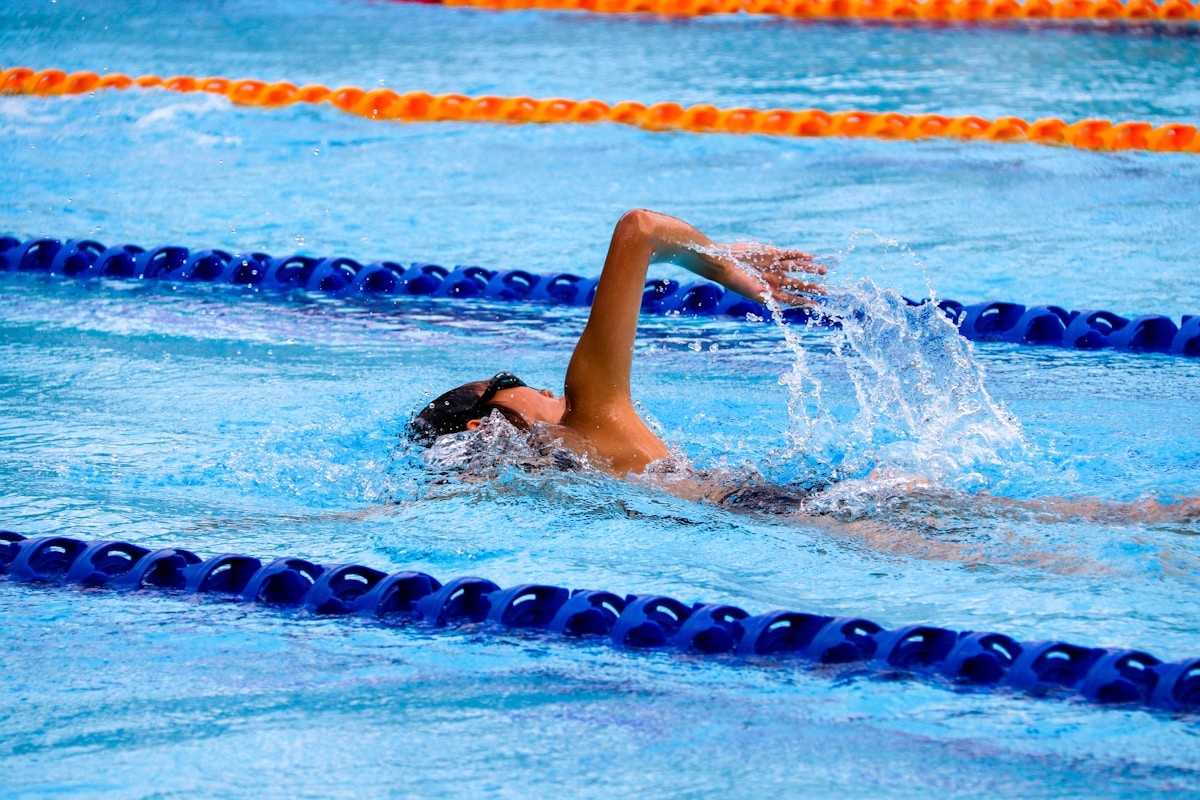
A teen swimmer doing double sessions has very different needs from a friend playing one recreational game a week. Sport type, training volume, position, and even the season all shift the answer. The 2024 Nutrients review emphasizes that energy needs scale with growth and activity, which is exactly why a single calorie prescription rarely fits a real teenager.
This is one place where individual variation matters most. For some teens, three meals plus two snacks is plenty. For others in a heavy training block, that same pattern leaves them short. Working with a registered dietitian is the clearest way to personalize this to your teen.
Why “eating enough” comes before any other goal
At Berry Street, we do not encourage weight loss as a goal for growing teen athletes. For a teenager still building bone, muscle, and organ tissue, intentional weight loss can quietly tip into under-fueling, and the fallout shows up as slower times, injuries, and burnout. Calorie counting, cutting food groups, or chasing a number on the scale are not appropriate strategies during this stage of development.
Eating enough comes first. Body composition may shift naturally as a side effect of good fueling and training over time, but it is never the stated goal and never something a teen should be steered toward. If performance is the aim, more food, not less, is almost always the answer.

The building blocks: carbs, protein, and fats for teen athletes
Once a teen is eating enough overall, the next question is balance. Carbohydrates, protein, and fats each do a specific job, and a teenage athlete needs all three. No single macronutrient is the villain, and none is a magic fix.
Carbohydrates — the main fuel (and why cutting them backfires)
Carbohydrates are the body’s primary and preferred fuel for sport. They stock the muscles and liver with glycogen, the energy source that powers sprints, lifts, and the second half of a game. Guidance on sport nutrition for young athletes from the Canadian Paediatric Society positions carbohydrate as the foundation of an active young person’s diet.
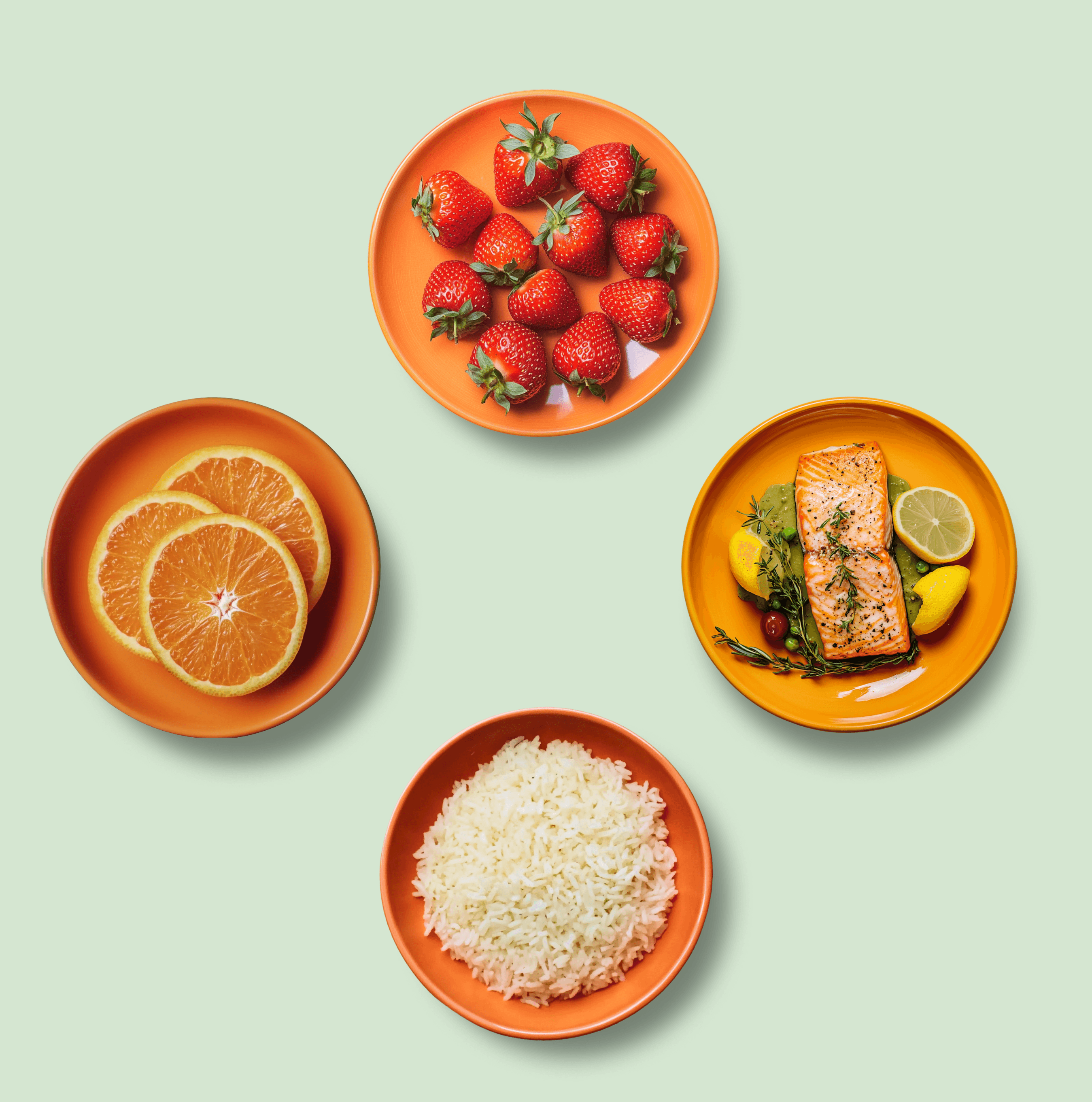
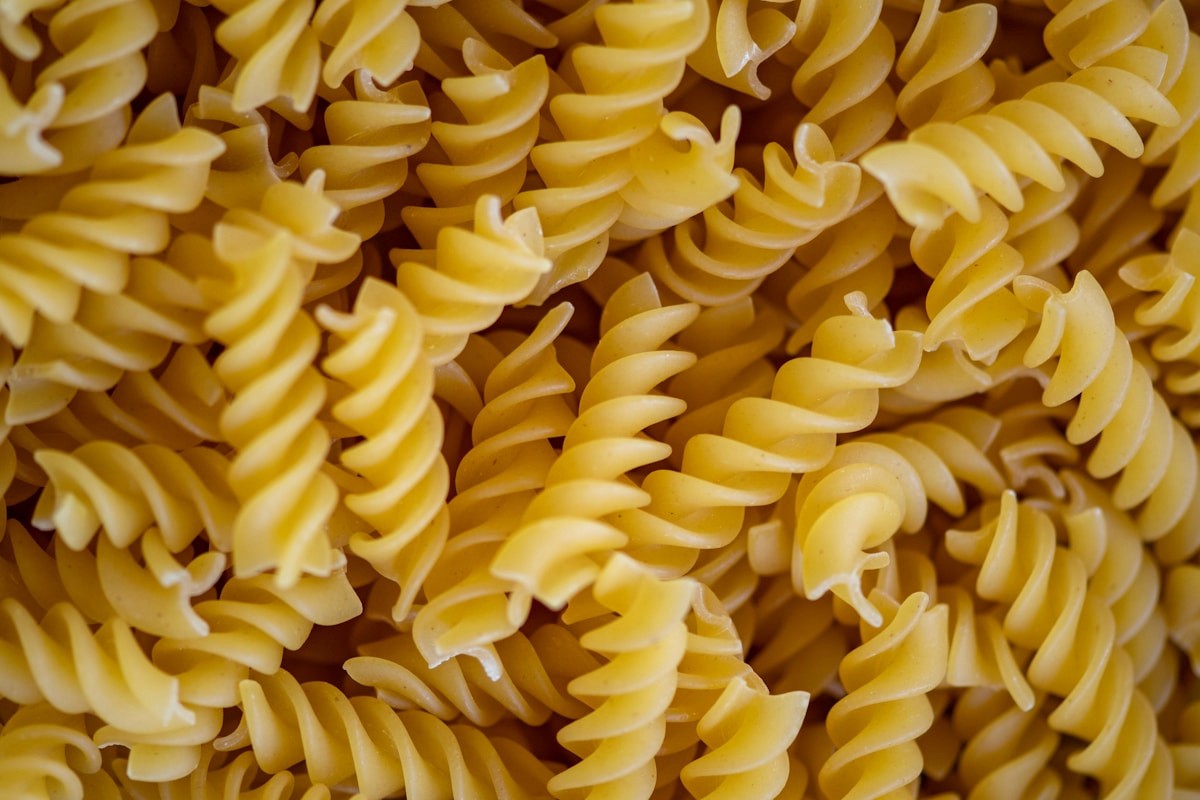
When a teen cuts carbs to “eat cleaner” or get leaner, the effect on performance is usually quick and obvious. Energy fades, workouts feel harder, and focus slips. Good sources are not exotic. Oats, rice, pasta, bread, potatoes, fruit, and milk all count, and building meals around them is one of the simplest ways to fuel a teenage athlete.
“When a teen comes in wanting to ‘eat cleaner’ or drop carbs to get faster, I don’t argue with the goal of performing well, but I do redirect. I show the family that carbs are the fuel that actually powers those sprints and lifts, and that cutting them usually shows up as a slower second half and a shorter fuse by dinner. We talk about adding, not subtracting. More oats, fruit, rice, and pasta around training. Fueling for performance almost always means eating more, not less.” — Bridget Isaacs, MS, RD
Protein — how much, and why more isn’t better
Protein supports muscle repair and the tissue-building that comes with growth. Teen athletes do need a bit more than sedentary peers, often in the range of roughly 1.2 to 1.6 grams per kilogram of body weight per day, though the right amount depends on the individual.
More is not automatically better. Beyond what the body can use, extra protein simply gets burned for energy or stored, and it often crowds out the carbohydrates a teen needs to fuel training. Spreading protein across the day, with some at each meal and snack, is more useful than piling it all into dinner. Eggs, milk, yogurt, chicken, fish, beans, tofu, and lentils all work well.
Fats — steady energy for a growing body
Fats are not something a teen athlete should fear or minimize. They provide a concentrated, steady source of energy, help the body absorb key vitamins, and support the hormone production that adolescence depends on.
There is no need to chase low-fat versions of everything. Nuts, seeds, nut butters, avocado, olive oil, dairy, and the fats found naturally in fish and meat all belong on a teen athlete’s plate. For a busy, hungry teen, fats also make meals more satisfying and easier to eat enough of.
The micronutrients parents should watch: iron, calcium, and vitamin D
Most vitamins and minerals fall into place when a teen eats enough varied food. A few deserve extra attention during the athletic teen years because the demands are higher and shortfalls are common. The 2024 Nutrients review flags iron, calcium, and vitamin D as the standouts for young athletes.
Iron (and why teen girls who menstruate need more)
Iron helps carry oxygen to working muscles, so a shortfall shows up as fatigue, poor endurance, and trouble recovering. Teen athletes are a higher-risk group, and teen girls who menstruate need more iron than their male teammates because they lose iron through their periods.
Iron-rich foods include red meat, poultry, fish, beans, lentils, tofu, and fortified cereals. Pairing plant sources with vitamin C, such as beans with peppers or cereal with orange slices, helps the body absorb more. If you suspect low iron, ask a clinician about testing rather than starting a supplement on your own.
Calcium and vitamin D for growing bones
The teen years are when bone is built for life, and calcium and vitamin D are central to that. This matters even more for athletes, because adequate bone density helps protect against the stress fractures that under-fueling can invite.
Dairy, fortified plant milks, yogurt, cheese, tofu, and leafy greens supply calcium. Vitamin D comes from sunlight, fortified foods, and some fish, and many teens fall short, so it is worth discussing with your teen’s clinician or registered dietitian whether testing or a supplement makes sense.
Timing: what to eat before, during, and after training
What a teen eats matters, and so does when. Timing food around training helps a young athlete show up fueled, stay steady, and recover well. The before-during-after framework below draws on established sport nutrition guidance for young athletes, kept practical for a real teenage schedule.
Before practice or a game
The goal before activity is topped-up energy without a heavy stomach. A meal roughly three to four hours out can be normal and balanced, leaning on carbohydrates with some protein. A smaller carb-based snack about one to two hours before, such as a banana, toast with honey, or a granola bar, tops off the tank.
Timing is a baseline to adjust, not a rule. Some teens handle food close to activity easily, while others need more of a gap, so let your teen’s comfort guide the details.
During longer or intense activity
For most practices under an hour, water is enough and no food is needed. For longer or very intense sessions, or tournament days with back-to-back games, some easily digested carbohydrate helps maintain energy. Think a piece of fruit, a handful of pretzels, or a sports drink during extended effort.
After training — the recovery window
Recovery is where the next session is won. After hard or long training, a teen benefits from a combination of carbohydrate to refill glycogen and protein to support muscle repair, ideally within an hour or two. This does not require anything special. Chocolate milk, a turkey sandwich, yogurt with fruit, or simply the next regular meal all do the job of refueling a teenage athlete.
Hydration for teen athletes
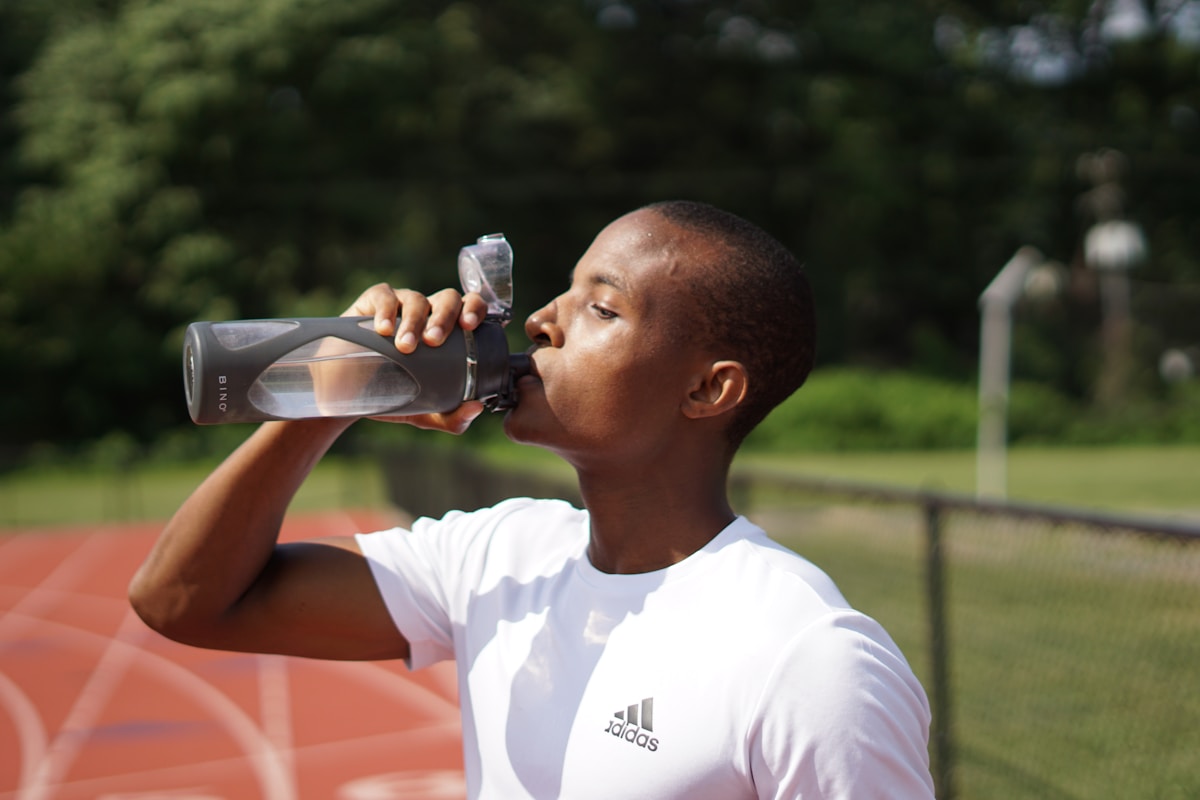
Hydration is easy to overlook and quick to affect performance. Dehydration can drag down performance and raise the risk of heat-related illness. Young athletes are also at higher risk of dehydration than adults and are often under-hydrated even when fluids are available, so a reminder system helps.
A practical baseline is steady water through the day, a glass or two in the couple of hours before activity, regular sips during, and more afterward to replace what was lost. Urine that is pale yellow is a reasonable everyday sign of good hydration. For sessions longer than about an hour or in the heat, a sports drink can help replace fluid and electrolytes, though for shorter activity, water is usually all a teen needs.
Do teen athletes need supplements or protein powder?
For the vast majority of teen athletes, the answer is no. A well-fueled teen can get everything they need from food, and food also delivers the variety, fiber, and satisfaction that powders and pills cannot.
Protein powder is not off-limits, and it can occasionally be a convenient add-on when a teen genuinely struggles to eat enough. Even then, it is a supplement to real meals, not a replacement for them. Performance supplements and stimulant-based products are a different matter and are generally not appropriate for teenagers, so any supplement is worth running past your teen’s clinician or a registered dietitian first. If your teen is reaching for powders to eat “cleaner” or eat less, that is a signal to look at whether they are eating enough overall.
Real-life fueling: easy meals and snacks for busy teens
Between school, practice, and homework, the real challenge is rarely knowing what is healthy. It is getting enough food into a packed day. The aim is simple: make eating enough easy, portable, and appealing, so a teen actually does it.
Grab-and-go snack ideas
Snacks do real work for a teen athlete, bridging the gap between meals and topping up energy around training. Keep easy options within reach.
Trail mix with nuts, seeds, and dried fruit
Greek yogurt with granola and berries
A peanut butter and banana sandwich
String cheese with an apple and crackers
A smoothie with milk, fruit, and oats
Building a balanced plate
A simple plate model helps a teen fuel without any counting. Fill roughly half the plate with carbohydrates like rice, pasta, or potatoes, a quarter with a protein like chicken, fish, beans, or tofu, and a quarter with vegetables or fruit, plus a source of fat such as olive oil, cheese, or avocado. Add extra carbohydrate on hard training days.
Fueling a vegetarian or plant-based teen athlete
A vegetarian or plant-based teen can absolutely meet their needs, with a little more planning around a few nutrients. Lean on beans, lentils, tofu, tempeh, edamame, nuts, seeds, whole grains, and, if eaten, eggs and dairy for protein.
Pay particular attention to iron, calcium, vitamin D, vitamin B12, and zinc, since these can be harder to get from a fully plant-based pattern. A registered dietitian can help make sure a plant-based teen athlete is covered, especially during heavy training.
When healthy focus becomes a red flag: under-fueling and disordered eating
An interest in eating well is a good thing. It becomes a concern when the focus narrows into rigid rules, fear of foods, or cutting back in ways that leave a teen under-fueled. Sport can mask this, because dropping fuel is easy to mistake for dedication.
Signs a teen athlete isn’t eating enough
Some patterns are worth paying attention to, especially when several show up together.
Skipping meals, eating much less, or cutting out whole food groups
Ongoing fatigue, frequent illness, or trouble recovering between sessions
A performance plateau or decline despite hard training
Stress fractures or repeated injuries
In teen girls, periods that become irregular or stop
That last cluster of low energy, disrupted periods, and weakened bones is well described in athletes and is sometimes called the female athlete triad, part of a broader picture known as Relative Energy Deficiency in Sport, or RED-S. The 2025 Nutrients review connects it directly to low energy availability in adolescent athletes.
When to talk to a registered dietitian
You do not need to wait for a crisis to get support. If your teen shows several of the signs above, if food or their body has become a source of stress, or if you are simply unsure whether they are eating enough, that is the right time to reach out. Early, non-judgmental help is far easier than untangling a deeper pattern later, and a registered dietitian who specializes in sport nutrition is a safe place to start.

How a registered dietitian supports your teen athlete
Generic advice can only go so far, because your teen’s needs depend on their sport, schedule, growth, and relationship with food. A registered dietitian starts there. An RD does not hand over a rigid meal plan. Instead, they build a fueling approach around your teen’s real life, check that your teen is eating enough for both growth and performance, and help you spot early warning signs before they grow.
Berry Street connects families with registered dietitians through virtual 1-on-1 visits, including RDs who focus on sport nutrition and pediatric nutrition. Every provider is a credentialed RD or RDN, not a coach, and care happens on your schedule with no waiting room. For a closer look at how fueling comes together across a week, our guide to building an athlete meal plan is a helpful companion.
For most families, this care is more affordable than expected. Berry Street is in-network with 1,250+ insurance plans, and 95% of members pay $0 out of pocket. When you are ready, you can check your coverage and connect with a registered dietitian in about 60 seconds, with no commitment required.
Frequently Asked Questions
How many calories does a teenage athlete need per day?
It varies widely with age, body size, sex, growth stage, and training load, and many teen athletes need roughly 2,000 to 4,000 or more calories a day. Treat that range as a baseline, not a target to hit exactly. The better question is whether your teen is fueled enough to grow, train, and feel good, which a registered dietitian can help you personalize.
How much protein does a teen athlete need?
Teen athletes often need somewhere around 1.2 to 1.6 grams of protein per kilogram of body weight per day, though the right amount is individual. Spreading protein across meals and snacks is more useful than loading it all at dinner. More is not better, since extra protein can crowd out the carbohydrates that fuel training.
What should a teen athlete eat before a game or practice?
A balanced, carb-focused meal about three to four hours before works well, followed by a smaller carb-based snack one to two hours out, like a banana or toast. The aim is topped-up energy without a heavy stomach. Some teens tolerate food close to activity while others need more of a gap, so let comfort guide the timing.
What should a teen athlete eat after training to recover?
After hard or long training, combine carbohydrate to refill energy stores with protein to support muscle repair, ideally within an hour or two. This can be as simple as chocolate milk, a turkey sandwich, or yogurt with fruit. Often the next regular meal does the job on its own.
How much water should a teen athlete drink?
Aim for steady water through the day, a glass or two before activity, regular sips during, and more afterward to replace losses. Pale yellow urine is a reasonable everyday sign of good hydration. For activity longer than about an hour or in the heat, a sports drink can help replace fluid and electrolytes.
How do I know if my teen athlete is eating enough?
Good signs include steady energy, normal growth, consistent performance, and, in menstruating teens, regular periods. Warning signs include ongoing fatigue, frequent illness, a performance plateau, injuries, or skipped meals. If you are unsure, a registered dietitian can assess whether your teen is fueled enough for both growth and sport.
Do teen athletes need protein powder or supplements?
Most do not, since a well-fueled teen can meet their needs from food. Protein powder can occasionally help when a teen truly struggles to eat enough, but it is an add-on, not a replacement for meals. Performance and stimulant supplements are generally not appropriate for teens, so check with a clinician or registered dietitian first.
What are good snack ideas for a busy teen athlete?
Reach for portable options that combine carbohydrate with some protein or fat. Trail mix, Greek yogurt with granola, a peanut butter and banana sandwich, string cheese with fruit, or a milk-based smoothie all work well. Keeping easy snacks within reach makes eating enough on a packed day much simpler.
What should a vegetarian or plant-based teen athlete eat?
Build meals around beans, lentils, tofu, tempeh, edamame, nuts, seeds, whole grains, and, if eaten, eggs and dairy for protein. Pay extra attention to iron, calcium, vitamin D, vitamin B12, and zinc, which can be harder to get from plants. A registered dietitian can help ensure a plant-based teen athlete is fully covered.
Should a teen athlete count calories or follow a special diet?
No. For a growing athlete, calorie counting and restrictive diets can quietly lead to under-fueling, which harms performance, growth, and health. The focus should be on eating enough varied food and timing it around training. Any changes to body composition are a possible side effect of good fueling, never the goal.
What nutrients do teen girls who play sports especially need?
Iron is a priority, since menstruation increases iron losses and shortfalls cause fatigue and poor endurance. Calcium and vitamin D matter greatly for building bone and protecting against stress fractures. Adequate overall energy is essential too, because under-fueling can disrupt periods and weaken bones over time.
When should my teen athlete see a registered dietitian?
Reach out if your teen shows signs of under-fueling, if food or body image has become stressful, or if you are simply unsure whether they are eating enough. You do not need to wait for a crisis. Early, non-judgmental support from a registered dietitian is easier than addressing a deeper pattern later.
Last Reviewed by Bridget Isaacs, MS, RD — August 2026.