Nutrition advice is everywhere, from Instagram reels to generic “eat clean” meal plans. But what if the foods that fuel one person’s energy, clarity, and hormonal health actually aggravate another person’s symptoms? That’s where personalized nutrition becomes so important. A science-driven approach that honors your health history, your lab work, your metabolism, and your unique goals.
At Berry Street, we believe that food is more than fuel…it’s clinical care. Whether you're managing insulin resistance, dealing with PCOS, or trying to boost your gut health, there are real, evidence-backed ways that you can eat to stay in better alignment with your body. And that means moving beyond the guesswork and into a model called Medical Nutrition Therapy (MNT), which is the gold standard for nutrition-based care.
“When we personalize nutrition therapy, we see patients feel better faster—whether it’s more energy, fewer symptoms, or better lab results,” says Jessica Kelly, MS, RDN, LDN.
“Generic plans just don’t cut it for complex cases. We use evidence-based strategies that are grounded in both science and the real lives of our clients,” adds Bridget Isaacs, MS, RD.
This guide looks into the foundations of MNT, the science behind biochemical individuality, and how our registered dietitians apply this approach with every client that we serve, every day.

The Science Behind Personalized Nutrition
Have you ever followed a popular diet only to feel like it just didn’t work for you? That’s because nutrition isn’t one-size-fits-all, and your body isn’t a trend. From the way you metabolize food to how your gut and hormones function, your health story is completely unique. And that’s exactly why personalized nutrition matters.
At Berry Street, we focus on something called biochemical individuality, which is a fancy way of saying that your body has its own blueprint. Your metabolism, for example, determines how you respond to carbs, fats, and proteins. Some people process sugars quickly, while others may experience spikes and crashes.
Your genes also play a role. Variants in certain genes can affect how your body absorbs vitamins, manages hunger cues, and stores energy. And let’s not forget your gut microbiome! The diverse community of bacteria in your digestive system impacts everything from immune health to your mood. When it's off balance, you may deal with bloating, food sensitivities, or inflammation.
This personalized approach isn’t just science. It’s real, practical care that helps with real health conditions. For example, if you’re managing insulin resistance (whether from diabetes, PCOS, or postpartum changes), your dietitian can help you find the right balance of foods to keep your energy steady.
If you live with gut issues like IBS or SIBO, certain fibers or fermented foods might make your symptoms worse, so your plan will be adjusted to encourage healing, not discomfort. And for those with thyroid or autoimmune conditions, nutrition plays a big role in managing inflammation, supporting key nutrients like iodine and selenium, and avoiding any of the most common dietary triggers.
Medical Nutrition Therapy isn’t about following strict food rules or restricting what you can eat. It’s about understanding what works for you. With the right support, you’ll finally have a plan that makes sense for your body and feels manageable in real life.

What Does Nutrition Therapy Actually Focus On?
Nutrition therapy is all about giving your body what it needs to function at its best, based on real science and real life. At Berry Street, our approach is grounded in five core pillars that work together to help support your overall well-being.
1. Balancing Energy and Blood Sugar
Keeping your blood sugar steady isn’t only important for those with diabetes. It also plays a role in everything from balancing your mood and energy to your hormones and inflammation. Eating regular meals with the right mix of fiber, lean protein, and healthy fats can help you avoid energy crashes, cravings, and brain fog.
As dietitian Bridget Isaacs, MS, RD, puts it: “Balanced blood sugar doesn’t just affect diabetes—it’s key to managing anxiety, inflammation, and even PMS.”
That might look like starting your day with a protein-rich breakfast (hello, eggs or Greek yogurt), eating every 3–5 hours, and building your meals using the plate method: half non-starchy veggies, a quarter protein, and a quarter whole grains.
2. Supporting Your Gut and Microbiome
Your gut does more than digest your food. It influences your immunity, hormones, and even your skin and mood. If you're dealing with symptoms like bloating, fatigue, or breakouts, your gut might just be trying to tell you something. Personalized nutrition can help identify what’s going on and offer solutions, like adjusting fiber timing for IBS or using probiotics to bring your system back into balance. Fermented foods like sauerkraut, kefir, and miso can also play a helpful role in keeping your gut thriving.
As Jessica Kelly, MS, RDN, LDN, explains: “When we optimize the gut, the ripple effects are enormous.”
3. Hormone Health and Nutrition
Your hormones work behind the scenes to influence your sleep, energy, appetite, stress levels, and more…and they’re deeply affected by how and what you eat! For example, anti-inflammatory foods (like salmon, leafy greens, and turmeric), paired with nutrients like magnesium, zinc, and vitamin D, can help bring your body back into better balance.
For conditions like PCOS, nutrition strategies that focus on ensuring your blood sugar stays stable and incorporating key micronutrients like inositol and B vitamins can make a big difference. Your dietitian will work with you to make sure that your meals support your hormone rhythms, instead of fighting them.
4. Filling in the Nutritional Gaps
Sometimes we assume that we’re getting everything we need from food, but things like stress, heavy periods, restrictive diets, or underlying health conditions can lead to deficiencies. Your dietitian may use lab work or symptom tracking to spot gaps in nutrients like iron, B12, magnesium, or omega-3s. And while supplements can be helpful, we only recommend them when they truly make sense for your body and goals, not just because they’re trending.
5. Supporting Your Relationship with Food
Food isn’t just fuel. It’s connection, culture, comfort, and sometimes even stress. That’s why nutrition therapy includes space to explore the emotional side of eating. Whether you’re working on gentle nutrition after an eating disorder, curious about intuitive eating, or just tired of yo-yo dieting, your Berry Street dietitian is here to help support your goals without judgment. Together, you’ll build habits that are rooted in self-trust and long-term confidence.
As Jessica Kelly puts it: “Food is never just about nutrients. It’s about experience, culture, and self-trust.”

Integrative Nutrition for Clinical Conditions
At Berry Street, our registered dietitians use a condition-specific, evidence-based approach to Medical Nutrition Therapy. We understand that no two health journeys are quite the same, so we personalize every plan based on your symptoms, lab work, goals, and lifestyle. Below are some of the main conditions that we can help with, along with the strategies that we use in practice.
PCOS
Polycystic Ovary Syndrome is a complex endocrine condition that affects hormones, insulin sensitivity, and inflammation. We focus on:
Blood sugar stabilization through balanced meals
Anti-inflammatory support with foods like flax, leafy greens, and omega-3-rich fish
Targeted supplementation such as inositol, magnesium, and vitamin D to support ovulation and metabolic health
Thyroid Disorders
Whether you're dealing with Hashimoto’s, hypothyroidism, or subclinical dysfunction, we address:
Nutritional gaps including selenium, iodine, and zinc (if appropriate)
Gut health to improve digestion and support your immune system
Adjustments for low energy, metabolic changes, and hormonal shifts
IBS & Gut Health
Digestive disorders require nuanced, personalized care. Our strategies include:
Low FODMAP, elimination, or fiber-adjusted protocols
Prebiotic and probiotic interventions specific to your microbiome and symptoms
Gut lining support and symptom tracking to identify triggers
Diabetes & Prediabetes
Our dietitians work with your real-life patterns, and not just the numbers. The support we provide may include:
CGM (continuous glucose monitoring) data interpretation
Meal planning for blood sugar balance, energy, and satisfaction
Reducing your A1c with practical, flexible strategies
Autoimmune Disease
We address immune dysregulation and inflammation through food-first care:
Identifying potential dietary triggers (e.g., gluten, dairy, nightshades)
Anti-inflammatory meal planning with omega-3s, polyphenols, and antioxidants
Gut restoration to enhance tolerance and reduce flare-ups
Mental Health & Emotional Eating
Nutrition plays a central role in your mood, cognition, and emotional well-being. We can help support you through:
Blood sugar regulation to stabilize your mood and energy
Nutrients for mental health: magnesium, B6, omega-3s, and more
Integrative work with therapists for long-term support
“Mental health and nutrition are deeply intertwined. Stabilizing blood sugar and targeting inflammation can shift mood faster than most people expect,” says Bridget Isaacs, MS, RD.

Additional Conditions that We Can Help With
Our care extends across every life stage and health need, including:
Eating Disorders & Disordered Eating
Nutrition therapy plays a very important role in healing your relationship with food. Whether you're working through restriction, bingeing, or have fear around eating, our dietitians provide compassionate, evidence-based support to help you nourish your body and rebuild trust in yourself. Together, we focus on sustainable habits that honor both physical and emotional well-being. We can help with:
Digestive & Gut Health
Your gut does so much more than digest food! It supports immune function, energy levels, and even your mood. If you're experiencing discomfort, irregularity, or have been diagnosed with a digestive condition, nutrition can help ease your symptoms, reduce inflammation, and support long-term healing from the inside out. We can help if you are dealing with:
Metabolic & Heart Health
Managing blood sugar, cholesterol, and your weight can feel completely overwhelming, but with Berry Street by your side, you don’t have to figure it out alone. Our dietitians offer personalized nutrition plans to support your heart health, improve metabolic markers, and help you feel energized and confident in your food choices.
Hormonal & Lifecycle Nutrition
From the first cycle to menopause, pregnancy to postpartum, and childhood through aging, nutrition supports every stage of life. Our team provides care that is tailored to your hormonal shifts, fertility goals, growing children, or changing nutritional needs with age.
Lifestyle & Prevention
Whether you're fueling a plant-based lifestyle, training for a race, or are simply trying to feel your best, nutrition can help you achieve your everyday goals. We help you align your eating habits with your values, lifestyle, and vision for optimal wellness, without the pressure of perfection.
Chronic & Specialized Support
Living with a chronic condition doesn’t mean you have to sacrifice your quality of life. Our dietitians collaborate with your medical team and create nutrition plans that support your treatment, manage your symptoms, and help you feel more in control of your health.
How Registered Dietitians Use Medical Nutrition Therapy
Medical Nutrition Therapy is about a whole lot more than just “eating healthy.” It’s a personalized, clinical approach to proper nutrition care. Our registered dietitians use evidence-based tools and deep listening to understand what’s really going on in your body, and how food can support your healing, energy, and everyday life. Whether you’re managing a medical diagnosis or are simply looking to improve your long-term health, MNT gives you a plan that’s built around you and your needs alone. Here’s what that process looks like at Berry Street:
Step 1: Getting the Full Picture
Your first session with a Berry Street dietitian is all about understanding you. We take the time to learn your health story, and not just what’s on your plate, but what’s happening in your life and how your body is responding. This includes:
Your health history and medical diagnoses
Any medications, supplements, or recent lab results (like A1c, iron, or thyroid levels)
Your typical meals and snacks, food preferences, and any symptoms that you’ve noticed
Lifestyle factors such as stress levels, sleep quality, physical activity, and your daily routine
As Jessica Kelly, MS, RDN, LDN, puts it: “We don’t just look at what you eat—we look at why, when, and how it fits into your day.”
This thorough assessment helps your dietitian see the full picture, so they can offer recommendations that are realistic, safe, and fully tailored to you.
Step 2: Creating Your Personalized Plan
From there, your dietitian designs a plan that reflects your unique needs, preferences, and goals. This isn’t about handing you a list of rules - it’s a collaborative process that puts you in the driver’s seat. Depending on your health concerns, your care plan may include:
Therapeutic nutrition approaches like the Mediterranean diet, DASH, low FODMAP, or elimination protocols
Thoughtful meal structuring and nutrient timing to support digestion, hormones, and blood sugar stability
Supplements targeted to fill specific gaps based on labs or symptoms
Gentle, sustainable behavior changes that fit your lifestyle…not fight against it
Sometimes, small shifts (like changing when you eat certain foods) can have a big impact. As dietitian Bridget Isaacs, MS, RD, explains: “Sometimes it’s not about removing foods—it’s about sequencing them differently to support digestion, hormones, or glucose.”
Step 3: Monitoring and Adjusting Over Time
Nutrition isn’t static, and your care plan shouldn’t be either. As your body changes, whether due to a new diagnosis, life event, or simply because you’re making progress, you and your dietitian will regularly check in and adjust your plan as needed. This may involve:
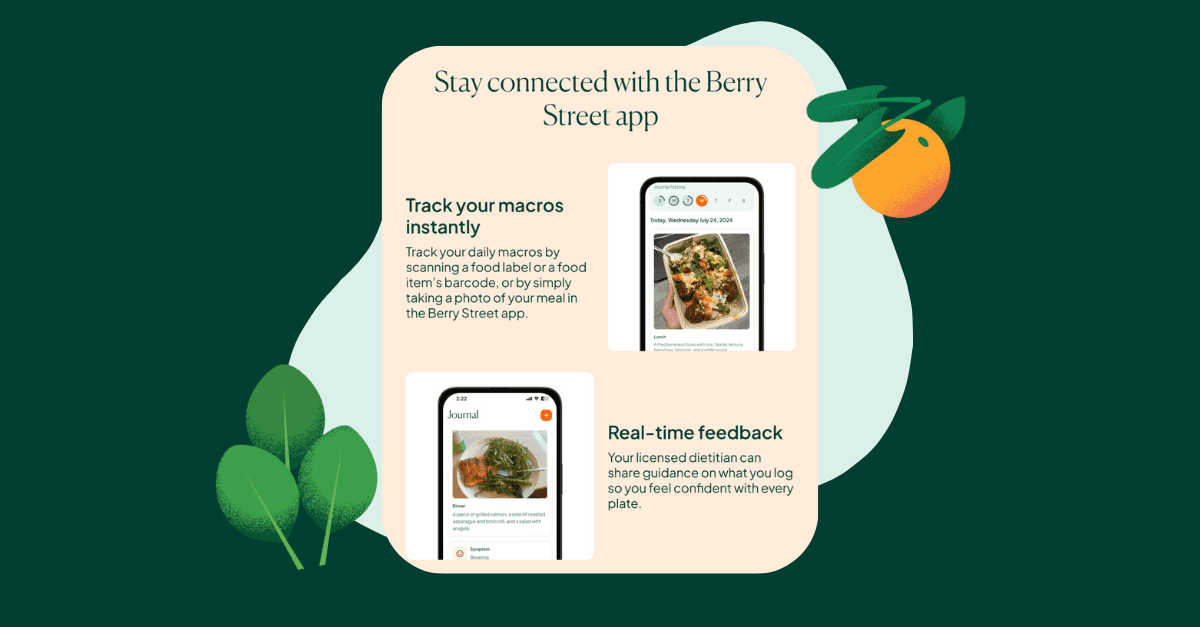
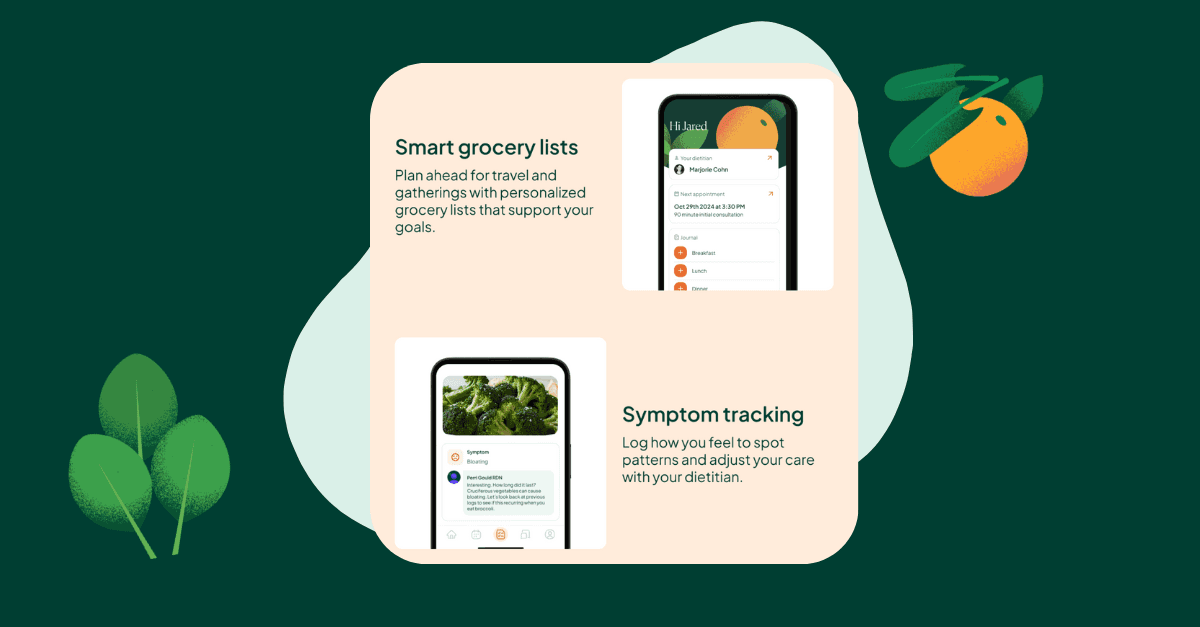
Tracking symptoms or using digital food journals
Reviewing updated lab work or health metrics
Reflecting on energy, mood, digestion, and your overall well-being
Progress isn’t always linear, and that’s okay. Your plan is designed to evolve with you so you can feel supported, not stuck.
Step 4: Working as Part of Your Care Team
Your health is complex, and we believe in treating it that way. That’s why Berry Street dietitians often collaborate with your broader healthcare team so that everyone’s working together to support your goals. This may include:
Communicating with your primary care doctor or specialists like endocrinologists, OB/GYNs, or gastroenterologists
Coordinating with mental health professionals when emotional health and eating are closely connected
Working alongside physical therapists or trainers to align your nutrition with movement
When helpful, your dietitian can also suggest additional testing (such as GI mapping, nutrient panels, or continuous glucose monitoring) to deepen our understanding of your unique biology.
As Jessica Kelly shares: “When patients feel seen, heard, and supported by an entire care team, that’s when lasting change happens.”

Why Personalized Nutrition Matters Far Beyond the Plate
Personalized nutrition isn’t just about what’s on your plate, it’s about how your entire body functions and how you feel in your daily life. When you work with a registered dietitian to create a plan that’s specifically customized to your unique biology, the results go far beyond weight or calories. You start to feel better in ways that truly matter: more energy, fewer symptoms, deeper self-trust.
As Bridget Isaacs, MS, RD, puts it: “We see people regain their energy, restore their cycles, and feel ‘like themselves again.’ That’s the ripple effect of eating for your biology.”
When care is aligned with your unique needs, many people experience:
Lower blood sugar and A1c levels with better insulin sensitivity
Fewer inflammatory flares in autoimmune conditions
More regular cycles and reduced hormonal symptoms in PCOS
Improved digestion, less bloating, and symptom relief in IBS, SIBO, or IBD
Greater mental clarity, steadier moods, and more restful sleep
These are real, measurable changes that come from nourishing your body…not restricting it.

A Recognized Part of Real Healthcare
Medical Nutrition Therapy isn’t an alternative or a luxury, it’s a recognized part of modern healthcare. Major insurance providers often cover MNT for a variety of conditions, which means access to high-quality nutrition care is more available than most people realize.
Common diagnoses that qualify for coverage include:
Diabetes and prediabetes
Cardiovascular disease
Chronic kidney disease
Eating disorders
Gastrointestinal conditions like IBS or IBD
At Berry Street, we’re here to help you understand your benefits and get you the support you deserve. Our team assists with verifying coverage, dealing with referrals, and submitting claims when needed so getting care doesn’t become another source of stress.
As Jessica Kelly, MS, RDN, LDN, says: “Personalized nutrition should be accessible—not a luxury. We’re committed to making it part of real healthcare.”
Long-Term Health Over Short-Term Fixes
Quick-fix diets may promise fast results, but they often leave you feeling discouraged, confused, or disconnected from your body. Personalized nutrition offers something that is a lot more meaningful: a sustainable way of eating that fits your life, your values, and your health.
With support from a dietitian, the focus shifts to:
Empowering choices instead of restrictions
Sustainable habits over one-size-fits-all rules
Understanding your biology instead of chasing a number on the scale
We don’t believe in shame-based nutrition or perfection. We believe in helping you build a lifelong relationship with food that’s rooted in curiosity, confidence, and care.
As Bridget Isaacs says: “No more yo-yo cycles or shame-based nutrition. When you know what your body needs, you’re free to live well.”
The Future of Nutrition Care is Personal
You deserve more than generic advice and short-term fixes. Your body is unique, and the way you care for it should be too.
Personalized nutrition, led by licensed, compassionate dietitians, is changing the way we approach chronic conditions, preventative care, and overall well-being. This isn’t fringe or “alternative,” it’s the next evolution of real, evidence-based healthcare.
With Medical Nutrition Therapy, we go beyond symptom management. We help you:
Ease discomfort from complex or chronic conditions
Support long-term health through targeted, food-first strategies
Improve digestion, hormone balance, energy, and emotional well-being
Feel empowered by your choices…not confused or restricted by them
As Jessica Kelly, MS, RDN, LDN, says: “Nutrition is personal. When we stop chasing trends and start listening to the body, healing happens.”
At Berry Street, we combine science with compassion. Our dietitians meet you where you are, guiding you with clear answers and not guilt. There are no trendy rules, no shame-based plans - just smart, personalized care that actually fits your real life.
Are you ready to stop guessing what your body needs?
Skip the one-size-fits-all approach. Book a session with a Berry Street dietitian and get the support you need to finally feel clear, confident, and cared for - every step of the way.
Frequently Asked Questions
Do I need lab work before starting Medical Nutrition Therapy?
You don’t need lab work before getting started. Your dietitian can begin building your personalized plan through a full health and lifestyle assessment, then help determine which labs - if any - would add helpful insight.
Can I work with a Berry Street dietitian if I have multiple health conditions?
Yes! Our dietitians are experienced in supporting clients with overlapping or complex conditions, such as PCOS with IBS or diabetes alongside emotional eating. In these situations, personalized nutrition becomes even more important.
Does Berry Street help with supplement recommendations?
Absolutely! Your dietitian can guide you on supplements based on your symptoms, medical history, and lab results. This includes support for autoimmune conditions, thyroid disorders, liver disease, and more.
Can I work with a Berry Street dietitian if I’m a vegetarian or a vegan?
For sure! We specialize in plant‑based nutrition and can help you meet your nutritional needs while honoring your lifestyle and values.
Can personalized nutrition help with mental health symptoms?
Yes. Supporting mental health is part of our whole‑person approach. Strategies like balancing blood sugar, reducing inflammation, and improving gut health often play a meaningful role in mood, clarity, and emotional well‑being.
Does Berry Street offer nutrition therapy for children and teens?
Yes, we do! Our pediatric dietitians work with children and adolescents using developmentally appropriate, family‑centered care.
How can I figure out what’s triggering my symptoms with the help of Berry Street?
Your dietitian will use tools like food and symptom journals, elimination protocols, and targeted testing (especially for gut health and allergies) to help uncover patterns and understand what your body is reacting to.
Can Berry Street help with fertility, pregnancy, or postpartum nutrition?
Yes. We offer support across all reproductive stages, including preconception, pregnancy, and postnatal health. Nutrition plans focus on hormones, nutrient repletion, and metabolic stability.
What credentials do Berry Street providers hold?
Berry Street providers are credentialed nutrition experts. All Berry Street providers are Registered Dietitian Nutritionists (RDNs)—licensed, clinically trained professionals qualified to provide medical nutrition therapy. Many also hold additional advanced certifications (for example, CNS).
What is the best diet for PCOS?
There isn’t one “best” diet for PCOS. Your Berry Street dietitian will tailor a plan based on your specific needs, including insulin resistance, inflammation, androgen symptoms, cycle goals, and overall health.
How often should I meet with my Berry Street dietitian?
Most clients start with weekly sessions. After that, follow‑up frequency depends on your goals and progress and is often monthly and then quarterly.
Does Berry Street help with emotional eating or disordered eating?
Yes. Some of our dietitians specialize in emotional eating and the full spectrum of eating disorders, including Binge Eating Disorder, Bulimia, Anorexia, and ARFID.
Can I use insurance for dietitian visits at Berry Street?
In many cases, yes. We help verify your benefits and can provide superbills for out‑of‑network reimbursement when needed.
What if I’ve already tried every diet and nothing has worked?
That’s exactly where personalized nutrition makes a difference. Instead of rigid diets, we help you understand your biology and create a plan that supports long‑term health, whether you're working on weight, heart health, metabolic goals, or overall well‑being.
Can I still enjoy food and eat out while working with a Berry Street dietitian?
Of course! Flexibility is a core part of our approach. We help you build sustainable habits so you can enjoy meals out, travel, social events, and everyday life without fear or restriction.
How do I get started with Medical Nutrition Therapy at Berry Street?
Getting started is simple. Book a session with a Berry Street dietitian and receive personalized, science‑backed care designed around your body, your goals, and your real daily life.