Your body runs on a built-in 24-hour schedule known as your circadian rhythm. This natural clock influences when you feel hungry, alert, sleepy, or energized. It’s guided by light, food, and daily habits…everything from when you wake up to when you eat dinner.
When your rhythm is in sync, your energy, digestion, and mood flow effortlessly. When it’s off, fatigue, cravings, and restless nights often follow.
“Your circadian rhythm is like your body’s GPS,” says Jessica Kelly, MS, RDN, LDN. “When you align your meals, light exposure, and sleep habits with your natural timing, everything feels easier—energy, digestion, even mood.”

Even small changes to your schedule, like daylight saving, travel, or late nights, can throw off your body’s internal rhythm. But the good news is that with a few simple adjustments to light exposure, meal timing, and nutrition, you can help your body reset naturally. Working with a Registered Dietitian can make this process even smoother, helping you restore balance, boost your energy, and feel grounded, no matter how busy life gets.
The Science Behind the Circadian Rhythm
Your circadian rhythm is controlled by a small region in the brain called the suprachiasmatic nucleus (SCN), located in the hypothalamus. This region acts like your internal timekeeper, responding mainly to light, especially natural morning sunlight. It helps regulate key hormones like:
Melatonin, which signals sleepiness
Cortisol, which promotes energy and alertness
When your light exposure, sleep, and meal timing are consistent, your internal rhythm functions smoothly. But irregular habits, like late-night screens, skipping breakfast, or inconsistent meal times, can confuse your body’s clock, leading to fatigue and metabolic sluggishness.
“Small lifestyle shifts—like morning sunlight, consistent meals, and a bedtime routine—can completely change how your metabolism and energy feel,” notes Bridget Isaacs, MS, RD.
Step 1: Begin Your Day with Morning Light
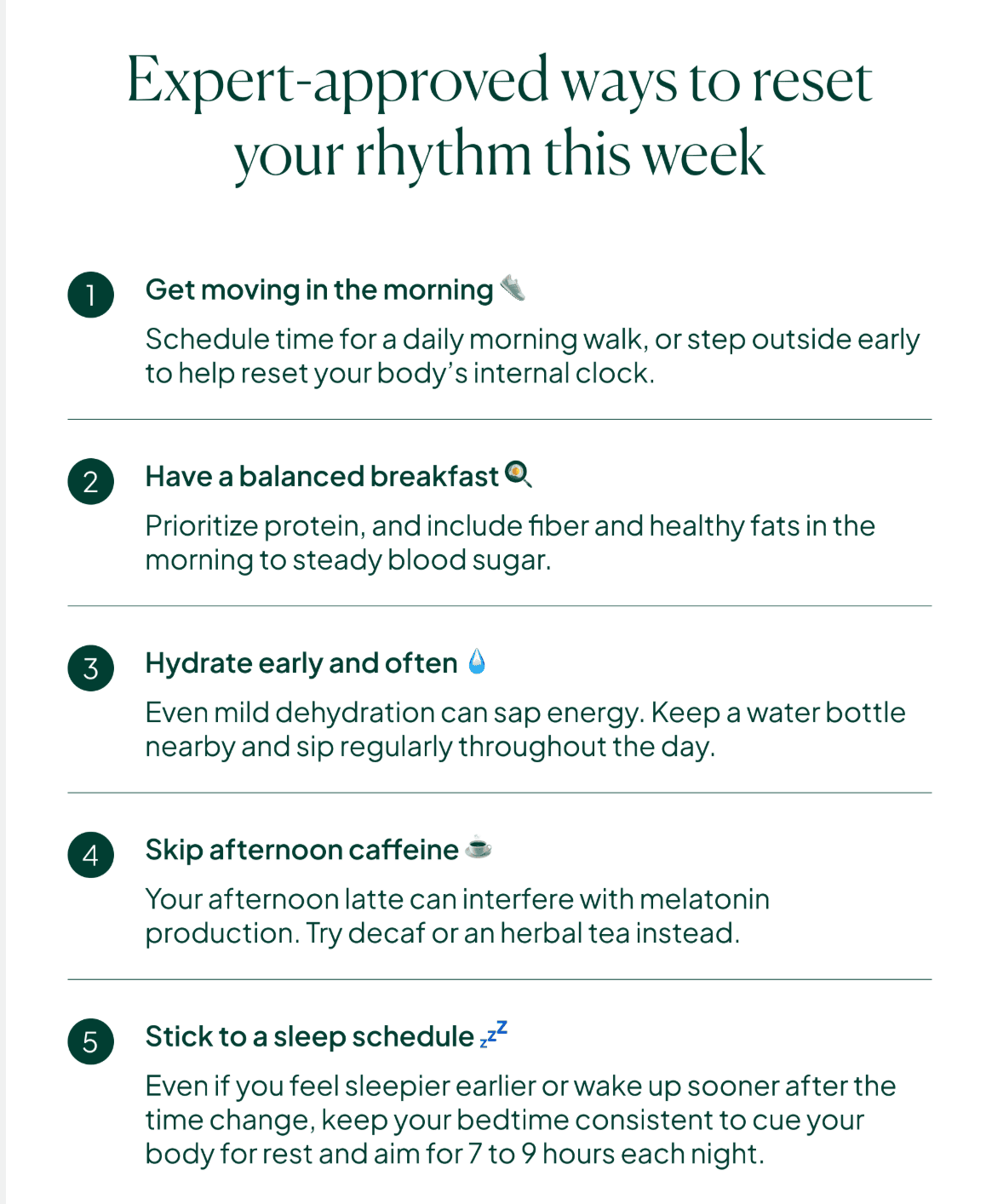
Morning sunlight is one of the best ways to reset your body clock. Natural light cues your brain to release cortisol and suppress melatonin, helping you feel alert and ready for the day.
Morning Light Tips:
Get 10–20 minutes of sunlight within the first hour of waking.
Step outside, even if it’s cloudy - natural light is far stronger than indoor light.
Avoid checking your phone immediately upon waking; give your eyes real daylight first.
“Light in the morning sets the tone for your entire day,” says Jessica Kelly, MS, RDN, LDN. “It helps regulate energy, hunger, and focus for the rest of your day.”

Step 2: Align Your Meals with Your Energy Peaks
Your metabolism has its own circadian rhythm too. Insulin sensitivity (your body’s ability to balance blood sugar) is higher earlier in the day and naturally declines in the evening. This means eating balanced meals during daylight hours can help lead to better energy and metabolic health.
Practical Meal Timing Tips:
Eat breakfast within 1–2 hours of waking to kickstart metabolism.
Make lunch your biggest meal since your body digests best mid-day.
Keep dinners lighter and earlier, ideally 2–3 hours before bed.
“Think of your meals as anchors for your metabolism,” says Bridget Isaacs, MS, RD. “When you eat in rhythm, your blood sugar and energy stay stable.”
Step 3: Balance Your Cortisol and Melatonin Naturally
Cortisol and melatonin are like the yin and yang of your circadian system. Cortisol peaks in the morning to help you wake up, while melatonin rises at night to help you fall asleep.
Disruptions, like late-night eating, caffeine after noon, or bright screens, can throw off these cycles.
To Support Natural Hormone Flow:
Limit caffeine after 2 p.m.
Dim lights and screens at least one hour before bed.
Maintain a consistent sleep schedule, even on weekends.
“People often try to fix fatigue with more coffee, but what they really need is better cortisol balance,” says Jessica Kelly, MS, RDN, LDN.
Step 4: Eat for Energy and Better Sleep
Nutrition plays a major role in how your internal clock functions. Certain nutrients help your body maintain consistent energy during the day and encourage deeper rest at night.
Key Nutrients for Circadian Health:
Magnesium: Supports relaxation and melatonin production (found in leafy greens, pumpkin seeds, dark chocolate).
Tryptophan: Converts to serotonin and melatonin (in turkey, oats, and eggs).
B vitamins: Help regulate energy metabolism and neurotransmitter balance.
Omega-3 fats: Improve mood and sleep quality.
“Your food choices send constant feedback to your internal clock,” says Bridget Isaacs, MS, RD. “Meals rich in protein, fiber, and healthy fats help your energy curve stay consistent.”

Step 5: Move in Tune with Your Body’s Clock
Exercise also has an influence on your circadian rhythm. Morning or afternoon movement enhances your level of alertness, while intense evening workouts can delay melatonin release and prevent your body from naturally winding down.
Smart Movement Strategies:
Try morning walks or yoga to help balance cortisol levels.
Schedule strength training mid-day when your body temperature and coordination peak.
Use evening stretching or a gentle activity to wind down and relax.
“Movement anchors your rhythm just like meals or sunlight,” explains Jessica Kelly, MS, RDN, LDN. “Even short walks can help regulate sleep and appetite.”
Step 6: The Gut–Brain–Clock Connection
Your gut bacteria have their own circadian rhythm, and they’re sensitive to what and when you eat. Eating irregularly or having late-night snacks can disrupt the gut microbiome, leading to inflammation and digestive distress.
Support Gut and Circadian Health:
Eat fiber-rich foods (fruits, vegetables, oats) consistently during daylight hours.
Avoid late-night snacks, which can confuse digestive timing.
Include fermented foods like yogurt, kefir, or miso for better gut bacteria balance.
“When your gut and circadian clocks are aligned, digestion feels easier and energy feels more stable,” says Bridget Isaacs, MS, RD.
Step 7: Create an Evening Routine That Supports Sleep
Your evening routine habits have a major impact on how quickly your body shifts into rest mode. Think of your evening as the runway to sleep…the smoother the landing, the better your recovery and hormone balance.
Evening Routine Ideas:
Dim the lights one hour before bed.
Avoid heavy meals late at night.
Keep your bedroom cool, dark, and screen-free.
Try herbal tea or breathing exercises instead of scrolling to unwind.
Step 8: Hydration and Your Body’s Clock
Hydration follows a rhythm, too. Drinking water consistently throughout the day, and not all at once, in big bursts, helps with alertness, cognitive function, and even digestion.
Hydration Habits:
Start your morning with a glass of water to replenish overnight losses.
Sip fluids with meals to help boost digestion.
Reduce your water intake right before bed to avoid sleep disruption.
Step 9: The Role of Mindfulness and Consistency
Your body thrives on predictability and regular patterns. Going to bed, eating, and waking at roughly the same times each day is going to help strengthen your circadian rhythm and will make your energy levels steadier.
“Consistency doesn’t mean rigidity,” says Jessica Kelly, MS, RDN, LDN. “It’s about patterns—your body just needs cues to know what’s coming next.”
Small, consistent actions build up over time, much like the habits described in the book Atomic Habits, by James Clear. Even minor improvements in meal timing, light exposure, and sleep can dramatically improve your energy, metabolism, and mood.
Daily Rhythm Reset Checklist
Focus Area | Why It Matters | Simple Practice |
Morning Light | Regulates hormones and alertness | Get 10–20 minutes of sunlight after waking |
Consistent Meals | Balances metabolism and digestion | Eat at similar times each day |
Balanced Nutrition | Stabilizes blood sugar and energy | Include protein, fiber, and healthy fats in each meal |
Mindful Movement | Boosts circulation and sleep | Move daily, ideally in daylight |
Sleep Routine | Supports recovery and hormone repair | Wind down 1 hour before bed |
Hydration | Maintains focus and metabolism | Sip water consistently throughout the day |
Final Thoughts About Your Body’s Clock from a Nutrition Expert
Your circadian rhythm influences every aspect of your health, from energy, metabolism, digestion, and even your emotional well-being. By syncing your light exposure, nutrition, and daily habits, you can restore balance and vitality naturally.
“Your body clock isn’t just about sleep—it’s about rhythm, balance, and timing,” says Bridget Isaacs, MS, RD. “When you eat, move, and rest in alignment, your energy feels effortless.”
If you’re ready to build a personalized rhythm for better energy, digestion, and sleep, the Registered Dietitians at Berry Street can help you design a plan that fits both your body and your lifestyle.
Book your personalized nutrition consultation today
Remember
Frequently Asked Questions: Circadian Rhythm, Nutrition, and Energy
Can I reset my body clock naturally?
Yes! You can support your circadian rhythm by getting morning sunlight, maintaining consistent meal times, and keeping a regular sleep schedule. Even small daily cues, like light exposure and breakfast timing, help your body reset.
Does eating late at night affect my metabolism?
Research shows late-night eating can disrupt blood sugar and digestive rhythms. Try finishing meals 2–3 hours before bedtime to allow your body to process nutrients efficiently.
Can supplements support my sleep or energy rhythm?
Certain supplements like magnesium, omega-3s, and B vitamins can help regulate circadian balance, but you should always try to get these from food sources first. Consult a Registered Dietitian before starting any supplement plan.
How does hydration impact my energy levels?
Even mild dehydration can cause fatigue and brain fog. Consistent water intake throughout the day helps sustain focus, alertness, and digestion.
What foods help regulate sleep?
Foods rich in magnesium, tryptophan, and healthy fats (like oats, nuts, seeds, and fatty fish) support melatonin production and relaxation. Avoid caffeine and alcohol close to bedtime.
Is it okay to skip breakfast?
Skipping breakfast can delay your internal clock and lead to energy crashes later in the day. A balanced morning meal with protein, fiber, and healthy fats helps align your metabolism and boost focus.
Can kids benefit from circadian-friendly nutrition?
Absolutely! Regular mealtimes, outdoor time, and balanced nutrition help children maintain steady energy and improve sleep quality. Read more about it here: Nutrition for Kids That Really Does Fuel Energy, Focus and Growth