Why Your Cooking Oil Matters More Than You Think
You reach for it almost every day, whether you’re roasting veggies, sizzling salmon, or tossing together a quick vinaigrette. But despite being a kitchen staple, cooking oil is one of the most misunderstood ingredients in your pantry. Beyond just flavor, the oil you choose can influence everything from how well you absorb nutrients to how your body manages inflammation and even your long-term heart and metabolic health.
“Every oil has a different nutrient profile and reacts differently to heat,” says Jessica Kelly, MS, RDN, LDN. “There’s no universal best oil—only the best oil for how you plan to use it.”
Are you ready to take your cooking and your health to the next level? Let’s explore the science behind fats, bust a few common oil myths, and break down how to pick the right oil for any dish that you’re making. Because when it comes to cooking well, what you use to cook with matters just as much as what you’re cooking.

The Science of Fats: Understanding What’s in Your Bottle
Cooking oils are primarily made of fatty acids, and these fats determine how oils behave when they are heated and how they affect your body.
Types of Fatty Acids
Monounsaturated fats (MUFAs) – Found in olive, avocado, and high-oleic sunflower oils. These fats support insulin sensitivity and boost your heart health.
Polyunsaturated fats (PUFAs) – Found in walnut, flaxseed, and soybean oils. These include omega-3 and omega-6 fatty acids, and are essential for hormone and immune function.
Saturated fats – Present in coconut oil, palm oil, and butter. While heat-stable, these fats raise LDL cholesterol when consumed in excess. For more guidance on managing cholesterol through diet, see our full article on how to lower cholesterol naturally.
Heat, Oxidation, and Smoke Points: Where Most People Go Wrong
One of the most common mistakes that people make in the kitchen is using oils in the wrong way.
Heating oils past their smoke point can degrade their fats, changing them into harmful free radicals. Oxidized oils can promote inflammation and oxidative stress.
General Smoke Point Guide:
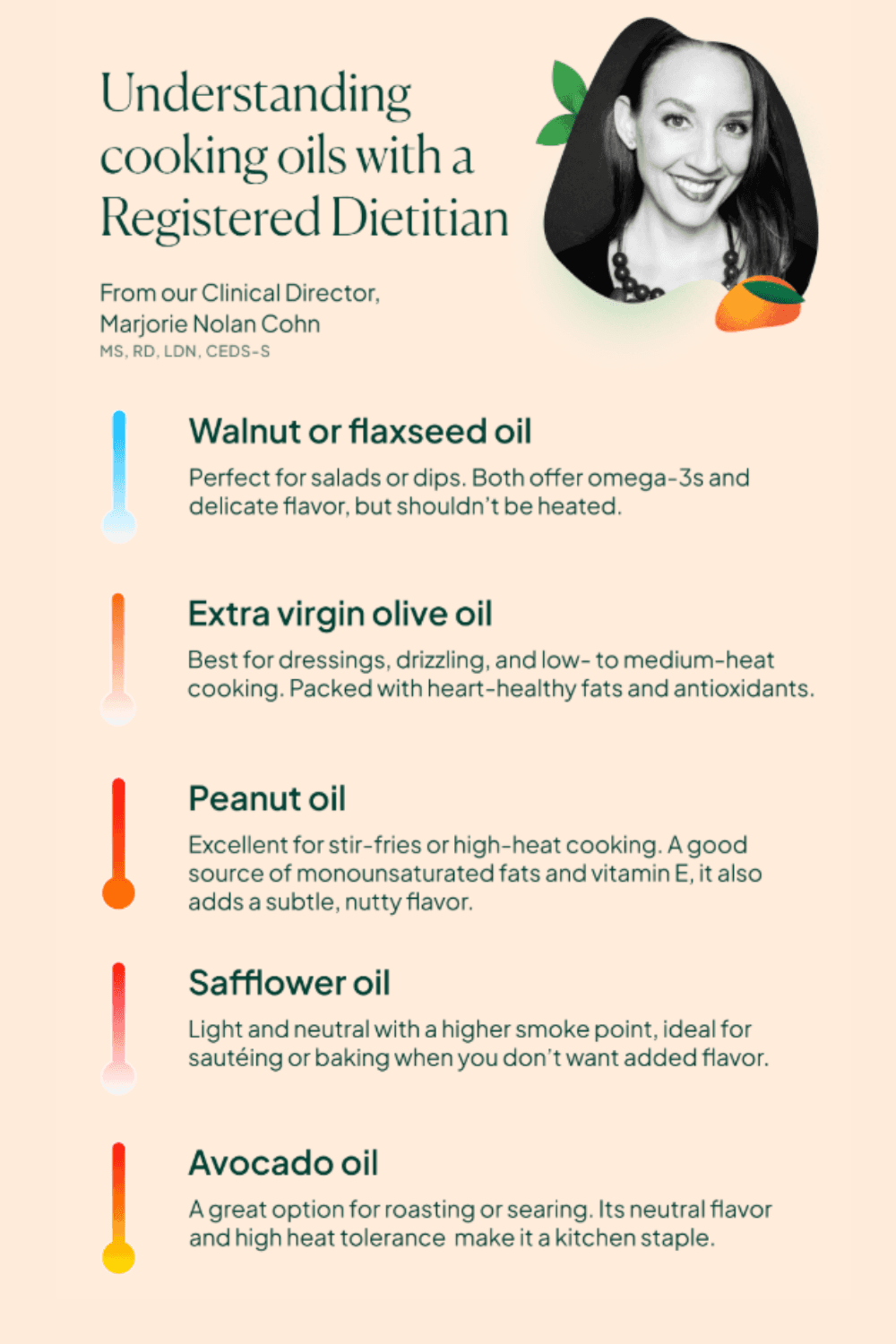
Low heat or no heat: extra-virgin olive oil, walnut, flaxseed
Medium heat: regular olive, sesame
High heat: avocado, peanut, high-oleic sunflower
Very high heat: refined avocado or peanut oil

Bridget Isaacs, MS, RD adds, “The oil you drizzle on a salad might not be the one you fry with. Oils are tools—and using the specific oils at low temperatures and others at high temperatures can work for your health.”
How to Choose the Right Cooking Oils for Your Health
Not all fats are created equal, and neither are cooking oils. The type of oil you use can influence everything from your cardiovascular health to your hormone balance, digestion, and even how you absorb vitamins from your food. But with so many choices on the shelf (and so much conflicting advice online), it’s easy to feel overwhelmed.
Let’s simplify the science and focus on what actually matters: how oils affect your health, how they react to heat, and how to use them wisely in your everyday meals.
Olive Oil: A Gold Standard for Heart and Gut Health
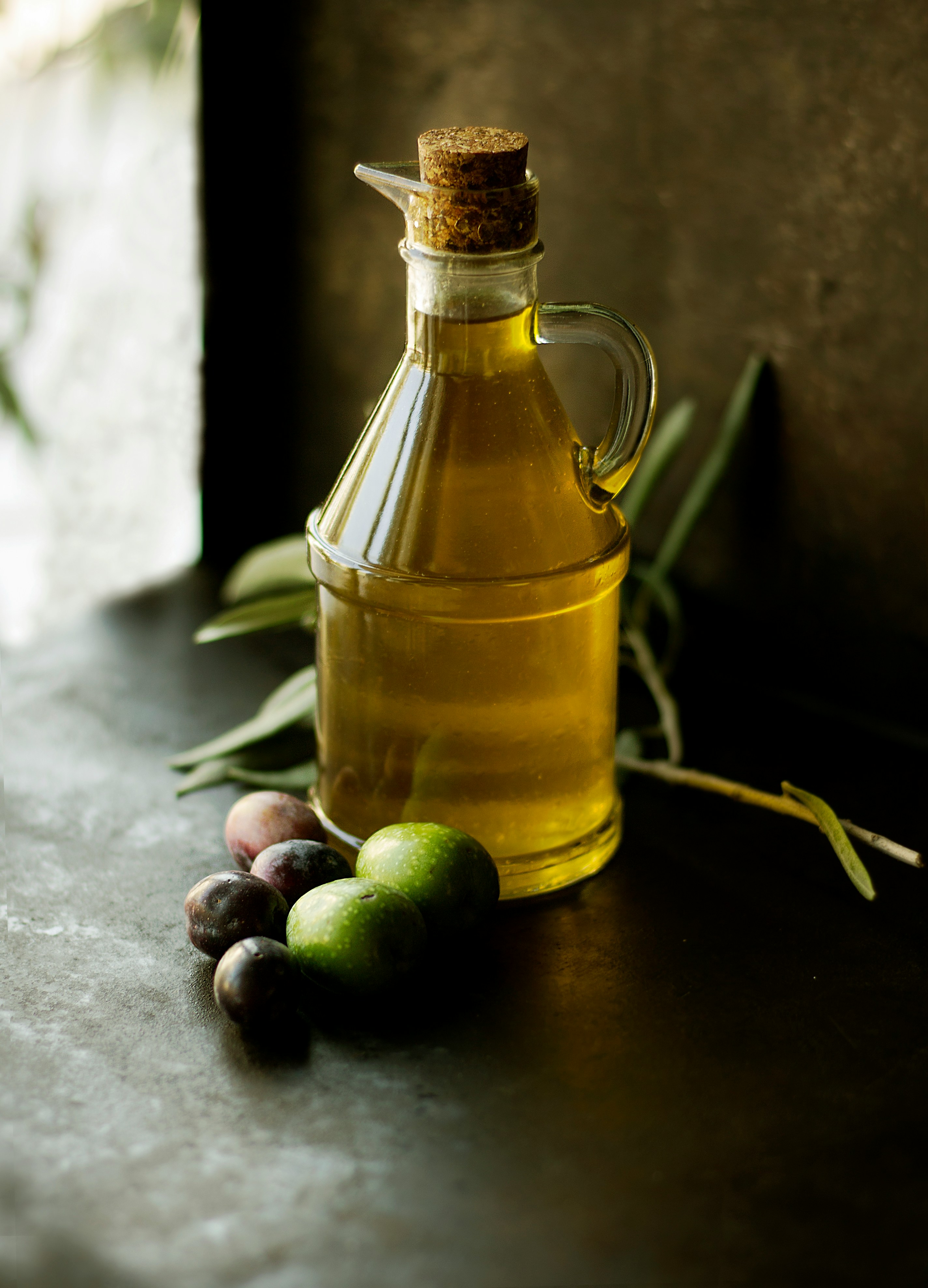
Olive oil (especially extra virgin) is rich in monounsaturated fats (MUFAs) and anti-inflammatory polyphenols. It’s a foundational oil in the Mediterranean diet, with strong research behind it. The landmark PREDIMED trial linked regular olive oil intake to a 30% reduced risk of major cardiovascular events. Plus, it also supports a more diverse gut microbiome, helping reduce inflammation and improve digestion. Use it for dressings, sautéing, low-to-medium-heat cooking, and even baking.
Avocado Oil: For High-Heat Cooking with a Clean Taste
If you’re roasting or pan-searing at high temperatures, avocado oil is a smart choice. With a smoke point above 500°F and a neutral flavor, it’s versatile, heat-stable, and rich in heart-healthy fats. It’s especially useful for sheet pan meals, stir-fries, and grilling.
Walnut & Flaxseed Oils: Cold-Use Oils with Omega-3 Benefits
Both of these oils are best used raw - for example, drizzled over grain bowls, added to smoothies, or used in salad dressings. Walnut oil is high in plant-based omega-3s and adds a nutty richness to meals, while flaxseed oil pairs beautifully with fiber-rich foods and can help stabilize your blood sugar.
Peanut Oil: Great for Stir-Fries, With a Caveat
Thanks to its high smoke point and vitamin E content, peanut oil is excellent for stir-frying and other high-heat methods. However, it’s important to avoid it if you have peanut allergies, and it’s best used in moderation to avoid excess omega-6 intake.
High-Oleic Safflower & Sunflower Oils: Clean and Stable
These oils are more heat-stable than their conventional versions. Look for “high-oleic” on the label, which means the oil is richer in monounsaturated fats and less prone to oxidation. They’re good for baking or medium-heat cooking.
Coconut Oil: Use Occasionally, Not Daily
Coconut oil is stable under heat and often praised for its antimicrobial properties, but it’s also high in saturated fat, which may not be ideal for daily use if you're managing your cholesterol or cardiovascular risk. Like we shared in The Problem with the Slow Carb Diet, coconut oil can be part of a healthy diet, just not the default.
Oils to Use More Sparingly
Some oils are best kept to occasional use, especially those that are highly refined, reused, or unstable at high heat.
Generic vegetable oils (like corn, soybean, or blends labeled “vegetable oil”) are often rich in omega-6 fats that can promote inflammation when overconsumed.
Reused frying oils, like those commonly used in restaurants, degrade into harmful compounds over time. This is one reason we highlight them in our post on How to Eat Out Without Sabotaging Your Health Goals.
Remember
Matching Oils to Your Health Goals
Choosing the right oil isn’t about cutting out fat, it’s about using the right fat for your needs. Here’s how to align your oils with your health goals:
For heart health: Use olive oil, avocado oil, and high-oleic oils regularly. See more in our post on How to Lower Cholesterol Naturally.
For hormone balance: Incorporate omega-3-rich oils like walnut or flaxseed, which we cover in our post on Seed Cycling and Hormone Health.
For blood sugar stability: Pair healthy oils with fiber and protein to slow glucose absorption. We talk about this in: Are Eggs Healthy?
For gut health: Choose oils that support microbial diversity - olive oil is one of the best options. Read more in IBS and the Low FODMAP Diet.
For everyday cooking: Aim for simplicity and balance. Learn how to build easy, nourishing meals in Lunchbox 101.
Smart, Everyday Oil Habits
You don’t need a cabinet full of fancy oils to eat well. Just a few intentional choices go a long way:
Choose the right oil for your cooking method - save delicate oils for dressings, and use stable oils for heat.
Store oils in a cool, dark place to preserve freshness and prevent oxidation.
Keep oils like flaxseed or walnut in the fridge to extend shelf life.
Rotate your oils throughout the week to get a mix of fats and nutrients.
Default to extra virgin olive oil for most daily cooking, it’s versatile, nutrient-dense, and backed by the strongest research.
As Jessica Kelly, MS, RDN, LDN, puts it: “Healthy eating isn’t about avoiding oils—it’s about making them work for your metabolism, not against it.”
Choosing your oils wisely is one of the simplest ways to make everyday meals more nourishing, more flavorful, and more aligned with your health goals. Let your oil do more than coat the pan - let it support your body from the inside out.
It isn't about perfection
Choosing the right oil isn't about perfection—it’s about knowing which one best supports your cooking method, health goals, and personal biology. When used strategically, oils become part of a foundation that supports heart health, hormonal balance, stable energy, and long-term metabolic wellness.
If you're already exploring pantry upgrades, this complements our guide to how to stock a healthy pantry and builds on the insights in why quick-fix diets don’t work.

Do you want personalized support choosing the best oils for your metabolism and cooking style? Book a session with a Berry Street dietitian.
Frequently Asked Questions
Is olive oil safe to cook with?
Yes. Despite persistent myths, extra-virgin olive oil is stable under medium heat due to its high antioxidant content. In fact, it retains much of its nutritional value when used for sautéing or baking.
What’s the best oil for frying?
For high-heat methods like frying, choose oils with high smoke points and stable fat profiles. Avocado oil, peanut oil, and refined sunflower oil are all excellent choices. These oils remain stable at high temperatures and are less likely to oxidize.
Do oils affect hormones and metabolism?
Absolutely. Fats help synthesize hormones, regulate inflammation, and stabilize blood sugar. Oils rich in omega-3s, like flaxseed and walnut, may support hormone balance, while monounsaturated fats, like those in olive and avocado oil, enhance insulin sensitivity - topics we also discuss in Life After Ozempic.
How much oil should I eat daily?
Most adults do well with 2 to 3 tablespoons of healthy fats per day, incorporated into balanced meals. The key is to use oils strategically, as part of meals with protein, fiber, and vegetables, not to fear them.
Are vegetable oils really inflammatory?
Not inherently. The concern is excessive intake of refined omega-6 oils (like soybean or corn oil) without balancing them with omega-3s. Instead of eliminating vegetable oils altogether, aim for variety and balance, as emphasized in Anti-Inflammatory Meal Plans.
Should coconut oil be used every day?
Coconut oil is heat-stable and has unique antimicrobial properties, but it’s also high in saturated fat. For most people, it’s best used in moderation and rotated with oils rich in unsaturated fats.
Can the wrong oil trigger digestive issues?
Yes. Some people with gut sensitivities may feel better avoiding heavily processed oils or those they don’t tolerate well. Cold-pressed oils like extra-virgin olive oil may support gut health by delivering polyphenols that nourish beneficial gut bacteria.
Do I need to refrigerate all oils?
No. But delicate oils like flaxseed and walnut should be kept in the fridge to prevent oxidation. Most cooking oils, like olive or avocado, are best stored in a dark, cool cabinet in a sealed container to maintain freshness.