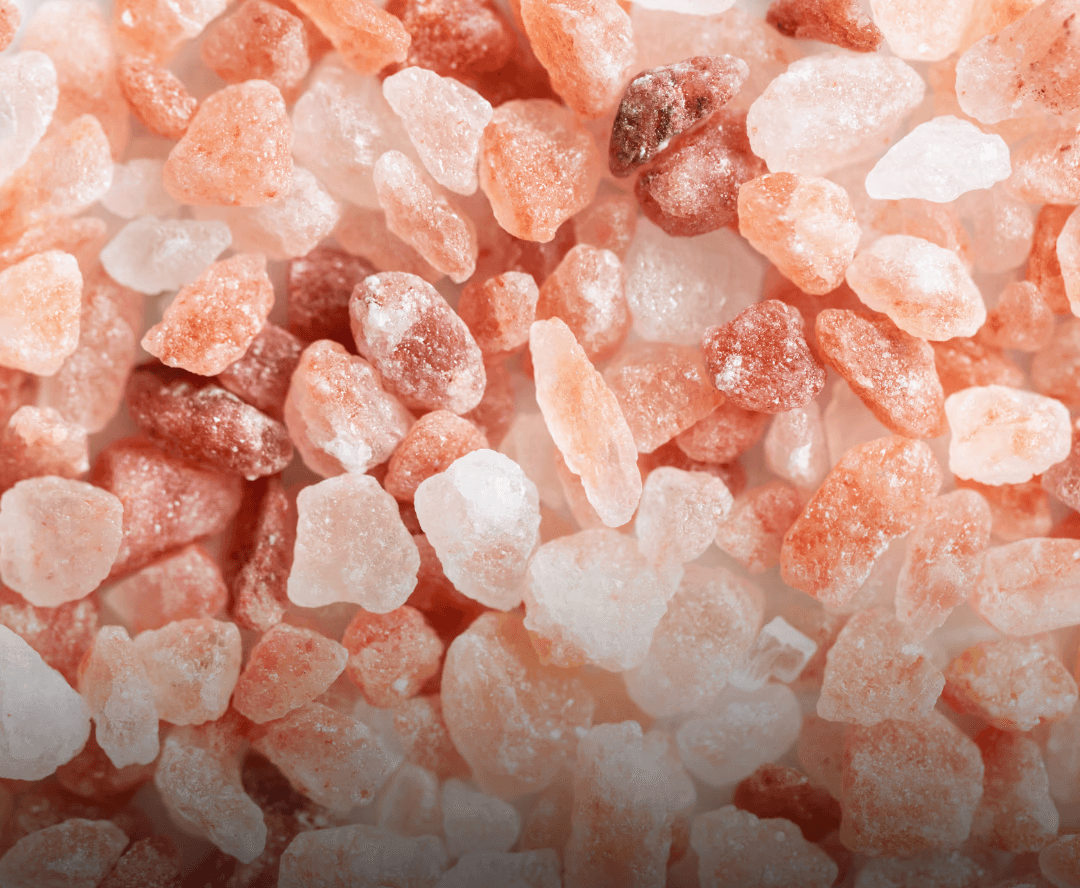
Pink salt is suddenly everywhere, right? From social media wellness videos to trendy water bottles, pink Himalayan salt has been marketed as a “miracle mineral” that boosts hydration, energy, and even weight loss. Influencers claim adding a pinch to your water helps “replenish electrolytes” or “support adrenal balance.”
But is there any truth behind these claims, or is pink salt just another wellness fad dressed up in pretty packaging?
Today, we’re looking into what the science actually says about pink Himalayan salt, how it’s made, what’s really in it, and whether it has any real health benefits beyond regular table salt.
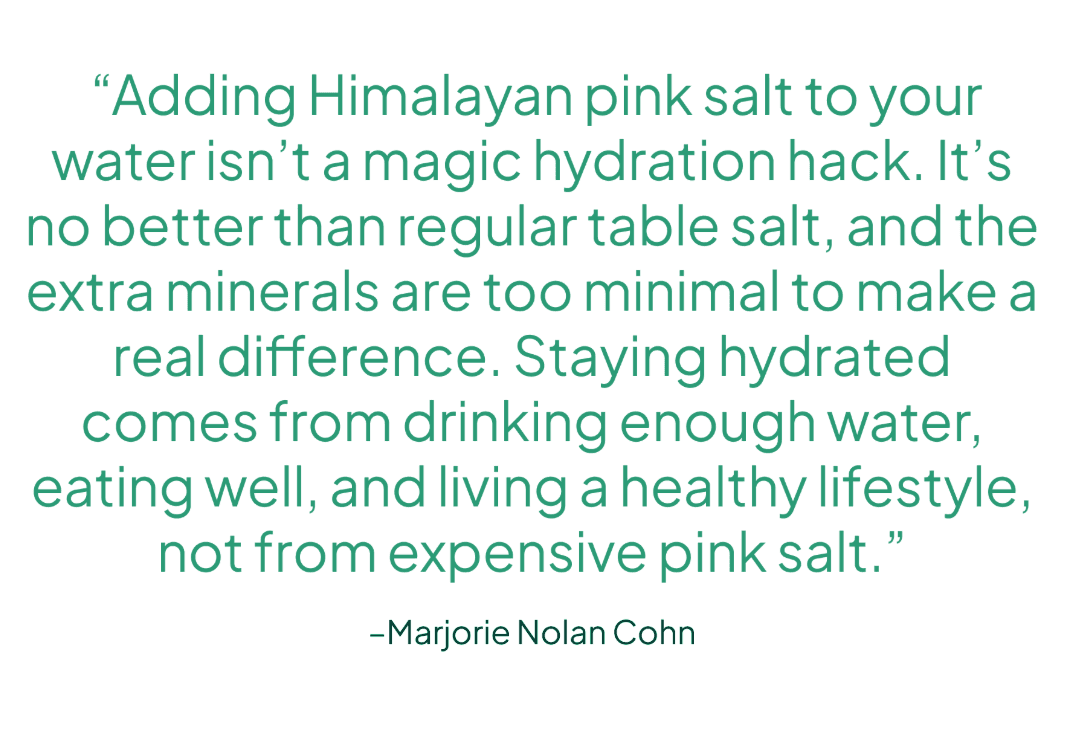
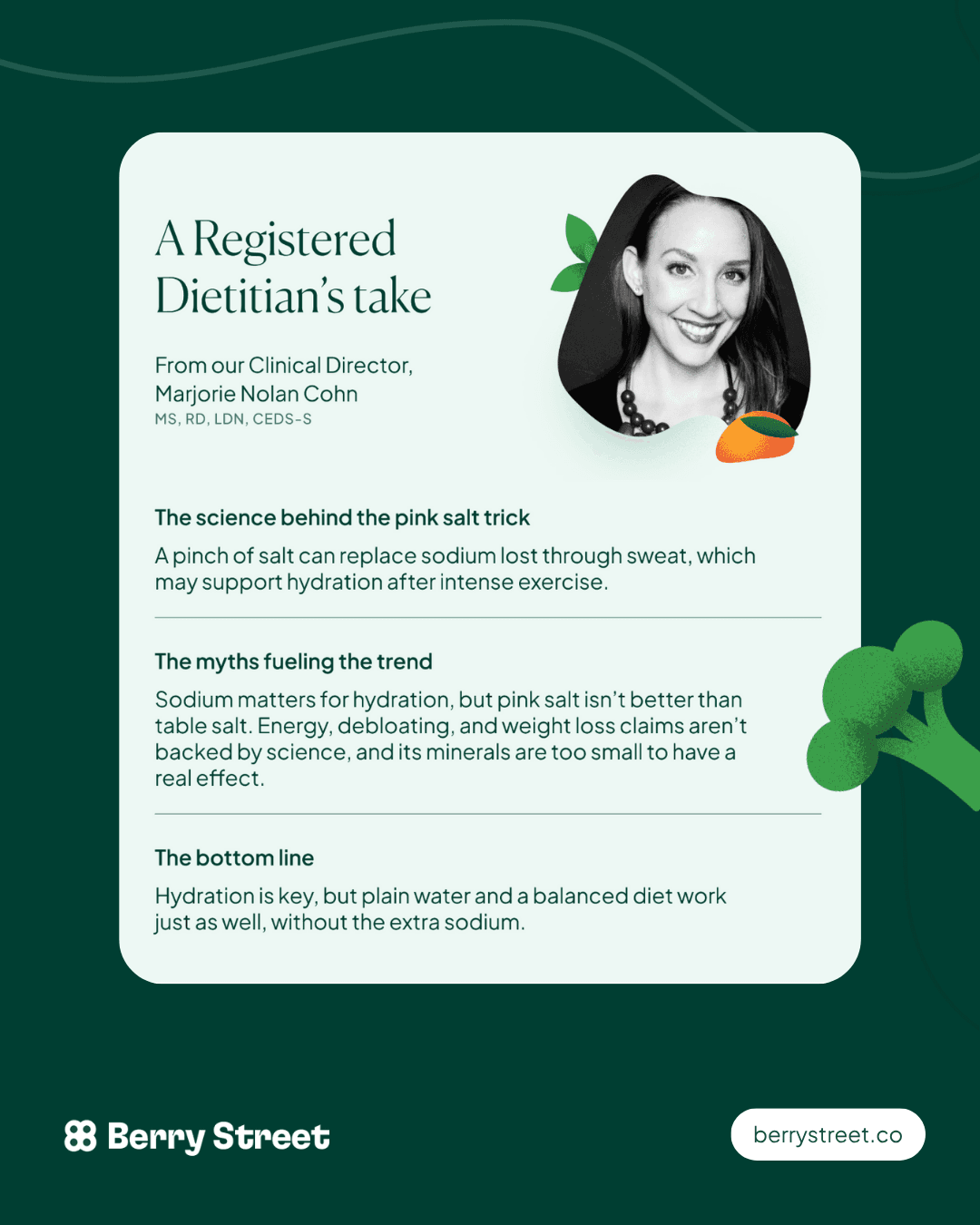
“Adding Himalayan pink salt to your water isn’t a magic hydration hack,” says Bridget Isaacs, MS, RD. “It does offer a little extra than regular table salt, but the extra minerals it contains are minimal.”

The Science of Hydration and Electrolytes
Some online trends claim that pink salt water boosts your hydration levels better than plain water. However, science tells a bit of a different story.
Electrolytes (like sodium, potassium, magnesium, and chloride) help maintain fluid balance and muscle function. While salt does provide sodium, drinking saltwater is not a safe or effective hydration strategy unless you’ve lost a lot of electrolytes through intense exercise or excess sweating.
For most people, good hydration comes from drinking plain water, eating fruits, and vegetables, not salt.
“Hydration isn’t about adding salt to your water—it’s about consistency,” explains Bridget Isaacs, MS, RD. “Drinking enough water throughout the day and eating balanced meals provides all the electrolytes you need.”
While pink salt isn't the magic electrolyte boost many claim it to be, staying hydrated is still essential for your energy and focus. To find out what your body actually requires, check out our complete guide to how much water you really need.
The Mineral Myth
It’s true that pink salt contains trace minerals like calcium, magnesium, and potassium. However, their quantities are negligible. You’d have to consume dozens of teaspoons of pink salt per day to get even a small fraction of your daily mineral needs, which would far exceed what would be considered a safe sodium intake.
“From a nutrition perspective, you’d get far more minerals from a handful of spinach or a banana than from any specialty salt,” says Bridget Isaacs, MS, RD.
Comparing Pink Salt, Sea Salt, and Table Salt
While marketing often talks about “trace minerals” or “purity,” the actual nutrient differences between pink, sea, and table salt are surprisingly small. What really sets them apart is how they are processed, their texture, and - sometimes - price, rather than their impact on your health.
The chart below breaks down what each type of salt offers, how they’re processed, and what that really means for your body.
Type of Salt | Sodium (per tsp) | Key Features | Health Impact |
Table Salt | ~2,300 mg | Often iodized; fine texture | Supports thyroid health but easy to overuse |
Sea Salt | ~2,200 mg | Minimal processing; minor trace minerals | Similar sodium content; minimal difference nutritionally |
Himalayan Pink Salt | ~2,300 mg | Contains trace minerals (iron, magnesium) | Nearly identical to table salt in sodium and health effects |
“Despite marketing, all salts are basically sodium chloride,” explains Jessica Kelly, MS, RDN, LDN. “Choosing pink salt over table salt won’t transform your hydration, hormones, or metabolism.”
Sodium, Health, and Moderation
Sodium often gets a bad reputation, but it’s not quite the villain that it’s made out to be…it’s all about balance. Your body actually needs sodium to function properly. It helps regulate your fluid balance, improves muscle contractions, and keeps your nerves firing the way they are supposed to. The problem arises when your sodium intake consistently exceeds what your body can manage.
Most adults in the U.S. consume far more than the recommended 2,300 milligrams per day, which is roughly the amount in a single teaspoon of salt. Excess sodium pulls more water into the bloodstream, increasing blood volume and, over time, raising your blood pressure. High sodium intake has been linked to a greater risk of heart disease, stroke, and kidney damage.
“The problem isn’t which salt you use—it’s how much,” says Jessica Kelly, MS, RDN, LDN. “Even natural salts contribute to excess sodium intake if you’re not mindful.”
Simple changes, like tasting food before salting it, using herbs and citrus for flavor, and being aware of the hidden sodium in packaged foods, can make a big difference. The goal isn’t to cut salt out entirely. Instead, it’s all about using it intentionally, in ways that increase the flavor and improve your health.
When Electrolyte Support Makes Sense
While most people can stay hydrated by just drinking water and eating well-balanced meals, there are times when the body truly benefits from having added electrolytes. Intense exercise, long hours outdoors in the heat, or illnesses involving vomiting or diarrhea can deplete sodium, potassium, and other minerals that your body needs in order to maintain proper fluid balance.
In these situations, evidence-based electrolyte solutions (like oral rehydration formulas or sports drinks) can help the body recover much better. These products are scientifically formulated with the right balance of sodium, potassium, and glucose to help with fluid absorption and restore hydration levels.
“Sports drinks and oral rehydration solutions are scientifically designed for recovery. We recommend sticking to something that is backed by research,” explains Bridget Isaacs, MS, RD.
For everyday hydration, plain water (and a diet rich in fruits, vegetables, and whole foods) usually does the job. But during times of heavy sweating, illness, or dehydration, getting extra electrolyte support can make a real difference in how quickly you feel restored.
Debunking the “Detox” Claim
Pink salt detoxes, baths, and scrubs have also gained a whole lot of popularity lately, claiming to “draw out toxins.” However, there’s no scientific evidence supporting these claims. The body’s natural detoxification systems (like your liver, kidneys, and lungs) already do that job the way they are supposed to.
“No food or salt can ‘detox’ your body,” says Jessica Kelly, MS, RDN, LDN. “Hydration, fiber, and adequate sleep are what truly support your body’s detox pathways.”
How to Use Salt Wisely
Season smartly: Use salt sparingly - taste first, then lightly season afterward if needed.
Flavor with herbs and acids: Lemon juice, vinegar, and spices add flavor without sodium.
Cook at home: Restaurant and packaged foods account for nearly 70% of sodium intake. Cook fresh meals at home and limit how much salt you add.
Stay hydrated: Proper water intake naturally supports electrolyte balance.
“Balance is key,” says Bridget Isaacs, MS, RD. “Plain water, colorful produce, and a balanced diet work just as well for the average individual—without the extra sodium or the expensive marketing. That being said, if you are extremely active or an athlete, it might be best to chat with a professional for personalized recommendations.”
Skip the fads
If you’re looking to improve your hydration, boost your energy, and keep your digestion healthy, skip the fads and focus on the foundations…balanced nutrition, adequate water intake, and steady electrolytes. Our Registered Dietitians can help you personalize your hydration and nutrition strategy for long-term results.
Pink Himalayan salt may look beautiful on your counter, but nutritionally, it’s no different from regular salt. While it can add visual appeal and a unique flavor, it won’t detox your body, improve your hydration, or boost your weight loss.
At Berry Street, our Nutrition Experts help you cut through all of the misinformation and build healthy, evidence-based habits that actually last. Book your consultation today.
Remember
Frequently Asked Questions
Is pink salt healthier than table salt?
Not really. Pink Himalayan salt contains trace minerals like magnesium, calcium, and potassium, but they exist in such small amounts that they don’t make a measurable difference to your health. From a nutrition standpoint, pink and table salt function almost identically in the body.
Does pink salt help with hydration?
There’s no scientific evidence that pink salt improves hydration more effectively than water or a nutrient-balanced diet. True hydration comes from fluids and electrolytes found in whole foods (like fruits, vegetables, and dairy), not from adding colored salt to your water.
Is pink salt lower in sodium?
No. Pink salt and table salt both contain roughly the same amount of sodium - about 2,300 milligrams per teaspoon. The differences are mainly in texture and color, not in sodium content or overall health effect.
Can pink salt help with weight loss?
No. Despite what’s often claimed online, no type of salt directly affects weight loss. Sustainable weight management depends on overall energy balance, movement, and nutrition quality, not on the kind of salt you use in cooking.
Should I switch to pink salt for cooking?
You can if you like the flavor or texture, but it won’t offer extra health benefits. Pink salt can be a fun way to add color or a subtle taste difference, but for most people, the best choice is simply to use salt (any salt) mindfully and in moderation.