Key Takeaways
PMOS (formerly called PCOS) shows up differently in every body, so there is no single “PMOS diet” that works for everyone. What actually helps is care built around your labs, symptoms, cycle, and daily life.
Insulin resistance is common in women with PMOS regardless of body size, which is why blood-sugar balance is often a starting point even for people who are not focused on weight.
A Registered Dietitian Nutritionist (RDN) is a licensed medical professional trained to treat conditions like PMOS. That is different from the word “nutritionist,” which in some states anyone can use.
A women’s-health dietitian works alongside your doctor across life stages, from PMOS and fertility to prenatal, postnatal, thyroid, and menopause care.
Nutrition counseling is often covered by insurance. Coverage depends on your plan, so checking yours first tells you what you will actually pay before you commit to anything.
Why hormones and nutrition are so connected for women
If you have PMOS (formerly called PCOS) or unpredictable cycles, you have probably tried to fix it with willpower. You cut carbs, downloaded another app, followed the plan that worked for someone online, and it worked until it didn’t. That is not a willpower problem. That is a one-size-fits-all problem. Your hormones respond to how and what you eat, but also to sleep, stress, thyroid function, blood sugar, and the specific way your body handles insulin. A plan designed for a stranger cannot account for any of that. Women’s-health nutrition is different because it treats those signals as connected. A dietitian who specializes in this area reads your symptoms, labs, and history together, then builds guidance that fits your body instead of asking your body to fit the guidance. You can learn more about how nutrition therapy fits into women’s health care across the reproductive lifespan.
In 30 seconds: A women’s-health dietitian is a licensed clinician who helps you manage PMOS and hormone-related symptoms through personalized, food-first care that works alongside your doctor. Instead of restriction, the focus is on steadying blood sugar, supporting energy, and building patterns you can keep. Nutrition counseling is often covered by insurance, and you can check your plan before booking.


What is a women’s health (PMOS) dietitian — and how is that different from a nutritionist?
A women’s-health dietitian is a Registered Dietitian Nutritionist who focuses on the hormonal and reproductive conditions that affect women across their lives. That includes PMOS, fertility, prenatal and postnatal nutrition, thyroid conditions, and menopause. They translate confusing lab results and conflicting online advice into a plan you can actually follow, and they coordinate with the rest of your care team rather than working in a silo.
Registered Dietitian Nutritionist (RDN) vs. “nutritionist”: credentials and why they matter
The two titles sound similar, but they are not the same thing. A Registered Dietitian Nutritionist completes an accredited degree, a supervised clinical internship, a national board exam, and ongoing continuing education. An RDN is a licensed medical professional qualified to treat and manage medical conditions like PMOS. The word “nutritionist,” by contrast, is not protected in every state, which means someone can use it without any of that formal training. In some states, a Certified Nutrition Specialist (CNS) is recognized as an advanced credential.
This distinction matters more with PMOS than with almost anything else. PMOS sits at the intersection of endocrinology, metabolism, mental health, and reproductive care, so the person guiding your nutrition needs real clinical training to interpret what your body is doing. Every Berry Street provider is a credentialed, licensed RD, RDN, or CNS, not a general health coach. That is the difference between generic advice and medical nutrition therapy.
What a women’s-health RD treats (PMOS, fertility, prenatal/postnatal, thyroid, menopause)
Hormonal health is not a single moment. It is a continuum that shifts through your twenties, thirties, forties, and beyond. A women’s-health RD is trained to move with you across that whole arc, which is one reason it helps to have the same kind of specialist through different chapters. Common areas include:
PMOS and insulin resistance: steadying blood sugar, supporting energy, and easing hormone-related symptoms without restriction.
Fertility and preconception: building nutrition patterns that may support ovulation and overall reproductive health, always alongside your OB-GYN or fertility team.
Prenatal and postnatal nutrition: meeting the real nutrient needs of pregnancy and recovery, including support during lactation.
Thyroid conditions: coordinating nutrition care when thyroid function affects energy, metabolism, and cycles.
Menopause and perimenopause: adjusting care as hormones shift again, with support for bone health, energy, and changing symptoms. You can read more about menopause nutrition care if that is the stage you are in.
For many people, the same relationship carries across several of these stages, so your dietitian already knows your history when your needs change.
How a dietitian actually helps with PMOS
PMOS is not one condition with one fix. It is a cluster of signs, including irregular cycles, elevated androgens, and, for many people, insulin resistance, that shows up differently from person to person. A dietitian’s job is to figure out which levers matter most for you and help you pull them in a way that fits your life.
Insulin resistance and blood-sugar balance
Insulin resistance is one of the most common threads in PCOS, and it often drives symptoms like fatigue, cravings, and irregular cycles. Importantly, insulin resistance is common in women with PMOS regardless of body size, according to a 2024 review in The Journal of Clinical Endocrinology & Metabolism. That is why a dietitian may focus on how your meals affect blood sugar even if weight is not your concern at all.
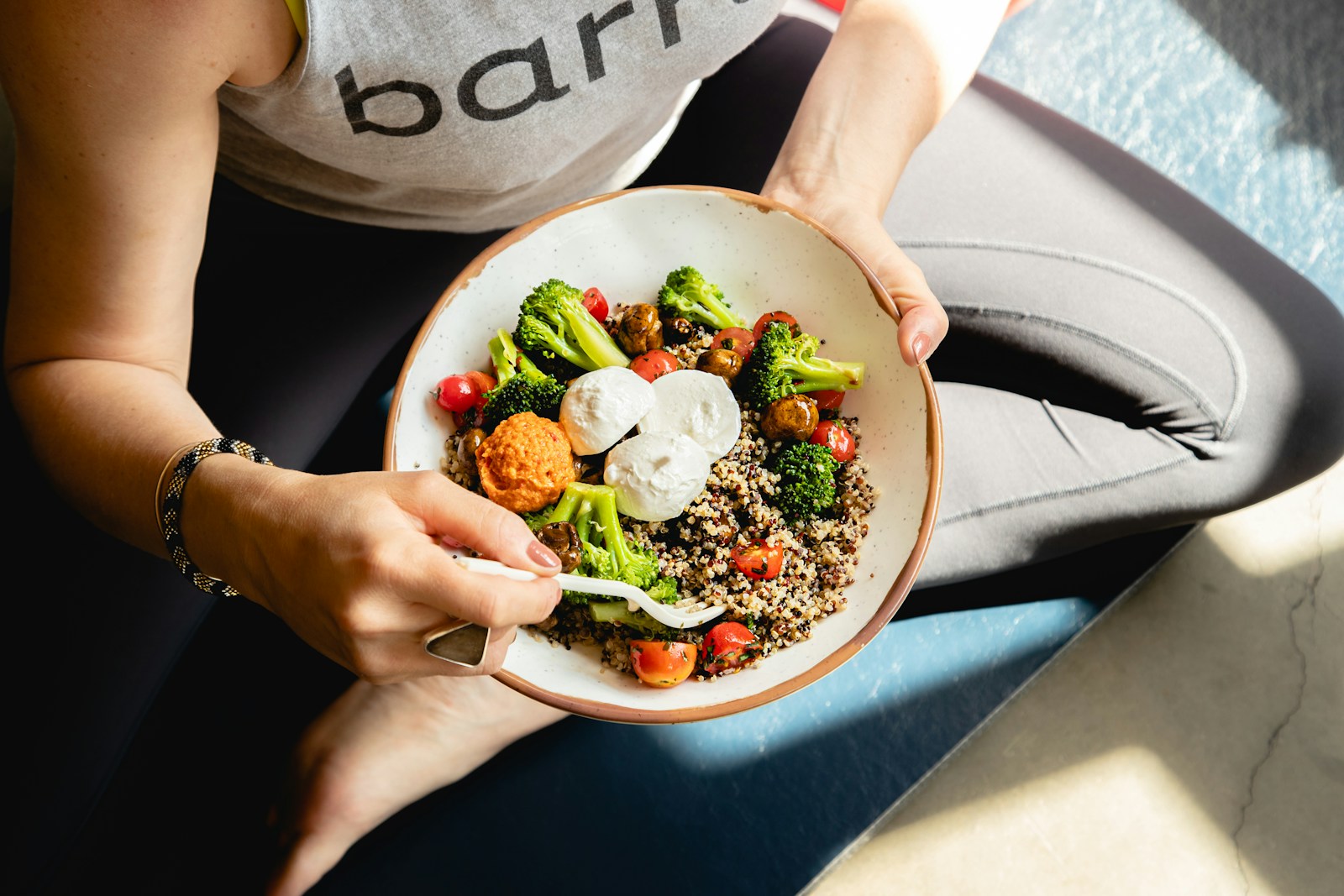
The practical work usually starts small. A dietitian might look at how your meals are built, whether you are going long stretches without eating, and how protein, fiber, and carbohydrates land across your day. The goal is steadier energy and steadier blood sugar, not a rigid set of rules. What that looks like depends on your labs, schedule, and preferences, which is exactly why it should be personalized.
“When someone tells me they are worried about insulin resistance, I don’t hand them a standard PMOS diet, because that doesn’t exist. We start with what a normal day of eating actually looks like for them, then we make small, realistic shifts, like adding protein and fiber to breakfast so blood sugar isn’t on a rollercoaster by mid-afternoon. I personalize it because two people with the same diagnosis can have completely different schedules, lab values, and foods they love, and the plan only works if it fits their life.” — Bridget Isaacs, MS, RD
Androgens, cycles, and hormone-related symptoms
Many PMOS symptoms, including irregular or absent periods, acne, and changes in hair, are linked to higher levels of androgens. Nutrition does not act like a medication here, but the way you eat can influence the blood-sugar and insulin patterns that are connected to those hormones. For some people, steadier blood sugar over time is associated with more regular cycles and fewer symptoms, though the degree of change varies widely from person to person.
A dietitian helps you track what is actually shifting, whether that is your energy, cycle, sleep, or relationship with food. They also help you set realistic expectations, because hormone changes take time and rarely move in a straight line. This is where a licensed clinician matters, because they can tell the difference between a change worth watching and one worth flagging to your physician.
Inositol, low-GI, and Mediterranean-style patterns — what the evidence says
There is a lot of noise online about supplements and eating patterns for PMOS, and a dietitian can help you sort signal from hype. On inositol, the picture is genuinely mixed. Some research suggests myo-inositol may support insulin sensitivity in PMOS, though current evidence remains limited and inconclusive, based on that same 2024 meta-analysis in The Journal of Clinical Endocrinology & Metabolism. That does not mean it cannot help. It means a supplement is a decision to make with a clinician who knows your history, not a default for everyone.
Eating patterns have their own evidence base. One 2025 study found Mediterranean-style eating was associated with lower odds of PMOS, though this is an association and not proven cause and effect, published in BMC Nutrition. More broadly, research suggests dietary patterns such as Mediterranean-style and low-glycemic-index eating, along with personalized macronutrient balance, may support insulin resistance and ovulation, according to a 2025 narrative review in the Journal of Health, Population and Nutrition. The through-line is consistency, not perfection. For the specific foods and meal ideas behind these patterns, our guide to nutrition for PMOS goes deeper, and a dietitian can help you adapt it to your own needs.
A weight-neutral approach: why we’re anti-diet, not anti-weight-loss
A lot of PMOS advice starts and ends with weight loss, which leaves many people feeling like they have failed before they begin. Berry Street takes a different stance. We are weight inclusive, but not weight centric. Weight loss can absolutely be a goal, but it doesn’t have to be, and it shouldn’t be presented as the only goal or primary measure of health. We focus on behaviors, symptoms, energy, and your relationship with food. For some people, weight changes over time as nutrition improves.
What to expect when you work with a virtual dietitian
Working with a dietitian is not a one-time consult where you get a printout and never see them again. It is an ongoing, collaborative relationship that adjusts as your body and life change. Care at Berry Street is fully virtual, so there is no commute and no waiting room, and you can fit visits around work, childcare, and the rest of your life.
“So many clients come to me exhausted, feeling like PMOS made weight loss impossible and that every past diet failed them. The first thing I tell them is that the diets failed them, they didn’t fail the diets. Then we shift the focus to energy levels, cycles, and how they feel rather than pressure to lose weight. When we focus on steadying blood sugar and eating enough instead of eating less, people usually start noticing better energy and mood first, and that momentum is what makes the changes actually stick.” — Bridget Isaacs, MS, RD
Your first appointment and personalized care plan
Your first visit is mostly a conversation. Your dietitian asks about your symptoms, your cycle, your labs, your history with food and dieting, your schedule, and what you actually want out of care. Nothing is prescribed at you. Instead, you build a plan together that reflects your real life, your preferences, and your goals, whether those are steadier energy, more regular cycles, fertility support, or simply a calmer relationship with food.
Because there is no universal PMOS plan, this first appointment is where personalization begins. Two people with the same diagnosis can leave with very different starting points, and that is by design. You can see the range of reasons people come in and book a first visit when the timing feels right for you.
Ongoing support between visits (messaging, tracking, the Berry Street app)
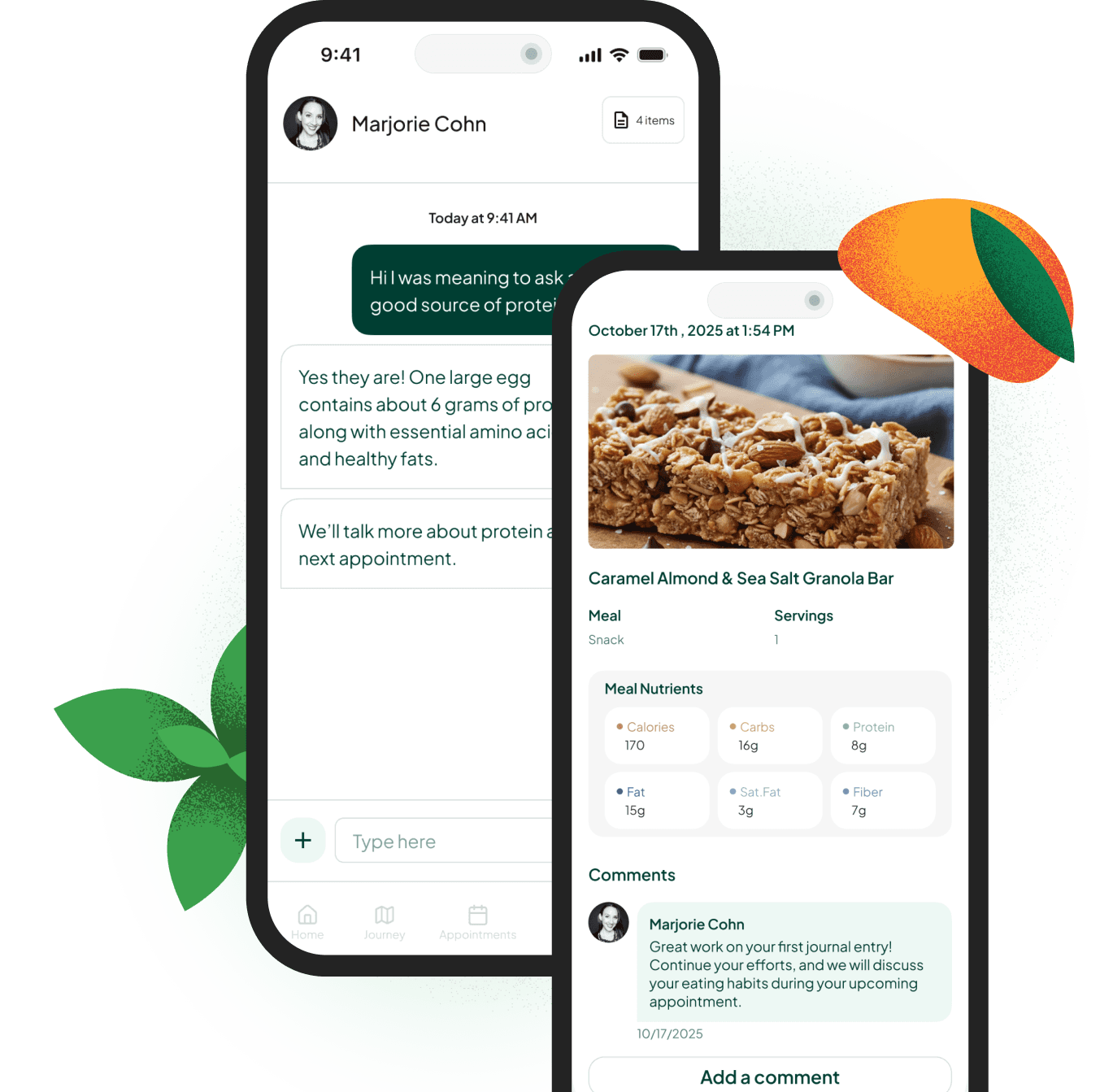
Real change happens between appointments, so the support does too. With Berry Street, you can message your dietitian between visits when a question comes up, rather than sitting on it for a month. The Berry Street app supports your care with AI-powered meal logging, where you can snap a photo to track meals, plus integration with wearable devices and lab data so your dietitian sees the fuller picture.

Visit cadence is personalized too. Some people meet weekly at first and taper over time, while others prefer a steadier rhythm. Depending on your needs, your dietitian will suggest a schedule and adjust it as you go. The point is consistent support that fits your life, not another rigid program to keep up with.
Is a PMOS / women’s health dietitian covered by insurance?
For many people, yes. Nutrition counseling is often a covered benefit, which surprises people who assume this kind of care is out of pocket. Berry Street is in-network with 1,250+ plans, and 95% of members pay $0 for their visits. That said, coverage always depends on your specific plan, so the honest answer is that it varies and the only way to know your cost is to check.
Checking your coverage in 60 seconds
You do not have to call your insurer or decode a benefits document to find out what you will pay. You can check your coverage in about 60 seconds by entering your state and insurance provider, with no commitment required. The process is secure and HIPAA-compliant, and it shows you your expected cost up front, so there are no surprises later. Knowing your number before you book takes the financial guesswork out of getting started.
Virtual care across all 50 states
Because care is fully virtual, where you live does not limit your access. Berry Street has a large network of registered dietitians serving patients across all 50 states, including many who specialize in women’s health and PMOS. That means you can be matched with a specialist who fits your goals and health history rather than settling for whoever happens to be nearby. Virtual visits also make it easier to keep the same dietitian if you move or your schedule changes.
How to choose the right women’s health dietitian for you
Not every dietitian works the same way, and PMOS care benefits from someone who genuinely specializes in hormonal and reproductive health. Choosing well is less about credentials alone, since every RDN or CNS is qualified, and more about fit with your goals, your life stage, and how you like to be supported.
Questions to ask before you book
A few questions can tell you a lot about whether a dietitian is right for you. Consider asking:
Do you specialize in PMOS and women’s hormonal health, and how often do you work with it?
How do you approach care if I am not focused on weight loss?
Will you coordinate with my doctor or OB-GYN as part of my care?
How do you personalize a plan rather than using a standard template?
What does support look like between appointments?
The answers will tell you whether the person leads with restriction or with personalization, and whether they treat weight as the whole story or as one small part of a bigger picture.
Matching to your goals and life stage
The right fit also depends on where you are in life. Someone focused on fertility has different needs than someone managing perimenopause, even if both have PMOS. A strong women’s-health dietitian meets you at your stage and adjusts as it changes. Berry Street matches you with a dietitian who specializes in your goals and history, so you are not starting from scratch each time your needs shift.
Getting started with personalized nutrition support
Getting help does not have to be a big commitment. The simplest first step is to find out what your care would cost, which takes about a minute and asks nothing beyond your state and insurance provider. From there, you can decide whether to be matched with a women’s-health dietitian and book your first visit whenever you feel ready. There is no pressure here, just support built around you and available when you want it. PMOS is a long-term condition, and having a licensed clinician in your corner, working alongside your doctor, can make managing it feel a lot less lonely.

Frequently Asked Questions
Can a dietitian actually help with PMOS?
Yes. A registered dietitian is a licensed medical professional trained to help manage PMOS through personalized nutrition care, often targeting blood-sugar balance, energy, and hormone-related symptoms. They work alongside your doctor, not instead of them, and tailor guidance to your labs, cycle, and daily life.
What does a PMOS dietitian do in the first appointment?
The first visit is mostly a conversation about your symptoms, history, labs, schedule, and goals. Together you build a starting plan that fits your real life rather than a generic template. Because there is no universal PMOS diet, this is where personalization begins.
Is a virtual dietitian for PMOS covered by insurance?
It depends on your plan. Nutrition counseling is often covered, and Berry Street is in-network with 1,250+ plans, with 95% of members paying $0. The most reliable way to know your cost is to check your specific coverage before you book.
What’s the difference between a dietitian and a nutritionist for women’s health?
A Registered Dietitian Nutritionist completes an accredited degree, supervised clinical training, a national board exam, and ongoing education, and is licensed to treat medical conditions. In some states, anyone can call themselves a “nutritionist” without that training. For PMOS and hormonal health, that clinical background matters.
How do I find a dietitian who specializes in PCOS and hormones near me?
Because Berry Street care is fully virtual across all 50 states, you are not limited to providers in your zip code. You can be matched with a dietitian who specializes in women’s health and PMOS based on your goals and history. Checking your coverage is usually the easiest first step.
How much does a PMOS dietitian cost?
Cost depends on your insurance plan. Many people pay nothing, since 95% of Berry Street members pay $0 with coverage, but your exact cost varies by plan. You can see your expected cost up front in about 60 seconds before committing to anything.
What foods help support hormone balance with PMOS?
There is no single list that works for everyone, but patterns like Mediterranean-style and low-glycemic-index eating are often part of the conversation. Our guide to nutrition for PMOS covers specific foods and meal ideas. A dietitian can help you adapt any of it to your own needs and preferences.
Can a dietitian help with fertility or getting pregnant with PMOS?
Yes. A women’s-health dietitian can build nutrition patterns that may support ovulation and overall reproductive health, always working alongside your OB-GYN or fertility team. Care is personalized, because fertility needs differ from person to person and stage to stage.
Do I need a doctor’s referral to see a PMOS dietitian?
It depends on your plan. Many plans allow direct access, and with Berry Street you can usually book without a referral. Some plans do require one, so it is worth checking yours when you review your coverage.
Can a dietitian help with PMOS-related weight changes without dieting?
Yes. Berry Street is weight inclusive, not weight centric, so care can focus on behaviors, symptoms, and energy rather than the only the scale. Weight loss can absolutely be a goal, but it doesn’t have to be, and it shouldn’t be presented as the only goal or primary measure of health.
How does women’s-health nutrition care change across life stages?
Hormonal needs shift through fertility, pregnancy, postpartum, thyroid changes, and menopause, and nutrition care adjusts with them. A women’s-health dietitian can support you across that whole continuum. Many people keep the same kind of specialist so their history carries forward as their needs change.
What questions should I ask when choosing a women’s-health dietitian?
Ask whether they specialize in PMOS and hormonal health, how they approach care if weight loss is not your goal, and whether they coordinate with your doctor. Also ask how they personalize plans and what support looks like between visits. The answers reveal whether they lead with restriction or with genuine personalization.
Last Reviewed by Bridget Isaacs, MS, RD — September 2026.