Key Takeaways
Virtual nutrition counseling connects you with a registered dietitian over video, so you can get real clinical care without a commute or a waiting room.
The person on the other end matters. “RDN” is a legally protected medical credential, while “nutritionist” often is not, so who you work with shapes the care you get.
Research suggests telehealth nutrition care produces outcomes comparable to in-person visits for many people, especially in managing conditions like type 2 diabetes.
Most Berry Street members pay $0 because nutrition counseling is often covered by insurance, and you can check your coverage in about 60 seconds.
The goal is a plan that fits your actual schedule, not another rigid diet, because what didn’t stick before was usually the plan, not you.
You know you should eat better. You’ve downloaded the apps, screenshotted the meal plans, and started three different “reset” weeks that quietly fell apart by Thursday. Between work, family, and a calendar that never really slows down, “eat healthy” becomes one more thing you’re behind on. That’s not a willpower problem. That’s a one-size-fits-all problem. Virtual nutrition counseling offers a different path. Instead of a generic template, you get 1-on-1 sessions with a registered dietitian who builds around your life, your health history, and the constraints you actually live with. This guide walks through how it works, whether it’s effective, what insurance usually covers, and how to start.
In 30 seconds: Virtual nutrition counseling is 1-on-1 care with a registered dietitian delivered over secure video, plus messaging between visits. It removes the travel and scheduling barriers that make in-person care hard for busy people, and research suggests outcomes are comparable to in-person visits for many. It’s often covered by insurance, so many people pay little or nothing out of pocket.
What Is Virtual Nutrition Counseling?
Virtual nutrition counseling is personalized, 1-on-1 care delivered by a registered dietitian through a secure video visit. You talk through your health, your goals, and your eating patterns, and your dietitian builds a plan you can actually follow. Some people call it online nutrition counseling, telehealth nutrition, or working with a virtual dietitian. The name matters less than the substance: a licensed clinician, a real conversation, and a plan made for one person instead of everyone.
It’s counseling, not a lecture. Your dietitian asks questions, listens, and adjusts. The work happens in the back-and-forth over time, not in a single downloadable PDF. That ongoing relationship is what makes the difference, because eating well is rarely about information you don’t have. It’s about support that fits the life you already have.

Virtual counseling vs. a diet app or online program
A diet app is a tool. Virtual nutrition counseling is care. That distinction explains why the apps so often stop working.
Most apps and online programs run on the same logic: pick a plan, follow the rules, track everything, and repeat. The plan doesn’t know you. It doesn’t know that your commute eats your evenings, that a medication changed your appetite, or that your last “successful” diet ended in a binge. When life shifts, the app has no way to adjust, so you fall off and feel like you failed.
A dietitian does the opposite. They start with your situation, then adapt the plan as your life changes. Here’s how the two compare in practice:
Personalization: An app applies the same rules to everyone. A dietitian tailors recommendations to your body, labs, schedule, and preferences.
Clinical judgment: An app can’t interpret your bloodwork or account for a medical condition. A registered dietitian can.
Accountability: An app sends reminders. A dietitian follows up, problem-solves with you, and adjusts what isn’t working.
Sustainability: Apps often lean on restriction and streaks. Counseling focuses on habits that hold up when life gets messy.
None of this means apps are useless. Many people use a tracking app alongside counseling. The point is that a tool built for millions can’t replace a plan built for you.

Who provides it — registered dietitians (RDs/RDNs), not generic “coaches”
This is where the details matter more than most people realize. The title “Registered Dietitian Nutritionist” is not marketing language. According to the Academy of Nutrition and Dietetics, “RDN” is a legally protected credential that requires graduate-level education, supervised practice, and passing a national exam. By contrast, “nutritionist” has no standardized legal definition, and in many places anyone can use the word without any specific training. State licensing laws vary, so the exact rules differ depending on where you live. Some states recognize Certified Nutrition Specialists (CNS) as providers with advanced credentials.
That gap has real consequences. A registered dietitian is a licensed medical professional trained to treat and manage medical conditions, working alongside your doctor rather than instead of them. A generic “wellness coach” may mean well, but they are not qualified to deliver medical nutrition therapy.
At Berry Street, every provider is a registered dietitian or certified nutrition specialist. When people ask about the difference between an online nutritionist and an online dietitian, this is the answer that matters most: credentials, clinical training, and the legal scope to actually treat conditions. If you want to understand more about what that expertise brings, this overview of the benefits of working with a dietitian is a good place to start.

Why Virtual Nutrition Counseling Fits a Busy Schedule
The single biggest reason people skip nutrition care isn’t cost or doubt. It’s time. Virtual nutrition counseling was built to remove that barrier, and its design maps directly onto a packed calendar.
No commute, no waiting room — sessions from home, work, or anywhere
An in-person appointment is rarely just the appointment. It’s the drive there, the search for parking, the waiting room, and the drive back. A 30-minute visit can cost you half a day. For many people, that math alone is why they never book.
A virtual visit is the appointment and nothing else. You join from your kitchen, your parked car on a lunch break, or a quiet corner of the office. The U.S. Department of Health and Human Services recognizes telehealth as an effective tool for nutrition care, and points to access, convenience and flexibility, reduced transportation and mobility barriers, and privacy as key benefits. Those benefits aren’t abstract. They’re the difference between care you’ll actually keep on the calendar and care you keep meaning to schedule.
Privacy is part of it too. Talking about food, weight, and health can feel vulnerable, and doing it from your own space makes the whole thing easier to walk into.
Flexible scheduling and messaging between visits
Busy schedules aren’t just full. They’re unpredictable. A meeting runs long, a kid gets sick, a shift changes. Rigid appointment systems punish that reality. Virtual care tends to flex with it.
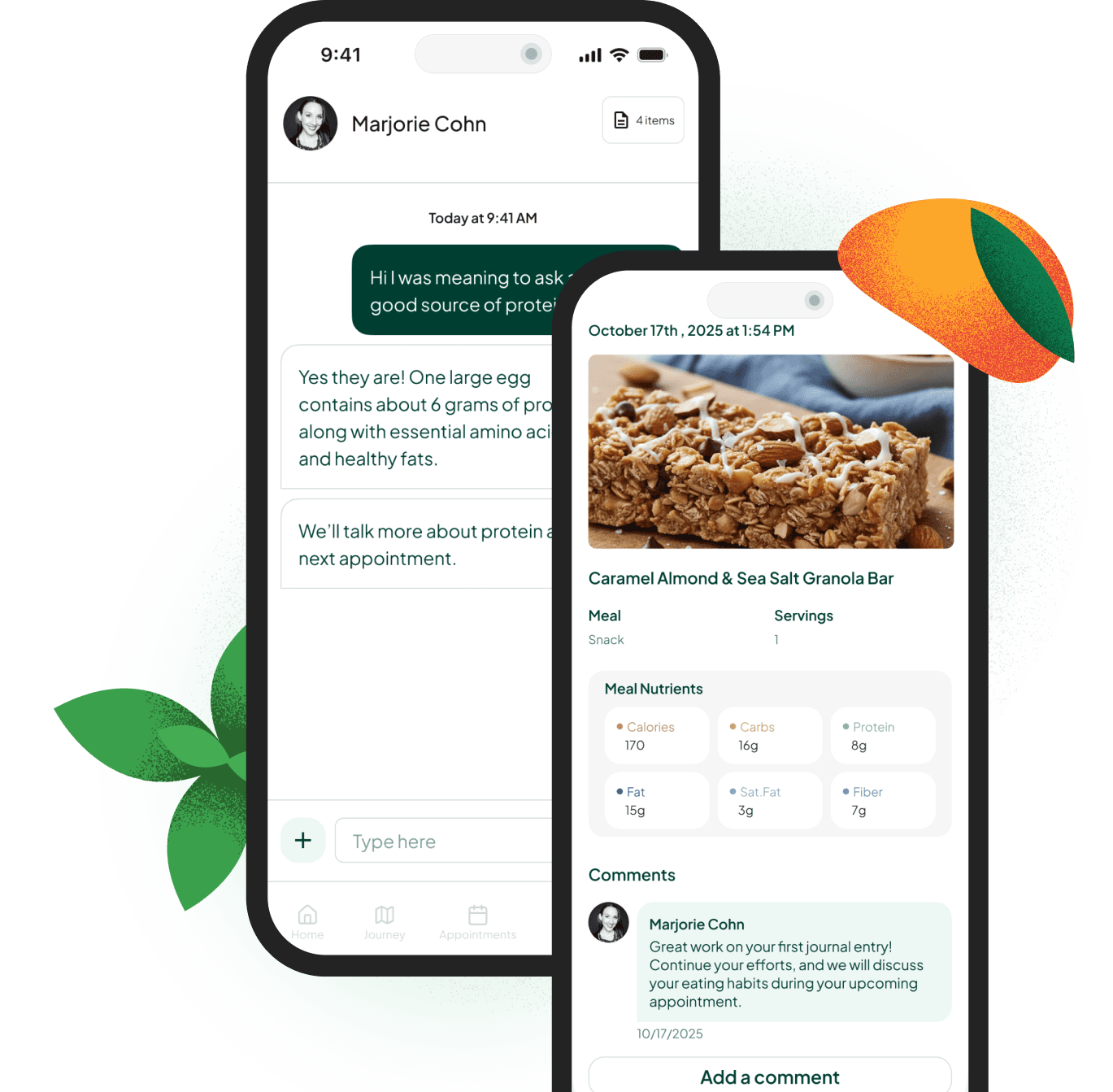
With Berry Street, you can book video sessions around your schedule and message your dietitian between visits through the app. That messaging piece is easy to underrate. Most of your eating happens in the gaps between appointments, and that’s exactly where a quick question keeps you on track. You can ask about a restaurant menu, a confusing lab result, or a week that went sideways, without waiting for your next session. Care becomes something woven through your week instead of a single event.
Is Virtual Nutrition Counseling as Effective as In-Person Care?
It’s a fair question, and a healthy one to ask. The honest answer is that virtual care is not a watered-down version of the real thing. For many people, the evidence suggests it holds up well against in-person visits, though it’s worth understanding the nuance.
What the research shows
The research base here is real and growing. A 2023 systematic review in Nutrition Reviews by Kelly and colleagues, examining the cost side of telehealth nutrition care, notes as established context that telehealth-delivered nutrition interventions have demonstrated effectiveness in practice. That’s a meaningful signal that delivering care over video is not a compromise on quality.
Comparisons with in-person care are encouraging too. In a 2023 evidence-based practice guideline published in the Journal of the Academy of Nutrition and Dietetics, the Academy of Nutrition and Dietetics found similar outcomes for most measures whether registered dietitian medical nutrition therapy was delivered in person, via telehealth, or as a blend of both, in the context of adult overweight and obesity management. The guideline does note that in-person visits may be preferred for some measurements, which is a reasonable caveat rather than a red flag.
The picture is similar for specific conditions. In a small, preliminary non-inferiority randomized trial published in Nutrients in 2024, Mori and colleagues reported that telenutrition was not inferior to face-to-face care for blood sugar control (HbA1c) in people with type 2 diabetes. Because it was a small study, it’s best read as promising rather than definitive. Taken together, the research suggests virtual nutrition counseling is comparable to in-person care for many people and many goals.
How dietitians deliver medical nutrition therapy over video
Medical nutrition therapy is a structured, evidence-based process, and almost all of it translates cleanly to video. Your dietitian conducts a full assessment, sets goals with you, delivers the intervention, and monitors your progress over time. A screen doesn’t remove any of those steps.
What video actually changes is the logistics, not the clinical substance. Your dietitian can review labs you share, look at your food logs, discuss your medications, and coordinate with your doctor, all from a secure visit. Many members connect wearable data and lab results through the Berry Street app, which gives your dietitian a fuller picture than a single in-person snapshot often would. The conversation, the reasoning, and the follow-through are the same care you’d get in a clinic, delivered where you already are.
What to Expect From Your First Virtual Appointment
The first appointment is less like a doctor’s exam and more like a focused, judgment-free conversation about your life and your goals.
The nutrition assessment and your personalized plan
Your first session centers on a nutrition assessment. Your dietitian asks about your health history, any conditions or medications, your typical eating patterns, your schedule, and what you actually want to feel or change. Nothing here is about scoring your choices or handing you a list of forbidden foods. It’s about understanding your starting point.
From there, you build a plan together. A good plan is specific and realistic, which usually means it starts small. Instead of overhauling everything at once, your dietitian identifies a few targeted changes that fit your week and move you toward your goals. Because the plan is personalized, it can flex as your life, labs, and priorities shift over time. You leave the first visit with clear next steps, not a rulebook.
Follow-ups, progress tracking, and staying accountable when life is hectic
Real change happens in the follow-ups. Ongoing visits are where your dietitian reviews what’s working, troubleshoots what isn’t, and adjusts the plan so it keeps fitting your life. Progress tracking might include how you’re feeling, your energy, your digestion, lab trends, and habits you’re building, not a single number on a scale.
Accountability is the part busy people worry about most, and it’s exactly where the messaging between visits earns its keep.
“Accountability doesn’t have to mean strict rules or check-ins that feel like a test. Between visits, I use messaging to keep things flexible. A client might send me a quick photo of a work lunch or a message when a week goes off the rails, and we adjust from there. The goal is to problem-solve in real time, celebrate the small wins, and keep the plan progressing as the client is ready.” — Bridget Isaacs, MS, RD
That’s the difference between counseling and a diet. A diet expects you to conform to it. Good counseling keeps meeting you where you are, week after week, especially on the weeks that don’t go to plan.
What Virtual Nutrition Counseling Can Help With
Virtual nutrition counseling is not only for one type of person or one type of goal. It supports a wide range of medical conditions and everyday concerns, always through the lens of personalized, sustainable change rather than restriction.
Chronic conditions — diabetes, prediabetes, PMOS, gut health
For chronic conditions, working with a registered dietitian can be a core part of your care, alongside your physician. The evidence in this area is some of the strongest.
For diabetes, a 2022 study in Frontiers in Nutrition by Dobrow and colleagues found that, in older adults managing type 2 diabetes, registered-dietitian-led interventions were associated with improvements in HbA1c, blood glucose, LDL cholesterol, and blood pressure. That review focused specifically on older adults. For prediabetes, a 2023 study in the American Journal of Clinical Nutrition by Dudzik and colleagues examined RD-provided medical nutrition therapy for its potential to support blood sugar management in adults with prediabetes.
Nutrition therapy is also widely used to support PMOS, gut health concerns like IBS, and other digestive issues. For any of these, a dietitian works with you to personalize an approach, because what helps one person’s symptoms may do little for another’s. The specifics always depend on your individual needs.
Everyday goals — energy, digestion, building sustainable habits
You don’t need a diagnosis to benefit. Plenty of people come to virtual nutrition counseling simply because they’re tired in the afternoons, uncomfortable after meals, or worn out from starting over every January. Those are exactly the goals a dietitian can help with, and the starting point is smaller than most people expect.

“When someone tells me they have no time to eat healthy, I don’t hand them a meal plan. We start with one or two changes that fit the routine they already have, like keeping an easy protein option on hand for the mornings you’re running out the door, or adding something to a meal instead of taking things away. Small, realistic, repeatable. That’s what actually sticks when life gets busy.” — Bridget Isaacs, MS, RD
The aim is steadier energy, better digestion, and habits that survive a hard week, built by adding and adjusting rather than restricting. For some people, changes in weight may follow as a side effect of eating and living better, but that might not be the whole point. If you want a deeper look at finding the right fit, this guide to choosing the best online nutritionist is a helpful read.
Does Insurance Cover Virtual Nutrition Counseling?
For a lot of people, this is the real deciding factor, and the news is better than expected. Nutrition counseling is often covered by insurance, which means the cost barrier many people assume exists frequently isn’t there at all.
How coverage typically works
Many insurance plans cover visits with a registered dietitian, sometimes as a preventive benefit with no cost-sharing. That’s why nutrition counseling covered by insurance is more common than people think. Berry Street is in-network with 1,250+ plans, and about 95% of members pay $0 out of pocket.
Coverage still depends on your specific plan, so the smartest first move is to confirm your own details before you book. Berry Street lets you check your coverage in about 60 seconds by entering your state and insurance provider, with no commitment and no surprise bills. You see what you’ll pay before anything is scheduled.
What to check before your first session
A few minutes of prep can save any confusion later. Before your first virtual session, it helps to confirm a handful of things:
Coverage for medical nutrition therapy or nutrition counseling: Confirm your plan includes it and whether any visit limits apply.
Referral requirements: Some plans require a referral from your doctor, and some don’t.
Cost-sharing: Ask whether you’ll owe a copay, coinsurance, or anything toward a deductible.
Telehealth coverage: Confirm that virtual visits are covered the same way in-person ones would be.
On the referral question specifically, the honest answer is that it depends on your plan. With Berry Street you can usually book without a referral, but some plans require one, so it’s worth checking yours. The 60-second coverage check surfaces most of these details up front.
Getting Started With a Virtual Dietitian
Starting is meant to feel straightforward, not like one more overwhelming project. The path is short: check your coverage, get matched with a registered dietitian who specializes in your goals and health history, and book your first video visit for a time that fits your week.

There’s no pressure and no long commitment. You can check your coverage and get started whenever you’re ready, and you can cancel anytime. If the apps and rigid plans never stuck, the problem was rarely your effort. It was a plan that was never built for you. Working with a virtual dietitian is a chance to try the other approach, the one that starts with your actual life and grows from there.
Frequently Asked Questions
Is virtual nutrition counseling as effective as seeing a dietitian in person?
Research suggests it’s comparable for many people. A 2023 Academy of Nutrition and Dietetics guideline found similar outcomes for most measures whether dietitian care was delivered in person, via telehealth, or blended, for adult overweight and obesity management. In-person visits may still be preferred for certain measurements, so the right format depends on your needs.
Does insurance cover virtual nutrition counseling?
Often, yes. Nutrition counseling is frequently covered by insurance, sometimes with no out-of-pocket cost. Berry Street is in-network with 1,250+ plans, and about 95% of members pay $0, though coverage always depends on your specific plan.
How much does an online dietitian or nutritionist cost?
It varies widely depending on your insurance and provider. When visits are covered, many people pay little or nothing out of pocket. With Berry Street, about 95% of members pay $0, and you can check your exact cost in about 60 seconds before booking.
What happens during a virtual nutrition counseling appointment?
Your first visit is a nutrition assessment where your dietitian learns about your health history, eating patterns, schedule, and goals. Together you build a personalized plan with a few realistic next steps. Follow-up visits track your progress and adjust the plan as your life changes.
Do I need a doctor’s referral to see a dietitian online?
It depends on your plan. With Berry Street you can usually book without a referral, but some plans require one, so it’s best to check yours. The 60-second coverage check helps confirm what your plan needs.
What’s the difference between an online dietitian and an online nutritionist?
“Registered Dietitian Nutritionist” is a legally protected credential requiring graduate education, supervised practice, and a national exam. “Nutritionist” has no standardized legal definition, so anyone can use the term in many places. Every Berry Street provider is a registered dietitian or certified nutrition specialist, and state licensing laws vary.
How does virtual nutrition counseling work with a busy or unpredictable schedule?
Virtual visits remove the commute and waiting room, so you can join from home, work, or anywhere. You can book sessions around your schedule and message your dietitian between visits. That flexibility makes it far easier to keep care on the calendar when your week is hectic.
What conditions can virtual nutrition counseling help with?
It supports many chronic conditions, including diabetes, prediabetes, PMOS, and gut health concerns like IBS, alongside your physician’s care. It also helps with everyday goals like energy, digestion, and building sustainable habits. Your dietitian personalizes the approach to your individual needs.
Is virtual nutrition counseling covered by Medicaid or Medicare?
Coverage varies by plan and program. According to Medicare.gov, Medicare Part B covers medical nutrition therapy for people with diabetes or kidney disease when they have a referral, within session limits, and qualifying beneficiaries pay nothing for these services. Telehealth rules can change, so check current Medicare guidance and your specific plan. Medicaid coverage differs by state, so it’s best to check your specific plan.
How often do I need to meet with a virtual dietitian?
There’s no single answer, because cadence is personalized. Some people meet weekly at first, then move to biweekly or monthly as habits take hold. Your dietitian recommends a rhythm based on your goals and how your progress is going.
What do I need for a virtual nutrition appointment (technology and setup)?
You need a smartphone, tablet, or computer with a camera and a reliable internet connection. A quiet, private space helps you focus and speak openly. It also helps to have any recent lab results or a list of medications handy to share with your dietitian.
Can I message my dietitian between virtual visits?
Yes. With Berry Street, you can message your dietitian through the app between sessions. This lets you ask quick questions, share a meal photo, or troubleshoot a tough week without waiting for your next appointment.
Last Reviewed by Bridget Isaacs, MS, RD — October 2026.