Key Takeaways
A low histamine diet is a tool for managing symptoms like GI upset, skin flares, and headaches, not a weight-loss plan.
There is no single official low-histamine food list, and tolerance varies from person to person, so this is not a one-size-fits-all approach.
The goal is the widest tolerable diet, reached through a short elimination phase of roughly 2 to 4 weeks followed by structured reintroduction, not permanent restriction.
Fermented, aged, cured, and leftover foods tend to be higher in histamine, but no food is inherently “bad” and your personal tolerance is what matters.
Evidence is still limited and histamine intolerance is a diagnosis of exclusion, so it helps to work with a dietitian and your broader care team.
You’ve cut out wine. Then aged cheese. Then leftovers. And you’re still not sure what’s actually setting off the flushing, the headaches, or the stomach trouble. When symptoms feel unpredictable, trimming foods one by one is a very human response. It’s worth saying up front: when we talk about a “diet” here, we mean a structured, temporary plan to manage symptoms — not a weight-loss plan, a cleanse, or a detox.

In 30 seconds: A low histamine diet is a short, structured trial that lowers your histamine load to see if your symptoms settle. It works in phases — a temporary elimination followed by careful reintroduction — and it’s best done with a registered dietitian so you don’t cut more than you need to. It is not a cure, and it is not a weight-loss diet.
What is a low histamine diet (and what it is not)?
Histamine is a natural compound your body makes and something you take in through food. It plays a role in digestion, immune responses, and communication between cells. Most of the time, your body clears the histamine from food without any issue.
For some people, that clearing process doesn’t keep up. When dietary histamine builds up faster than your body can break it down, you may notice symptoms across several systems at once. A low histamine diet lowers the amount of histamine coming in from food, giving your body a chance to catch up.
A key point: this isn’t about “good” or “bad” foods. Foods simply range from higher to lower in histamine, and tolerance is deeply individual. A food that bothers one person may be perfectly fine for another. The goal is to find your personal threshold, not to fear your plate.

Histamine intolerance vs. a food allergy
This is where a lot of confusion starts, so let’s be clear. Histamine intolerance is thought to be associated with reduced activity of the diamine oxidase (DAO) enzyme, the enzyme responsible for breaking down histamine from food in your gut. When DAO activity is low, histamine can accumulate and trigger symptoms.
That mechanism makes histamine intolerance different from a classic food allergy. A true food allergy is an immunological reaction — your immune system produces IgE antibodies against a specific food, and even a tiny amount can cause a response. Histamine intolerance is a non-immunological reaction. It’s dose-related, meaning your total histamine load matters more than any single bite. This distinction shapes everything about how the two are managed, which is why getting the right label matters.
Why it’s a symptom-management tool, not a weight-loss or “detox” diet
A low histamine diet is a symptom-management tool. It is not a weight-loss diet, and it is not a detox or a cleanse — your liver and kidneys already handle that work.
The aim is to quiet a specific set of symptoms and identify your triggers, then bring foods back. Any change in weight is a side effect of eating differently for a while. Framing this as a “cleanse” tends to push people toward staying restrictive far longer than they need to, which is the opposite of the goal. A well-run low histamine diet should make your food world bigger over time, not smaller.

When should you try a low histamine diet?
A low histamine diet isn’t a first stop for every symptom. It tends to make sense when a pattern points toward histamine and other causes have been considered. Here’s how to think about the timing.
Symptoms and situations where an RD might suggest it
Histamine intolerance can show up in more than one place at once, which is part of what makes it confusing. Depending on your individual needs, a dietitian might raise a low histamine trial when you’re dealing with a cluster like this:
Digestive symptoms: bloating, cramping, diarrhea, or nausea, often tied to certain meals. This overlaps with broader gut and digestive symptom care, so the two are often explored together.
Skin symptoms: flushing, hives, or itching that seems to come and go without an obvious allergen.
Head symptoms: headaches or migraines that follow histamine-rich meals or drinks for some people.
Mast cell conditions: people with mast cell activation syndrome (MCAS) may explore a lower-histamine approach as part of a broader plan with their care team.
The through-line is a pattern. One rough afternoon doesn’t mean histamine. A recurring cluster of symptoms tied to what you eat is a better reason to ask the question.
Why it’s a “diagnosis of exclusion” — what to rule out first
Here’s the part that’s easy to skip and important not to. Histamine intolerance is a diagnosis of exclusion, which means a physician should rule out other conditions first. There’s no single validated blood test or biomarker that confirms it.
Conditions worth ruling out include IgE food allergy, celiac disease, inflammatory bowel disease (IBD), and mast cell disorders such as MCAS or mastocytosis. These can mimic histamine intolerance, and some need very different treatment. Starting with your doctor and a registered dietitian helps you avoid restricting foods for a problem you don’t actually have.
When a low histamine diet is not the right move
Restriction isn’t free, and for some people it carries real risk. A low histamine diet is generally not the right move if you have a history of an eating disorder, disordered eating, or a fraught relationship with food. Removing food groups can reactivate old patterns, and that harm can outweigh any symptom relief.
It’s also not ideal if you’re already eating a very limited diet, where cutting more could leave gaps in your nutrition. In these situations, the safer path is working closely with your care team to protect both your symptoms and your overall wellbeing, rather than tightening restriction on your own.
How strict does a low-histamine diet need to be?
Here’s the honest answer: less strict than most people fear.
The goal of a low histamine diet is not the shortest possible food list. It’s the widest variety of foods you can comfortably tolerate. Trial restriction is a tool, not the destination.
For some people, a few targeted swaps calm symptoms. Others need a more structured reset before things settle. The right level of strictness is the one that gives you relief without shrinking your plate more than your body actually requires.
Why there’s no single “official” low-histamine food list (the evidence is heterogeneous)
If you’ve searched for a low histamine food list, you’ve probably found five lists that disagree with each other. That’s not you doing it wrong. The science itself is inconsistent.
A 2021 review in Nutrients looked across published low-histamine diets and found no single validated food list. The evidence is heterogeneous, and the histamine content of a given food varies widely with processing, storage, and ripeness. The one point every reviewed diet agreed on was excluding fermented foods.
So what does that mean for you?
A “high histamine” food on one list may sit on the “safe” side of another.
The same food can carry more or less histamine depending on how fresh it is.
Rigidly following someone else’s list may cut foods your body handles fine.
This is exactly why personalization matters more than any printout. Your tolerance is yours.
The least-restrictive-effective principle — full elimination vs. targeted reduction
Think of strictness as a dial, not a switch.
At one end sits full elimination: pulling most higher-histamine foods for a short window. At the other end sits targeted reduction: trimming only your most likely triggers while keeping the rest of your diet intact.
Full elimination can make patterns easier to spot, because there’s less noise. But it’s also the more restrictive path, so it should be short and purposeful. Targeted reduction is gentler and may be plenty for milder symptoms.
How do you know where to start? A few questions help:
How severe and frequent are your symptoms right now?
Do you already suspect a handful of specific triggers?
Do you have a history of restrictive eating that makes a big cut risky?
The principle to hold onto is simple. Use the least restriction that still gives you a clear answer. More cutting is not more healing, and a shorter list is not a healthier one.
How long the elimination phase should last (typical 2–4 week ranges)
You don’t need to eliminate for months to learn something.
Many experts commonly propose a short elimination phase of about two to four weeks, followed by structured reintroduction. A 2025 review in the International Journal of Molecular Sciences describes this phased elimination-and-reintroduction approach as the practical framework for histamine intolerance.
One important caveat: this timeline is commonly proposed, not proven in placebo-controlled trials. The evidence for the low histamine diet is still limited. Two to four weeks is a reasonable starting point, not a scientific guarantee.
If nothing shifts in that window, that’s useful information too. It may mean histamine isn’t your main driver, which is worth exploring with a dietitian.
The elimination-and-reintroduction approach, step by step
Histamine elimination and reintroduction works best as one connected process, not two separate diets. Reintroduction is where you actually learn what your body can handle.
Phase 1 — short, structured elimination
For roughly two to four weeks, you reduce the foods most likely to be higher in histamine.
Keep it focused and time-limited. A few habits make this phase more useful:
Eat mostly fresh, simply prepared foods during the window.
Track what you eat and how you feel each day.
Resist adding more restrictions mid-phase unless a dietitian advises it.
The aim here is a clear baseline, not perfection. You’re gathering data about your symptoms, not earning a grade.
If a food slips in, don’t spiral. One imperfect day rarely erases the picture, and a diary helps you account for it. This phase is meant to teach you something, not to test your willpower.

Phase 2 — reintroduction to find your personal threshold
This is the part people skip, and it’s the part that matters most.
Once symptoms settle, you reintroduce foods one at a time, in small amounts, watching how you respond. Many people find they tolerate more than they expected, especially when foods are fresh.
A simple way to approach it:
Add back one food at a time, in a normal portion.
Give each food a couple of days before drawing conclusions.
Note any symptoms, and note when nothing happens too.
Reintroduction reveals your personal histamine threshold. It’s rarely “zero.” Most people have a level they can enjoy without symptoms, and the only way to find it is to test, not to guess.
Phase 3 — building your widest tolerable diet (personalization)
The finish line isn’t a permanent restriction list. It’s the most varied, sustainable way of eating your body allows.
By now you know which foods you tolerate freely, which ones you enjoy in smaller amounts, and which few genuinely aren’t worth it for you. That map is personal, and it can shift over time as your gut health and stress levels change. Finding your triggers once doesn’t mean the list is fixed forever, and a structured process beats endless guesswork when you’re trying to make sense of food sensitivities.
“When a client is sure they have to cut everything, I flip the question. Instead of ‘what’s high in histamine,’ we ask ‘what are you eating comfortably right now?’ We focus on those foods first. Then we test a short, focused elimination. Nine times out of ten, the tolerable list is far bigger than they feared.” — Bridget Isaacs, MS, RD
Lower- vs. higher-histamine foods (a starting point, not a rulebook)
No food here is “bad” or “toxic.” These are patterns that tend to hold, and a place to begin your own testing, not a verdict on any single food.
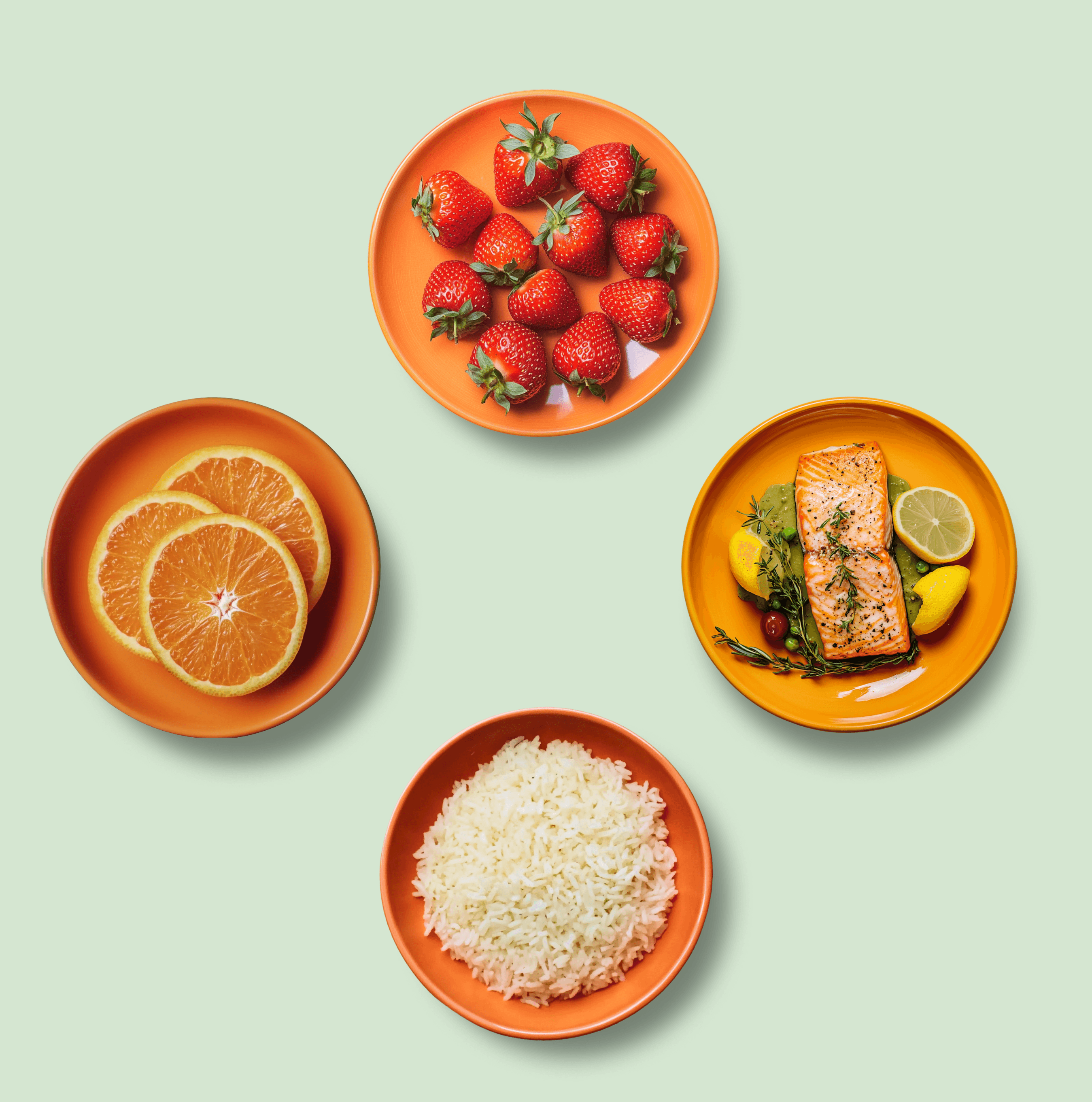
Foods often lower in histamine
These foods tend to be better tolerated by many people, especially when eaten fresh:
Freshly cooked meats, poultry, and fish eaten the day they’re prepared
Most fresh vegetables
Many fresh fruits
Eggs
Rice and other plain grains
Freshness is the theme. The same protein eaten fresh often behaves very differently than the leftover version.

Foods often higher in histamine (fermented, aged, cured, leftovers)
Fermented, aged, and cured foods, plus older leftovers, tend to accumulate more histamine because of microbial activity. These are common ones to test carefully:
Aged cheeses
Cured and fermented meats
Sauerkraut and other fermented foods
Leftovers stored for a while before eating
Alcohol deserves a nuance. Wine and beer are actually low in measured histamine, but alcohol can affect diamine oxidase (DAO), the enzyme that helps break histamine down. So drinks may worsen symptoms for some people even when the histamine number looks low.
The framing stays the same throughout: these foods may worsen symptoms for some people. They are not forbidden.
“Fresh is best” and other practical habits (freezing, food diary, timing)
Once histamine forms in food, you can’t cook it out. That’s why handling matters as much as the food itself.
A few habits do a lot of the work:
Eat fresh when you can. Fresh and refrigerated foods tend to carry less histamine than aged or long-stored ones.
Freeze leftovers promptly. Freezing right after cooking slows the microbial activity that builds histamine.
Keep a food and symptom diary. Patterns are far easier to see on paper than in memory.
Small logistics like these often reduce symptoms without cutting a single food group.
How a registered dietitian helps — and protects your nutrition
A low histamine diet touches a lot of foods at once, which is exactly where guidance pays off.
Avoiding nutrient gaps and unnecessary restriction
Cutting broadly and indefinitely carries real costs. Over-restriction can lead to nutrient gaps, social isolation, and disordered eating patterns, which is why a registered dietitian’s role is to protect your nutrition while you investigate.
A dietitian helps you eliminate only what’s necessary, reintroduce on a real timeline, and keep your diet varied enough to meet your needs. The point isn’t to police your plate. It’s to keep the widest, most nourishing diet possible while you find your threshold.
Special cases: MCAS, IBS/SIBO overlap, pregnancy
Histamine rarely travels alone, and context changes the approach.
MCAS. A low histamine diet for MCAS is sometimes used alongside medical treatment. It’s a supportive step, not a standalone cure, and it belongs within a broader plan managed by your care team.
IBS and SIBO overlap. Gut symptoms often blur together. The same elimination-and-reintroduction logic appears in the low-FODMAP approach to IBS, and it’s worth ruling out overlapping drivers like SIBO and what to eat for it before assuming histamine is the whole story.
Pregnancy. Nutrient needs rise, so broad restriction is riskier here. Any elimination during pregnancy should be guided by a dietitian to keep both you and your baby well nourished.
“Reintroduction is where the real work happens, and I don’t let clients skip it. We add foods back methodically, one at a time, until we find the amount your body handles without symptoms. My job is to keep your diet varied and complete while we search for that threshold, not to leave you stuck on a tiny list of ‘safe’ foods.” — Bridget Isaacs, MS, RD
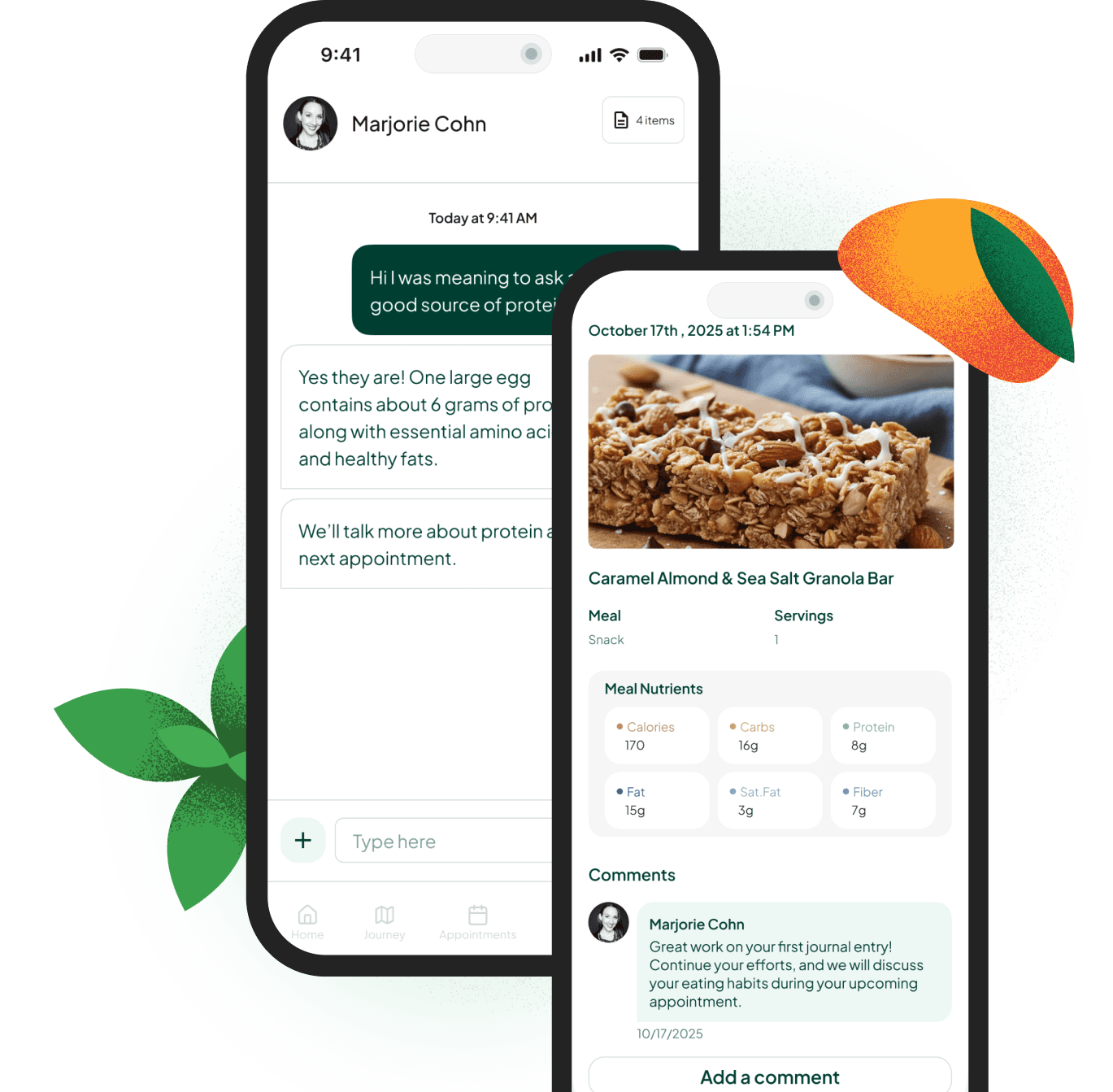
You can connect with a Berry Street registered dietitian to build this plan around your body and your life.
Working with a Berry Street dietitian on histamine intolerance
A low histamine diet is easy to over-restrict on your own. A registered dietitian keeps it as light-touch as possible, using the shortest useful elimination and a structured reintroduction so you land on the widest tolerable diet instead of a permanently narrow one. Because histamine intolerance is a diagnosis of exclusion, your dietitian also works alongside your doctor, not instead of them, to rule out other causes and protect your nutrition along the way.
Care at Berry Street is fully virtual, so there is no commute and no waiting room. Most members pay $0 with insurance coverage, and you can check yours in about a minute with no commitment. If you want support navigating gut and digestive care, you can book your session whenever the timing feels right for you.

Frequently Asked Questions
When should I try a low histamine diet?
A low histamine diet may be worth exploring if you have persistent GI, skin, or neurological symptoms that other conditions have not explained. Because histamine intolerance is diagnosed by exclusion, it is best to talk with your doctor and a dietitian first. They can help you rule out other causes before you start eliminating foods.
How strict does a low-histamine diet need to be?
Only as strict as it needs to be to see whether symptoms change, and no stricter. The aim is the least-restrictive version that still gives useful information, usually a short trial rather than a rigid, indefinite plan. A dietitian can help you avoid cutting more foods than necessary.
How long should the elimination phase of a low histamine diet last?
The elimination phase is typically short, often around 2 to 4 weeks. That window is usually long enough to notice whether symptoms improve for you. If nothing changes, extending the restriction rarely helps and it is worth revisiting the plan with your care team.
Is a low histamine diet an elimination diet?
Yes. It follows the same structure as other elimination diets, with a temporary removal phase followed by gradual reintroduction. The reintroduction step matters just as much as the elimination, because it shows which foods you actually tolerate.
What foods are highest in histamine?
Fermented, aged, and cured foods tend to be higher in histamine, including aged cheeses, cured meats, sauerkraut, and some alcoholic drinks. Leftovers can also accumulate histamine as they sit. Individual tolerance varies, so a food that bothers one person may be fine for another.
What can I eat on a low histamine diet?
Freshly prepared foods are usually better tolerated, such as fresh meats and fish, most fresh vegetables, and many grains. Cooking in smaller batches and eating food soon after preparing it can help. A dietitian can build a plan around foods you enjoy while protecting your overall nutrition.
Is there scientific evidence that a low histamine diet works?
The evidence is limited and still emerging. Some people report improvement in GI, skin, and neurological symptoms, but there are no placebo-controlled trials proving the diet works (Jackson et al., IJMS 2025). It may help some individuals, so it is best trialed carefully with professional guidance.
Do I need a low histamine diet for MCAS (mast cell activation syndrome)?
Not necessarily. Some people with MCAS find that lowering dietary histamine helps their symptoms, while others notice little difference. MCAS is a complex condition, so any dietary changes should be coordinated with the medical team managing your care.
Can I do a low histamine diet without a dietitian?
You can, but it is easy to over-restrict and miss key nutrients on your own. A dietitian keeps the plan least-restrictive, guides reintroduction, and helps you interpret your results. That support often means fewer unnecessary food cuts and clearer answers.
Is a low histamine diet meant to be permanent?
No. It is designed to be temporary and phased, not a lifelong restriction. The point of reintroduction is to expand your diet back to the widest range you can comfortably tolerate.
How is histamine intolerance diagnosed?
Histamine intolerance is diagnosed by exclusion, meaning other conditions with similar symptoms are ruled out first. There is no single validated test or food list that confirms it. A structured elimination and reintroduction trial, guided by your care team, often provides the clearest picture.
What’s the difference between a histamine intolerance and a food allergy?
A food allergy involves the immune system reacting to a specific food, sometimes severely. Histamine intolerance is thought to involve difficulty breaking down histamine from foods, which can cause symptoms without a true allergic response. If you suspect an allergy, see your doctor, because the two are evaluated and managed differently.
Last Reviewed by Bridget Isaacs, MS, RD — October 2026.