We’ve all been there… You finish a meal that looked perfectly healthy, only to find yourself unbuttoning your jeans thirty minutes later because of intense, uncomfortable bloating. Or maybe it’s the brain fog, the sudden skin flare-up, or the "emergency" trips to the bathroom that seem to happen without any rhyme or reason.
If you feel like your body is speaking a language you can’t quite understand, you are definitely not alone. Food sensitivities are incredibly common, yet they remain one of the most misunderstood areas of nutrition. Unlike a peanut allergy (which is usually really clear and urgent), food sensitivities are subtle, sneaky, and vary widely from person to person.
At Berry Street, we believe you shouldn’t have to play a guessing game with your health. Today, we’re looking into what food sensitivities actually are, how they differ from allergies, and the exact step-by-step approach our dietitians use to help you finally find some relief.
Key Takeaways
Sensitivities vs. Allergies: Allergies are immune-system-driven and can be life-threatening; sensitivities are often digestive-based and result in delayed discomfort.
Symptoms Vary: Beyond stomach pain, sensitivities can cause fatigue, joint pain, and skin issues.
The 5-Step Process: Healing involves identifying triggers, a strategic break, observation, structured reintroduction, and personalization.
Professional Support: Working with a Registered Dietitian ensures you don't unnecessarily restrict your diet or miss out on vital nutrients.

Food Sensitivities Aren’t Food Allergies
One of the biggest hurdles in gut health is the confusion between a food allergy and a food sensitivity. While they might feel similar in the moment of discomfort, they are happening in different systems of your body.
What is a Food Allergy?
A food allergy involves an immediate IgE immune system response. When someone with a peanut allergy eats a nut, their immune system sees it as a direct threat and releases chemicals like histamine. This can lead to hives, swelling, or even anaphylaxis. It requires strict avoidance because even a tiny amount can be very dangerous.
What is a Food Sensitivity?
Food sensitivities (sometimes called food intolerances) generally affect the digestive system or involve a delayed immune response (IgG). Instead of an immediate "red alert," your body might struggle to break down a certain carbohydrate or react to a specific protein over several hours or even days.
As Bridget Isaacs, MS, RDN, LDN explains:
"The tricky thing about sensitivities is the 'dose-response' relationship. While an allergy is all-or-nothing, many people with sensitivities can tolerate a small amount of a food but experience symptoms once they hit a certain threshold. It’s about finding your individual limit."
It’s also important to know that food sensitivities can also change over time. Your gut health isn't static, and as you heal your microbiome, you may find that you can tolerate foods that used to cause you grief.
Why Is It So Hard to Pinpoint Triggers?
If you’ve ever tried to keep a food journal, you know it’s not always as simple as "I ate X, so I feel Y." This is due to delayed reactions. A sensitivity symptom can show up anywhere from 2 to 72 hours after eating a certain food.
If you had a sandwich on Tuesday and feel bloated on Thursday, you’re likely to blame Thursday’s salad rather than Tuesday's bread. This "lag time" is why many people feel stuck in a never-ending cycle of trial and error.
To make things even more confusing, symptoms aren't always localized to the stomach. Some of the most common signs of sensitivity include:
Migraines or frequent headaches
Chronic fatigue or "sluggishness"
Eczema or acne flare-ups
Joint pain and inflammation
A Step-by-Step Approach to Food Sensitivities
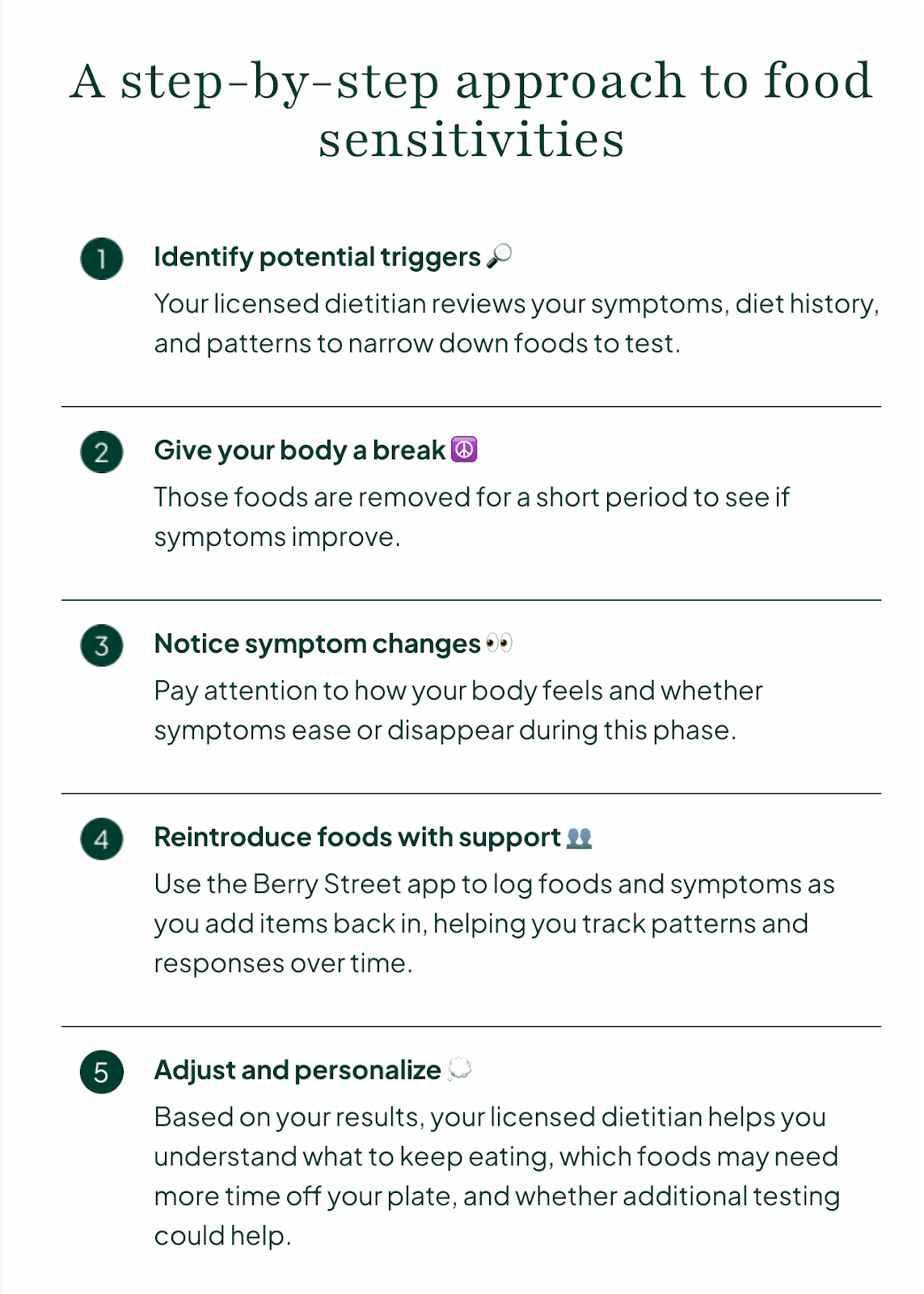
At Berry Street, we don't believe in "forever" restrictive diets. Our goal is to expand your plate, not shrink it. Here is the 5-step clinical approach we use to help you find answers. We recommend going through each of these steps while working with a Berry Street Registered Dietitian.
1. Identify Potential Triggers
We start by playing detective. Your licensed dietitian will review your symptoms, diet history, and lifestyle patterns. We look for all of the "usual suspects,"things like lactose, gluten, fermentable carbohydrates (FODMAPs), or food additives.
"We look at the whole picture," says Jessica Kelly, MS, RDN, LDN. "Sometimes what looks like a food sensitivity is actually a reaction to stress, poor sleep, or an underlying condition like SIBO. We want to make sure we’re treating the root cause, not just the symptom."
2. Give Your Body a Break
Once we have a shortlist of potential triggers, we temporarily remove them. This isn't a "detox"; it’s a clinical elimination phase that is designed to let your gut inflammation settle. This phase typically lasts 2–4 weeks.
3. Notice Symptom Changes
This is the "data collection" phase. We help you use tools like the Berry Street app to track how you feel. Do your energy levels improve? Does the bloating dissipate? This step is really important for confirming that we are on the right track before we move to reintroduction.
4. Reintroduce Foods with Support
This is where most people go wrong when trying to do this alone. They reintroduce everything at once (like the "pizza and beer" Friday) and feel terrible.
In this phase, we reintroduce one food at a time in specific amounts. This allows us to see exactly which food is the culprit and what your "threshold" is.
5. Adjust and Personalize
Based on your results, your dietitian helps you build a long-term plan. This might mean keeping certain foods off your plate for a while, or simply learning how to pair them with other foods to help with digestion. This is all about creating a lifestyle that feels good and is sustainable.
Are you tired of feeling bloated and tired? Your insurance likely covers 100% of your sessions with a Berry Street dietitian. Book your first session here!
Common Culprits: What Might Be Affecting Your Gut?
While everyone is a bit different, there are several common food groups that tend to trigger sensitivities more frequently than others. Here are the ones that we run into most often:
Dairy and Lactose
Lactose intolerance is perhaps the most well-known sensitivity, caused by a lack of the enzyme lactase. However, some people aren't sensitive to the sugar (lactose) but rather the proteins (whey or casein) found in milk. This can lead to skin issues or respiratory congestion. If you're wondering how this affects your hormones, check out our guide on milk, hormones, and PCOS.
Gluten and Grains
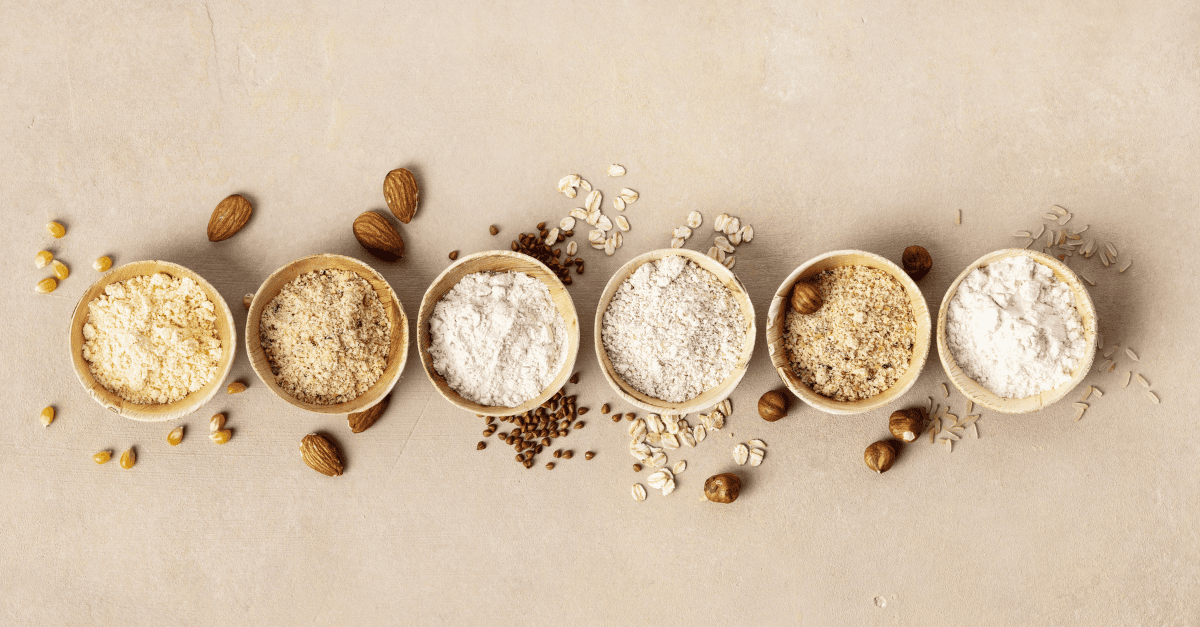
Non-celiac gluten sensitivity (NCGS) is a real condition where individuals experience symptoms similar to Celiac disease but without the same autoimmune damage. Interestingly, many people find that it isn't the gluten itself, but the way grains are processed or the high fiber content that causes issues. For some people, rethinking their oatmeal intake or adjusting how much gluten they eat can make a massive difference.
High FODMAP Foods
FODMAPs are types of carbohydrates that aren't absorbed well in the small intestine. They travel to the colon, where they are fermented by bacteria, producing gas. High FODMAP foods include "healthy" staples like garlic, onions, apples, and beans.
Why DIY Elimination Diets Can Be Dangerous
It is tempting to download a list of "bad foods" from the internet and cut them all out tomorrow. However, this often leads to:
Nutrient Deficiencies: Cutting out entire food groups (like dairy or grains) can lead to deficiencies in Calcium, Vitamin D, or B vitamins.
Disordered Eating: Extreme restriction can create a fearful relationship with food.
Inaccurate Results: If you don't reintroduce foods systematically, you may end up avoiding foods that you actually tolerate perfectly fine.
Working with a professional ensures that you are getting the most from your nutrition while you investigate your symptoms.
Frequently Asked Questions
How long does it take to see results?
Most patients start to notice a difference in their bloating and energy levels within 10 to 14 days of the elimination phase. However, true "gut healing" is a longer process that involves balancing your microbiome.
Can I just take a blood test for food sensitivities?
While many "at-home" IgG tests are marketed online, the American Academy of Allergy, Asthma & Immunology generally advises against them. These tests often show "positives" for foods you eat frequently, not necessarily foods you are sensitive to. A guided elimination diet remains the "gold standard."
Will I ever be able to eat my favorite foods again?
In many cases, yes! Often, once we address systemic inflammation and support the gut lining, patients find they can reintroduce previously "problem" foods in moderate amounts.
Does insurance cover these sessions?
Yes! At Berry Street, we work with most major insurance providers. In fact, most of our patients pay $0 out of pocket for their sessions.
Your Gut Has Been Trying to Tell You Something
Your body isn't trying to make your life difficult… it’s trying to communicate. Constant bloating and discomfort are signals that something in your environment or diet isn't quite aligning with your biology.
By taking a structured, science-backed approach, you can stop the guessing game and start feeling like yourself again. You don't have to walk the grocery store aisles in fear. Whether it's learning how to read food labels or understanding the science of your body clock, we are here to give you the roadmap.
Are you ready to start your journey to better gut health? Don't wait for the next flare-up. Partner with a Berry Street dietitian today to create a personalized plan that works for your life. Book your first session with a registered dietitian.
Remember
Sources & Further Reading
Mayo Clinic: Food Allergy vs. Food Intolerance
Cleveland Clinic: Everything You Need to Know About FODMAPs
Harvard Health: The Gut-Brain Connection
NIH: Lactose Intolerance