Sharing a meal has always been about more than just fuel. From those butterflies-in-your-stomach first dates to the exhausted Tuesday night dinners where you finally get to decompress, food is one of the simplest and most profound ways we feel close to the people we love. This is the place where connection truly happens.
But let’s be real: when one of you is managing PCOS and focusing on blood sugar, while the other is training for a marathon or perhaps dealing with digestive issues, that "simple" meal can suddenly feel like a logistical nightmare. You might find yourself wondering what to cook, how to portion things, or whether you are accidentally prioritizing one person’s needs over the other’s, and what used to feel really easy can start to feel extremely complicated.
At Berry Street, we believe that navigating nutrition together is intimacy at its core. As our Clinical Director, Marjorie Nolan Cohn, says, "Sharing food is a sixth love language if you think about it—one that’s built on communication, flexibility, and feeling supported, not perfection."
If you’ve ever felt like a short-order cook in your own kitchen or felt guilty for eating "differently" than your partner, this guide is made just for you. We’re taking a deep dive into how to build a food routine that supports both of you, without the tension or the guesswork so that mealtime can feel easy and connected again, rather than a stressful or isolating time.

Key Takeaways
Communication is the Foundation: Understanding each other's "why" (health goals, energy needs, or medical requirements) reduces friction and helps to build empathy.
Shared vs. Identical: You don’t have to eat the exact same meal to eat together. Small adjustments allow for individual needs while still allowing for a shared experience.
The "Build-Your-Own" Strategy: Using a base meal with customizable "add-ons" is the ultimate hack for couples with different dietary requirements.
Professional Support Matters: A licensed dietitian can provide an objective roadmap for couples to ensure both partners' nutritional needs are met without there being any burnout.

Why Mealtimes Get Complicated
It’s rare to find two people with the exact same metabolic rate, hormonal profile, and taste buds. Even couples who eat together every day can have very different bodies and very different needs. In a partnership, you might be dealing with:
Different Energy Needs: A partner with a physically demanding job or high athletic output requires significantly more calories than someone with a sedentary desk job. That can show up as different portion sizes, snack needs, or even meal timing, which can feel awkward if you are both eating the same foods.
Health-Specific Goals: One person might be trying to lower their risk of Type 2 Diabetes, while the other is trying to gain muscle. Both goals are valid, but they often require some different approaches to carbohydrates, protein, and overall balance on the plate.
Hormonal Health: Conditions like PCOS require specific blood-sugar-balancing approaches that might not be the priority for the other partner. This can mean paying closer attention to fiber, protein, and meal consistency, even when your partner feels more flexible.
Digestive Sensitivities: Dealing with IBS and a Low FODMAP diet means certain "healthy" foods (like garlic or onions) might be off-limits for one person but perfectly fine for the other. This can make shared cooking feel frustrating, especially when favorite flavors or go-to recipes suddenly feel complicated.
As Jessica Kelly, MS, RDN, LDN, notes: “The biggest mistake couples make is assuming they have to eat exactly the same things in the same portions. When we force a 'one-size-fits-all' approach on a household, one person usually ends up overnourished while the other feels restricted. Balance comes from customization, not conformity.”
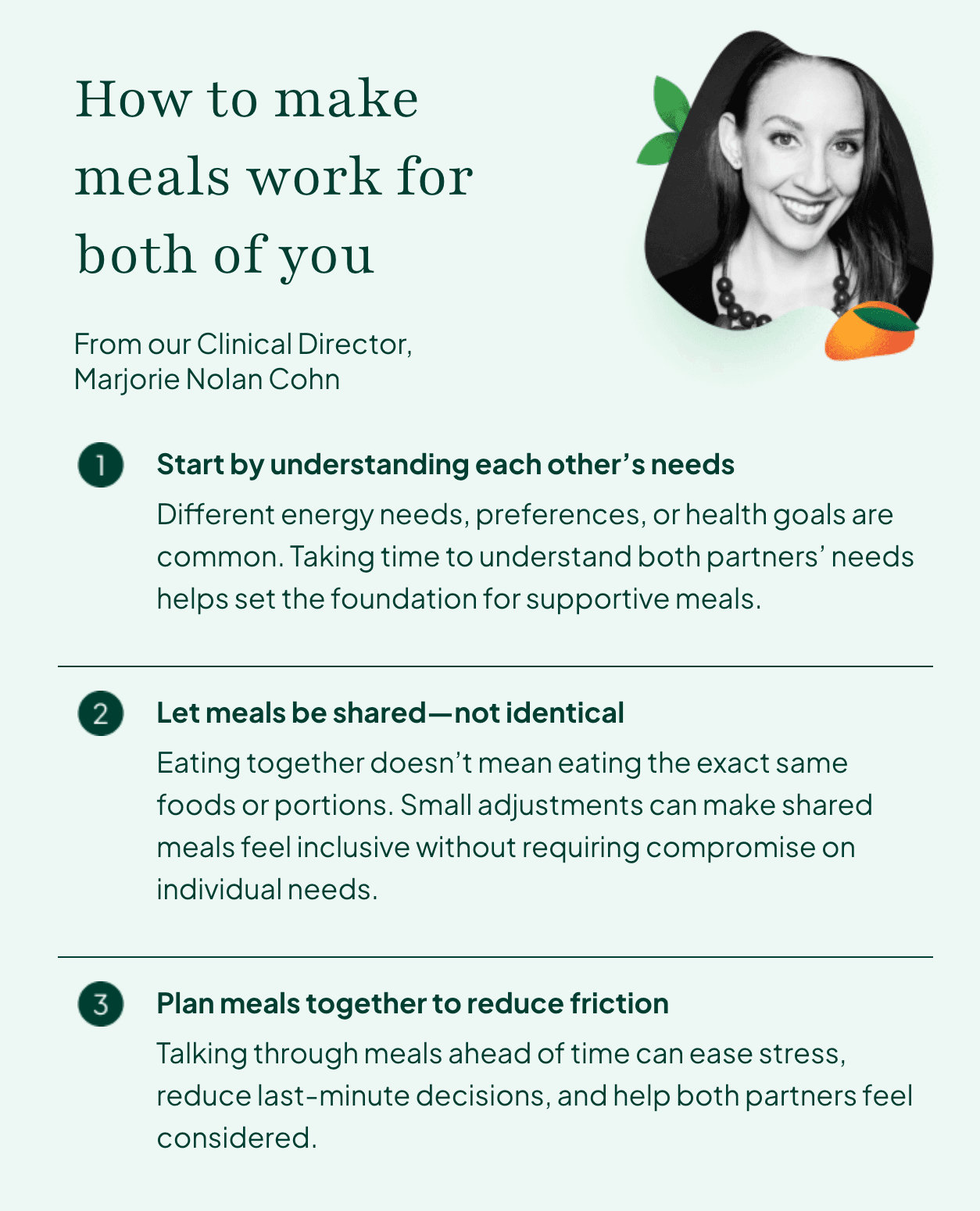
Strategy 1: Start by Understanding Each Other’s Needs
Before you even pick up a grocery list, you need to talk, and this doesn’t have to be a heavy or uncomfortable conversation. We often assume our partner understands why we are making certain food choices, but unless you’ve shared the "why," it can come across as being "picky" or "difficult." Most of the time, the disconnect is just a lack of context, not a lack of support.
Sit down and discuss:
What are your current health priorities? (e.g., "I'm trying to balance my blood sugar to avoid afternoon crashes.") This is going to help your partner understand what you are working toward, not just what you are eating.
What are your "non-negotiables"? (e.g., "I need a high-protein breakfast to feel functional.") These are the habits that help you feel your best and set the tone for your entire day. Naming them is going to help prevent any misunderstandings later on.
Where can we compromise? (e.g., "We can always have a shared salad, but I’ll add a different grain to mine.") Compromise often looks like shared foundations with personalized add-ons, rather than completely separate meals.
Expert Insight: "When partners understand the clinical 'why' behind a dietary change (like how certain foods impact energy or insulin), they remove some of the tension around meals and start to work as a team because they understand each other’s motivations," says Bridget Isaacs, MS, RDN, LDN.
Strategy 2: Let Meals Be Shared - Not Identical
Eating together doesn’t mean eating the exact same foods or portion sizes. This is one of the most freeing mindset shifts that you can make as a couple. It saves time and energy in the kitchen, and it takes pressure off trying to make one “perfect” meal that works for everyone..
The "Base + Modular" Approach
Instead of making two separate meals, create a "base" that works for both, then customize it. You can think of this as building a shared starting point rather than creating two entirely different dinners.
Here’s an example of what this could look like:
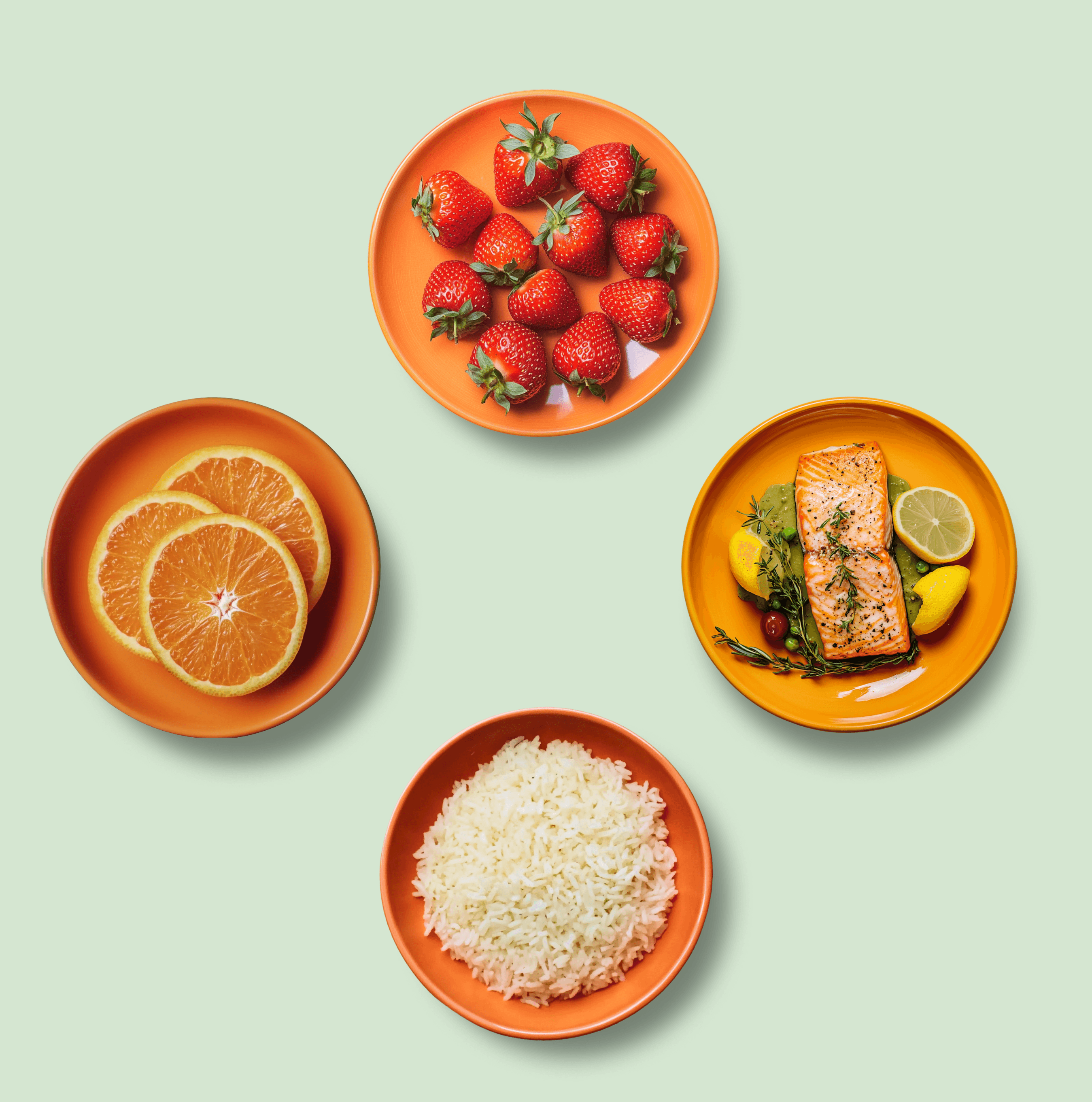
The Base: A roasted sheet-pan of vegetables and a high-quality protein (like grilled chicken, salmon, or tofu). This creates a consistent anchor for the meal that you can both enjoy.
The Modules:
Partner A (Higher energy needs) adds a large portion of quinoa or roasted sweet potatoes. This supports higher calorie needs without changing the core meal.
Partner B (Focusing on PCOS) adds extra leafy greens and a healthy fat like avocado. This helps support blood sugar balance while still sharing the same base foods.
This keeps the kitchen work manageable while also respecting portion distortion and individual requirements. Everyone feels that they have been taken into consideration, and no one feels like they are eating a “separate” meal.
The "Build-Your-Own" Bar
Think taco nights, grain bowls, or even a nutritious pasta bar. Putting ingredients in separate bowls on the table allows each person to build a plate that suits their hunger levels and health goals without there being any tension. It also turns dinner into a more interactive, low-pressure experience that encourages flexibility and choice.
Strategy 3: Plan Together to Reduce Friction
Stress is the enemy of healthy eating, and mealtime stress tends to show up really fast when everyone is tired and hungry. When 6:00 PM rolls around and no one knows what's for dinner, we tend to default to the path of least resistance. That often leads to frustration, rushed choices, or meals that leave one or both of you unsatisfied.
Talking through meals ahead of time can ease stress, reduce last-minute decisions, and help both partners feel considered. Even a quick check-in earlier in the week can make your evenings feel a lot calmer and way more connected.
Actionable Planning Tips:
Shared Grocery List: Use a digital app where both partners can add items throughout the week. This keeps everything in one place and helps avoid the “I thought you were getting that” moment. Check out our Grocery Store 101 guide for tips on shopping with confidence.
The "Two-Choice" Rule: If one person is the primary cook, give the other person two healthy options to choose from. This keeps decision-making simple while still giving everyone a voice in what ends up on the table.
Prepping "Add-Ons": Spend an hour on Sunday prepping the things that differentiate your plates like boiling eggs, cooking a batch of rice, or chopping extra veggies. These small steps make it easy to adjust portions and nutrients throughout the week without having to cook multiple meals.
Ready to find a plan that works for both of you? A Berry Street dietitian can help you and your partner feel supported, understood, and confident in your food choices. We can help you deal with all of this by creating a personalized plan. navigate these complexities with a personalized plan. Book your nutrition consultation here.
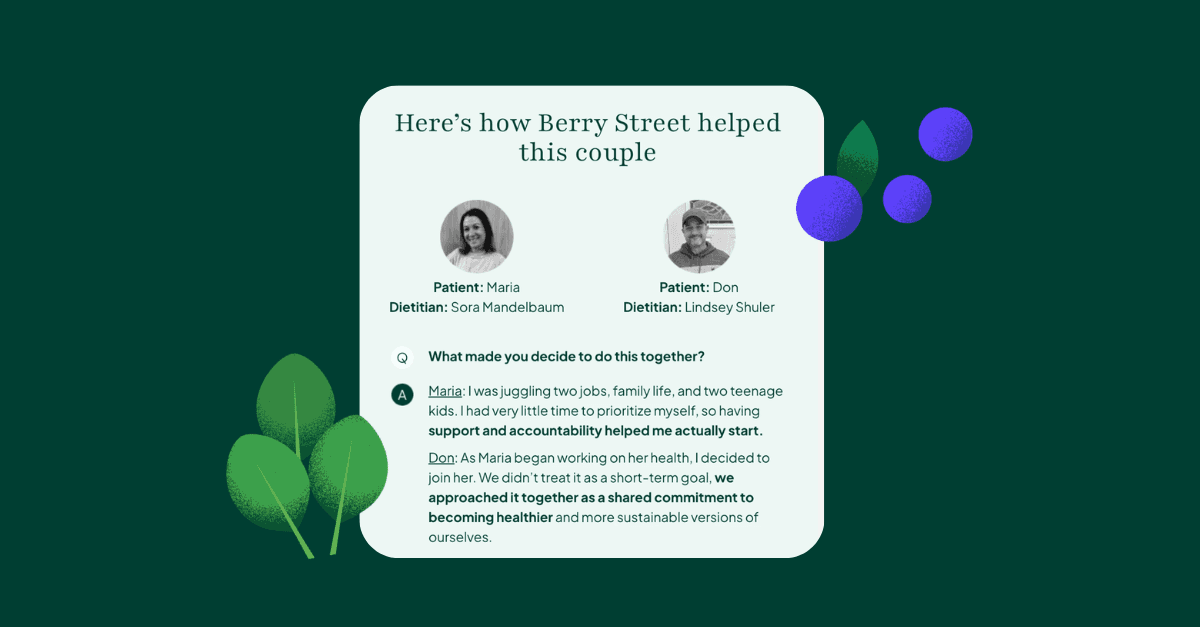
Story Time
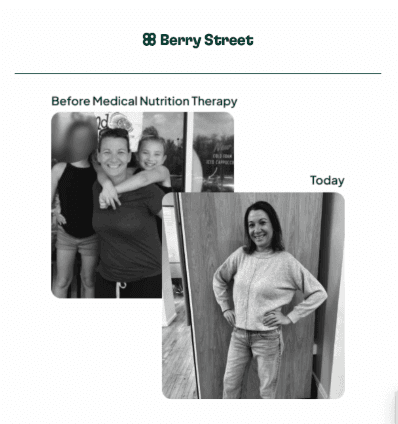
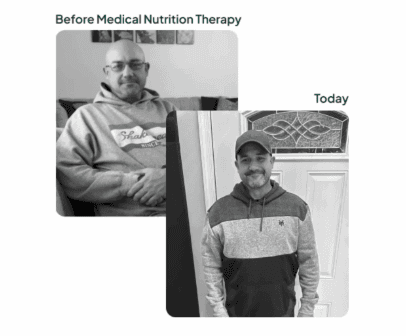
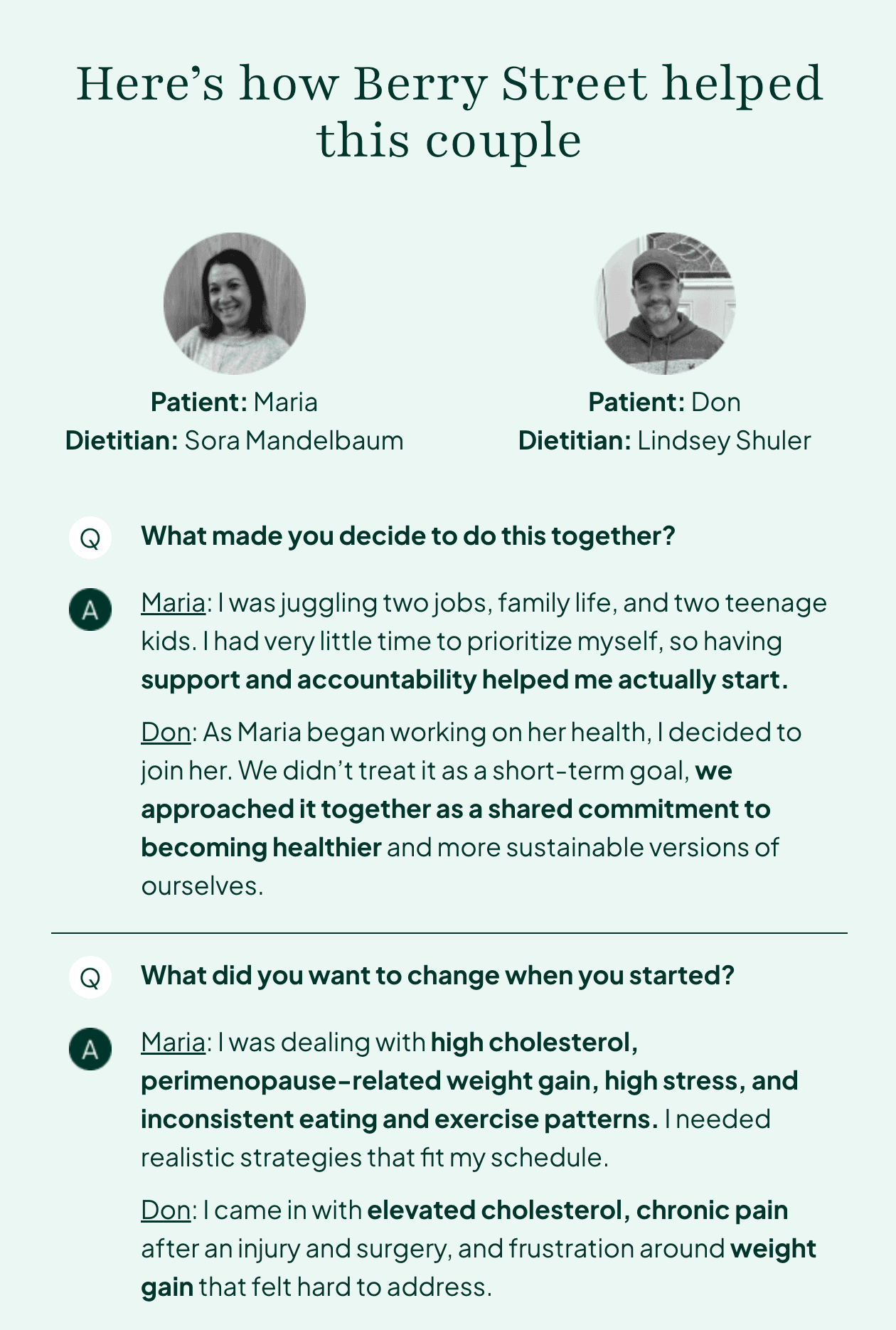
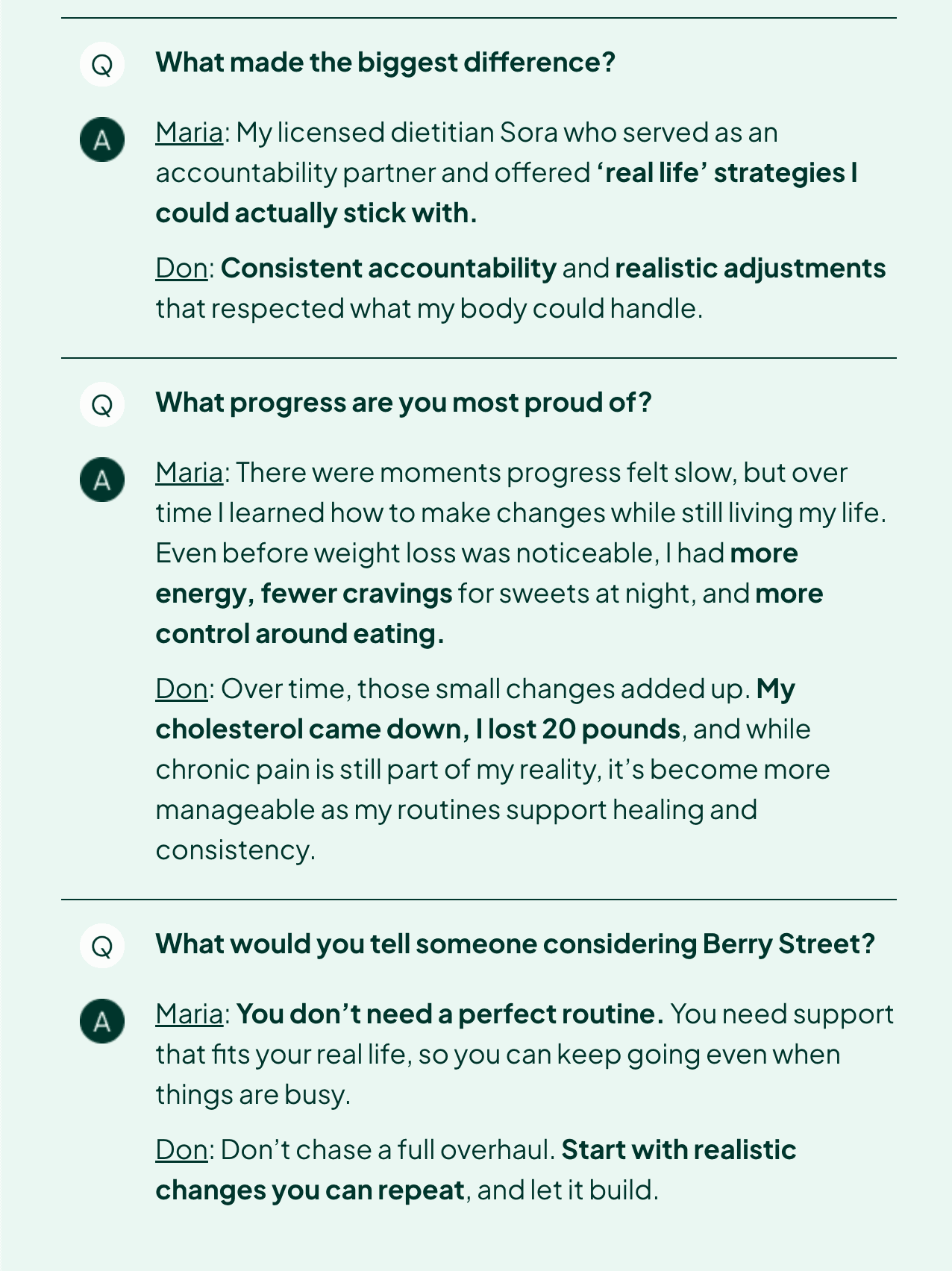
Don and Maria share how they approached change as a shared commitment.
Frequently Asked Questions
My partner has a much higher metabolism than me. How do I stop eating "their" portions?
This is a common struggle! Use smaller plates for yourself and larger ones for your partner to visually trick the brain into feeling satisfied. Also, focus on filling half your plate with non-starchy vegetables first.
How do we handle one person being "plant-based" and the other wanting meat?
The "Component Method" works best here. Roast a large tray of vegetables and a starch that everyone likes. Then, prepare a small portion of animal protein and a small portion of plant protein (like chickpeas or tofu) separately. With this method everyone wins.
Is it okay to eat at different times if our schedules don't align?
While shared meals are great for connection, forcing a 6:00 PM dinner when one person isn't home until 8:00 PM creates resentment. You can still sit together while one person has a small snack and the other eats dinner, or prioritize a shared breakfast or lunch instead.
What if my partner isn't interested in "healthy" eating?
Lead by example, not by lecturing. Often, when a partner sees how much more energy and better mood you have from strengthening your immune system or balancing your hormones, they become curious and want to give it a try as well.
Keep in mind:
Love at First Bite (and Every Bite After)
Some things really are better together. You don’t have to sacrifice your health goals to have a happy, shared table, and you don’t have to sacrifice the joy of eating to be healthy.
By prioritizing communication and getting professional support when needed, you can turn mealtime back into a source of connection rather than a source of stress.
Are you ready to build a food routine that supports both of you? A licensed Berry Street dietitian can help you and your partner put these tips into practice with support designed for both of your needs.
Click here to find your dietitian and book your first session.