Key Takeaways
Credentials come first. A Registered Dietitian Nutritionist (RD/RDN) is a licensed medical professional, while “health coach” and “nutritionist” are titles that in many places anyone can use.
Insurance coverage is plan-dependent, not platform-wide. The right platform tells you exactly what you’ll pay before your first visit.
Fit matters more than features. A platform that specializes in your condition usually serves you better than a bigger, more generic service.
The research on remote nutrition care is encouraging but still developing. Virtual and blended care can produce outcomes similar to in-person care for many people, though the evidence depends on the condition.
Personalized care is a quality signal. Rigid, one-size-fits-all plans tend to work “until they don’t,” while individualized, individual care is designed to last.
Getting nutrition care no longer means driving to a clinic and sitting in a waiting room. Remote dietitian care has moved into the mainstream, and dozens of digital platforms now promise to connect you with expert help from home. But they are not all the same. Some connect you with licensed clinicians who can treat medical conditions. Others are polished apps wrapped around generic “wellness coaching” with no clinical credentials behind them, and from the outside they can look almost identical.
This guide covers how to tell the difference and match a platform to your needs: credentials, insurance and cost, what the research says, and condition specialization. Berry Street, the registered-dietitian-led platform that publishes this guide, appears here as one option among several, and we’ll be transparent about that whenever we mention it.
In 30 seconds: A quality digital dietitian platform connects you with a licensed Registered Dietitian (RD/RDN), verifies your insurance up front, and specializes in your condition or goal. Look for real clinical credentials over “health coaches,” transparent cost, and a personalized, weight-neutral approach. The best platform for you is the one that treats your specific situation, accepts your plan, and can get you started quickly.
What is a digital dietitian platform, and how does remote care work?
A digital dietitian platform connects you with a nutrition professional through video visits, secure messaging, and often a companion app, so care happens over your phone or computer on a schedule that fits your life.

The strongest platforms are built around registered dietitians, who are qualified to provide medical nutrition therapy for diagnosed conditions. Others offer only general wellness guidance, so knowing which kind you’re looking at is the first step.
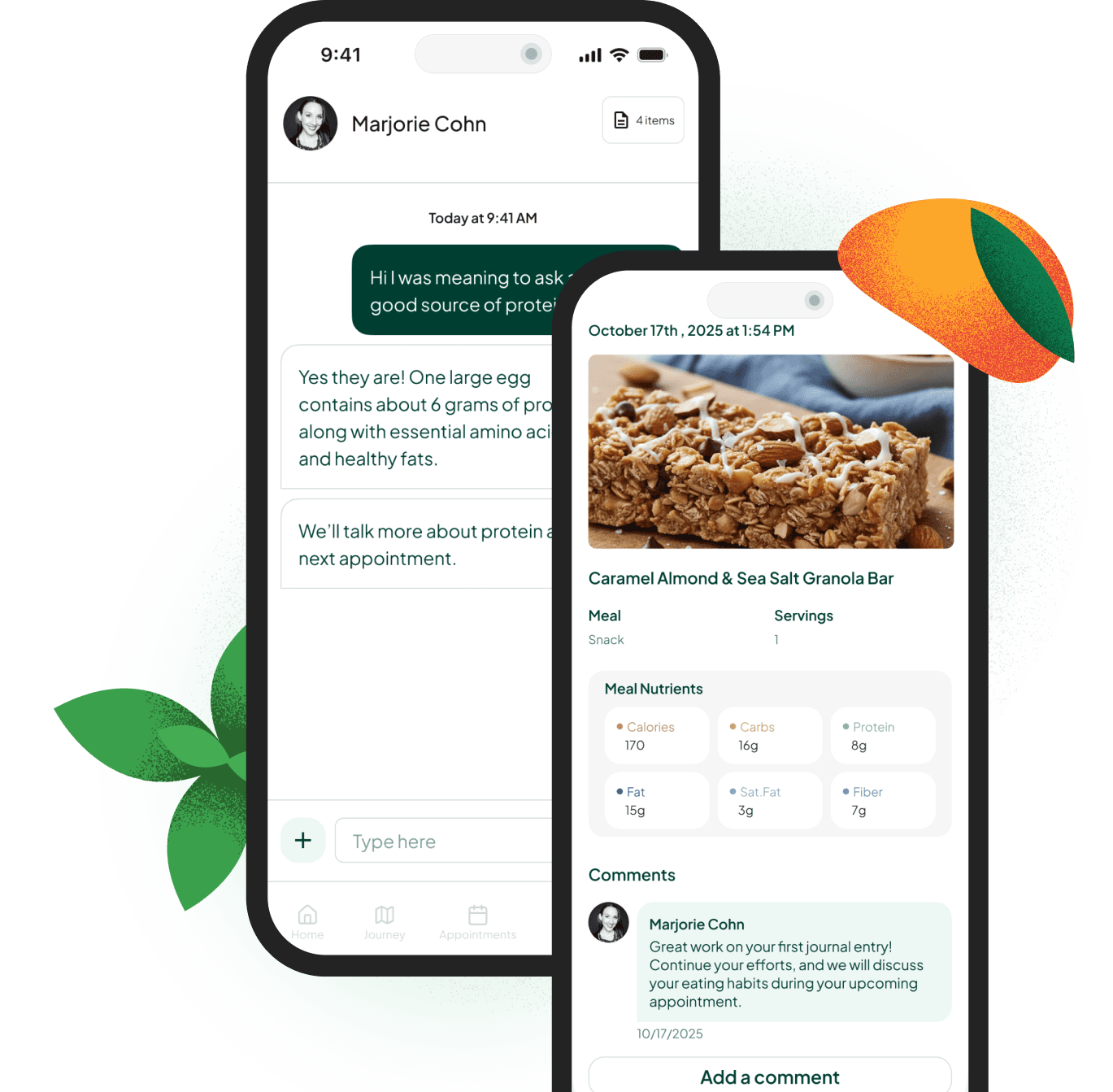
Federal telehealth guidance recognizes that registered dietitians can deliver nutrition care remotely through secure, HIPAA-compliant platforms, often paired with tools like connected glucose monitors, smart scales, food-logging apps, and patient portals. Remote nutrition care is an established model, not an experiment.
What happens in a virtual dietitian visit
A first visit usually starts with a conversation, not a lecture. From there, the two of you build a plan together, whether that means adjusting meals around a medication, easing digestive symptoms, or steadying blood sugar. A typical visit includes:
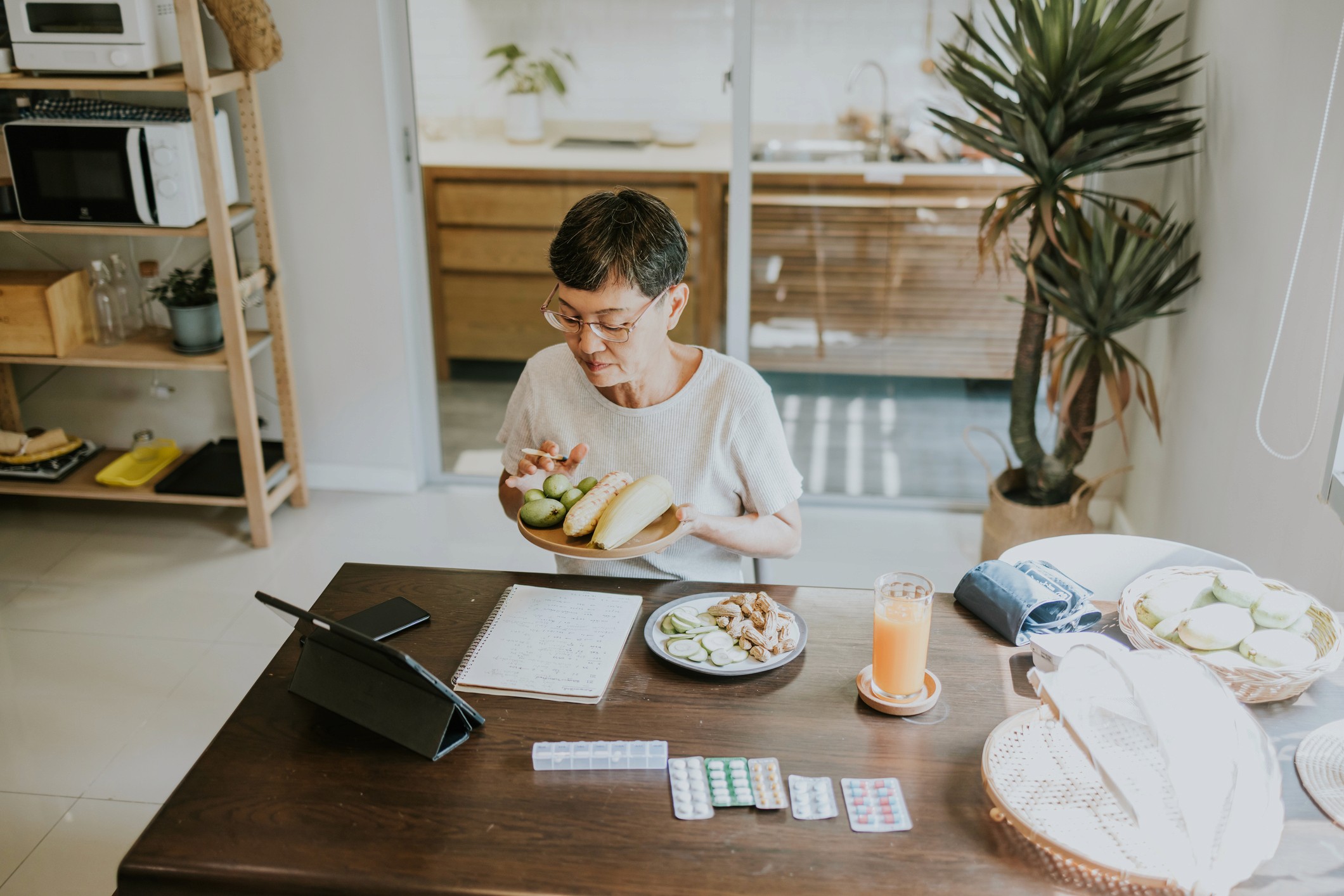
A review of your health history, labs, and current symptoms.
A conversation about your goals, your routine, and your relationship with food.
Practical, specific next steps to try before your next visit.
A plan for follow-up, including how you’ll stay in touch between sessions.
Follow-up visits are usually shorter, focused on progress and small, sustainable adjustments that are easier to keep up with when you don’t have to commute.
Who remote nutrition care is a good fit for
Remote care may be an especially good fit if you:
Want ongoing support rather than a single one-off appointment.
Are managing a condition like diabetes, IBS, PMOS, or heart health that benefits from steady, personalized adjustments.
Have struggled with rigid diet plans and want a more individualized approach.
Value being able to message your dietitian between visits.
If your situation requires hands-on assessment, your dietitian may coordinate with your physician. Remote dietitians work alongside your doctor, not instead of them.

Do online dietitian visits actually work as well as in person?
The short version: the evidence is promising but still developing, and the answer depends on the condition and how care is delivered.
A 2023 evidence-based guideline from the Academy of Nutrition and Dietetics found that medical nutrition therapy outcomes were generally similar whether delivered in person or through blended care that combines in-person and telehealth visits, for most outcomes studied. The same review noted that in-person contacts may still offer additional benefits for some measures, so blended delivery is not identical to in-person care in every case.
A 2024 randomized trial in Japan (just 30 participants) found telenutrition was non-inferior to face-to-face care for blood-sugar (HbA1c) control in people with type 2 diabetes. That’s an encouraging signal, with an important caveat: it’s a single small study in one setting, so it can’t be generalized to everyone.
Remote nutrition care can work well for many people. It is not automatically “just as good” as in person for everyone, and the right answer depends on your condition and needs.
What the research says about telehealth nutrition care
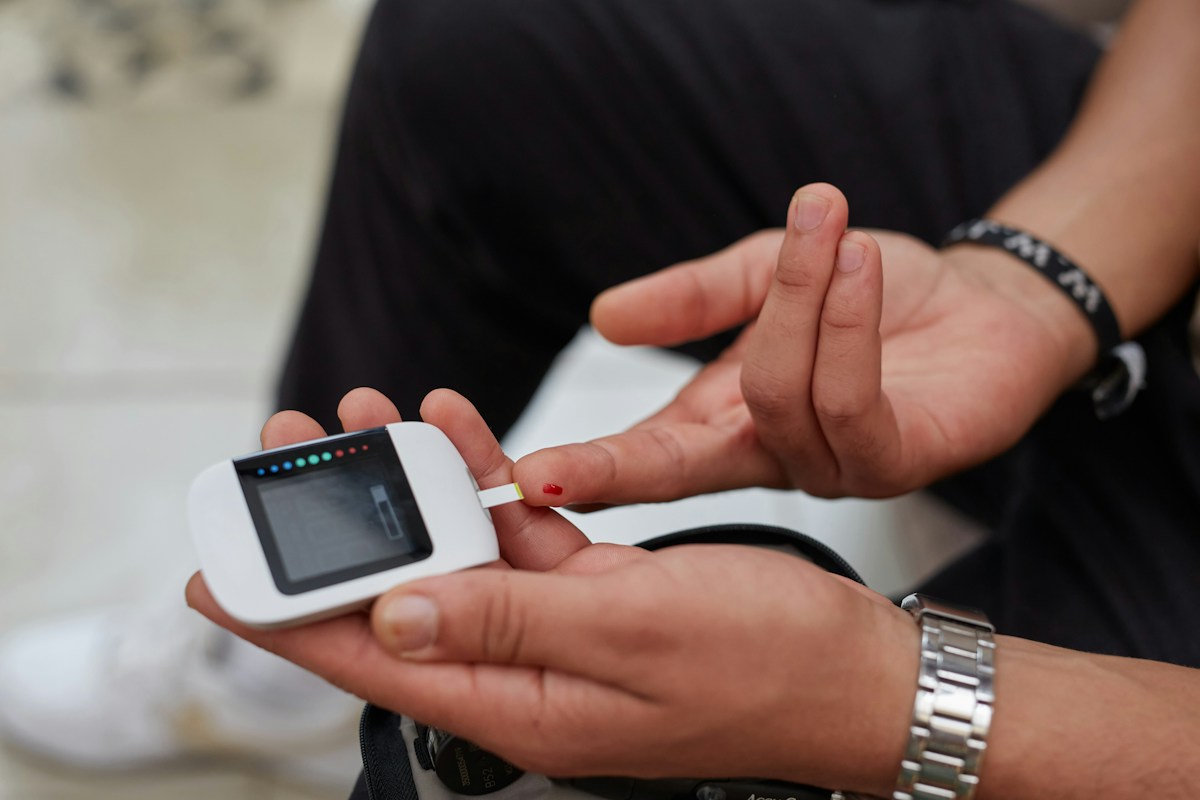
Telehealth nutrition services are increasingly used, and the broader research literature reflects that growth internationally. What the research consistently supports:
Blended and remote care can achieve outcomes similar to in-person care for many nutrition goals.
Regular contact and follow-up matter, and remote care makes that contact easier to sustain.
Results vary by individual and condition, so personalized care remains essential.
Ask a platform how it measures progress and how often you’ll connect with your dietitian, because consistency drives results.
How to choose a digital dietitian platform: 7 things that matter
Not all platforms deserve your trust equally. Use these seven criteria as a checklist. The more boxes a platform ticks, the more confident you can be.
1. Real registered dietitians (RD/RDN) or Certified Nutrition Specialists (CNS) — not “health coaches”
This is the criterion that matters most, so start here. “Registered Dietitian Nutritionist” is a legally protected, credentialed title. According to the Academy of Nutrition and Dietetics, earning the RDN requires a graduate-level degree, supervised practice, and passing a national exam. By contrast, “nutritionist” has no standardized federal definition, and in many places anyone can use it regardless of training. Some states recognize Certified Nutrition Specialists (CNS) as practitioners with an advanced credential.
That’s why the word “coach” on a platform should prompt a closer look. A health coach can offer encouragement and general wellness tips, but is not qualified to provide medical nutrition therapy for a diagnosed condition. If you’re managing diabetes, kidney disease, an eating disorder, or another medical concern, you want a licensed clinician, and this guide to the nutritionist vs. dietitian difference explains why.
Before you sign up, find where the platform states its providers’ credentials. If you can’t find “RD,” “RDN” or “CNS” clearly, treat that as a red flag.
“When a client asks how to tell a legitimate platform from a generic nutrition-coaching app, I tell them to look for two letters first: RD, RDN or CNS. Those letters mean a licensed clinician who can actually treat a medical condition, not just hand you a meal template. If a site talks about ‘coaches’ and ‘wellness experts’ but you have to dig to find an actual credential, that tells you what you need to know.” — Bridget Isaacs, MS, RD
2. Insurance coverage and transparent, no-surprises cost
Coverage is always plan-dependent, so the key question is whether the platform verifies your specific insurance up front and shows you what you’ll pay. Watch for these green flags:
The platform verifies your insurance before your first visit.
You’re shown your expected cost clearly, with no hidden fees.
Self-pay pricing is published openly if you don’t use insurance.
If a platform can’t tell you your cost until after you’ve committed, keep looking.
3. Specialization for your condition or goal
Managing chronic kidney disease is different from supporting someone with IBS, PMOS, an eating disorder, or heart health, so the right platform can match you with a dietitian who specializes in your situation.
Ask whether the platform lets you filter by specialty and whether it lists the conditions it actually treats. A broad service may be fine for general wellbeing, but for a medical condition you want depth, not just availability.
4. A personalized, sustainable care model
If you’ve tried restrictive apps or rigid plans that worked “until they didn’t,” you already know the problem. That’s not a willpower problem. That’s a one-size-fits-all problem.
The best platforms build care around you: your body, routine, health history, and relationship with food, with recommendations that adapt over time rather than a template handed to everyone.
An individualized, realistic approach is a strong quality signal. It focuses on building sustainable habits and improving health markers rather than treating weight as the only measure of success. For some people, weight change may follow better nutrition, but it doesn’t have to be the goal.
5. Appointment availability and how you’re matched
Ask how quickly you can be seen and how the platform matches you with a provider. Strong platforms consider:
Your condition and goals when matching you with a dietitian.
Your state and licensing, since dietitians are licensed to practice in specific states.
Your scheduling needs, including evenings or weekends if you need them.
6. Between-visit support, app, and data tools
Nutrition change happens between appointments, so the tools a platform gives you outside of visits matter.
A 2024 narrative review in Nutrition Reviews notes that digital tools offer the promise of stronger between-visit support, though the authors frame this as promising rather than proven. Federal telehealth guidance similarly describes pairing visits with connected glucose monitors, smart scales, and patient portals.

Look for:
Secure messaging with your dietitian between visits.
Easy ways to log meals or share data, ideally without tedious manual entry.
Integration with wearables or lab data if you track those.
7. Privacy, security, and HIPAA compliance
Your health information is sensitive, and any real telehealth nutrition service should be HIPAA-compliant, using secure video and encrypted messaging rather than a generic video-chat app. Federal telehealth guidance emphasizes using HIPAA-compliant, secure platforms for delivering telenutrition care. Before signing up, look for a clear privacy policy and confirmation that visits and messages are protected.
How the best-known remote dietitian platforms compare
Several reputable platforms now offer remote dietitian care, including Fay, Nourish, Culina Health, and Berry Street. Rather than rank them, it’s more useful to understand what quality platforms share and where they differ, so you can evaluate any of them.
What most reputable platforms have in common
Most connect you with registered dietitians, accept a range of insurance plans, and offer video visits with between-visit support. Where they differ is in the details that matter to you:
Which insurance plans they accept, since coverage is always plan-dependent.
Which conditions they specialize in and how deep that specialization goes.
Their care philosophy, including whether they take a weight-neutral, non-diet approach.
The size of their dietitian network and how quickly you can be seen.
The tools they offer between visits.
The best platform depends on which of these details line up with your needs.
How Berry Street approaches remote care
Disclosure: Berry Street is the publisher of this guide. We include ourselves so you can compare us on the same criteria as any other platform, described as factually as we can.
Berry Street is a fully virtual platform built around 1-on-1 care with registered dietitians. Our network includes 1,800+ registered dietitians across all 50 states, which supports matching you with someone who specializes in your specific condition or goal.
On cost, we’re in-network with 1,250+ insurance plans, and most members pay $0. Coverage always depends on your specific plan, so you can check your coverage in about 60 seconds, with no commitment. We show you what you’ll pay up front, with no surprises.
Our care model is individualized and realistic. The focus is on personalized, sustainable care rather than rigid restriction. We support a wide range of needs, from diabetes and heart health to IBS, PMOS, thyroid conditions, eating disorders, and GLP-1 nutrition support. You can see the full list of conditions we treat and, if you’d like, connect with a dietitian through our onboarding flow.
Questions to ask before you sign up
Before you commit to any service, ask these questions. Good platforms will have clear answers.
Are your providers registered dietitians (RDs/RDNs), or health coaches?
Do you accept my specific insurance plan, and what will I pay?
Do you have dietitians who specialize in my condition or goal?
How do you match me with a dietitian, and how soon can I be seen?
What support do I get between visits, and how do I reach my dietitian?
Is the platform HIPAA-compliant, and how is my data protected?
What is your care philosophy around weight and dieting?
Matching a platform to your specific needs
The right platform depends on why you’re seeking care, but the goal is always depth of specialization and a care model that fits you.
Managing a chronic condition (diabetes, heart health, kidney disease)
Chronic conditions benefit from regular, personalized adjustments, which is where consistent remote care helps. For diabetes, a dietitian can help you steady blood sugar around meals, medications, and daily life. For heart health, the focus may be on eating patterns that support blood pressure and cholesterol. For kidney disease, care often involves individualized attention to specific nutrients, so a renal-specialized dietitian matters.
This is medical nutrition therapy, not general wellness advice, so credentials are non-negotiable here. This overview of what medical nutrition therapy is is a helpful starting point.
Digestive and hormonal health (IBS, PMOS, thyroid)
Digestive and hormonal conditions are highly individual, so specialization matters. For IBS, a dietitian can help you identify triggers and build an eating pattern that eases symptoms without unnecessary restriction. For PMOS and thyroid conditions, care is tailored to your symptoms, labs, and goals rather than a generic plan.
“For someone managing PMOS or diabetes remotely, what makes virtual care work is the steady follow-up. I can check in on how a change is actually landing in your real week, adjust it, and troubleshoot the day-to-day stuff over a message instead of waiting months for the next appointment. That consistency is often what makes the difference, and it’s usually easier to keep up with from home.” — Bridget Isaacs, MS, RD
GLP-1 medication nutrition support
If you’re on or considering a GLP-1 medication, a dietitian can help you protect muscle, manage side effects like nausea, and get enough protein and nutrients while your appetite changes.
Some platforms go further. Berry Street clinicians prescribe FDA-approved GLP-1 medications directly and bill insurance, with a registered dietitian included at no extra cost to help you sustain results over time. In this medical weight-management context, weight management can be a named goal, and the dietitian’s role is to make the process healthier and more sustainable. You can learn more about GLP-1 nutrition support if that’s relevant.
Eating disorders and a weight-neutral approach
For eating disorders and disordered eating, a weight-neutral, non-diet approach isn’t just a preference, it’s a clinical necessity. Care should focus on your relationship with food and your overall well-being, never on restriction or weight as a measure of success.
Look for platforms with dietitians who specialize in this area and explicitly practice from a weight-inclusive philosophy. You can explore specialized eating disorder support to see what that looks like in practice.
Choosing the platform that’s right for you
There’s no single “best” platform, only the one that fits your needs. If you take one thing from this guide, let it be this: verify credentials, confirm coverage, and choose specialization over a generic promise. Walk through the seven criteria, ask the questions above, and trust the platform that gives you clear answers.
If Berry Street sounds like it could be a fit, you can check your coverage and connect with a registered dietitian in about a minute, with no commitment. And if you’re still weighing your options, this guide to finding the best online nutritionist for personalized care can help you compare.

Frequently Asked Questions
What is a digital dietitian platform, and how does remote nutrition care work?
A digital dietitian platform connects you with a nutrition professional through video visits, secure messaging, and often a companion app, so care happens from home instead of a clinic. The strongest platforms are built around registered dietitians who can provide medical nutrition therapy for diagnosed conditions, starting with an intake conversation and continuing through follow-up visits and between-visit support.
Are online dietitian visits covered by insurance?
Often, yes, because nutrition counseling is frequently a covered benefit, but coverage always depends on your specific plan, so the best platforms verify your insurance before your first visit and show you exactly what you’ll pay. With Berry Street, you can check your coverage in about 60 seconds, and most members pay $0.
How do I choose the best online dietitian platform for me?
Start by confirming that the platform uses registered dietitians (RDs/RDNs) rather than health coaches, then verify that it accepts your insurance and specializes in your condition or goal. From there, weigh appointment availability, between-visit support, care philosophy, and privacy practices, and choose the platform whose specialties and coverage line up with your needs.
Is a virtual dietitian as effective as seeing one in person?
The evidence is promising but still developing, so the honest answer is that it depends on your condition and how care is delivered. A 2023 Academy of Nutrition and Dietetics guideline found outcomes were generally similar for in-person versus blended in-person-plus-telehealth care for most outcomes, and a small 2024 trial found telenutrition non-inferior for blood-sugar control in type 2 diabetes. Because much of this evidence involves blended care or small samples, remote care can work well for many people rather than being automatically identical to in-person care.
Do these platforms use real registered dietitians (RDs/RDNs) or health coaches?
A Registered Dietitian Nutritionist is a licensed clinician who has completed a graduate degree, supervised practice, and a national exam, while “coach” and “nutritionist” are titles that in many states require no formal credential. If a platform doesn’t clearly state that its providers are RDs, RDNs or a CNS, treat that as a warning sign.
How much does an online dietitian cost without insurance?
Self-pay costs vary by platform, session length, and location, so look for published, transparent pricing before you commit. It’s worth verifying insurance first, since covered visits often cost far less or nothing at all, and with Berry Street, most members pay $0 with coverage.
Can a remote dietitian help with a specific condition like diabetes, PMOS, or IBS?
Yes, and specialization is one of the biggest quality signals to look for. A registered dietitian can provide medical nutrition therapy tailored to conditions like diabetes, PMOS, IBS, heart health, and kidney disease, adjusting your plan around your symptoms, labs, and daily life.
Can an online dietitian support me while I’m on a GLP-1 medication?
Yes. A dietitian can help you protect muscle, manage side effects like nausea, and get enough protein and nutrients as your appetite changes. Some platforms, including Berry Street, also prescribe FDA-approved GLP-1 medications directly with a registered dietitian included to help you sustain results.
How quickly can I get an appointment with an online dietitian?
Timing depends on the platform, your state, and your dietitian’s availability, though many remote platforms can see you within days rather than weeks. Ask how the platform matches you and how soon you can book, since faster access helps when you’re ready to start.
Do online dietitian platforms accept Medicare or Medicaid?
Some do, but it depends on the platform and your specific plan, and not every platform participates in every program. Coverage rules for Medicare and Medicaid vary, so the most reliable approach is to check your coverage with the platform before booking so you know exactly what you’ll pay.
What should I expect in my first virtual dietitian appointment?
Your first visit is usually a conversation, not a lecture. Your dietitian will ask about your health history, eating patterns, symptoms or labs, and what you want from care, then work with you to build a personalized plan you can start right away.
Is my health information secure with a telehealth nutrition platform?
A legitimate telehealth nutrition platform should be HIPAA-compliant, using secure video and encrypted messaging rather than a generic video app, as federal telehealth guidance emphasizes. Before signing up, look for a clear privacy policy and confirmation that your visits and messages are protected.
Last Reviewed by Bridget Isaacs, MS, RD — October 2026.