Key Takeaways
A GLP-1 dietitian is a registered dietitian with experience supporting people on GLP-1 medications. There is no separate “GLP-1 certification.”
The medication changes your appetite, not your habits or your nutrition needs. A dietitian helps you spend a smaller appetite on the foods that do the most for you.
Getting enough protein and key nutrients matters more when you are eating less, and it is one of the main ways to protect muscle during treatment.
GI side effects like nausea are common early on and usually ease. Adjusting portion size, timing, and food texture often helps before you ever consider stopping.
Your goals lead the plan. That might include weight, but it might also be blood sugar, energy, digestion, or a calmer relationship with food.
You started a GLP-1 medication, or you are thinking about it, and now you are staring at your plate wondering what you are actually supposed to eat. Maybe a few bites fill you up. Maybe protein suddenly feels heavy. Maybe you have heard you should see a dietitian but are not sure it is worth it.
Here is the common assumption: the medication does the work, so food takes care of itself. What actually happens is these medications lower appetite and slow how quickly your stomach empties, which changes how much you eat and how food feels. What they do not change is what your body needs from that food. In other words, the medication changes your appetite, not your habits or your nutrition needs.
That is where a GLP-1 dietitian comes in. This guide covers what one actually does, how they help, and an honest look at whether you need one.
In 30 seconds: A GLP-1 dietitian is a registered dietitian who helps you eat enough protein and key nutrients while your appetite is low, ease side effects like nausea, protect muscle, and build habits that hold up if you taper off. The medication reduces your appetite. A dietitian makes sure the food you do eat still works for your body and your goals.
What is a GLP-1 dietitian?
A GLP-1 dietitian is a registered dietitian who specializes in nutrition for people taking GLP-1 medications. They look at your full picture: your medication and dose, your health history, your schedule, and the outcomes that matter most to you. From there, you build a plan together and adjust it as your body responds. Referral to a dietitian is widely considered crucial to the care team for people on these medications, and dietitians themselves describe their role as bridging medical treatment and everyday eating.

Is there a special “GLP-1 dietitian” certification?
No. There is no separate “GLP-1 dietitian” credential or certification. The term simply describes a registered dietitian who has experience supporting patients on these medications. What you are looking for is the RD or RDN credential first, and GLP-1 experience second.
RD vs. nutritionist — why the credential matters
This distinction matters more than it might seem. A Registered Dietitian Nutritionist is a licensed medical professional who has completed a graduate degree, supervised clinical training, and a national exam. By contrast, “nutritionist” is not a protected title in many states, which means someone can use it without formal qualifications. In some states, a Certified Nutrition Specialist (CNS) is another advanced nutrition credential. On a medication that changes how you eat, that clinical training is part of what makes the guidance safe and personalized. If you want a deeper look, see our guide to the difference between a nutritionist and a registered dietitian.
What a GLP-1 dietitian does not do
A dietitian cannot prescribe your medication or adjust your dose. That is your medical team’s job. A registered dietitian works alongside your prescriber, not instead of them. If a side effect points to something that needs a medical change, your dietitian will flag it and send you back to the person who prescribes.


How a GLP-1 dietitian actually helps
The value is practical, and it shows up in a handful of specific ways.
Getting enough protein and nutrients when your appetite is low
When you are eating less overall, every bite carries more nutritional weight. Reduced food intake can increase the risk of falling short on protein and micronutrients like iron and calcium that are already common in people with obesity. A dietitian helps you spend your smaller appetite on the foods that do the most. A common approach is protein-first eating, prioritizing protein at whatever meal you tolerate best and spreading it across several small meals rather than one large meal you do not want, which supports the higher daily protein that helps protect muscle during treatment.

“When someone comes to me a few weeks into a GLP-1, the appetite change has usually done something they didn’t expect. They’re barely eating, and what they do eat is mostly carbs because protein doesn’t sound good. We start with one change: a protein source as the first thing you eat each day, usually a source that seems safe to the client.” — Bridget Isaacs, MS, RD
Easing nausea and other GI side effects through food and timing
GI symptoms are the most common reason people struggle on these medications. Nausea, vomiting, and constipation are frequently reported, especially when you start or raise your dose, and they usually ease as your body adjusts. A dietitian helps you adjust food before you think about stopping. Cool, low-aroma foods like smoothies, yogurt, and cottage cheese often go down more easily than heavy, hot meals. Smaller portions eaten slowly, steady fluids and fiber, and staying upright after eating can all help.

Protecting muscle mass during treatment
When weight comes off, some of that loss can come from muscle, not only fat. Protein paired with structured strength or resistance activity is the main way to protect lean mass during treatment. Hitting a protein target is harder when you feel full after a few bites, which is exactly where a practical plan helps. For a closer look at daily meals, see our dietitian’s guide to what to eat on a GLP-1 and our guide to preventing muscle loss on GLP-1 medications.
Building a sustainable, non-restrictive relationship with food
Eating less can start to feel like a diet, even when it is not meant to be one. A good dietitian keeps the focus on nourishing your body well, not on rules or restriction. That means no food is off-limits and nothing has to be “earned back.”
“On a GLP-1, eating less can start to feel like a diet, but that’s not what we’re doing. I tell clients the goal is to nourish your body well on less, not to restrict. We pick a few foods you actually enjoy, then make sure each small meal includes protein and some color. No food is off the table.” — Bridget Isaacs, MS, RD
Planning for eating well after the medication
Whether you stay on your medication long term or step down, the goal shifts toward habits that hold. That planning is worth doing before any change rather than after. A dietitian helps you build eating and activity patterns that carry over, so your results are not tied to the prescription alone.
Do you actually need a GLP-1 dietitian?
Not everyone does. Here is an honest way to think about it.
Who benefits most
Some people get the most out of working with a dietitian. You may be one of them if:
You feel full after a few bites and are not sure you are eating enough.
Protein feels heavy, so most of what you eat is carbs or liquids.
Nausea, constipation, or reflux is shaping what you eat.
You are worried about losing muscle, energy, or hair.
You have another condition to manage, like PMOS, diabetes, or high cholesterol, where nutrition plays a direct role.
You have a history of restrictive eating and want support that does not tip back into it.
None of those are willpower problems. They are predictable effects of how these medications work, and they respond well to a plan built around your body.
When you may be fine without one
If your appetite change is mild, you are still hitting protein and nutrients comfortably, side effects are minimal, and you have no other conditions in play, you may do well on your own for a while. Even then, a check-in or two can be useful, especially around dose increases or if you plan to taper off later.
What working with one looks like
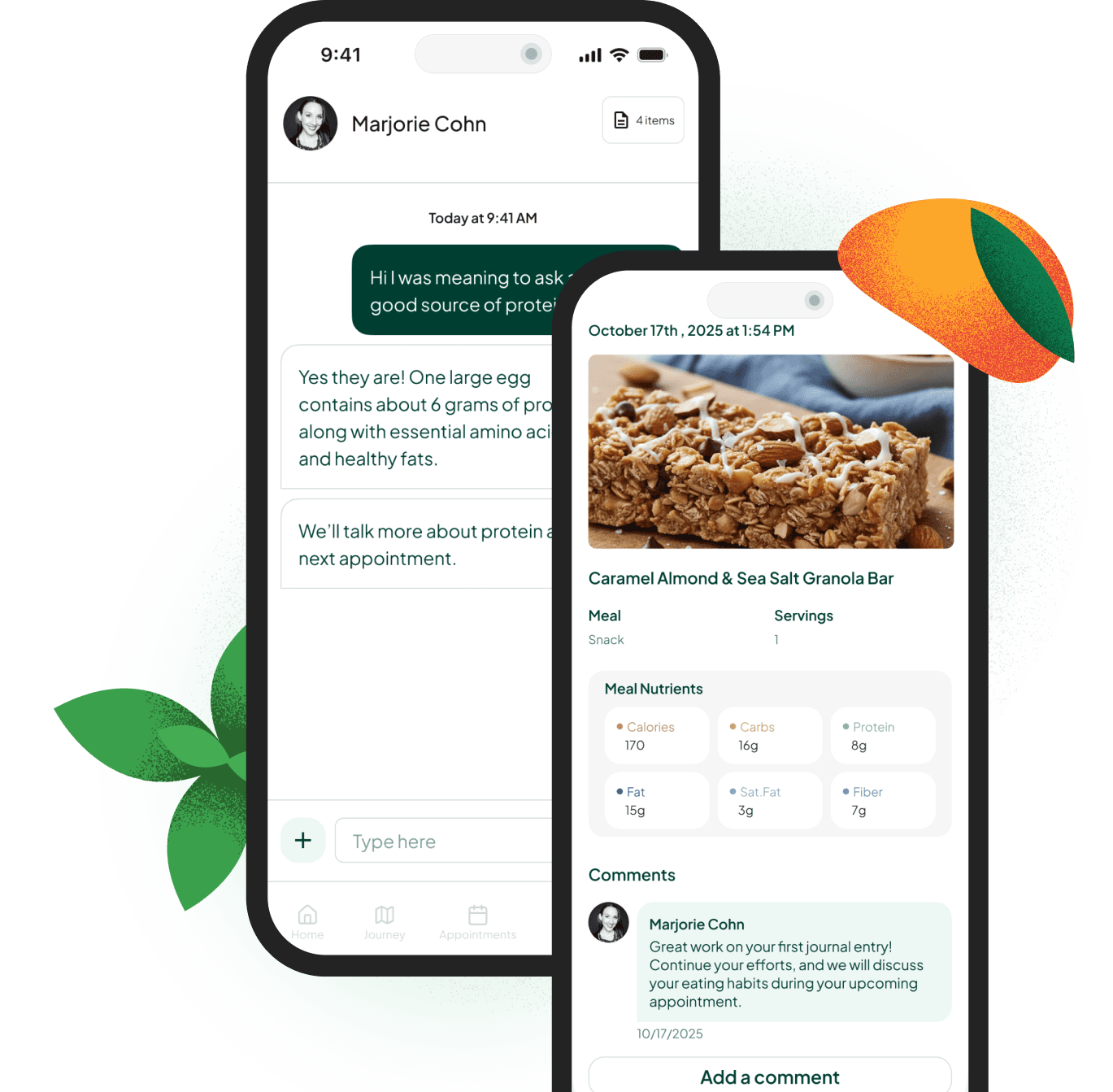
There is no one-size-fits-all plan. Your dietitian starts with where you are now and the outcomes you care about, then adjusts as your body responds. Because Berry Street care is fully virtual, visits happen on your schedule, and you can message your dietitian between appointments as symptoms change. That matters on a GLP-1, where the plan often needs small tweaks at each new dose.
How to find a GLP-1 dietitian — and what it costs
What to look for in an RD
Start with the credential: look for RD, RDN, or CNS after their name, not a general “nutritionist” or “health coach” title. Then look for GLP-1 experience. You want someone who focuses on nourishing you well and protecting muscle, not adding further restrictions or labeling foods “good” and “bad.”
Is it covered by insurance?
It depends on your plan. Nutrition counseling is often a covered benefit, but coverage varies by insurer, plan, and state, so it is worth checking yours before you assume anything. With Berry Street, most members pay $0. Based on our own data, we are in-network with 1,250+ insurance plans nationwide, and 95% of members pay nothing out of pocket. You can check your coverage in about 60 seconds with no commitment. If you are using our GLP-1 program, a registered dietitian is included at no extra cost alongside your prescriber.
The bottom line
A GLP-1 dietitian helps you get the results you want from your medication while protecting the things it can quietly cost you, like muscle, nutrients, and energy. The medication reduces your appetite. A dietitian makes sure the food you do eat still works for your body and the goals that matter to you.
If you are on a GLP-1 or considering one, you do not have to figure the food part out alone. When you are ready, you can see if you are covered and get matched with a dietitian who specializes in GLP-1 care.

Frequently Asked Questions
What is a GLP-1 dietitian?
A GLP-1 dietitian is a registered dietitian who specializes in nutrition for people taking GLP-1 medications. They help you get enough protein and nutrients while your appetite is low, ease side effects, and protect muscle. They work alongside your prescriber, not instead of them.
Is there a special certification for a GLP-1 dietitian?
No. There is no separate “GLP-1 dietitian” certification or credential. The term simply describes a registered dietitian who has experience supporting patients on these medications, so look for the RD, RDN or CNS credential first.
Do you need a dietitian while taking a GLP-1 medication?
Not everyone does, but many people benefit from one, especially when appetite drops fast or side effects shape what they can eat. A dietitian is most helpful if you are struggling to hit protein, dealing with nausea or constipation, worried about muscle loss, or managing another condition. If your appetite change is mild and you feel well, you may be fine with an occasional check-in.
What does a GLP-1 dietitian actually help with?
A GLP-1 dietitian helps you get enough protein and key nutrients on a smaller appetite, ease GI side effects like nausea and constipation, protect muscle, and build eating habits that last. They personalize the plan to your medication, dose, symptoms, and goals. They also help you plan for eating well if you taper off.
Can a dietitian prescribe or adjust my GLP-1 medication?
No. A dietitian cannot prescribe medication or change your dose, which is your prescriber’s role. They work alongside your medical team and will flag anything that needs a medical decision. Their focus is the nutrition side of your care.
How do I get enough protein on a GLP-1 when my appetite is low?
A common approach is protein-first eating, putting a protein source at whatever meal you tolerate best. Smaller, more frequent meals usually work better than three large ones. A dietitian will personalize the exact amount and timing to what you can comfortably eat.
How can a dietitian help with GLP-1 side effects like nausea?
Nausea, vomiting, and constipation are common, especially early on and at dose increases. A dietitian can adjust food textures, portion sizes, timing, fiber, and hydration to ease symptoms, and can suggest cool, low-aroma foods when nausea peaks. They will also flag when something should go back to your prescriber.
How do I avoid losing muscle on a GLP-1?
Getting enough protein and adding regular strength or resistance activity are the main ways to help protect muscle while you lose weight. Consistency matters more than any single meal, which is harder when your appetite is low. A dietitian helps you hit protein targets in a way that fits how much you can actually eat.
What should I eat while taking a GLP-1?
Focus on protein at each meal, plenty of colorful plants for fiber and nutrients, and fluids throughout the day, choosing gentler foods when side effects flare. There is no list of “off-limits” foods, and the right pattern depends on your body, your dose, and how you feel. A dietitian helps you build a realistic plan rather than a rigid set of rules.
What happens to my eating after I stop the medication?
If you taper off or stop, appetite usually returns, and results can be harder to hold without a plan. Building sustainable eating and activity habits while you are still on the medication makes that transition smoother. What happens next varies from person to person, so it is worth planning with your care team before any change.
Is a GLP-1 dietitian covered by insurance?
Often, yes, but it depends on your specific plan, since coverage varies by insurer and state. With Berry Street, most members pay $0 because we are in-network with 1,250+ plans nationwide. You can check your own coverage in about 60 seconds before booking.
How do I find a dietitian experienced with GLP-1 medications?
Look for the RD, RDN or CNS credential first, then ask about experience supporting GLP-1 patients. Berry Street matches you with a registered dietitian who specializes in GLP-1 care, and you can check coverage and get matched in one place. Fully virtual visits make it easier to keep up with the small adjustments each dose can require.
Last Reviewed by Bridget Isaacs, MS, RD — October 2026.