Key Takeaways
An online dietitian gives you 1-on-1 nutrition care by video. No commute, no waiting room, no travel to a specialist.
The credential is the first filter. Look for “RD,” “RDN,” or “CNS” which signals licensed clinical training, not a generic “nutritionist” or “health coach” title.
Coverage drives cost more than anything else. Nutrition counseling is often covered, and most Berry Street members pay $0 out of pocket with insurance.
Match on specialty, not just the soonest opening. The right fit knows your condition, your history, and your goals.
Try before you commit. A first visit tells you a lot, and you can switch dietitians if the fit is off.
Virtual nutrition care has grown quickly, which means more choices and more noise to sort through. The “best” online dietitian service is not one universal winner. It is the one that fits your condition, your coverage, and how you like to be supported, and the hardest part is that almost anyone can call themselves a “nutritionist” online. This guide walks through how a registered dietitian reads those signals so you can choose with confidence.
In 30 seconds: An online dietitian service connects you with a licensed RD or RDN who provides nutrition therapy over video. When you compare your options, weigh three things first: credentials, insurance coverage, and specialty fit. The right match works with your body, your schedule, and your goals instead of handing you a one-size-fits-all diet.
What Is an Online Dietitian Service, and How Does It Work?
An online dietitian service connects you with a credentialed nutrition professional who meets with you by secure video instead of in person. You get real clinical guidance from home, on your own schedule, often with messaging and progress tracking in between visits.
The appeal is practical. Online nutrition counseling removes the commute and the waiting room, and it widens access to specialists you might never find nearby. Berry Street works with 1,800+ registered dietitians across all 50 states, so you can match with someone who fits your needs even if none practice in your town.

The typical process: check coverage, get matched, meet by video, message between visits
Most online dietitian services follow a similar rhythm, and knowing it helps you compare them fairly.
First, you check your coverage. Good services let you see your expected cost up front rather than surprising you with a bill later. Next, you get matched with a dietitian based on your goals, health history, and preferences. Then you meet by video for an initial assessment, where your dietitian learns how you actually eat and live before building a personalized plan.
From there, care is ongoing. You meet regularly to adjust the plan, and many platforms let you message your dietitian, log meals, and connect wearable or lab data between sessions. That steady contact, not a single one-time consultation, is where most of the progress happens.
Online vs. in-person: what the research and convenience trade-offs look like
Virtual care is convenient, but is it effective? The evidence is encouraging. A 2025 systematic review and meta-analysis found that online nutrition counseling produced meaningful improvements in weight, BMI, and waist circumference, with patient satisfaction between 78% and 98.6%.

One honest caveat helps set expectations. In that same review, virtual care did not consistently outperform usual care on blood markers like HbA1c, cholesterol, and blood pressure. Research suggests online counseling works well for many people, and results depend on your goals and your consistency, so it is fair to ask any provider how they measure progress.
The convenience trade-offs are mostly in your favor. You save travel time, you can attend from work or home, and you are not limited to local providers. For some people, in-person visits may still feel better for hands-on needs, and the good news is that many conditions can be managed well either way.

Registered Dietitian vs. “Nutritionist” vs. Health Coach: Why Credentials Come First
This is the single most important thing to check, because these titles are not equal.
What an RD/RDN actually is (training, supervised hours, CDR credential)
According to the Academy of Nutrition and Dietetics, “registered dietitian nutritionist” is a legally protected title. Only practitioners who complete specific education, pass a national exam, and keep up continuing education can use it.
Behind that credential is real clinical training. RDNs complete an accredited degree, hundreds of supervised practice hours, and a national exam administered by the Commission on Dietetic Registration, the credentialing agency for the field. Standards have also risen. The Academy of Nutrition and Dietetics notes that RDNs now hold at least a graduate degree, though many experienced dietitians were credentialed earlier with a bachelor’s. A Registered Dietitian Nutritionist is a licensed professional qualified to help treat and manage medical conditions, and can work alongside your doctor rather than instead of them.

Why “nutritionist” and “health coach” aren’t the same thing
The word “nutritionist” is different. In many states, anyone can use it without formal training or licensing, so the qualifications behind it vary widely. In some states, Certified Nutrition Specialist (CNS) is a reliable, advanced credential. Health coaches can be genuinely helpful for motivation and habit support, but they are generally not licensed to provide medical nutrition therapy for a condition like diabetes or kidney disease.
That gap is exactly why the letters after a name matter so much. If you are managing a health condition, a credentialed RD, RDN or CNS is the safer, more capable choice. If you want a deeper comparison, our guide to the difference between a nutritionist and a dietitian breaks it down. Every Berry Street provider is a credentialed RD, RDN, or CNS, not a generic health coach.
7 Things to Look For When Comparing Online Dietitian Services
Use these seven factors when you compare options. Each one maps to a question you can ask before your first visit.
1. Credentials — are the providers RDs/RDNs, not coaches?
Start here, always. Confirm that the people delivering care are Registered Dietitians or Registered Dietitian Nutritionists, not uncredentialed “nutritionists” or health coaches. A reputable service makes its providers’ credentials easy to verify. If you cannot quickly tell who holds an RD, RDN, or CNS, treat that as a red flag.
“When a potential client asks me how to size up an online dietitian, the very first thing I tell them to check is the credential, before price or app features. Ask two things up front: do you take my insurance, and how often do you see people with my exact condition? Those answers tell you more than any polished bio.” — Bridget Isaacs, MS, RD
2. Insurance coverage and “no-surprises” billing
Coverage is usually the biggest cost factor, so look for a service that checks your benefits before you book and shows you what you will owe. A “no-surprises” approach, where you see your expected cost up front, protects you from a bill you did not expect. Berry Street is in-network with 1,250+ insurance plans nationwide, and most members pay $0 out of pocket with coverage.
3. Specialization match (diabetes, PMOS, GLP-1 support, eating disorders, gut health, prenatal/postnatal)
General healthy-eating advice is easy to find. What you actually want is a dietitian who works with your situation regularly. Look for named focus areas such as diabetes, PMOS, eating disorders, gut health, or prenatal and postnatal nutrition. If you take a GLP-1 medication, look for GLP-1 nutrition support specifically. These are FDA-approved medications that support metabolic health, prescribed and monitored by a medical team, and a dietitian’s role is nutrition support alongside them, protecting protein intake, easing nausea and food aversions, and steering away from restriction.
4. Care philosophy — personalized and weight-inclusive vs. one-size-fits-all restriction
A good service tailors care to you rather than assigning the same restrictive plan to everyone. Ask how a provider approaches food. Berry Street follows a realistic, weight-inclusive philosophy, which means building sustainable habits. Weight loss can absolutely be a goal, but it doesn’t have to be, and it shouldn’t be presented as the only goal or primary measure of health.
5. Matching quality — how you’re paired with a provider
How you get matched shapes your whole experience. Some services let you filter and choose, while others assign a provider for you. Either can work, but the match should account for your condition, your goals, and your history, not just the next open slot. Ask what happens if the first pairing is not the right fit.
6. Ongoing support between sessions (app, messaging, tracking)
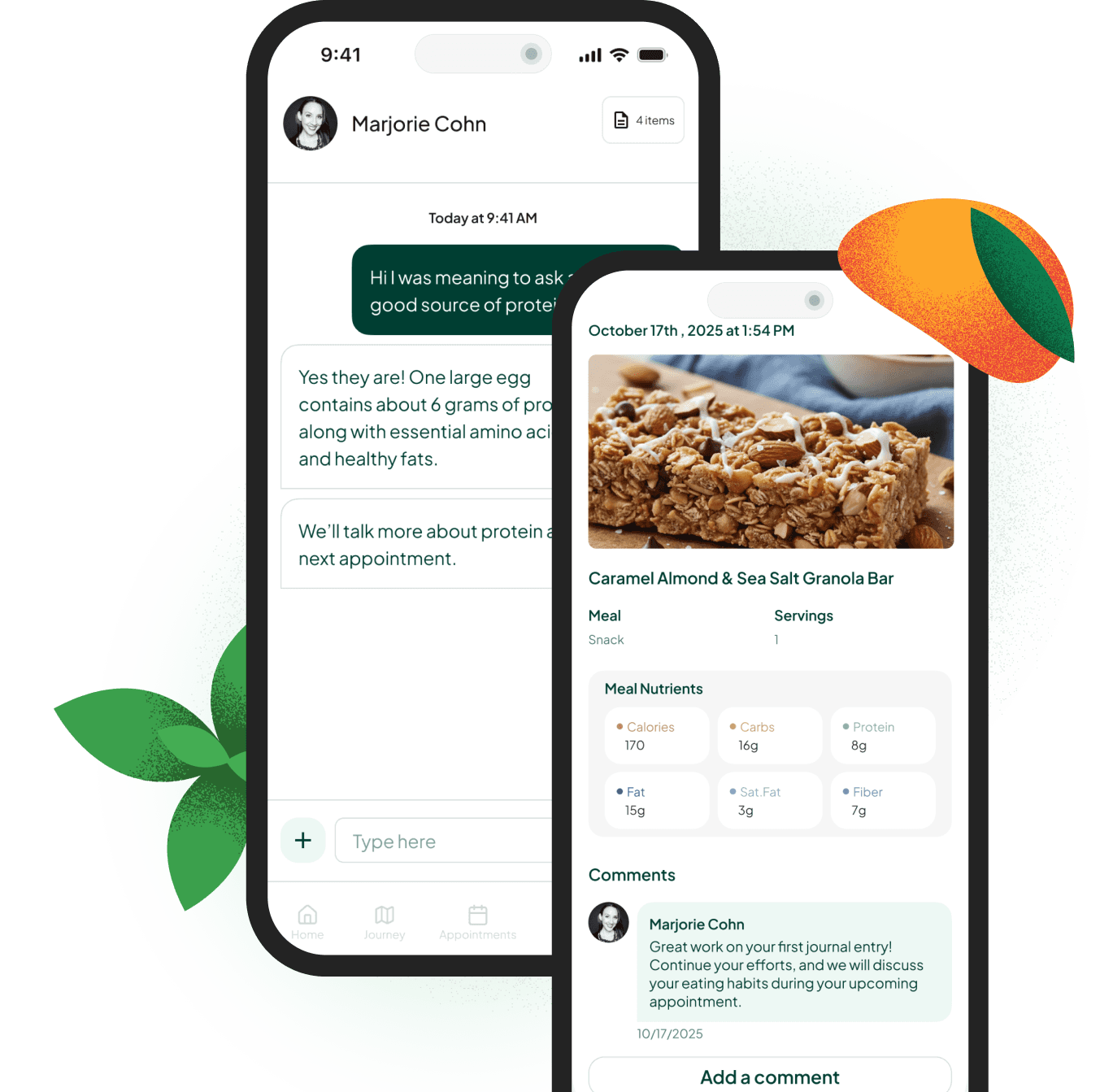
Progress happens between appointments, so between-visit support matters. Look for secure messaging with your dietitian, simple ways to log meals, and the option to connect wearable or lab data. The Berry Street app, for example, includes AI-powered meal tracking, wearable and lab integrations, and direct messaging with your dietitian. Consistent contact keeps a plan adjustable and realistic.
7. Access, availability, and privacy (all-50-states reach, HIPAA compliance)
Finally, confirm the practical details. Can the service see patients in your state? How soon can you get an appointment, and can you reschedule easily? Just as important, is the video platform private and HIPAA-compliant? Care that reaches all 50 states and protects your health information gives you both flexibility and peace of mind.
How Much Does an Online Dietitian Cost?
Cost depends almost entirely on your insurance, so start there.
With insurance (often $0 out of pocket) vs. self-pay ranges
Nutrition counseling is often covered as a preventive benefit, which can bring your cost down sharply. Berry Street is in-network with 1,250+ insurance plans nationwide, and most members pay $0 out of pocket with coverage.

Public coverage has rules worth knowing. Medicare Part B covers medical nutrition therapy for people with diabetes or kidney disease, or a kidney transplant in the last 36 months, and it requires a doctor’s referral. Only a registered dietitian or qualifying nutrition professional can provide those services. Telehealth eligibility can depend on where you live, so confirm the current rules with your provider or plan.
Without insurance, self-pay rates vary by location and specialty. According to Healthline, appointments often begin around $100, with more in-depth intake sessions commonly running about $150 to $250 and follow-ups around $100 to $150. Prices differ by provider, so ask for the full range before you book.
How to verify your coverage before you book
You do not have to guess. The best services let you check coverage in advance, in minutes, with no commitment. With Berry Street, you can enter your state and insurance provider and see your expected cost in about 60 seconds. The process is HIPAA-compliant, and you see exactly what you will pay before your first appointment. When you are ready, you can check your coverage and get matched online.
Who Benefits Most From an Online Dietitian Service?
Almost anyone can benefit from personalized nutrition care, but a few situations make virtual, credentialed support especially valuable.
By condition/goal — chronic conditions, women’s health, GLP-1 nutrition support, general wellbeing
If you are managing a chronic condition such as diabetes, pre-diabetes, or kidney disease, an RD can provide medical nutrition therapy tailored to your labs and medications. For women’s and reproductive health, dietitians support PMOS, prenatal and postnatal nutrition, and hormonal changes. If you take a GLP-1 medication, a dietitian offers nutrition support alongside it, helping protect muscle and manage side effects. And if you simply want to feel better day to day, a dietitian can help you build habits that actually fit your life.
“When a new client is managing something like diabetes or PMOS, I explain that an app or a health coach can hand you a generic plan, but it can’t adjust to your labs, your medications, or the week you actually had. As a registered dietitian, that ongoing, personalized adjustment is exactly the work, and it’s what a one-size-fits-all program can’t do.” — Bridget Isaacs, MS, RD
Finding the Right Fit for You
The “best” online dietitian service is the one that checks the boxes that matter to you: real RD, RDN or CNS credentials, coverage you can confirm up front, a specialty match for your goals, and a care philosophy that feels supportive rather than restrictive.
If apps, calorie counting, or rigid plans have worked until they didn’t, that is not a willpower problem. It is a one-size-fits-all problem. Personalized care from someone who understands your body and your life is what tends to stick. When you are ready, you can check your coverage in about 60 seconds and get matched with a registered dietitian, with no commitment required, and you can cancel anytime.

Frequently Asked Questions
What should I look for when choosing an online dietitian service?
Start with credentials, then coverage, then specialty fit. Confirm the providers are Registered Dietitians, RDNs or a CNS, check whether the service is in-network with your plan, and look for a provider who regularly treats your condition. A supportive, personalized care philosophy and solid between-visit support round out a strong choice.
Are online dietitian services covered by insurance?
Often, yes, but it depends on your plan. Nutrition counseling is frequently covered as a preventive benefit, and with Berry Street most members pay $0 out of pocket with coverage. You can check your specific plan in about 60 seconds before booking.
How much does an online dietitian cost without insurance?
Self-pay rates vary by location and specialty. According to Healthline, appointments often begin around $100, with more in-depth intake sessions commonly around $150 to $250 and follow-ups around $100 to $150. Ask any provider for their full range before you book.
Is an online dietitian as effective as seeing one in person?
Research is encouraging. A 2025 systematic review and meta-analysis found that online nutrition counseling improved weight, BMI, and waist circumference, with high patient satisfaction, though it did not consistently outperform usual care on blood markers like HbA1c and cholesterol. For many people, virtual care delivers personalized clinical guidance conveniently, and results depend on your goals and consistency.
What’s the difference between an online dietitian and an online nutritionist?
A Registered Dietitian Nutritionist holds a legally protected title that requires accredited education, supervised practice, and a national exam. In many states, anyone can call themselves a “nutritionist” without formal training. A CNS is a reliable credential in some states. For managing a health condition, look for the RD, RDN or CNS credential.
Do I need a doctor’s referral to see an online dietitian?
It depends on your plan. Many plans let you book directly, and with Berry Street most members can get started without a referral, though some plans do require one, so it is worth checking yours. Medicare medical nutrition therapy specifically does require a doctor’s referral.
How do online dietitian services match you with a provider?
Matching methods vary. Some services let you filter and choose your dietitian, while others pair you based on your goals, health history, and preferences. With Berry Street, you are matched with a dietitian who specializes in your needs, and you can switch if the first fit is not right.
Can an online dietitian help with GLP-1 medications, PMOS, diabetes, or eating disorders?
Yes. Dietitians provide specialized support across all of these, from medical nutrition therapy for diabetes and PMOS to compassionate care for eating disorders. For GLP-1 medications, a dietitian offers nutrition support alongside your medical team, helping protect muscle and manage side effects. Look for a provider who names your area as a focus.
How many online dietitian sessions will I need?
There is no single answer, because it depends on your goals and condition. Some people meet a few times to build a plan, while others benefit from ongoing check-ins over several months. Your dietitian will recommend a cadence and adjust it as you progress.
How quickly can I book an appointment with an online dietitian?
Often within days. Because care is fully virtual, you are not limited to providers near you, which usually means shorter waits. You can check coverage and get matched in about 60 seconds and then schedule at a time that works for you.
Can I switch dietitians if it isn’t a good fit?
Yes. A good service makes it easy to change providers if the match is not right for you. With Berry Street, you can switch dietitians, and you can cancel anytime. Finding the right fit is part of the process, not a failure.
Are online dietitian sessions HIPAA-compliant and private?
Reputable services use secure, HIPAA-compliant video and messaging to protect your health information. Berry Street’s care is fully virtual, private, and HIPAA-compliant from coverage check to visit. If a service cannot clearly explain how it protects your privacy, treat that as a warning sign.
Last Reviewed by Bridget Isaacs, MS, RD — September 2026.