Key Takeaways
“Holistic” should mean whole-person care from a licensed clinician, so start by looking for a registered dietitian (RD/RDN), not an unregulated “nutritionist” title.
A good gut-health dietitian looks at food, stress, sleep, movement, and hormones together, because your digestion rarely responds to diet changes alone.
Fiber and plant diversity feed a healthier gut microbiome, and research links higher fiber intake to better bowel regularity for many people.
Skip generic “gut-reset” plans and at-home microbiome tests as a first step, since a personalized, dietitian-guided plan tends to be more useful.
Care is usually covered. Berry Street is in-network with 1,250+ plans, and 95% of members pay $0.
Bloating that shows up every afternoon. A stomach that reacts to foods you used to eat without a second thought. Days planned around where the nearest bathroom is. If any of that sounds familiar, searching for a “holistic nutritionist online for gut health” is a reasonable next move. The tricky part is knowing who is actually qualified to help.
This guide walks you through what that phrase really means, how the right professional supports your gut, and how to choose one with confidence. The short version is that “holistic” and “credentialed” are not opposites. The whole-person care you want is exactly what a registered dietitian is trained to provide, and you can work with one entirely online.
In 30 seconds: For gut concerns like bloating, IBS, or food sensitivities, look for an online registered dietitian (RD/RDN) who treats the whole person, not a generic wellness coach or a mail-in test kit. A licensed dietitian builds a personalized, evidence-based plan and works alongside your doctor. At Berry Street, most members pay $0 with insurance.
On this page
What “holistic nutritionist for gut health” really means
How an online holistic dietitian actually helps your gut
What to look for when choosing an online gut health nutritionist
What online gut health care looks like — and how it’s covered
Your next step toward a calmer gut
Frequently Asked Questions
Sources & Further Reading
What “holistic nutritionist for gut health” really means
The word “holistic” gets used a lot, and it can mean very different things depending on who is saying it. Before you pick someone to guide your gut health, it helps to define the term and understand why the credentials behind it matter so much.
Holistic = whole-person care (food, stress, sleep, movement, hormones)
Holistic care simply means looking at the whole person instead of one symptom in isolation. Your gut does not operate on its own. It responds to what you eat, how you sleep, how stressed you feel, how much you move, and shifts in your hormones.
A whole-person approach considers all of those levers together. So if your bloating spikes during busy weeks, a holistic practitioner asks about your workload and sleep, not just your last meal. That wider view is often what a narrow food-only plan misses.
It also reframes the goal. Instead of chasing a “perfect” gut through strict rules, whole-person care looks for small, sustainable shifts that fit your actual life. For some people that means adjusting meal timing, and for others it means addressing stress before touching the menu at all.
The good news is that this style of care is not fringe. It is a core part of how a registered dietitian is trained to work, and it is available through virtual gut health support.

Why credentials matter — RDN vs. an unregulated “nutritionist” title
Here is a detail many people miss. In many states, anyone can call themselves a “nutritionist” without any required license, degree, or clinical training. The title alone does not guarantee expertise.
A Registered Dietitian Nutritionist (RDN) is different. An RDN is a licensed medical professional who has completed an accredited degree, a supervised practice program, and a national registration exam, and who keeps the credential current through ongoing continuing education. That means they are qualified to help manage medical conditions, not just offer general wellness tips. Similarly, a Certified Nutrition Specialist (CNS) is another credentialed professional with advanced training in clinical nutrition, and Berry Street includes both RDNs and CNS providers on its care team.
So when you search for a “holistic nutritionist,” the safer move is to look for an RD or RDN who practices holistically. You get the whole-person lens you wanted, backed by real clinical accountability.
When gut symptoms need a licensed clinician, not just a wellness coach
Some gut issues are minor and short-lived. Others are signals worth taking seriously. A wellness coach may mean well, but they are not trained to tell the difference or to safely manage a diagnosed condition.
See a licensed clinician if you notice any of these:
Symptoms that persist for weeks or keep coming back.
Unintended changes in your digestion, energy, or appetite.
A diagnosed condition like IBS, IBD, or celiac disease.
New symptoms that worry you or disrupt daily life.
A registered dietitian works alongside your doctor, not instead of them. If your symptoms point to something that needs medical testing, a good dietitian will say so and coordinate with your physician.

How an online holistic dietitian actually helps your gut
Once you are working with a credentialed dietitian, what does the help actually look like? It is less about handing you a rigid list of rules and more about untangling what is driving your symptoms, then building a plan around your real life.
Common concerns they address (bloating, IBS, constipation, IBD, food sensitivities)
A gut-focused dietitian supports a wide range of digestive concerns. You do not need a formal diagnosis to benefit, and you do not have to figure out the cause on your own first.
Common reasons people reach out include:
Ongoing bloating, gas, or abdominal discomfort.
Irritable bowel syndrome (IBS) and its day-to-day flare-ups.
Constipation or irregular, unpredictable bowel habits.
Inflammatory bowel disease (IBD), managed together with your care team.
Suspected food sensitivities and unclear trigger foods.
For each of these, the goal is the same. Understand your unique pattern, then adjust in a way that fits your body and your schedule.
The whole-person — fiber and plant diversity, fermented foods, the gut-brain axis, stress, sleep
This is where the holistic part earns its name. A dietitian rarely focuses on a single area of your life. Instead, they look at several factors that shape how your gut feels.
Fiber and plant diversity come first for many people. Eating a wide variety of plants feeds the trillions of microbes in your gut, and dietary fiber intake helps shape the composition of your gut microbiota. Fiber- and polyphenol-rich foods, like colorful fruits, vegetables, legumes, and whole grains, appear to support beneficial changes in the gut microbiome for many people. Fiber also has a practical payoff. A 2025 randomized controlled trial found that fiber supplementation improved bowel function in healthy adults, which matters if regularity is your main concern.

Beyond fiber, a dietitian may weave in a few other tools, depending on your individual needs:
Fermented foods, added gradually, for some people who tolerate them.
The gut-brain axis, since stress and mood can directly affect digestion.
Sleep habits, because poor rest can worsen gut symptoms.
Gentle, consistent movement to support regularity.
“When someone comes to me online for bloating or IBS, I don’t start with a diet at all. I start with a symptom and food timeline — when things flare, what your sleep and stress looked like that week, and what you’re already eating. That picture almost always tells us more than a one-size-fits-all ‘gut-reset’ plan ever could, and it means the changes we make are yours, not a template.” — Bridget Isaacs, MS, RD
Why personalization beats generic “gut-reset” plans and at-home microbiome tests
Search results are full of “gut-reset” programs and mail-in microbiome kits that promise a tidy answer. The trouble is that your gut is highly individual, and these products tend to hand everyone the same script.
At-home microbiome tests can be interesting, but the evidence supporting their clinical value is still limited, and results rarely translate into a clear, personalized plan. As Berry Street explains, gut health is never one-size-fits-all. A dietitian interprets your actual symptoms, history, and preferences, then adjusts as you go. That feedback loop is something a static test or generic reset cannot offer.
Personalization also protects you from overcorrecting. A generic plan might tell everyone to load up on fiber or cut out whole food groups, when your body may need the opposite. A dietitian paces changes to what you can tolerate, so you feel better without trading one problem for another.
What to look for when choosing an online gut health nutritionist
You have decided to get support. Now comes the part that trips people up. The internet is crowded with confident-sounding advice, so here is how to separate a qualified clinician from the noise.
Credentials to verify (RD/RDN, state licensure)
Start with credentials, because they are the clearest signal of training. This is quick to check and worth the two minutes.
Look for these specifically:
The letters RD, RDN or CNS after their name.
State licensure where your state requires it (many do).
A background or specialty in digestive health.
Care that complements your doctor, rather than replacing medical treatment.
If you want a fuller picture of how whole-person practitioners are trained, this overview of what a holistic nutritionist does for long-term health is a helpful companion read.
Questions to ask in a first consultation
A first visit is also your chance to interview them. A confident, credentialed dietitian will welcome these questions rather than dodge them.
Consider asking:
How do you personalize a plan for someone with my symptoms?
Do you coordinate with my doctor when needed?
How do you decide whether an elimination approach is appropriate?
What does support look like between our sessions?
How will we measure whether things are improving?
The answers should feel specific to you. Vague, one-size-fits-all replies are a sign to keep looking.
Red flags (restrictive “detoxes,” one-size-fits-all elimination diets, food fear)
Some approaches sound appealing but can do more harm than good. Watch for these warning signs.
Promises of a “detox,” “cleanse,” or fast “gut-reset.”
Long lists of foods framed as “toxic,” “bad,” or forever off-limits.
A blanket elimination diet handed to everyone, without personalization.
Pressure to cut out major food groups with no plan to reintroduce them.
Elimination approaches like the low-FODMAP diet do have a place, but as a temporary, dietitian-guided diagnostic tool, not a permanent way of eating. Done without support, restrictive diets can slip into food fear or disordered eating. A trained dietitian keeps the process structured and time-limited, and helps you reintroduce foods so your diet stays as varied as possible.
“When a client wants to jump straight into a strict elimination or ‘detox’ diet, I slow us down. We treat something like low-FODMAP as a short, structured experiment with a clear reintroduction plan — never a permanent list of ‘banned’ foods. My job is to keep your world of food as wide as we safely can, because cutting out more and more isn’t a win, and it can quietly turn into food fear.” — Bridget Isaacs, MS, RD
What online gut health care looks like — and how it’s covered
If you have never worked with a dietitian virtually, you may be wondering how it all works in practice. Here is what to expect, including the part people worry about most.
A typical virtual visit and between-session support
Care is fully virtual, so there is no commute and no waiting room. You meet your dietitian by video from home, on a schedule that fits your life.

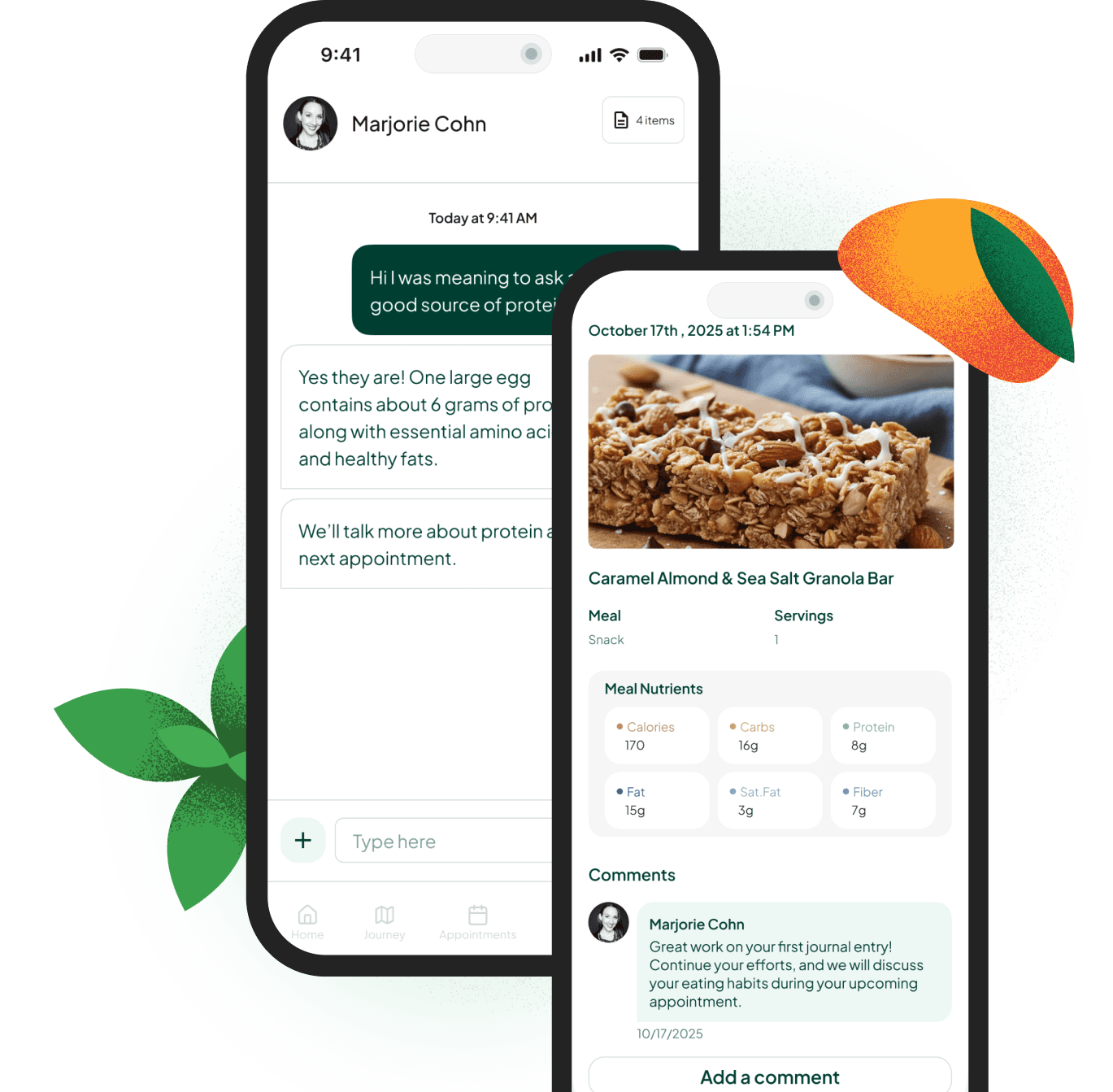
A first visit usually covers your symptoms, history, routines, and goals. From there, you build a plan together and adjust it over follow-up visits. Between sessions, you can often message your dietitian with questions, log meals, and share how things are going, so support does not stop when the call ends.
That steady contact matters for gut concerns in particular. Digestion changes week to week, and small tweaks often reveal more than one big overhaul. Being able to report a flare or a good stretch in real time lets your dietitian fine-tune the plan while it is still fresh.
Insurance and cost (most Berry Street members pay $0)
Cost is the biggest reason people delay getting help, and it is often lower than expected. Nutrition counseling is frequently covered by insurance.
Berry Street is in-network with 1,250+ plans, and 95% of members pay $0. You can check your own coverage in about 60 seconds, with no commitment, before you ever book. The process is secure, and you see what you would pay up front.
How Berry Street matches you with a gut-health RDN
You should not have to guess whether a dietitian actually understands gut concerns. Matching solves that for you.
After you check coverage, Berry Street matches you with a registered dietitian who specializes in your goals and health history. If digestive health is your focus, you are paired with someone experienced in that area. From there you can book video visits on your schedule and stay connected between them.
Your next step toward a calmer gut
You do not need to have everything figured out before you reach out. That is the whole point of working with a dietitian. If ongoing bloating, IBS, or food sensitivities have been wearing you down, a personalized, evidence-based plan can help, and the first step is small.
Whenever you are ready, you can check your coverage and book a visit in about a minute. There is no pressure and no commitment to see whether you are covered. A calmer gut often starts with one honest conversation with someone trained to help.

Frequently Asked Questions
What’s the difference between a holistic nutritionist and a registered dietitian for gut health?
A “holistic nutritionist” describes an approach, and in many states the title requires no license or clinical training. A registered dietitian (RD/RDN) is a licensed medical professional who can practice holistically and manage conditions. For gut health, an RDN gives you whole-person care plus real clinical accountability.
Can an online nutritionist really help with bloating and IBS?
Yes, for many people. A registered dietitian can review your symptoms, identify likely triggers, and build a personalized plan to ease bloating and IBS flare-ups. Virtual care works well here, because most of the work is conversation, tracking, and gradual adjustments over time.
Is an online holistic nutritionist for gut health covered by insurance?
Often, yes. Nutrition counseling is frequently a covered benefit, especially with a registered dietitian. Berry Street is in-network with 1,250+ plans, and 95% of members pay $0, and you can check your own coverage in about 60 seconds before booking.
How do I find a qualified holistic nutritionist online?
Start with credentials. Look for the letters RD or RDN, confirm state licensure where required, and check for experience in digestive health. Then ask how they personalize care. With Berry Street, you check coverage first and get matched with a gut-health dietitian.
Are at-home gut microbiome tests worth it, or should I see a dietitian?
At-home microbiome tests can be interesting, but the science is still developing, and results rarely produce a clear, personalized plan. A registered dietitian interprets your real symptoms and history, then adjusts as you go. For most people, that guidance is more useful than a test result alone.
What questions should I ask before choosing an online gut health nutritionist?
Ask how they personalize plans for your symptoms, whether they coordinate with your doctor, and how they decide if an elimination approach is appropriate. Also ask about between-session support and how you will measure progress. Specific answers are a good sign.
How much does an online gut health nutritionist cost?
Costs vary by provider and insurance, so it is worth checking your specific coverage. Many people pay far less than they expect once insurance is applied. At Berry Street, 95% of members pay $0, and you can confirm your own cost in about 60 seconds.
Can a dietitian help with a low-FODMAP diet or SIBO online?
Yes. A registered dietitian can guide a low-FODMAP diet as a temporary, structured tool and support you through reintroduction, all virtually. For more detail, see this explainer on IBS and the low-FODMAP diet. For SIBO, a dietitian works alongside your doctor’s treatment plan.
What actually happens in an online gut health nutrition appointment?
Your first video visit covers your symptoms, health history, routines, and goals. You and your dietitian then build a plan together and refine it over follow-up visits. Between sessions, you can usually message questions, log meals, and share updates, so you are supported throughout.
How long does it take to see gut health improvements when working with a dietitian?
It depends on your situation, so timelines vary from person to person. Some people notice changes within a few weeks, while others need longer to identify triggers and build steady habits. A dietitian sets realistic expectations and adjusts the plan as you go.
Do I need a doctor’s referral to see a gut health dietitian online?
Usually not, though some insurance plans may ask for one. A dietitian works alongside your doctor and will coordinate care when needed. The simplest way to know your requirements is to check your coverage, which also shows any plan-specific details up front.
Sources & Further Reading
Fu J, et al. “Dietary Fiber Intake and Gut Microbiota in Human Health.” Microorganisms, 2022, vol. 10, no. 12, article 2507. https://pmc.ncbi.nlm.nih.gov/articles/PMC9787832/
Meiners F, et al. “Gut microbiome-mediated health effects of fiber and polyphenol-rich dietary interventions.” Frontiers in Nutrition, 2025, vol. 12, article 1647740. https://pmc.ncbi.nlm.nih.gov/articles/PMC12425962/
Inoue R, et al. “Effects of Dietary Fiber Supplementation on Gut Microbiota and Bowel Function in Healthy Adults: A Randomized Controlled Trial.” Microorganisms, 2025, vol. 13, no. 9, article 2068. https://pmc.ncbi.nlm.nih.gov/articles/PMC12471990/
Porcari S, et al. “International consensus statement on microbiome testing in clinical practice.” The Lancet Gastroenterology & Hepatology, 2024, vol. 10, no. 2, pp. 154-167. https://pmc.ncbi.nlm.nih.gov/articles/PMC12343204/
South Carolina Academy of Nutrition and Dietetics. “Licensure & Reporting Harm — RDN vs. Nutritionist requirements.” https://www.eatrightsc.org/licensure-reporting-harm
Commission on Dietetic Registration. “RD Examination — Eligibility Requirements.” https://www.cdrnet.org/RDNeligibility
Berry Street: Why gut health is never one-size-fits-all
Berry Street: IBS and the low-FODMAP diet, a nutrition expert explains
Berry Street: What is a holistic nutritionist? Build long-term health
Last Reviewed by Bridget Isaacs, MS, RD — October 2026.