Key Takeaways
The right questions turn a first dietitian visit from a generic diet talk into personalized care. Ask about credentials, specialties, insurance, and philosophy before you book.
A Registered Dietitian Nutritionist (RD or RDN) is a credentialed medical professional. “Nutritionist” is not a protected title in many states, so the letters after a name matter. A Certified Nutrition Specialist (CNS) is an advanced credential recognized on a state by state basis.
Bring your goals, your health history, any recent labs, your medication and supplement list, and a few days of honest eating patterns. The more your dietitian knows, the more tailored your plan.
Set success metrics that go beyond the scale. Energy, labs, digestion, strength, and how food fits your life are all meaningful signs of progress.
Most Berry Street members pay $0 with insurance, and you can usually book without a referral. Coverage depends on your plan, so it is always worth checking yours.
You have booked, or you are about to book, your first visit with a dietitian. Maybe your doctor suggested it. Maybe you are managing a condition, or you are simply tired of piecing together nutrition advice from apps and headlines that never quite fit your life. Either way, one visit can shape whether you get a real, personalized plan or another set of rules you will abandon in a month.
The difference often comes down to the questions you ask. A prepared client who knows what to ask walks out with clarity, next steps, and a plan built around their body and schedule. This guide gives you a registered-dietitian-built checklist you can copy and paste, so you can vet fit, coordinate with your doctor, and set success metrics that actually mean something.

In 30 seconds: Ask about credentials, insurance, and philosophy before or on your first appointment, then use your first visit to align on your goals, your labs, your doctor’s involvement, and what success looks like beyond the scale. The best questions help you confirm your dietitian is the right fit and turn a single appointment into a personalized plan you can stick with.
Why the questions you ask actually matter
Nutrition advice is everywhere, and most of it is not built for you. A dietitian’s value is not a generic meal plan. It is an individualized process of assessment, diagnosis, intervention, and follow-up that adapts to your health history, your preferences, and your life.
That personalization is exactly what the evidence points to. According to the Academy of Nutrition and Dietetics, medical nutrition therapy provided by a registered dietitian nutritionist is effective at improving health outcomes across a wide range of conditions, including type 2 diabetes, pre-diabetes, high blood pressure, high cholesterol, and chronic kidney disease. A key reason is that dietitians deliver tailored care rather than one-size-fits-all advice.
The questions you ask shape how personalized that care can be. When you come prepared with your goals, your history, and your questions, your dietitian can spend the visit on strategy instead of setup. When you ask about approach and philosophy up front, you avoid the frustration of realizing three visits in that the fit is wrong.


What a registered dietitian does — and how they differ from a nutritionist
Before your first question about food, it helps to understand who is sitting across the screen from you.
RD/RDN credentials and clinical training
A Registered Dietitian (RD) and a Registered Dietitian Nutritionist (RDN) are the same credential. Both signal that a person has completed rigorous, standardized training. The Academy of Nutrition and Dietetics notes that an RDN must earn a graduate-level degree with an accredited nutrition curriculum, complete an extensive supervised practice program, pass a national registration exam, and maintain continuing education throughout their career. Many also hold specialty certifications in areas like diabetes, pediatrics, renal, oncology, or sports nutrition.
This training is what allows dietitians to treat and manage medical conditions, not just offer general wellness tips. Research on registered dietitian care reflects that clinical impact. For example, a systematic review and meta-analysis found that nutrition therapy delivered by dietitians may improve some nutrition and health outcomes in adults with protein-energy malnutrition, though the certainty of evidence varies by outcome. Dietitians work alongside your doctor, not instead of them.
Dietitian vs. nutritionist — why the distinction matters
Here is the part that surprises many people. “Registered Dietitian” and “Registered Dietitian Nutritionist” are protected, credentialed titles that require the education, supervised training, and national exam described above. The term “nutritionist,” by contrast, is not consistently regulated, and in many states is not legally protected, which means individuals with widely varying training may use it. That is why Berry Street is clear about credentials: every one of our providers is a registered dietitian or Certified Nutrition Specialist, not an uncredentialed “nutritionist.” A Certified Nutrition Specialist (CNS) is an advanced credential that requires a graduate degree, supervised practice hours, and a national board exam, and CNS professionals are also part of the Berry Street care team.
It is important to note that not every nutritionist lacks expertise, but it does mean you should check the letters after someone’s name and what they stand for. If you want a deeper breakdown, our guide on the difference between a nutritionist and a dietitian walks through it. When you are trusting someone with your health, credentials are a fair thing to ask about.
Questions to ask before you book
The best time to confirm fit is before your first appointment. These questions help you screen for the right expertise, understand the cost, and gauge whether a dietitian’s philosophy matches what you are looking for.
Questions about credentials, specialties, and experience
Are you a Registered Dietitian, Registered Dietitian Nutritionist or Certified Nutrition Specialist?
Do you specialize in my goal or condition, and how much experience do you have with it?
Do you hold any specialty certifications relevant to my needs?
Have you worked with people in a similar situation to mine?
Specialization matters. A dietitian who focuses on gut health, diabetes, or women’s health brings pattern recognition that a generalist may not. It is reasonable to ask directly.
Questions about insurance, cost, and logistics
Do you accept my insurance, and what will I pay out of pocket?
Do I need a referral from my doctor?
How long are visits, and how often will we meet?
Are visits virtual, and can I message you between appointments?
Cost should not be a mystery. It depends on your plan, but nutrition counseling is often a covered benefit. With Berry Street, most members pay $0 with insurance, and you can usually book without a referral. Some plans do require one, so it is worth checking yours before you start. You can confirm your coverage when you check your options through the booking flow.
Questions to gauge approach and philosophy
How would you describe your approach to nutrition?
Do you focus only on weight, or on broader health and behaviors?
Will my plan be personalized, or is it a standard template?
How do you help clients make changes that last?
This is where fit is won or lost. If you want support that is not built around restriction, ask how a dietitian thinks about weight and behavior. At Berry Street, the focus is often on sustainable habits and how you feel, not rigid rules.
Questions to ask at your first appointment
Once you are in the room, or on the video call, the goal shifts from vetting to building. These questions help you and your dietitian align on where you are headed and how you will get there.

Questions about your goals and personalized plan
Based on what I have shared, what would you recommend I focus on first?
What does a realistic plan look like for my schedule and preferences?
What small changes could make the biggest difference for me?
How will we adjust the plan if something is not working?
“When a new client asks me what details are important, I tell them to get specific about their life and habits. The most useful thing you can bring is honesty about your schedule, your budget, and what has and has not worked before. I would rather build one change that fits your Tuesday night than hand you a perfect plan you will never actually use.” — Bridget Isaacs, MS, RD
Questions about coordinating with your doctor and labs
Can you work with my doctor and review my recent lab results?
Are there any labs or tests worth asking my doctor about?
How will you share updates with my care team?
Which of my medications or supplements should we account for?
Dietitians are part of your broader care team. If you have recent bloodwork, bring it. Coordinated care helps your dietitian tailor recommendations and flag anything worth raising with your physician.
Questions about what success looks like (beyond the scale)
How will we measure progress?
What non-scale wins should I look for early on?
How long before I might notice changes?
What happens if the plan needs to change?
“I help clients pick two or three markers that actually reflect how they are living, not only a number on the scale. Early on I point them toward things like steadier energy through the afternoon, better sleep, less bloating after meals, or simply feeling calmer around food. Those wins usually show up before any change on the scale, and they are the ones that keep people going.” — Bridget Isaacs, MS, RD
Questions to ask by goal or condition
Different goals call for different questions. Here are focused mini-lists you can adapt to your situation.
Weight management and GLP-1 / weight-loss-medication support
Do you have experience supporting clients on GLP-1 medications?
How can nutrition help me protect muscle and manage side effects?
How do we keep results sustainable over time?
How do you coordinate with the clinician prescribing my medication?
GLP-1 medications like the ones prescribed for weight management and type 2 diabetes are FDA-approved treatments that work best with support. When these medications are medically prescribed and monitored, a dietitian plays an important role in helping you protect lean muscle, manage side effects like nausea, and get adequate protein and nutrients while your appetite changes. This is care, not a shortcut, and weight loss can be a stated goal in this medical context.
Diabetes and pre-diabetes
How can nutrition help me manage my blood sugar?
Should we coordinate around my medication or monitoring?
What changes tend to make the biggest difference for people like me?
How will we track progress beyond a single lab value?
Nutrition therapy has strong evidence behind it here. Ask how your dietitian will personalize recommendations to your labs, your routine, and your preferences.
Gut health / IBS
Do you have experience with IBS or other digestive concerns?
Will we try a structured approach, and how will we reintroduce foods?
How do we avoid unnecessary restriction?
How will we know the plan is helping?
Gut health work is highly individual. A good dietitian aims to expand what you can comfortably eat, not shrink it permanently.
PMOS, women’s health, and hormonal health
Do you specialize in PMOS or women’s hormonal health?
How does nutrition fit alongside any other treatment I am receiving?
What should I realistically expect, and over what timeline?
How will we personalize this to my body and goals?
For hormonal health, specialization helps. Our PMOS condition page explains how dietitian-led care can fit into a broader plan, and it is worth asking a prospective dietitian how much experience they have in this area.
What the dietitian will ask YOU (and how to prepare)
A first visit is a two-way conversation. Knowing what your dietitian will ask helps you show up ready to make the most of it.
What to bring to your first appointment
Your goals, and why they matter to you right now
Relevant health history and any recent lab results
A current list of medications and supplements
A realistic picture of a few typical days of eating
Your questions from the checklist below
You do not need a perfect food diary. An honest snapshot is far more useful than a polished one.

How to prepare so the visit is worth it
Think about what a good outcome looks like for you. Consider your schedule, your budget, your cooking reality, and any past approaches that did or did not work. If you want a fuller picture of the experience, our guide on what to expect when seeing a dietitian walks through a typical visit. The more context you bring, the more personalized your plan can be.
Copy-and-paste question checklist
Copy this list, keep it on your phone, and bring it to your visit.
Before your appointment
Are you a Registered Dietitian or Registered Dietitian Nutritionist?
Do you specialize in my goal or condition?
Do you accept my insurance, and what will I pay?
Do I need a referral?
How would you describe your approach to nutrition?
At your first appointment
What should I focus on first?
What would a realistic plan look like for my life?
Can you work with my doctor and review my labs?
How will we measure progress beyond the scale?
How will we adjust if something is not working?
By goal or condition
What experience do you have with my specific situation, like GLP-1 support, diabetes, gut health, or PMOS?
How will we keep changes personalized and sustainable?
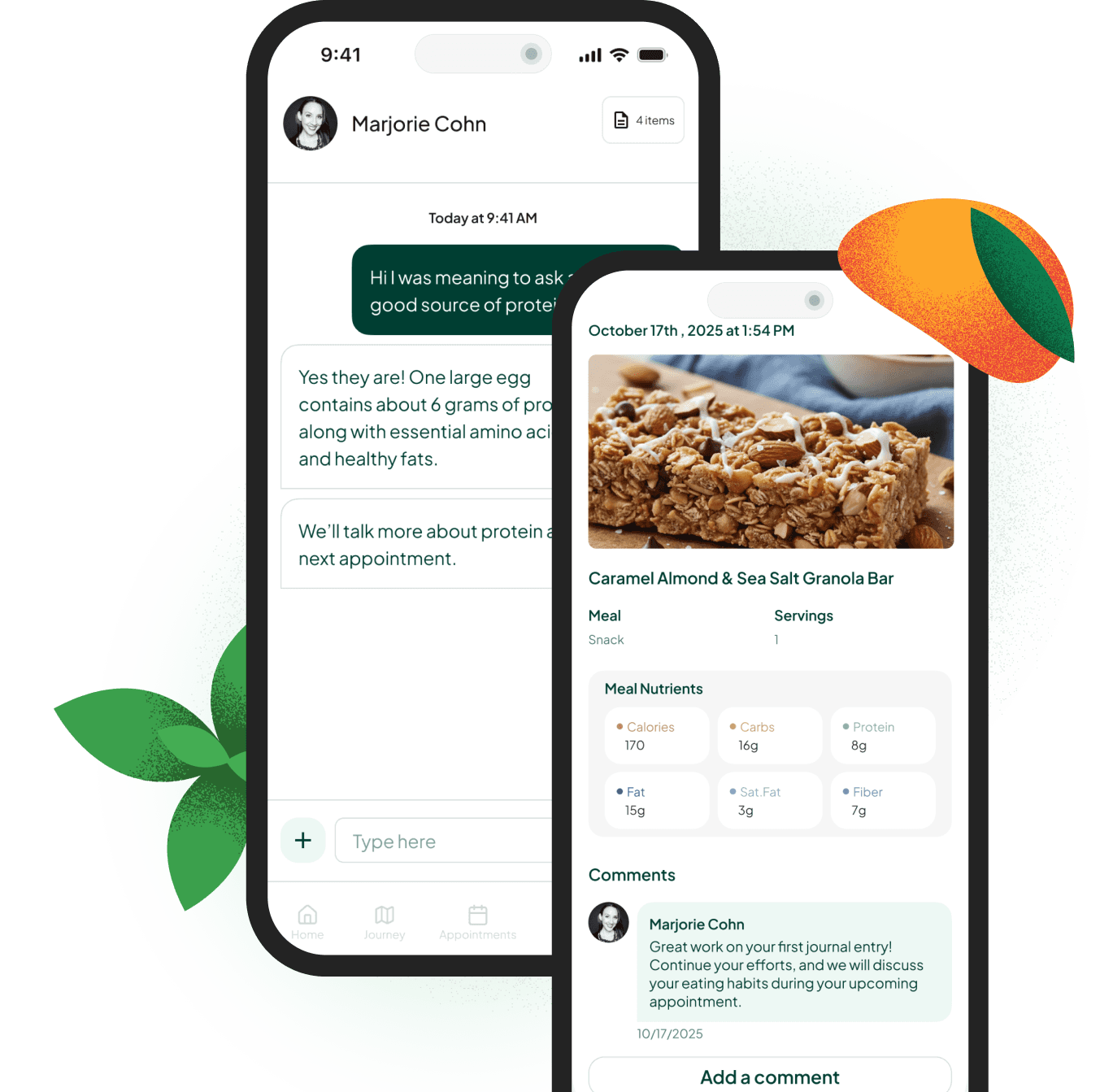
Getting started with a Berry Street dietitian
If you are ready to put this checklist to use, Berry Street matches you with a registered dietitian who specializes in your goals and health history, through virtual visits that fit your schedule. Most members pay $0 with insurance, and you can usually get started without a referral. Coverage depends on your plan, so the simplest first step is to check your coverage and get matched. No pressure, and you can cancel anytime.

Key Takeaways
Ask about credentials, specialties, insurance, and philosophy before you book so you confirm fit early.
Look for the RD or RDN credential, since “nutritionist” is not a protected title everywhere.
Bring your goals, history, labs, and medication list, and prepare an honest snapshot of how you eat.
Set success metrics beyond the scale, like energy, labs, digestion, and how food fits your life.
With Berry Street, most members pay $0 with insurance and can usually book without a referral, though coverage depends on your plan.
Frequently Asked Questions
What should I bring to my first dietitian appointment?
Bring your goals, relevant health history, any recent lab results, and a current list of medications and supplements. It also helps to have an honest picture of a few typical days of eating. You do not need a perfect food diary, just an accurate snapshot.
How do I prepare for a dietitian appointment?
Think about what a good outcome looks like for you and what has or has not worked before. Consider your schedule, budget, and cooking reality so your dietitian can build a plan that fits. Writing down your questions ahead of time helps you cover everything in the visit.
How do I know if a dietitian is the right fit for me?
Ask about their approach, their experience with your specific goal or condition, and how they personalize plans. A good fit usually means you feel heard, not judged, and the plan reflects your real life. If the approach feels overly rigid or generic, it is reasonable to look for a better match.
What will the dietitian ask me during my first visit?
Expect questions about your goals, health history, typical eating patterns, medications, and any recent labs. Your dietitian may also ask about your schedule, stress, sleep, and past experiences with food. This helps them build a plan tailored to you rather than a template.
How often should I see a dietitian?
It depends on your goals and needs, and your dietitian will personalize the cadence with you. Some people meet more often early on and then space visits out as they build momentum. There is no single right frequency for everyone.
Does insurance cover seeing a dietitian?
Often, yes, though it depends on your plan. Nutrition counseling is frequently a covered benefit, and with Berry Street most members pay $0 with insurance. You can check your specific coverage in about a minute before booking.
What’s the difference between a dietitian and a nutritionist?
A Registered Dietitian or Registered Dietitian Nutritionist has completed graduate-level education, supervised clinical training, and a national exam, and holds a protected credential. The term “nutritionist” is not consistently regulated and can sometimes be used without those formal credentials. When you need clinical, personalized care, the RD or RDN credential is a meaningful signal.
What questions should I ask a dietitian about weight loss or GLP-1 medications?
Ask whether they have experience supporting clients on GLP-1 medications and how nutrition can help you protect muscle and manage side effects. Ask how they keep results sustainable and how they coordinate with your prescribing clinician. GLP-1 medications are FDA-approved treatments, and a dietitian helps you get the most from medically supervised care.
Can I ask my dietitian for a meal plan?
Yes, and many dietitians will build one with you if it is helpful. A good meal plan is personalized to your preferences, budget, and schedule rather than a rigid template. You can also ask for flexible frameworks instead of a fixed plan if that suits you better.
What should I do if my dietitian’s advice isn’t working for me?
Tell them. A good dietitian expects to adjust the plan and will want to know what is not fitting. If you have shared honest feedback and the approach still is not working, it is reasonable to seek a dietitian whose style fits you better.
Can a dietitian work with my doctor and review my lab results?
Yes. Dietitians are part of your broader care team and can review recent labs and coordinate with your physician. Bringing your bloodwork to your visit helps your dietitian tailor recommendations and flag anything worth raising with your doctor.
How long does it take to see results from working with a dietitian?
It varies from person to person and depends on your goals. Many people notice non-scale wins first, like steadier energy, better digestion, or feeling calmer around food, sometimes within a few weeks. Lasting change tends to build gradually, which is what makes it sustainable.