Key Takeaways
You do not have to be on a diet, or plan to lose weight, to benefit from working with a dietitian.
“Registered Dietitian Nutritionist” (RDN) is a protected clinical credential, while “nutritionist” can be used without formal training in some states.
Medical nutrition therapy can help manage conditions like diabetes, IBS, and PMOS without rigid restriction.
The non-diet, HAES approach focuses on sustainable behaviors and a calmer relationship with food, with weight loss as at most one possible outcome.
Most Berry Street members pay $0 through insurance, though what you pay depends on your plan.
You’ve tried the diets. The low-carb one, the meal-replacement one, the app that counted every bite. Some of them worked, for a while, and then they didn’t. If that sounds like your last decade, here’s the reframe that changes everything: none of them stuck because the plan was never built for you. That’s not a willpower problem. That’s a one-size-fits-all problem.
Here’s the other thing worth saying up front. A dietitian is not the food police. Not all dietitians are going to inspect your pantry, hand you a list of forbidden foods, or make you obsessively log calories. Strict food rules and over restriction is an old model, and it’s the one that keeps failing people.
This article walks through what dietitians actually do, how their care differs from a diet, and why you do not have to diet to see one. The short version: real nutrition care is personalized, supportive, and built to last longer than any 30-day plan ever could.

In 30 seconds: No, you do not have to diet to see a dietitian. A registered dietitian provides personalized, nutrition care that helps you manage conditions and rebuild a calm relationship with food, and weight loss is at most one possible outcome, never the only goal. Most Berry Street members pay $0 through insurance.
What Does a Dietitian Actually Do?
A dietitian is a licensed healthcare professional trained to turn nutrition science into care that fits your body, your history, and your life. That work looks less like a rulebook and more like a partnership.
Registered Dietitian (RD/RDN) vs. “Nutritionist” — Why the Credential Matters
The title matters more than most people realize. To become a registered dietitian nutritionist (RDN), a person completes a graduate degree, hundreds of supervised practice hours, and a national board exam, then keeps up ongoing continuing education to stay credentialed. “Registered dietitian nutritionist” is a legally protected title, granted through the Academy of Nutrition and Dietetics credentialing body.
“Nutritionist,” by contrast, has no standardized meaning. In many places, anyone can use the word without any formal training at all. That gap is exactly why the credential is worth checking before you trust someone with your health. It is important to note that a Certified Nutrition Specialist (CNS) does hold an advanced credential, awarded by the Board for Certification of Nutrition Specialists.
This is a Berry Street difference we take seriously. Every Berry Street provider is a licensed RD, RDN, or CNS, not a generic health coach or an uncredentialed “nutritionist.” If you want the fuller picture, here’s more on what a dietitian does.

Medical Nutrition Therapy — Treating Conditions, Not Handing Out Diets
One of the core things dietitians provide is medical nutrition therapy (MNT). MNT is personalized, clinical nutrition care used to help manage health conditions. It is not a generic diet printout you take home and follow alone. It’s individualized to your labs, your symptoms, your medications, and your goals, and it gets adjusted as you go.
Dietitians do this work alongside your doctor, not instead of them. Your physician manages diagnoses and prescriptions, and your dietitian translates that plan into food and habits that actually fit your day. According to a 2025 Academy of Nutrition and Dietetics position paper, MNT delivered by registered dietitian nutritionists is effective in improving health outcomes for many chronic conditions. That’s care, not a crash diet.

“Do I Have to Diet to See a Dietitian?” (Short Answer: No)
Let’s answer the question in the heading directly, because it’s the one that stops so many people from reaching out. No, you do not have to diet to see a dietitian. In fact, for many people, stepping off the diet cycle is the whole point.
The Difference Between a Diet and Dietitian-Guided Nutrition Care
A diet is usually rigid, restrictive, and identical for everyone who follows it. It hands you rules from the outside and asks you to “will power” your way through, then blames you when the plan runs out of steam.
Dietitian-guided nutrition care works the other way around. It’s personalized to your needs, built to be sustainable. No foods get demonized, no eating is labeled shameful, and the plan flexes with your real life instead of fighting it. The goal is a way of eating you can actually keep.
What “Non-Diet” and Health at Every Size (HAES) Really Mean
Here at Berry Street, we have many providers that follow a non-diet and/or HAES approach.
That framing comes from Health at Every Size (HAES), an approach that de-emphasizes weight as the primary marker of health. Instead, it focuses on sustainable behaviors and a calmer, less anxious relationship with food. Progress gets measured in energy, lab results, symptom relief, and how you feel, not just a number on a scale. Some Berry Street dietitians work from this weight-neutral, HAES framework, and you can read more about weight-neutral, Health at Every Size care.
How a Non-Diet Dietitian Helps You — Without Restriction
So if it isn’t about restriction, what does the actual help look like? Quite a lot, as it turns out, and none of it requires you to shrink your plate or track a single calorie.
Building a Better Relationship With Food (Intuitive Eating, Hunger and Fullness Cues)
A big part of the work is helping you rebuild trust with your own body. Intuitive eating is one framework dietitians use for this. It means tuning back into your hunger, fullness, and satisfaction cues rather than outsourcing every decision to external diet rules.
The research here is encouraging. A 2023 systematic review and meta-analysis in the journal Eating Disorders found that intuitive-eating interventions improved intuitive eating along with a range of health-related outcomes. And a 2022 systematic review in the Journal of Nutrition Education and Behavior found that people in intuitive-eating-based programs tend to maintain or improve their diet quality, though this evidence is still emerging and worth watching. If this speaks to you, here’s more on intuitive eating.

Managing Medical Conditions Without a Restrictive Plan (Diabetes, IBS, PMOS, Heart Health)
Managing a diagnosis does not have to mean living on a short list of approved foods. For conditions like diabetes, IBS, PMOS, and heart health, a registered dietitian personalizes the approach to you.
For some people with diabetes, that may mean learning how to pair foods to steady energy rather than cutting out whole groups. With IBS, care may involve a structured, temporary approach to identifying triggers, always guided so you’re not restricting forever. For PMOS or heart health, recommendations depend on your individual needs, your labs, and what’s realistic for your week. The through-line is flexibility, not fear.
Support for Disordered Eating and a History of Chronic Dieting
If years of dieting have left you exhausted, anxious around food, or caught in cycles you’d rather not repeat, you’re far from alone, and you’re not broken. Dietitians who work in this space lead with compassion, not judgment. They meet you exactly where you are, at whatever pace feels safe, and help you rebuild from there without shame about the past.
Where Weight Fits In — a Possible Outcome, Never the Only Goal
So where does weight actually fit? It can be one possible outcome of feeling better and eating in a way that suits your body. It might not be the only goal, and it’s not the single yardstick we use to define your health. Better sleep, steadier energy, easier digestion, and a quieter relationship with food all count, too.
“When someone comes in worn out from years of dieting, the first thing I tell them is that I’m not here to put them on another one. We spend our early sessions figuring out what’s actually going on with your energy, your schedule, and your history with food, and we build from there. If weight change happens along the way, great, but I treat it as one signal among many, never the scoreboard. My job is to help you feel better and trust food again, not to hand you a smaller plate.” — Bridget Isaacs, MS, RD
What to Expect When You Work With a Dietitian
If you’ve never worked with a dietitian, the unknown can feel intimidating. Here’s a realistic look at what the experience is actually like, start to finish.
Your First Appointment — What Actually Happens
Your first session is mostly a conversation. Your dietitian gets to know your history, your health goals, your day-to-day routine, and your relationship with food. Expect questions, listening, and a plan that starts small. You will not leave with calorie-counting homework or a punishing meal plan to force yourself through.

“A first session is really about getting to know you, not auditing your fridge. We talk through your history, what a normal day of eating looks like, what’s stressful about food right now, and what you actually want to feel. From there we pick one or two small, doable shifts, not a full overhaul. Nobody leaves my first appointment with a calorie target to hit, they leave with a next step that fits their week.” — Bridget Isaacs, MS, RD
Personalized, Ongoing Support That Fits Your Real Life
Care doesn’t stop when the first call ends. You and your dietitian set a cadence that fits your life, whether that’s weekly at first or spaced further out as things click. Between visits, you can message your dietitian with the questions that come up in real time, so support shows up when you actually need it, not just on appointment day.
What a Dietitian Can’t Do (Diagnose, Prescribe) and How They Work With Your Care Team
It’s worth being clear about the boundaries, too. A dietitian does not diagnose diseases or prescribe medication on their own. Those are your physician’s role. What a dietitian does is collaborate with your broader care team, translating your medical plan into practical, personalized nutrition care and looping in your doctor as needed. You get coordinated support, not conflicting advice.
Reasons to See a Dietitian That Have Nothing to Do With Weight Loss
Plenty of people come to a dietitian for reasons that have nothing to do with the scale. Depending on your individual needs, you might reach out to:
Boost steady, all-day energy instead of riding crashes
Calm ongoing gut symptoms like bloating, constipation, or IBS flare-ups
Manage a condition such as diabetes, PMOS, or heart health with food
Fuel athletic training, recovery, and sports performance
Navigate nutrition through pregnancy and the postpartum months
Eat well and confidently around food allergies or intolerances
Sort out confusing, contradictory nutrition advice you’ve read online
Build a calmer, less stressful relationship with food and eating
Everyone’s starting point looks a little different, so what brings you in may look nothing like the person next to you, and that’s exactly the point.
Getting Started With a Berry Street Dietitian
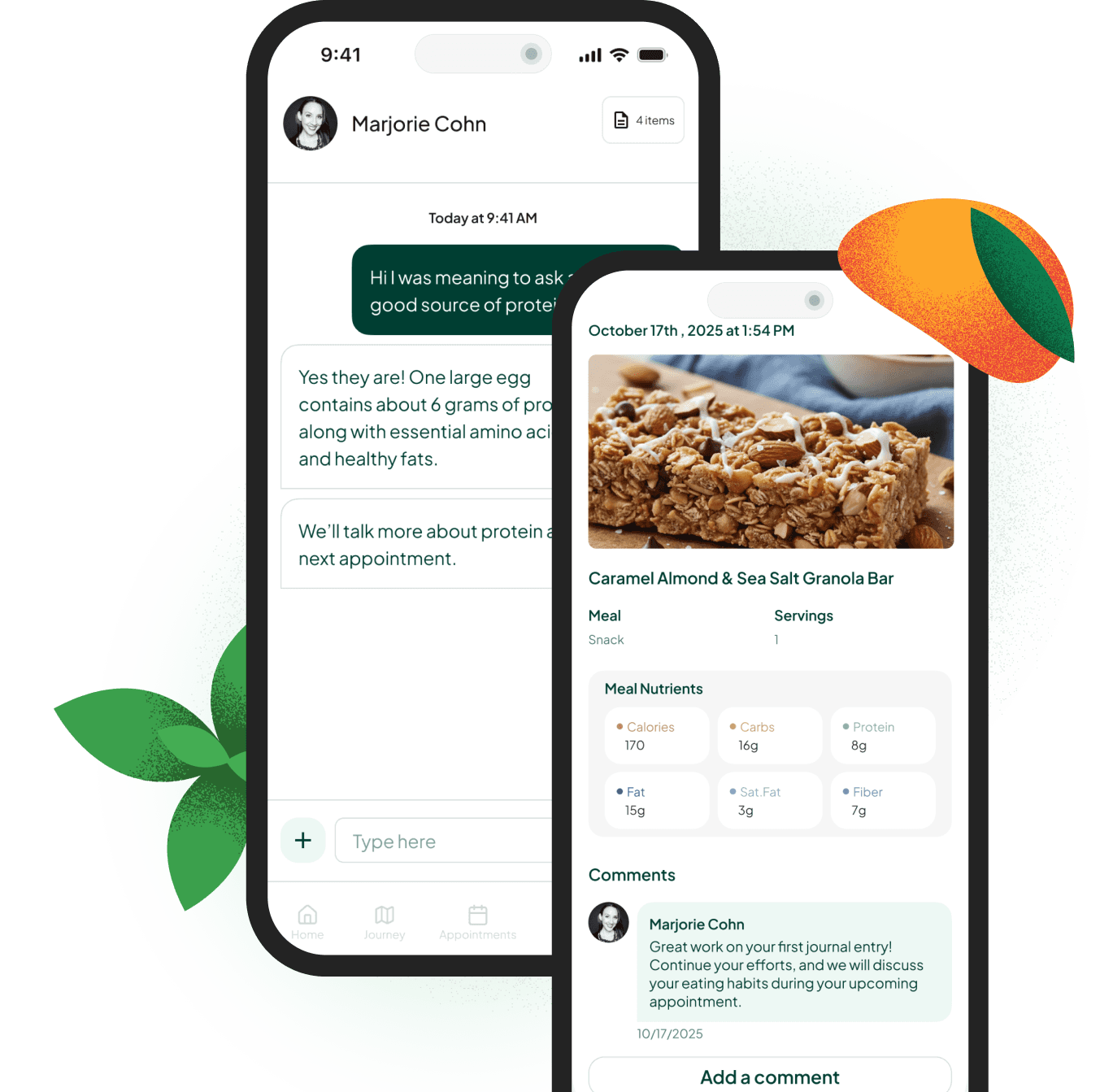
If you want support that starts with your goals instead of a diet plan, working with a Berry Street dietitian is a low-pressure first step. Here is how it works. We match you with a registered dietitian who fits your goals and health history, so you are not starting over with a stranger each visit. You meet 1-on-1 over video, and you can chat with your dietitian between visits when questions come up. Everything is fully virtual, so there is no commute and no waiting room.
Cost is often the first question, so we make it easy to answer. Berry Street is in-network with 1,250+ insurance plans, and most members pay $0 out of pocket. Whether that applies to you depends on your plan, and you can check your coverage in about 60 seconds.

Frequently Asked Questions
Do you have to be on a diet to see a dietitian?
No. A dietitian helps you understand your body, your habits, and your health, and none of that requires you to be dieting. Many people work with a dietitian precisely because they want to stop dieting and find something more sustainable.
Can a dietitian help me without putting me on a restrictive diet?
Yes. A registered dietitian can support your health without handing you a rigid meal plan or a list of forbidden foods. The focus is on practical, personalized changes that fit your life, not restriction for its own sake.
What’s the difference between a dietitian and a nutritionist?
A Registered Dietitian Nutritionist (RDN) is a licensed clinical professional who completes advanced education, supervised training, and national credentialing. The title “nutritionist” is not protected in every state, so it can sometimes be used without formal qualifications. Every Berry Street provider is a credentialed, licensed clinician — an RD, RDN, or CNS.
What does a non-diet or HAES dietitian actually do?
A non-diet or Health At Every Size (HAES) dietitian helps you build sustainable eating behaviors and a calmer relationship with food, rather than chasing a number on the scale. They look at the full picture, including stress, sleep, schedule, and health history. Weight loss may be one possible outcome for some people, but it is never treated as the only measure of health.
What happens at your first dietitian appointment?
Your first visit is mostly a conversation. Your dietitian asks about your goals, health history, eating patterns, and what has and has not worked for you before. From there, you agree on a few realistic next steps together, tailored to your individual needs.
Can a dietitian help if I have a history of yo-yo dieting or disordered eating?
Yes, and this is one of the most common reasons people reach out. A dietitian can help you move away from cycles of restriction and rebound toward steadier, less stressful eating. Care is non-judgmental and paced to what feels safe for you.
What are reasons to see a dietitian that aren’t about weight loss?
Plenty. People work with dietitians for gut health, energy, managing a diagnosis, fertility and prenatal nutrition, sports performance, or simply feeling more confident about food. Improving how you feel day to day is a valid goal on its own.
Can a dietitian help manage a condition like diabetes, IBS, or PMOS without a strict diet?
Yes. Medical nutrition therapy can help you manage conditions like diabetes, IBS, and PMOS through personalized, flexible changes rather than one rigid diet. Your dietitian tailors recommendations to your body, your labs, and your daily routine.
Does insurance cover seeing a dietitian?
It depends on your plan. Berry Street is in-network with 1,250+ plans and most members pay $0, and you can check your coverage in about 60 seconds. That quick check shows what you would pay before you commit to anything.
What can’t a dietitian do?
A dietitian does not diagnose disease or prescribe medication independently. Instead, they work alongside your doctor as part of your care team, focusing on the nutrition side of your health. For medical diagnoses and prescriptions, your physician remains involved.
Do dietitians only care about weight loss?
No. A registered dietitian cares about your overall health, your relationship with food, and how you feel, not just the scale. Weight loss may be one possible goal or side effect for some people, but it is never the only thing that matters.
Last Reviewed by Bridget Isaacs, MS, RD — November 2026.