Key Takeaways
Both rapid weight loss and GLP-1 medications can modestly raise your gallstone risk, but the absolute risk stays low for most people and is very manageable with the right support.
Keeping some healthy fat at each meal gives your gallbladder a reason to contract and empty, which helps keep bile moving instead of sitting still.
Fiber-rich foods and regular, balanced meals work together to support healthy digestion and steadier bile flow throughout the day.
Pacing your weight loss so it happens gradually is one of the most protective things you can do for your gallbladder.
A registered dietitian can help you do all of this without restriction, building a plan that fits your body, your medication, and your life.
If you are losing weight on a GLP-1 medication and someone mentioned gallstones, it makes sense to pause and wonder what that means for you. Maybe you read a warning label, saw a headline, or felt a twinge after a meal. That worry is valid, and it deserves a clear, calm answer rather than another reason to feel afraid of your own treatment.
Here is the reassuring part. GLP-1 medications are FDA-approved treatments that support metabolic health and weight management, prescribed and monitored by a medical team that includes a registered dietitian. The gallstone question is real, but it is not a reason to fear the medication. It is a reason to eat in a way that actively protects you.
This article takes a nutrition-first angle. Instead of listing foods to fear, we will walk through how eating enough of the right things keeps your gallbladder working the way it should, and how your care team can personalize the details for you.

In 30 seconds: Yes, both rapid weight loss and GLP-1 medications can raise gallstone risk somewhat. For most people that risk stays low, and you can lower it further by eating enough of the right fats and fiber, keeping your meals steady through the day, and pacing your weight loss so it happens gradually.
Can rapid weight loss or a GLP-1 medication cause gallstones?
Yes, both can raise the risk, but for most people that risk stays low and manageable, and it is not a reason to fear the medication. Gallstones are a known consideration whenever weight comes down quickly, whether the tool is surgery, a very low-calorie approach, or a GLP-1 medication. Knowing why they form makes it much easier to eat in a way that lowers your odds.
What gallstones are and why they form
Your gallbladder is a small pouch that sits under your liver and stores bile, a fluid your body uses to digest fat. When you eat a meal with some fat in it, your gallbladder squeezes and releases that bile into your small intestine.
Bile is a mix of substances, including cholesterol. When there is too much cholesterol in the bile for the fluid to keep dissolved, tiny crystals can form and clump into stones. Two things make this more likely: bile that is overloaded with cholesterol, and a gallbladder that is not emptying often enough. When bile sits still instead of flushing out regularly, those crystals have more time to settle and grow.
The two drivers: rapid weight loss and slowed gallbladder emptying on GLP-1s
There are two main forces at work here, and they can overlap.
The first is rapid weight loss itself. When you lose weight quickly, your liver releases extra cholesterol into your bile, and at the same time your gallbladder tends to empty less often. That combination, described by the NIDDK, is exactly the setup that lets cholesterol crystals form.
The second is specific to how GLP-1 medications work. These medications slow digestion, and part of that effect involves reducing a signal called cholecystokinin, or CCK. CCK is the hormone that normally tells your gallbladder to contract after a meal. With less of that signal, gallbladder contraction can be blunted and bile can sit longer than it should, a state called bile stasis. Put the two drivers together, and you can see why the topic comes up. You can also see why what and how you eat has real leverage over it.

How common is this, really?
It helps to put the numbers in perspective, because relative risk and absolute risk are two very different things.
People taking GLP-1 medications do have a modestly higher relative risk of gallbladder and biliary problems. One large analysis in JAMA Internal Medicine found roughly a 27% higher risk of gallstones and about a 36% higher risk of gallbladder inflammation compared with people not taking the medication. That sounds significant on its own, and it is worth knowing.
But the absolute risk tells the fuller story. That same body of research translates to roughly 27 extra cases per 10,000 people treated per year. In other words, the great majority of people on these medications never develop a gallbladder problem at all. Risk is highest during stretches of rapid weight loss, especially in the first several months, which is exactly when your eating pattern matters most.
Why does losing weight quickly raise gallstone risk?
When weight comes off fast, three things tend to happen at once inside your bile system.
First, your bile becomes supersaturated with cholesterol. As stored fat breaks down quickly, your liver moves more cholesterol into the bile than the fluid can comfortably hold, which sets the stage for crystals to form.
Second, bile can start to sit still. If meals are small or infrequent and very low in fat, your gallbladder is not prompted to contract, so bile pools instead of flushing out. In fact, during very rapid weight loss, gallstones can form within weeks at rates 15 to 25 times higher than in people with obesity who are not actively losing weight.
Third, and closely related, is reduced gallbladder contraction when fat intake drops very low. This is the piece you have the most direct control over, and it leads straight into how to eat.
How to eat to lower your gallstone risk
This is the heart of it. None of what follows is about restriction or counting. It is about giving your body enough of the right foods, in a steady rhythm, so your gallbladder keeps doing its job.
Keep some healthy fat at meals so your gallbladder keeps emptying
This may feel counterintuitive when you are trying to lose weight, but fat is your gallbladder’s friend here. Dietary fat is the trigger that tells your gallbladder to contract and release bile. When fat intake drops too low, that signal fades and bile sits still, which is the opposite of what you want. Keeping some healthy fats in your meals helps your gallbladder empty regularly, so aim to include a source of fat like olive oil, avocado, nuts, or fatty fish such as salmon at most meals. How much fat is right for you can vary, so work with your dietitian to personalize this.

“I see a lot of clients who are eating so little fat that I honestly worry their gallbladder is barely emptying. When we add the right fats back in — a drizzle of olive oil on vegetables, a few ounces of salmon, some avocado on toast — I want them to know that is protective, not a step backward. You are not undoing your progress by eating enough fat. You are taking care of the organ that has to keep up with it.” — Bridget Isaacs, MS, RD
Build meals around fiber: vegetables, fruit, beans, whole grains
Fiber supports healthy digestion and steadier bile flow, and it helps meals feel satisfying, which matters when appetite is already lower on a GLP-1 medication. Higher-fiber eating patterns with fewer refined carbohydrates are associated with better gallbladder health, so build your plate around vegetables, fruit, beans and lentils, and whole grains. These foods also make it easier to hit your other targets without much effort. For some people, ramping up fiber gradually feels better on the stomach, so there is no need to rush it.

Eat regular, balanced meals: don’t skip or fast for long stretches
Long gaps between meals mean long stretches where your gallbladder is not being prompted to empty. On a GLP-1 medication, reduced appetite can make it easy to unintentionally skip meals or go many hours without eating, which lets bile sit. Aim for a steady rhythm of balanced meals across the day, even when hunger is quiet. Eating enough, on a schedule, is protective.
“When a client is losing weight quickly on a GLP-1, my job is not to hand them another set of rules. We build a rhythm — something like three meals with a little something in between — and we make sure each one has enough food to actually count (including a source of fat). I want the plan to protect their gallbladder without turning into one more restrictive diet. We focus on the rhythm and to eating enough.” — Bridget Isaacs, MS, RD
Ease up on refined carbs and added sugar
Eating patterns high in refined carbohydrates and added sugar are associated with a less favorable bile makeup. Leaning toward whole grains and away from highly refined carbohydrates supports gallbladder health. This is not about labeling any food off-limits. It is about balance, so let whole, fiber-rich carbohydrates do most of the work while sweets and refined options play a smaller role. Where your personal balance lands can depend on your individual needs.
Hit your protein target
Protein deserves its own spot here, though for a different reason. There is no strong evidence that eating more protein prevents gallstones. What protein does do on a GLP-1 medication is help protect your muscle while you lose weight, which matters for your strength, metabolism, and long-term health. Because appetite is lower, it is easy to fall short, so make protein a deliberate part of each meal. For the full picture on how to prevent muscle loss on GLP-1 medications, a dietitian can help you set a target that fits your body.
Pace your weight loss: why gradual is safer for your gallbladder
How fast you lose weight is one of the biggest levers for gallbladder risk, and it is one you and your care team can adjust. Gradual weight loss is safer than a rapid drop. Very fast loss, faster than about 1.5 kg (roughly 3 pounds) per week, and very large total drops of more than about 25% of body weight, raise gallstone risk, while a more gradual pace and adequate dietary fat help lower it.
The encouraging news is that pacing is adjustable. Your prescriber can fine-tune your dose, and your registered dietitian can shape your meals so weight comes off at a steadier rate. If you are just getting started, it is worth reading up on weight loss medication: what to know before you start so you and your team can set a pace that protects you.
Warning signs: when to call your care team
Even with a thoughtful eating plan, it is important to know what a gallbladder problem can feel like. Contact your care team if you notice any of these signs:
Pain in the upper-right part of your abdomen, especially after fatty meals, that can radiate to your right shoulder blade
Nausea and vomiting
Fever or chills
Jaundice, meaning yellowing of your skin or the whites of your eyes
If any of these show up, reach out to your care team rather than waiting it out. And here is one piece of guidance your prescriber will echo: do not stop your GLP-1 medication on your own. Because it is a prescription medication, any decision to pause or adjust it should be made with your prescriber, so the change is safe and accounts for your full picture.
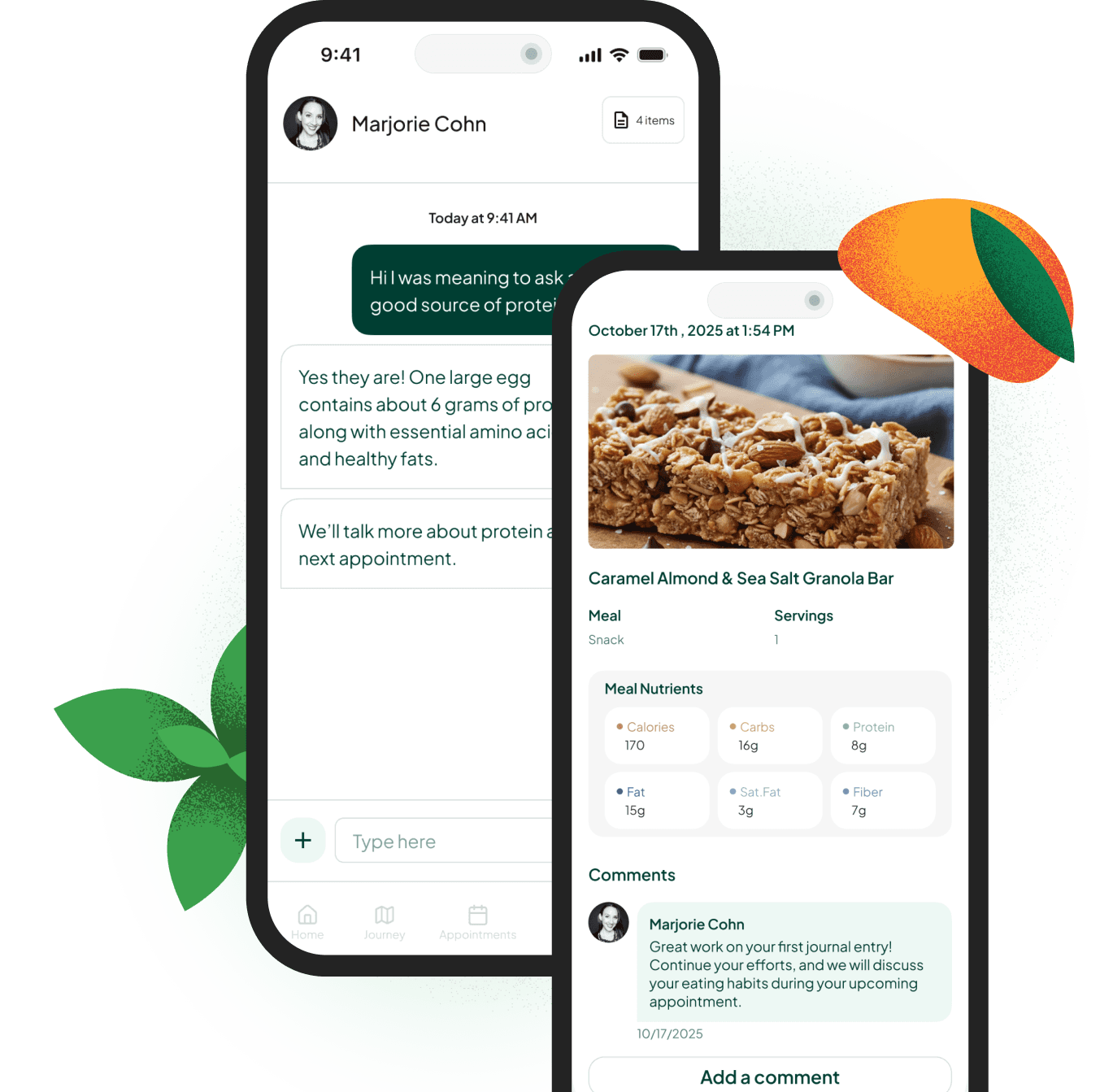
How a registered dietitian helps you lose weight safely on a GLP-1
Losing weight on a GLP-1 medication is a real medical goal, and it deserves real medical support. A Registered Dietitian Nutritionist (RDN) is a licensed medical professional with years of clinical training. Berry Street’s care team also includes Certified Nutrition Specialists (CNS), a credential a growing number of states recognize as an advanced nutrition provider. Your dietitian or CNS works alongside your prescriber, not instead of your doctor, so your care stays connected at every step.
Here is where that partnership matters for your gallbladder. When appetite drops fast, it is easy to eat too little fat, too little fiber, or too little of anything at all. That can leave your gallbladder sitting still, and a gallbladder that rarely empties is more likely to form stones. A dietitian helps you avoid that without turning food into a set of rules.

Your dietitian personalizes four things that directly affect gallbladder health:
Fat: enough at each meal to prompt your gallbladder to contract and empty, spread across the day rather than saved for one large meal.
Fiber: steady amounts from foods you actually enjoy, which helps keep bile moving.
Protein: enough to protect muscle while you lose weight, so more of what you lose is fat rather than lean tissue.
Meal rhythm: a pattern of eating that keeps your gallbladder active, even when the medication makes you far less hungry.
None of this is about restriction or counting. It is about adequacy, so your body keeps functioning well while the medication does its job. For some people that means smaller, more frequent meals. For others it means anchoring three meals a day around protein and a source of fat. Your dietitian tailors it to your appetite, your schedule, and how the medication feels for you.

At Berry Street, this support is built into GLP-1 care rather than sold as an add-on. Most Berry Street members pay $0 out of pocket, because we are in-network with 1,250+ insurance plans nationwide, and 95% of members pay $0 with coverage. If you want to see what your plan covers, you can check your coverage and get matched with a dietitian who works with GLP-1 patients. There is no rush and no commitment, just a clearer picture of your options.
Frequently Asked Questions
Can Ozempic or another GLP-1 medication cause gallstones?
GLP-1 medications are linked to a modestly higher chance of gallstones, though for most people the added risk is small. Much of that risk appears to come from the rapid weight loss these medications can produce rather than the medication alone. If you have gallstone symptoms or a history of gallbladder problems, talk with your prescriber before and during treatment.
How common are gallstones on GLP-1 medications?
The relative risk is modestly higher on GLP-1 medications, with studies pointing to roughly a 27% increase for gallstones. The absolute risk stays small, on the order of about 27 extra cases per 10,000 people per year. For most people that is a low chance, and it can be lowered further with steady weight loss and good nutrition.
Why does rapid weight loss cause gallstones?
When you lose weight quickly, your liver releases extra cholesterol into bile, which can tip bile toward forming stones. At the same time, eating very little can leave the gallbladder sitting full for long stretches instead of emptying regularly. Both effects raise the odds of stones, which is why the pace of weight loss and the adequacy of your meals matter.
What are the warning signs of a gallbladder problem while on a GLP-1?
Watch for steady pain in the upper-right part of your abdomen that can radiate to your right shoulder blade, along with nausea or vomiting. Fever or chills and yellowing of the skin or eyes (jaundice) are more serious signs. If any of these appear, contact your care team promptly rather than waiting them out.
Should I stop my GLP-1 medication if I develop gallstones?
Do not stop your GLP-1 medication on your own. Whether to continue, pause, or adjust treatment is a medical decision that depends on your symptoms and overall health, and your prescriber is the right person to make that call with you. Reach out to them as soon as gallstone symptoms appear so you can decide on the next step together.
What should I eat to lower my gallstone risk while losing weight?
Aim for balanced meals that include some fat, steady fiber, and enough protein, rather than eating as little as possible. Keeping your gallbladder emptying regularly is the goal, and that happens when you eat enough at each meal. Your dietitian can help you shape this around your appetite and the way the medication affects you.
Do I need to follow a strict low-fat diet, or is some fat better for my gallbladder?
Some fat is actually better for your gallbladder than a very strict low-fat approach. Fat is what signals the gallbladder to contract and empty, so cutting it out almost entirely can let bile sit and stagnate. A moderate amount of fat spread across your meals helps keep things moving, and a dietitian can help you find the right amount for you.
How much fat do I need to eat to keep my gallbladder emptying properly?
There is no single number that fits everyone. The practical goal is enough fat at each meal to prompt your gallbladder to empty, rather than saving all your fat for one meal or avoiding it entirely. Work with your dietitian to personalize the amount to your appetite, your medication, and any other health conditions you have.
How fast is “too fast” for weight loss when it comes to my gallbladder?
Very rapid weight loss raises gallstone risk, and losing more than about 1.5 kilograms (roughly 3 pounds) per week is often where that risk climbs. Large, sudden drops are riskier than a steady, gradual pace. Your care team can help you find a rate of loss that still protects your gallbladder. A safe rate of weight loss is 1 to 2 pounds per week.
Does fiber, coffee, or any specific food lower gallstone risk?
Fiber and healthy fats both help keep bile moving, which supports gallbladder health over time. Some research has explored coffee as well, but no single food or drink is a guaranteed fix, so it helps to stay balanced rather than leaning on one item. A dietitian can help you build these into meals in a way that fits your life.
Can I keep losing weight on my GLP-1 without raising my gallstone risk?
Yes, for many people, that is very achievable. Steady pacing, enough fat and fiber at each meal, and support from a registered dietitian all work together to lower the risk while you keep making progress. It is less about doing anything extreme and more about eating enough of the right things consistently.
What foods should I limit to protect my gallbladder?
No food is off-limits, but it can help to ease up on refined carbohydrates, added sugar, and very high saturated-fat processed foods. Leaning more often on whole foods, fiber, and moderate healthy fats supports steady bile flow. Think of it as adjusting the balance of your meals rather than labeling any food as bad.