Key Takeaways
Fiber helps steady the blood sugar and insulin swings that drive many PMOS symptoms, which makes it one of the most useful nutrition levers you can pull.
The best high-fiber foods for PMOS are whole, minimally processed plants: non-starchy vegetables, legumes, intact whole grains, berries, and seeds like flax and chia.
Most adults benefit from roughly 25 to 38 grams of fiber a day, but with PMOS the goal is a steady, well-tolerated intake rather than the highest possible number.
Ramp up slowly and drink more water, because adding a lot of fiber too fast is the main reason people feel bloated and give up.
There is no single “PMOS diet,” and a registered dietitian nutritionist (RDN) can personalize this to your labs, symptoms, and life while working alongside your doctor.
You were probably handed a “PMOS food list” at some point. Eat this, avoid that, good luck. What no one explained was why those foods matter, how they connect to your hormones, or how to actually build meals around them on a normal Tuesday. So the list ended up in a drawer, and you were left feeling like you were failing at something no one really taught you.
Here is a more useful place to start: fiber. It is one of the most researched, most forgiving, and most practical tools for managing PMOS, and it works with your body instead of against it. This guide walks through the best high fiber foods for PMOS, how much you may need, how to build a plate that keeps your blood sugar steadier, and how to do all of it without turning eating into a set of rules. (One quick note on naming: in mid-2026, PCOS was formally renamed PMOS, or polyendocrine metabolic ovarian syndrome, though a number of people and clinicians still say PCOS.)
In 30 seconds: Fiber slows how quickly sugar hits your bloodstream, which eases the insulin spikes that can push PMOS symptoms along. Fill most of your plate with high-fiber plants like vegetables, beans, intact grains, berries, and seeds, pair them with protein and healthy fat, and increase your intake gradually with plenty of water. For some people this also supports steadier energy, cycles, and mood, but the right amount is personal.
How Does Nutrition Affect Hormonal Health When You Have PMOS?
PMOS is a hormonal and metabolic condition, not simply a “reproductive” one. That distinction matters, because what you eat influences the same systems that shape your symptoms: blood sugar, insulin, inflammation, and the sex hormones that affect cycles, skin, hair, and mood. Food is not a cure. But it is one of the levers that consistently shows up in the research, and it is one you have real control over. A balanced eating pattern that supports insulin management is considered a central element of PMOS care.
You can learn more about the condition itself on the Berry Street PMOS condition page, and dig deeper into the whole picture in our guide to nutrition for PMOS.
The blood sugar-insulin-androgen connection (plain-language mechanism)
Here is the chain reaction, in plain language.
When you eat carbohydrates, your body breaks them down into glucose (blood sugar). Insulin is the hormone that ushers that glucose out of your blood and into your cells for energy. Many people with PMOS have some degree of insulin resistance, which means the cells respond sluggishly to insulin, so the body pumps out more of it to get the job done.
That extra insulin is the part that matters for your hormones. Higher insulin levels can signal the ovaries to make more androgens (hormones like testosterone), and they can lower a protein called sex hormone-binding globulin (SHBG) that normally keeps androgens in check. More free androgens is what drives a lot of the symptoms people associate with PMOS: irregular cycles, acne, and unwanted hair changes.
So the practical takeaway is this. If you can smooth out the blood sugar and insulin swings, you take pressure off the whole downstream cascade. That is exactly where fiber earns its place. You can read more about the insulin side of things in our insulin resistance diet plan.
Where fiber fits in
Fiber is the part of plant foods your body cannot fully digest. Instead of being absorbed for quick energy, it slows things down and does work along the way.
That slowing-down effect is the whole point for PMOS. When fiber is present, glucose enters your bloodstream more gradually, so your insulin response is gentler and steadier. Research on PMOS specifically points to low-glycemic-index, high-fiber, and omega-3-rich eating patterns as a way to improve insulin sensitivity and support hormonal balance. Fiber is not the only factor, but it is one of the most reliable and least restrictive ones you can build a plate around.

Why Is Fiber a Standout for PMOS?
Plenty of nutrients matter for PMOS. Fiber stands out because it works on several PMOS-relevant systems at once, and because adding it rarely backfires.
Steadier blood sugar and insulin response
This is the headline benefit. Soluble fiber, in particular, forms a gel in your gut that slows digestion and blunts the rise in blood sugar after a meal.
Steadier blood sugar means your body needs less insulin to manage each meal. Over time, a gentler insulin pattern can ease the androgen-driven symptoms we walked through above. You do not have to eliminate carbs to get this benefit. Pairing carbs with fiber, protein, and fat changes how your body responds to them, which is a much more sustainable strategy than cutting food groups.
Fiber, the gut, and estrogen balance
Fiber also feeds the beneficial bacteria in your gut, and a well-fed gut microbiome does more than aid digestion. Certain gut bacteria help regulate how your body processes and clears estrogen. When that system runs smoothly, it supports a healthier hormonal balance overall.
Fiber also keeps you regular, which is the main way your body escorts out hormones and waste it no longer needs. For some people, better digestion is the first improvement they notice, well before anything shows up on a lab report.
Fullness, energy, and sustainable eating (not restriction)
Fiber-rich foods take longer to eat, take up more room in your stomach, and digest slowly, so they help you feel full and satisfied for longer. That can translate into steadier energy across the day and fewer sharp crashes that leave you reaching for a quick fix.
This is not about eating less or earning your food. It is about eating in a way that actually satisfies you. When meals keep you full and your energy stays level, you are not fighting your own hunger all day, and that is what makes an eating pattern something you can keep up for years instead of weeks.
What Are the Best High-Fiber Foods for PMOS?
The best high fiber foods for PMOS are whole, minimally processed plants. You do not need exotic ingredients or supplements to hit your fiber goals. You need a rotation of foods you actually like from the categories below. For a broader look at building meals around fiber, our high-fiber diet plan goes further.
Non-starchy vegetables and leafy greens
These are your foundation. They are high in fiber and water, rich in nutrients, and gentle on blood sugar, so you can enjoy them generously.
Leafy greens like spinach, kale, arugula, and Swiss chard
Broccoli, cauliflower, Brussels sprouts, and cabbage
Zucchini, asparagus, green beans, peppers, and mushrooms
A simple habit: aim to make non-starchy vegetables the largest portion on your plate at most meals. Roast them, sauté them, or add them raw to whatever you are already eating.
Legumes, beans, and lentils
Legumes may be the single most useful food group for PMOS. They deliver fiber and plant protein in the same package, which is exactly the combination that steadies blood sugar.
Lentils (red, green, brown, black)
Chickpeas, black beans, kidney beans, and pinto beans
Edamame and split peas
A half cup of cooked lentils provides roughly 8 grams of fiber. Canned versions count too, so rinse and add them to soups, salads, grain bowls, and pasta dishes.

Whole (intact) grains
The word “intact” matters here. Grains in their whole form, where the kernel is still recognizable, digest more slowly than finely milled flours, even whole-grain ones.
Oats (steel-cut or rolled)
Quinoa, farro, barley, and bulgur
Brown rice and wild rice
These give you steadier energy than refined grains and pair well with protein and vegetables. If a grain leaves you feeling sluggish, that is worth noting and personalizing, because tolerance varies from person to person.
Berries and lower-glycemic fruits
Fruit is not the enemy for PMOS, despite what many restrictive food lists imply. Whole fruit comes packaged with fiber, which slows the natural sugars it contains.
Raspberries, blackberries, blueberries, and strawberries
Apples and pears (with the skin)
Oranges, kiwi, and cherries
Raspberries are a standout, with about 8 grams of fiber per cup. Pairing fruit with a little protein or fat, like berries with Greek yogurt, softens the blood sugar response even further.

Nuts, seeds, and flax
Nuts and seeds add fiber, healthy fats, and protein, plus a satisfying crunch that makes meals and snacks more filling.
Chia seeds and ground flaxseed
Almonds, walnuts, and pistachios
Pumpkin seeds and sunflower seeds
Ground flaxseed is especially worth a mention. It provides fiber plus omega-3 fats, and it stirs easily into oatmeal, yogurt, or a smoothie. Chia seeds do the same and thicken beautifully into an overnight pudding.
How Much Fiber Should You Eat With PMOS?
More is not automatically better. The goal is a steady, comfortable intake your body tolerates well, not a race to the highest number.
Practical daily ranges (and why more isn’t always better)
General guidance for adults lands around 25 to 38 grams of fiber per day, and most people currently eat far less than that. For many people with PMOS, gradually working toward the upper end of that range is a reasonable target, because the blood-sugar benefits scale with intake up to a point.
But there is a ceiling worth respecting. Going much higher, especially very quickly, can cause bloating, gas, and discomfort, and it can even interfere with how well you absorb certain minerals. It can also crowd out protein and fat if fiber becomes the only thing you focus on. This is a place where “depending on your individual needs” is not a throwaway phrase. Your ideal number depends on your digestion, your current intake, your other health conditions, and your medications.
How to ramp up without bloating (hydration, gradual increases)
If you have ever doubled your fiber overnight and regretted it, you already know the golden rule: go slow and drink water. Fiber pulls water into your digestive tract, so hydration is what keeps things moving comfortably rather than backing up.
A gentle approach looks like this:
Add a few grams of fiber every few days, not all at once.
Increase water alongside it, roughly aiming for pale-yellow urine as a rough gauge.
Cook or soften vegetables at first if raw produce feels harsh on your gut.
Rinse canned beans and, when cooking dried beans, soak them well before cooking.
Give your body a couple of weeks to adjust before adding more.
“When a client with PMOS gets bloated from fiber, it’s almost never that fiber is ‘wrong’ for them. It’s the pace. I have them add just three to five grams at a time and hold there for a week or two before nudging it up again. We bump water at the same time, start with cooked and softened vegetables instead of big raw salads, and soak the beans well or reach for canned and rinsed. Spreading fiber across the day instead of loading one huge meal makes it so much easier to stick with.” — Bridget Isaacs, MS, RD
How Do You Build a PMOS-Friendly Plate? (Fiber + Protein + Healthy Fat)
Once you know your best fiber sources, the next step is assembly. You do not need to count anything. You need a repeatable structure.
A simple plate formula
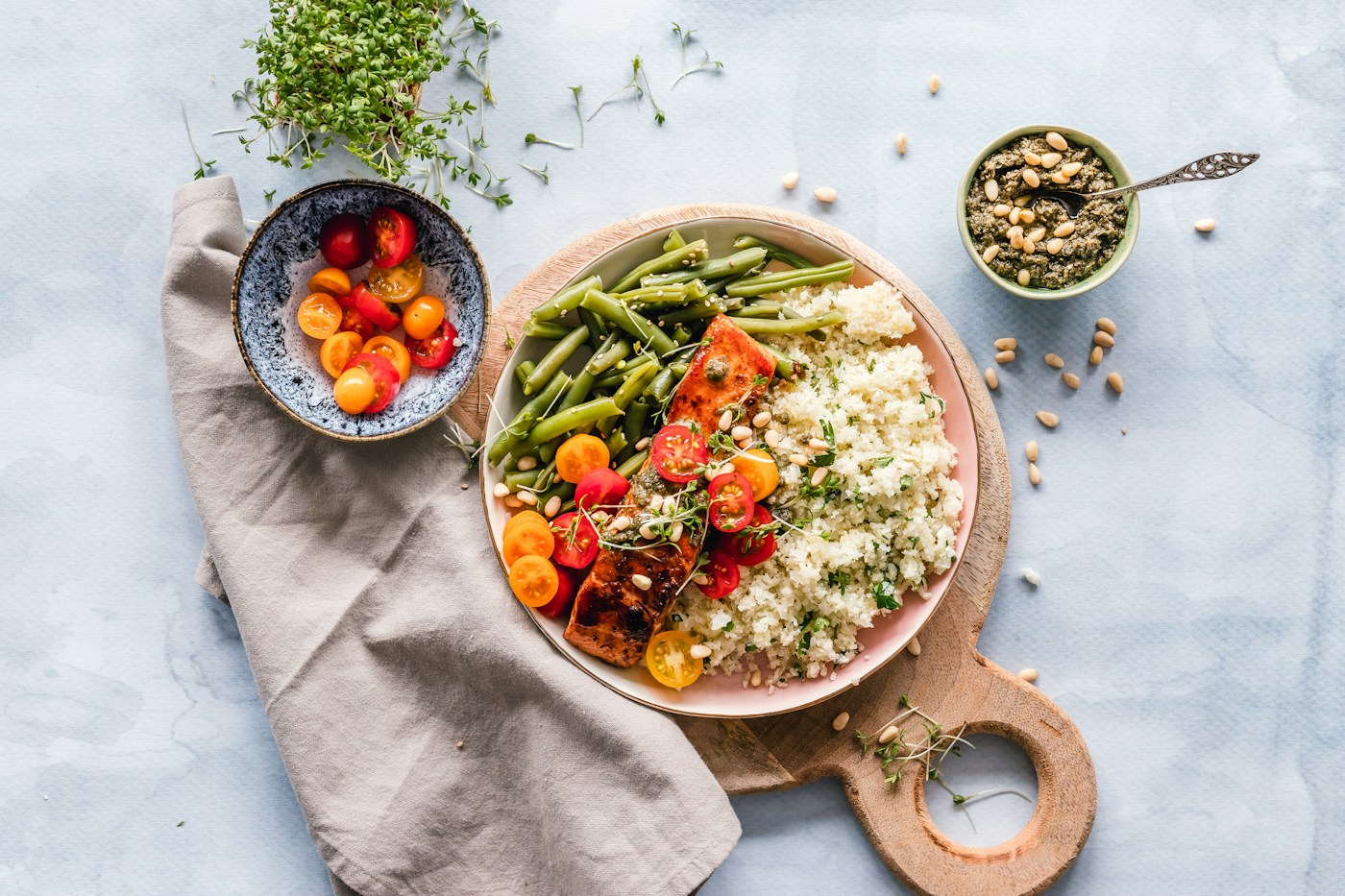
The combination that keeps blood sugar steadiest is fiber plus protein plus healthy fat at every meal. Each one slows digestion in its own way, and together they flatten the post-meal blood sugar curve.
A simple visual to follow:
Half your plate: non-starchy vegetables and other high-fiber plants
A quarter of your plate: protein (fish, poultry, eggs, tofu, tempeh, or legumes)
A quarter of your plate: intact whole grains or a starchy vegetable
A thumb or two of healthy fat: olive oil, avocado, nuts, or seeds
This formula flexes to fit almost any cuisine or preference, which is what makes it something you can live with. It is a baseline, not a strict rule.
Sample day of high-fiber, blood-sugar-friendly meals
Here is what a fiber-forward, blood-sugar-friendly day might look like. Treat it as an example to adapt, not a prescription.
Breakfast: Steel-cut oats topped with raspberries, ground flaxseed, and a spoonful of nut butter, plus two eggs on the side.
Lunch: A big salad of leafy greens, chickpeas, roasted vegetables, quinoa, olive oil, and grilled chicken or tofu.
Snack: Greek yogurt with blueberries and pumpkin seeds, or apple slices with almonds.
Dinner: Baked salmon, a lentil and vegetable stew, and a side of sautéed greens with garlic and olive oil.
Notice that no meal is built on fiber alone. Every one pairs fiber with protein and fat, and none of them ask you to skip food groups or go hungry.
Which Foods Should You Enjoy Less Often? (Framed Through Balance, Not Rules)
No food is off-limits with PMOS. That framing tends to backfire, because rules built on fear are hard to keep and easy to feel bad about breaking. It is more useful to understand why certain foods affect you the way they do, so you can make choices that fit the moment.
Refined carbs and sugary drinks — the “why,” not a ban
Highly refined carbohydrates and sugar-sweetened drinks tend to raise blood sugar quickly and sharply, because they have little to no fiber to slow them down. Sugary beverages are especially worth understanding, since liquid sugar hits your bloodstream fast and does not fill you up the way food does.
This does not mean you can never have them. It means these foods are ones many people with PMOS choose to enjoy a little less often, or to pair with fiber, protein, and fat to soften their effect. A cookie after a balanced meal lands very differently than a cookie on an empty stomach. That is information you can use, not a rule to obey.
“When a client comes in with a long ‘do not eat’ list, we actually get rid of it. Restriction almost always backfires and makes food feel scary. Instead of taking things away, we add. We crowd the plate with fiber, protein, and color, and honestly the foods people worried about start to take up less space on their own because we are focused on what we CAN eat. Nothing is completely off-limits. A food you love, paired with fiber and eaten after a real meal, fits just fine.” — Bridget Isaacs, MS, RD
Which Diet Patterns Does the Research Support (Mediterranean and DASH)?
You do not have to invent an eating pattern from scratch. Two well-studied approaches line up closely with everything above, and both are naturally high in fiber.
The Mediterranean pattern centers vegetables, legumes, whole grains, fish, nuts, and olive oil, with less emphasis on refined foods. It is rich in fiber, healthy fats, and anti-inflammatory foods, which is a strong match for the metabolic and inflammatory sides of PMOS.
The DASH pattern (Dietary Approaches to Stop Hypertension) shares much of the same foundation, with a focus on vegetables, fruits, whole grains, and lean proteins. In one 2024 systematic review and network meta-analysis, the DASH diet ranked as the most effective dietary intervention for improving PMOS metabolic parameters, including insulin resistance measured by HOMA-IR and fasting glucose.
What both patterns have in common is more telling than their differences. They are built on fiber-rich whole plants, healthy fats, and quality protein, and neither relies on extreme restriction. Which one suits you may come down to taste, culture, and what feels sustainable, and that is a great thing to sort out with a dietitian.
When Should You Work With a Registered Dietitian for PMOS?
You can absolutely start adding fiber on your own today. But PMOS is individual, and there is no universal PMOS diet, so a point comes where personalized support makes the difference between guessing and knowing.
It may be worth connecting with a dietitian if you feel overwhelmed by conflicting advice, if your symptoms are not improving, if you are managing PMOS alongside another condition, if you are thinking about fertility, or if food has started to feel stressful. A registered dietitian nutritionist (RDN) is a licensed medical professional with years of clinical training, qualified to help treat and manage conditions like PMOS. Dietitians work alongside your doctor, not instead of them.

At Berry Street, care is 1-on-1 and virtual, and our approach is Health at Every Size. We are weight inclusive, not weight centric, which means the focus is on building steady, sustainable habits rather than following rigid rules. The broader principle is really that weight change is one possible health outcome, not the definition of health or success.
Cost is often less of a barrier than people expect. Berry Street is in-network with 1,250+ insurance plans, and 96% of members pay $0. If it feels like the right time, you can see your visit options and get matched with a dietitian who specializes in PMOS and women’s health.
Key Takeaways
Fiber steadies the blood sugar and insulin swings that drive many PMOS symptoms, so it is a high-value, low-risk place to start.
Build meals around whole plants: non-starchy vegetables, legumes, intact whole grains, berries, and seeds.
Aim gradually toward roughly 25 to 38 grams of fiber a day, increasing slowly and with plenty of water to avoid bloating.
Pair fiber with protein and healthy fat, and treat no food as off-limits.
PMOS nutrition is personal, and an RDN can tailor it to your body while working alongside your doctor.

Frequently Asked Questions
What are the best high-fiber foods for PMOS?
The best high-fiber foods for PMOS are whole, minimally processed plants: non-starchy vegetables and leafy greens, legumes like lentils and chickpeas, intact whole grains like oats and quinoa, berries, and seeds like flax and chia. These foods deliver fiber alongside nutrients and, in the case of legumes and seeds, protein and healthy fats. Rotating a mix you enjoy is more useful than chasing any single “superfood.”
How much fiber should you eat per day if you have PMOS?
General guidance for adults is roughly 25 to 38 grams of fiber per day, and many people with PMOS benefit from working gradually toward the higher end. That said, more is not automatically better, and the right amount depends on your digestion, current intake, and other health needs. Increase slowly rather than all at once.
Does fiber help with PMOS insulin resistance?
Yes, fiber can help. It slows how quickly glucose enters your bloodstream after a meal, which softens the insulin response and takes pressure off the insulin-driven cascade that affects PMOS symptoms. Soluble fiber, found in oats, beans, and many fruits, is especially helpful for this, though results vary from person to person.
How does nutrition affect hormonal balance in women?
Nutrition influences blood sugar, insulin, and inflammation, which in turn affect the sex hormones that shape cycles, skin, and mood. In PMOS specifically, steadier blood sugar and insulin can help keep androgen levels in a healthier range. Fiber, protein, and healthy fats all play a role in that balance.
What foods should you limit if you have PMOS?
Rather than banning foods, many people with PMOS choose to enjoy refined carbohydrates and sugar-sweetened drinks a little less often, because they raise blood sugar quickly without much fiber to slow it down. The goal is balance, not fear. Pairing these foods with fiber, protein, and fat, or eating them after a full meal, softens their effect.
Can diet alone manage PMOS symptoms, or do you also need medication?
For some people, nutrition and lifestyle changes meaningfully improve symptoms on their own. For others, medication is an important part of the picture, and diet works best alongside it. This is a decision to make with your medical team, and a dietitian can support your nutrition while working alongside your doctor.
Is the Mediterranean or DASH diet better for PMOS?
Both are well-studied and share a fiber-rich, whole-food foundation, and both can support PMOS. One 2024 network meta-analysis ranked the DASH diet as the most effective for improving metabolic parameters like insulin resistance and fasting glucose. The better choice for you may come down to taste, culture, and what feels sustainable long term.
Can a high-fiber diet help with PMOS-related weight changes?
A high-fiber pattern can help you feel fuller and keep energy steadier, and for some people that supports weight changes as a side effect of eating in a more satisfying way. But weight is not the goal or the measure of health here. The aim is steadier blood sugar, better energy, and habits you can sustain.
What triggers PMOS symptom flare-ups?
Triggers vary, but common ones include large blood sugar and insulin swings, high stress, poor sleep, and inflammation. Because these factors interact, no single trigger explains everything. Tracking your own patterns, ideally with a dietitian, helps you spot what affects you personally.
How quickly can dietary changes improve PMOS symptoms?
Some people notice steadier energy, fewer cravings, and better digestion within a few weeks. Changes to cycles, skin, and labs often take longer, frequently a few months, because hormones shift gradually. Consistency matters more than speed, and progress is rarely a straight line.
Can what you eat help with PMOS-related cycle regularity or fertility?
For some people, improving insulin sensitivity through a fiber-rich, balanced eating pattern supports more regular cycles over time, which can matter for fertility. Nutrition is one piece of a larger picture that may also include medical care. If fertility is a goal, working with both your doctor and a dietitian is worthwhile.
How do you increase fiber without bloating or digestive discomfort?
Go slowly and hydrate. Add a few grams of fiber every few days rather than all at once, increase your water alongside it, and start with cooked or softened vegetables if raw produce feels harsh. Rinsing canned beans, soaking dried ones, and spreading fiber across the day all help too.
Last Reviewed by Bridget Isaacs, MS, RD — October 2026.