Key Takeaways
After 60, your body needs the same or more of many nutrients while often needing fewer total calories, so every bite has to work harder for you.
Protecting muscle and bone is the real priority. Protein, calcium, vitamin D, and steady movement matter far more than any number on a scale.
Some nutrients get harder to absorb with age, especially vitamin B12. The fix is usually fortified foods or a targeted supplement, not more worry.
Appetite, thirst, and taste often fade with age, which means smaller, nutrient-dense meals and consistent hydration deserve a plan of their own.
There is no single “diet after 60.” The eating pattern that lasts is the one built around your health history, your budget, and your life, ideally with a registered dietitian.
Introduction
Good nutrition for healthy aging after 60 is not about eating less or chasing a smaller body. It is about giving your body the fuel it needs to stay strong, steady, and independent for the decades ahead. Your needs shift in your 60s, 70s, and beyond, and the advice that worked at 35 often stops fitting.
If you have felt confused by conflicting rules online, you are not alone. One article says cut carbs, another says count every calorie, and none of it feels doable. That is not a willpower problem. That is a one-size-fits-all problem.
This guide walks through what actually changes in your body after 60 and the practical, evidence-based habits that support muscle, bone, digestion, and energy. Think of it as a starting point you can personalize, not a strict rulebook.

In 30 seconds: After 60, aim to eat enough protein to protect muscle, get plenty of calcium and vitamin D for your bones, and choose nutrient-dense foods since your calorie needs may drop while your nutrient needs hold steady or rise. Watch nutrients that get harder to absorb, especially vitamin B12, and stay hydrated even when you don’t feel thirsty. Because needs vary so much from person to person, working with a registered dietitian who specializes in healthy aging is the most reliable way to make it personal.
Why nutrition changes after 60
Aging changes how your body uses food. Understanding those shifts helps the rest of this guide make sense, because the goal is to work with your body rather than against it. Nutrient needs shift as you age, and the foods that support you now may look different from what supported you at 40.
What shifts in your body — metabolism, muscle, appetite, and thirst
Several changes tend to arrive together after 60, though the pace is different for everyone.
Muscle mass declines. Adults gradually lose muscle with age, a process called sarcopenia. Less muscle can mean less strength, more fall risk, and slower recovery from illness.
Metabolism slows. With less muscle and often less movement, many people burn fewer calories at rest. This is a normal part of aging, not a personal failing.
Appetite fades. Hormonal changes, medications, and a duller sense of taste and smell can leave you feeling full sooner or simply less interested in food.
Thirst signals weaken. Your sense of thirst becomes less reliable with age, so you may be low on fluids before you ever feel thirsty.
None of these changes mean decline is inevitable. They mean your food choices carry more weight, and small, consistent habits can protect your strength and energy for years.

Why “eat less” is the wrong goal (fewer calories, but more nutrients)
Here is the part most diet advice gets backward. Yes, many people need somewhat fewer calories after 60 because of slower metabolism and less muscle. But your need for protein, calcium, vitamin D, fiber, and other nutrients stays the same or even climbs.
That combination changes the math. With less room for empty calories, the priority becomes nutrient-dense whole foods rather than simply smaller portions. Every meal is a chance to deliver something your body needs.
It is also worth naming the bigger risk. For older adults, under-nutrition and missing key nutrients are often more of a concern than overeating. So the aim is not to shrink your plate. The aim is to make what is on it count.

Expert nutrition tips for healthy aging after 60
These tips are the core of good nutrition for healthy aging after 60. Read them as a menu of options to personalize, not a checklist you must complete all at once. For some people, protein will be the first focus. For others, hydration or bone health matters most.
Prioritize protein to protect muscle and strength
Protein is your best tool against age-related muscle loss, and most older adults benefit from more of it than the old standard suggested. Established expert consensus, published by Bauer and colleagues in the Journal of the American Medical Directors Association, recommends about 1.0 to 1.2 grams of protein per kilogram of body weight each day for healthy adults over 65.
That is meaningfully higher than the older 0.8 grams per kilogram standard set for younger adults. If you are active or exercising, aim for at least 1.2 grams per kilogram. If you are managing an acute or chronic illness, your needs may rise to 1.2 to 1.5 grams per kilogram.
One important exception applies. People with severe kidney disease, meaning an eGFR below 30 and not on dialysis, may need to limit protein instead. If that describes you, work with your doctor and dietitian before increasing intake.
A practical way to hit your target is to spread protein across the day and vary your sources. Think eggs or Greek yogurt at breakfast, beans or fish at lunch, and lean meat, tofu, or lentils at dinner. Spreading it out helps your body use protein more effectively than saving it all for one large meal.

“When a client over 60 tells me they just aren’t hungry, I don’t push big plates on them. We start small and often, a few bites of Greek yogurt, a handful of nuts, eggs at breakfast when appetite is usually highest, and we anchor protein to something they already do every day. Getting even 20 to 30 grams into each meal does more to protect muscle than one large dinner they can’t finish.” — Bridget Isaacs, MS, RD
Protect your bones with calcium and vitamin D
Bone strength becomes a real priority after 60, because fractures can threaten your independence. Calcium and vitamin D work as a pair, since vitamin D helps your body absorb the calcium you eat.
Recommended amounts differ by age and sex:
Women 51 and older: 1,200 mg of calcium per day.
Men 51 to 70: 1,000 mg of calcium per day.
Men 71 and older: 1,200 mg of calcium per day.
Upper limit for adults: 2,000 mg of calcium per day, so more is not better.
For vitamin D, adults 51 to 70 need 600 IU (15 mcg) per day, and adults 71 and older need 800 IU (20 mcg) per day. The upper limit is 4,000 IU per day. Food sources include dairy, fortified plant milks, fatty fish, and eggs. Because vitamin D is hard to get from food alone, some people benefit from a supplement, so ask your dietitian or doctor what fits your needs.
Get enough fiber for digestion, blood sugar, and heart health
Fiber supports regular digestion, steadier blood sugar, and heart health, and it is one nutrient most Americans fall well short of.
The Adequate Intake targets are roughly 21 grams a day for women 51 and older and about 30 grams a day for men 51 and older. Treat those as guidelines to move toward, not hard requirements to hit perfectly.
You can build up gradually with whole grains, beans and lentils, fruits, vegetables, nuts, and seeds. Add fiber slowly and drink water alongside it, since a sudden jump can cause bloating for some people.
Watch the nutrients that get harder to absorb (B12, vitamin D, potassium)
After 60, the challenge with some nutrients is not that you need more. It is that your body absorbs them less easily, or that they are simply hard to get in the first place.
Vitamin B12 is the clearest example. The recommended amount stays at 2.4 mcg per day for all adults over 51 and does not rise with age. The issue is absorption. Atrophic gastritis, which affects roughly 8 to 9 percent of adults 65 and older, reduces how well you absorb the B12 that is naturally bound to food. Certain medications can lower absorption too, including proton pump inhibitors, and metformin might also reduce it.
Here is the reassuring part. The crystalline B12 found in supplements and fortified foods is absorbed normally even when food-bound B12 is not. So fortified foods like some breakfast cereals, or a supplement, can close the gap. Supplementation is meant for people with risk factors, not for everyone, so it is worth checking with your provider.
Potassium is another nutrient many older adults fall short on. A helpful daily target is about 3,400 mg for men 51 and older and 2,600 mg for women 51 and older. Aim to get it from food such as dried apricots, lentils, and potatoes rather than a supplement, since potassium supplements can be risky without medical guidance.
Stay hydrated — even when you don’t feel thirsty
Because thirst becomes a less reliable signal with age, hydration deserves real attention. The goal is simple. Drink water consistently throughout the day rather than waiting until you feel thirsty, and treat water as your best everyday choice.
A few habits make this easier for many people. Keep a glass or bottle within reach, sip with every meal and medication, and lean on water-rich foods like soups, fruits, and vegetables. If you take a diuretic or have a heart or kidney condition, ask your doctor how much fluid is right for you, since needs vary.
Season smart — flavor without excess sodium
Taste can dull with age, which sometimes leads to heavier salting. But most adults 51 and older benefit from keeping sodium in check to support healthy blood pressure.
A reasonable aim is to reduce sodium toward 2,300 mg a day, about one teaspoon of salt. A lower target of 1,500 mg a day may help some people who have high blood pressure or prehypertension, but that lower number is not meant for everyone.
The good news is that flavor does not have to suffer. Herbs, spices, citrus, garlic, and vinegar can carry a dish without leaning on the salt shaker. Building flavor this way keeps eating enjoyable, which matters just as much as the numbers.
Account for medications and how they affect appetite and absorption
Medications are a normal part of life for many people after 60, and they can quietly shape nutrition. Some blunt appetite or change how food tastes. Others affect how your body absorbs certain nutrients.
You have already seen two examples. Proton pump inhibitors can reduce B12 absorption, and metformin might do the same. Other medications can affect potassium, sodium, or hydration needs. The takeaway is not to fear your prescriptions. It is to review your full medication list with your doctor and dietitian so your eating plan fits your body and your treatment together.
How to turn these tips into a routine that lasts
Knowing what to eat is one thing. Making it stick is another. This section turns the tips above into a routine you can actually keep, because consistency beats extremes every single time.
Build a balanced plate (the MyPlate approach, made personal)
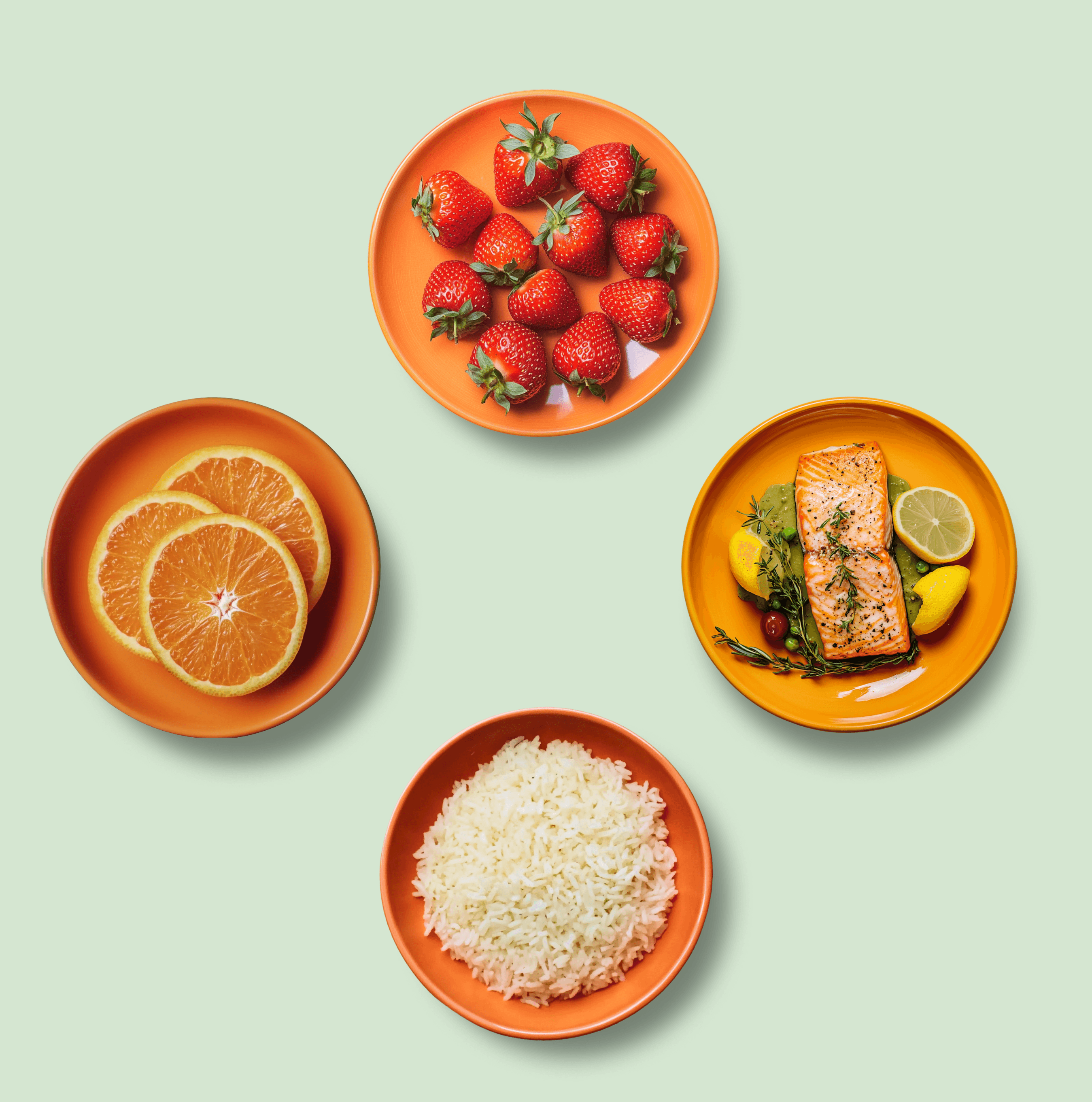
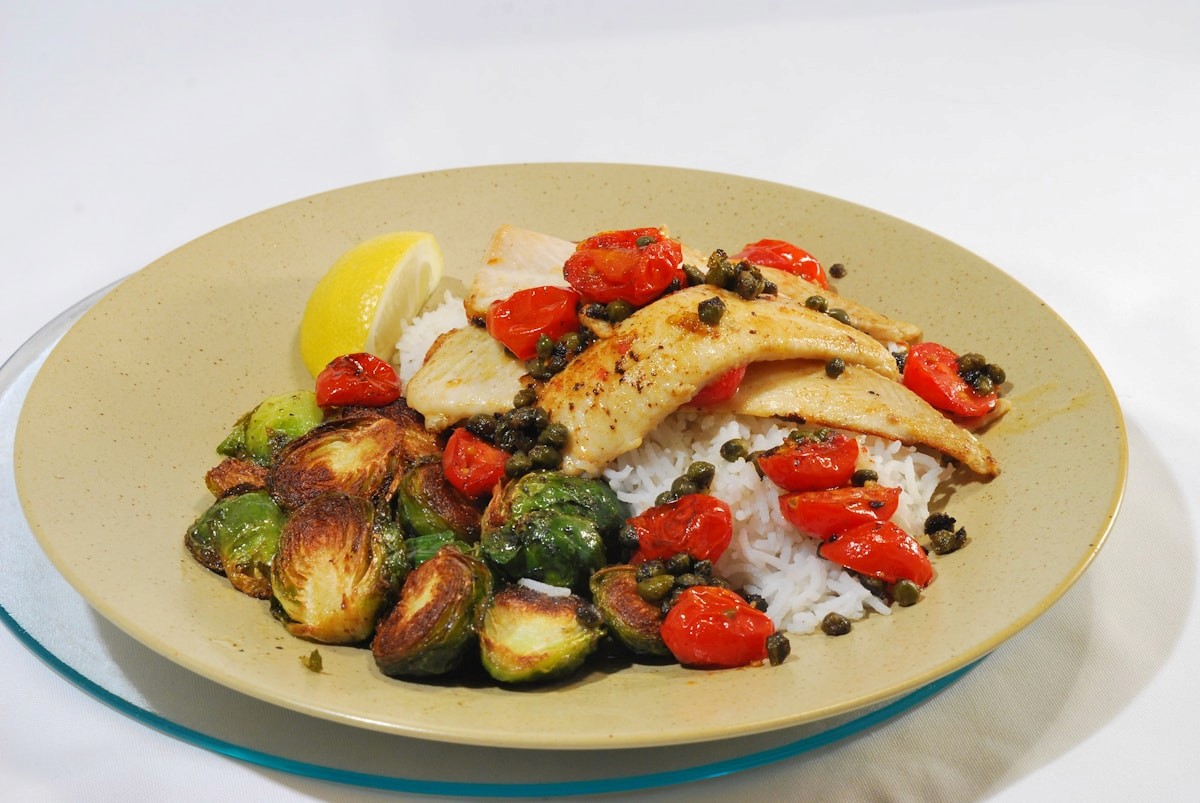
A simple plate framework takes the pressure off counting anything. Fill half your plate with fruits and vegetables, about a quarter with a protein source, and about a quarter with whole grains, adding a serving of dairy or a fortified alternative.
You can personalize this endlessly. A balanced plate built on lean proteins, colorful produce, whole grains, and low-fat dairy or fortified options works whether you cook elaborate meals or keep things quick and simple. The pattern matters more than perfection.
Eating patterns that work — US-Style, Mediterranean, and plant-forward
You do not have to invent an eating plan from scratch. Several well-studied patterns support healthy aging, and any of them can be adapted to your tastes and budget.
US-Style pattern: A flexible, familiar approach built around vegetables, fruits, grains, lean proteins, and dairy.
Mediterranean-style pattern: Emphasizes vegetables, fruits, whole grains, fish, olive oil, and legumes, with less red meat.
Vegetarian or plant-forward pattern: Centers on beans, lentils, soy, whole grains, nuts, and produce, with attention to protein and B12.
The best pattern is the one you enjoy and can sustain. For women looking for a concrete starting point, our free diet plan for women over 60 offers a sample framework to adapt.
When appetite drops: smaller, nutrient-dense meals and snacks
If a full plate feels like too much, you are far from alone, and the solution is not to force it. Shift toward smaller, more frequent meals and snacks that pack nutrition into every bite.
A few approaches help many people. Eat your largest meal when your appetite is strongest, often earlier in the day. Keep easy, protein-rich snacks on hand, such as yogurt, cheese, nut butter, or hard-boiled eggs. Add calories and nutrients gently with olive oil, avocado, or a scoop of nut butter when portions are small.
Warning signs of poor nutrition to watch for
Poor nutrition can affect adults of any body size, because it is about nutrient quality and absorption, not weight. That is why the warning signs are worth knowing regardless of what the scale says.
Talk to your doctor or dietitian if you notice any of these:
Unintended weight loss.
Low appetite that lingers.
Fatigue or new weakness.
Wounds that heal slowly.
Frequent illness or infections.
Dizziness or unsteadiness.
Noticing one of these is not cause for alarm. It is simply a signal worth mentioning, so a professional can help you get ahead of it.
“The clients who feel most overwhelmed are usually the ones trying to follow ten rules at once. We talk about picking just two changes that fit their week, maybe protein at breakfast and a glass of water with every meal, and we ignore the rest until those feel automatic. You don’t need a perfect diet. You need a few habits you’ll actually keep.” — Bridget Isaacs, MS, RD
When to work with a registered dietitian (and how it’s often $0 with insurance)
You can do a lot on your own with the guidance above. But there are moments when personalized, professional support makes all the difference, especially when the advice online starts to contradict itself.
It is worth reaching out to a registered dietitian if you are managing a health condition like diabetes, heart disease, or kidney disease, if your appetite has dropped, if you have noticed any warning signs of poor nutrition, or if you simply want a plan built around your body and your life. A Registered Dietitian Nutritionist, or RDN, is a licensed medical professional with years of clinical training, qualified to help you turn general guidance into a plan that fits. Dietitians work alongside your doctor, not instead of them.
Cost is often less of a barrier than people expect. Berry Street is in-network with more than 1,250 insurance plans nationwide, and about 95 percent of members pay $0 out of pocket. You can check your coverage and connect with a dietitian in about 60 seconds, with no commitment. If you would rather browse first, you can explore registered dietitians who support healthy aging and find a specialist who fits.
The bottom line on eating well after 60
Nutrition for healthy aging after 60 comes down to a few foundational ideas. Feed your muscles with enough protein. Protect your bones with calcium and vitamin D. Prioritize fiber, potassium, and the nutrients that get harder to absorb, especially B12. Stay hydrated even when thirst goes quiet, and season with flavor instead of extra salt.
Notice what is not on that list. There is no calorie counting, no forbidden foods, and no number on the scale to chase. Weight may change as your nutrition improves, but that is a possible side effect, never guaranteed. The real aim is strength, energy, and independence for the years ahead.
Because so much of this depends on your health history, medications, and preferences, you do not have to figure it out alone. When you are ready, you can check your coverage and connect with a Berry Street registered dietitian who will help you make it personal. Most members pay $0, and there is no pressure to decide today.

Frequently Asked Questions
What are 5 foods that seniors should eat every day?
Rather than a rigid list, think in categories you can rotate. Aim for a protein source such as eggs, fish, or beans, plus leafy greens and colorful produce, whole grains, dairy or a fortified alternative, and legumes. Variety within these groups matters more than eating the exact same five foods daily.
What is the healthiest diet for people over 60?
There is no single healthiest diet, and any well-studied pattern can work when it fits your life. The US-Style, Mediterranean-style, and plant-forward patterns all support healthy aging. The best choice is the one you enjoy, can afford, and can sustain, ideally personalized with a dietitian.
How much protein does someone over 60 need each day?
Expert consensus recommends about 1.0 to 1.2 grams of protein per kilogram of body weight daily for healthy adults over 65, higher than the old 0.8 gram standard. Active adults may need at least 1.2 grams per kilogram, and those with illness may need 1.2 to 1.5. People with severe kidney disease may need to limit protein instead.
Which vitamins and minerals matter most after 60?
Calcium and vitamin D lead the list for bone health, along with vitamin B12, potassium, and fiber. B12 stands out because absorption often declines with age, even though the requirement does not change. Your individual needs depend on your health and medications, so a dietitian can help you prioritize.
Why is staying hydrated harder as you age, and how much water do you need?
Your sense of thirst becomes less reliable with age, so you may be low on fluids before you notice. The practical fix is to drink water consistently through the day rather than waiting to feel thirsty. Water is the best everyday choice, and your ideal amount depends on your health and medications.
How can you keep muscle mass and prevent sarcopenia after 60?
The two most effective levers are eating enough protein, spread across the day, and staying physically active with regular strength or resistance work. Aiming for roughly 1.0 to 1.2 grams of protein per kilogram daily supports muscle for most healthy adults over 65. Pairing protein with movement protects strength better than either alone.
What foods support bone health and lower fracture risk after 60?
Calcium-rich foods like dairy, fortified plant milks, leafy greens, and canned fish with bones support your skeleton, alongside vitamin D from fatty fish, eggs, and fortified foods. Women 51 and older need 1,200 mg of calcium daily, and men need 1,000 to 1,200 mg depending on age. Vitamin D helps your body absorb it.

How do medications affect nutrient absorption in older adults?
Some common medications change how your body handles nutrients. Proton pump inhibitors can reduce vitamin B12 absorption, and metformin might do the same, while other drugs affect potassium, sodium, or fluids. Review your full medication list with your doctor and dietitian so your eating plan works with your treatment.
What are the warning signs of poor nutrition in older adults?
Watch for unintended weight loss, a lingering low appetite, new fatigue or weakness, slow wound healing, frequent illness, or dizziness. Importantly, poor nutrition can affect adults of any body size, because it reflects nutrient quality, not weight. If you notice these signs, mention them to your doctor or dietitian.
Do you need fewer calories after 60, and how do you still get enough nutrients?
Many people do need somewhat fewer calories because metabolism slows and muscle declines, but nutrient needs stay the same or rise. That means every bite has to work harder, so the focus shifts to nutrient-dense whole foods rather than simply smaller portions. The goal is quality, not restriction.
Is the Mediterranean diet good for people over 60?
Yes, the Mediterranean-style pattern is one of several well-studied approaches that support healthy aging. It emphasizes vegetables, fruits, whole grains, fish, olive oil, and legumes, which align well with the priorities of eating after 60. As with any pattern, it works best when adapted to your tastes, budget, and health needs.
Last Reviewed by Bridget Isaacs, MS, RDN — August 2026.