Key Takeaways
A registered dietitian treats weight as one possible outcome of better nutrition, not the only goal, so the plan is built around your habits, health history, and life.
Registered Dietitian Nutritionist (RDN) is a legally protected credential requiring graduate training, supervised practice, and a national exam, while “nutritionist” has no standardized meaning in many states.
Research shows RD-delivered weight management can improve BMI, waist circumference, and the odds of meaningful change, with results tied closely to consistent follow-up rather than any single diet.
If you take a GLP-1 medication like Ozempic, Wegovy, Mounjaro, or Zepbound, a dietitian helps you eat enough protein and stay nourished while appetite is lower.
With Berry Street, nutrition visits are in-network with 1,250+ plans and 95% of members pay $0, and you can usually book without a referral depending on your plan.
Most “weight loss programs” ask you to follow the same rules as everyone else. Count these points. Cut that food group. Hit this number on the scale. For a while, it can feel like progress. Then life gets busy, the plan gets rigid, and it stops fitting.
That is not a willpower problem. It is a one-size-fits-all problem. An online dietitian for weight loss programs works differently, because a registered dietitian starts with your body, your routine, and your relationship with food, then builds nutrition changes you can actually keep. Weight change may follow better nutrition, and it is treated as one outcome among several.

This guide explains what virtual, RD-led care includes, how it handles conditions like PMOS and prediabetes, how it pairs with GLP-1 medications, what it costs, and how to choose the right dietitian for you.
In 30 seconds: An online dietitian for weight loss is a licensed registered dietitian who works with you over video to build sustainable eating habits tailored to your health history and goals. Weight change may be one result of that work, alongside better energy, labs, and confidence around food. For many people the care is covered by insurance, and you can often start without a referral depending on your plan.
Why “weight loss programs” usually don’t stick — and what works instead
You have probably tried a plan before. Maybe a few. They worked until they didn’t, and then the old patterns came back. That cycle is common, and it is rarely about discipline.
The problem is usually the program itself. Generic plans treat every body, schedule, and history as interchangeable. Real, lasting change tends to come from care that fits your actual life.
The one-size-fits-all problem (not a willpower problem)
Most off-the-shelf programs assume the same rules will work for everyone. They ignore your medical history, your hormones, your stress, your budget, and your food preferences. When the plan collides with real life, it breaks, and you get blamed for it.
A dietitian-led approach flips that. Instead of asking you to conform to a rigid template, an RD adapts the plan to you. That includes what you already eat, what you enjoy, and what has failed before. This matters because sustainable eating patterns, not extreme ones, are what hold up over months and years.
There is also a hidden cost to the cycle of starting and abandoning plans. Each round can chip away at your confidence and your trust in your own body. A dietitian-led model is built to break that pattern, because the plan bends to fit you instead of asking you to bend to fit the plan.
You can read more about the day-to-day of this work in our guide on what a dietitian does for weight loss.
What makes an online dietitian different from an app or a “nutritionist”
Apps can track meals and remind you to move. What they cannot do is diagnose, personalize care for a medical condition, or adjust a plan when your labs or symptoms change. They give you data, not clinical judgment.

The title matters too. According to the Academy of Nutrition and Dietetics, “Registered Dietitian Nutritionist” (RDN) is a legally protected credential that requires graduate-level training, supervised practice, and a national exam. By contrast, the word “nutritionist” has no standardized meaning in many states and can be used by people with little formal training. It is also worth noting that in some states, the Certified Nutrition Specialist (CNS) is recognized as an advanced credential.
That is the core difference. An online dietitian brings licensed, clinical expertise to your plan. An app or an uncredentialed coach cannot.

What an online weight-loss dietitian actually does
Working with a registered dietitian is a care relationship, not a downloadable plan. It starts with understanding you, moves into a personalized approach, and continues with regular check-ins that adapt over time.
Here is what that looks like in practice.
Your first assessment: history, habits, and realistic goals
Your first visit is a conversation, not a lecture. Your dietitian reviews your medical history, medications, lab work, sleep, stress, and current eating patterns. They also ask what has worked before and what has not, so the plan builds on your strengths.

From there, you set goals together. For some people that includes a weight goal. For others the focus is steadier energy, better digestion, improved labs, or a calmer relationship with food. Your dietitian helps you choose goals that are realistic for your body and your schedule.
This first conversation also sets the tone for the whole relationship. You are not being graded, and there is no food diary to feel guilty about. The point is to understand your starting line clearly, so the plan that follows is grounded in your real life rather than an idealized version of it.
A personalized plan (not a rigid diet)
A dietitian-built plan is not a fixed menu you either follow or fail. It is a flexible framework shaped around your preferences, culture, budget, and health needs. No food is labeled “bad” or “off-limits,” because restriction tends to backfire.
Instead of overhauling everything at once, your dietitian usually starts with one or two targeted changes. That might mean adding protein at breakfast, building more balanced meals, or adjusting timing around your workday. Small, specific shifts are easier to keep than a full reset, and they add up.
Follow-ups, accountability, and adjusting for plateaus
Change is rarely linear. Progress speeds up, slows down, and sometimes stalls. Regular follow-up visits are where your dietitian reviews what is working, troubleshoots what is not, and adjusts the plan as your life and body change.
This ongoing contact is one of the most important parts of the process. Evidence-based practice guidelines from the Academy of Nutrition and Dietetics point to contact frequency as a key driver of results, often more than the delivery format itself. Plateaus become a signal to adjust, not a reason to quit.
What a real weight-loss nutrition program includes
A quality program is more than a meal plan. It combines behavior change, condition-aware clinical care, and medication support when appropriate, all delivered by a licensed dietitian.
The strongest evidence supports this model. A 2023 systematic review in the Journal of the Academy of Nutrition and Dietetics found that weight management delivered by registered dietitians significantly improved BMI, waist circumference, and the likelihood of achieving at least 5% weight loss, with moderate-to-high certainty of evidence.
Behavior change and sustainable habits over restriction
The heart of this work is behavior, not deprivation. Your dietitian helps you understand your patterns and build habits that stick, rather than handing you a list of rules to white-knuckle through. Skills like meal planning, balanced plates, and managing stress-related eating tend to outlast any short-term diet.
That focus on sustainability is what separates lasting change from another failed program. A modest, steady shift you can maintain beats an extreme one you abandon. A 2019 meta-analysis in Healthcare found that individualized consultations with a dietitian produced modest but statistically significant additional weight change compared with usual care.
It helps to remember that weight is only one signal among many. Better sleep, more stable energy, improved blood sugar, and less anxiety around meals are all meaningful wins. When those pieces improve, weight change may follow for some people, but the habits are what keep the results in place.
“When a client wants to lose weight fast, I don’t start by taking things away. I start with what’s already working in their routine, then we make one or two targeted changes—usually building more protein and fiber into the meal they already like most. Overhauling everything at once is what makes plans collapse. A few specific shifts you can actually keep are what add up over time.” — Bridget Isaacs, MS, RD
Condition-aware care (PMOS, prediabetes, thyroid, metabolic health)
Nutrition does not happen in a vacuum, and neither does weight. Conditions like PMOS, prediabetes, thyroid disorders, and other metabolic issues all affect how your body responds to food. A registered dietitian is trained to account for these, which a generic program cannot.
For example, nutrition therapy for PMOS may focus on blood sugar balance and hormone-supportive eating rather than cutting calories. You can learn more about that approach through our PMOS nutrition therapy resources. Condition-aware care means your plan works with your body, not against it.
The same principle applies to prediabetes and thyroid conditions. A dietitian can read your lab results, coordinate with your physician, and adjust your plan as your numbers move. This is clinical care, not general advice, and it is one of the clearest reasons to work with a licensed professional rather than a generic app.
GLP-1 nutrition support — pairing medication with a dietitian
GLP-1 medications like Ozempic, Wegovy, Mounjaro, and Zepbound are clinician-prescribed treatments that support metabolic health. They are not shortcuts, and they work best alongside good nutrition. Because these medications lower appetite, getting enough protein and key nutrients can become harder, which is where a dietitian is especially valuable.
A dietitian helps you protect muscle, manage side effects, and stay nourished while your appetite is lower. A multi-society advisory led by Mozaffarian and colleagues names adequate protein intake and strength training to preserve lean mass as one of its eight key priorities for people on GLP-1 medications, and stresses that nutrition therapy is an essential part of GLP-1 care. Your specific protein needs should be set with your dietitian based on your body and goals. You can explore this care through our GLP-1 dietitians resources.
“For clients on a GLP-1, appetite can drop fast, so I focus on protein and fiber-first at whatever meal they tolerate best—often breakfast. We add small, frequent nourishing snacks like Greek yogurt and berries or a handful of nuts so they’re not relying on one big meal. The goal is keeping them well-fed and protecting muscle, with targets I adjust to their individual needs.” — Bridget Isaacs, MS, RD

Is an online dietitian covered by insurance? What it costs
Cost is often the biggest question, and the answer is more encouraging than many people expect. Nutrition counseling is frequently covered as a preventive benefit, which means many people pay little or nothing out of pocket.
With Berry Street, care is in-network with 1,250+ insurance plans nationwide, and 95% of members pay $0 out of pocket. Coverage always depends on your specific plan, so the honest answer is that it varies. The good news is that checking is quick and carries no commitment.
Because cost is often what keeps people from starting, it helps to know it before you decide anything. Berry Street uses a “no-surprises” approach, which means you see your expected cost up front rather than after your first visit. There is no pressure to continue if the numbers do not work for you.
How coverage works and checking it in 60 seconds
Many insurance plans cover visits with a registered dietitian, sometimes with generous session counts per year. Whether yours does, and what you would pay, depends on your plan details.
You can check your coverage in about 60 seconds by entering your state and insurance provider. The process is secure, HIPAA-compliant, and shows you exactly what you would pay before you commit to anything. You can check your coverage and get started here.
How to choose the best online dietitian for you
The “best” program is not the one with the flashiest marketing. It is the one led by a qualified professional who fits your goals, your health history, and your life. Two things help you sort real care from generic advice: credentials and the right questions.
Credentials to look for (RD/RDN vs. “nutritionist”)
Start with the credential. Look for “RD” or “RDN” after a provider’s name. As the Academy of Nutrition and Dietetics explains, these are legally protected titles that require graduate training, supervised clinical practice, and a national exam.
The word “nutritionist” is different. In many states it has no standardized meaning and no required training, so it can describe a highly qualified clinician or someone with a weekend certificate. A Certified Nutrition Specialist (CNS) is an advanced credential recognized in some states, requiring postgraduate education, supervised practice, and a national exam. When your health is involved, the RD/RDN or CNS credential is the clearest signal of clinical expertise. Every Berry Street provider is a licensed registered dietitian or Certified Nutrition Specialist.
Questions to ask before you start
A few questions can tell you a lot about whether a program is right for you. Consider asking:
Are you a registered dietitian (RD or RDN), Certified Nutrition Specialist (CNS) and are you licensed in my state?
Do you have experience with my condition or goals, such as PMOS, prediabetes, or GLP-1 support?
How do you personalize plans, and do you require strict rules?
How often will we meet, and how do you handle plateaus?
Do you take my insurance, and what will I pay?
The answers should point toward personalized, non-restrictive care built around you. If a program promises fast, guaranteed results for everyone, treat that as a reason to be cautious.
Trust your read of the conversation, too. Good care should feel collaborative and free of shame, not like being handed a set of rules to obey. If a provider talks over you or reduces your health to a single number on a scale, that is a sign the fit may be wrong.
Getting started with a Berry Street registered dietitian
If you are ready for support built around you instead of another rigid plan, working with a Berry Street dietitian is designed to be straightforward. You start by checking your coverage, then get matched with a registered dietitian who specializes in your goals and health history.
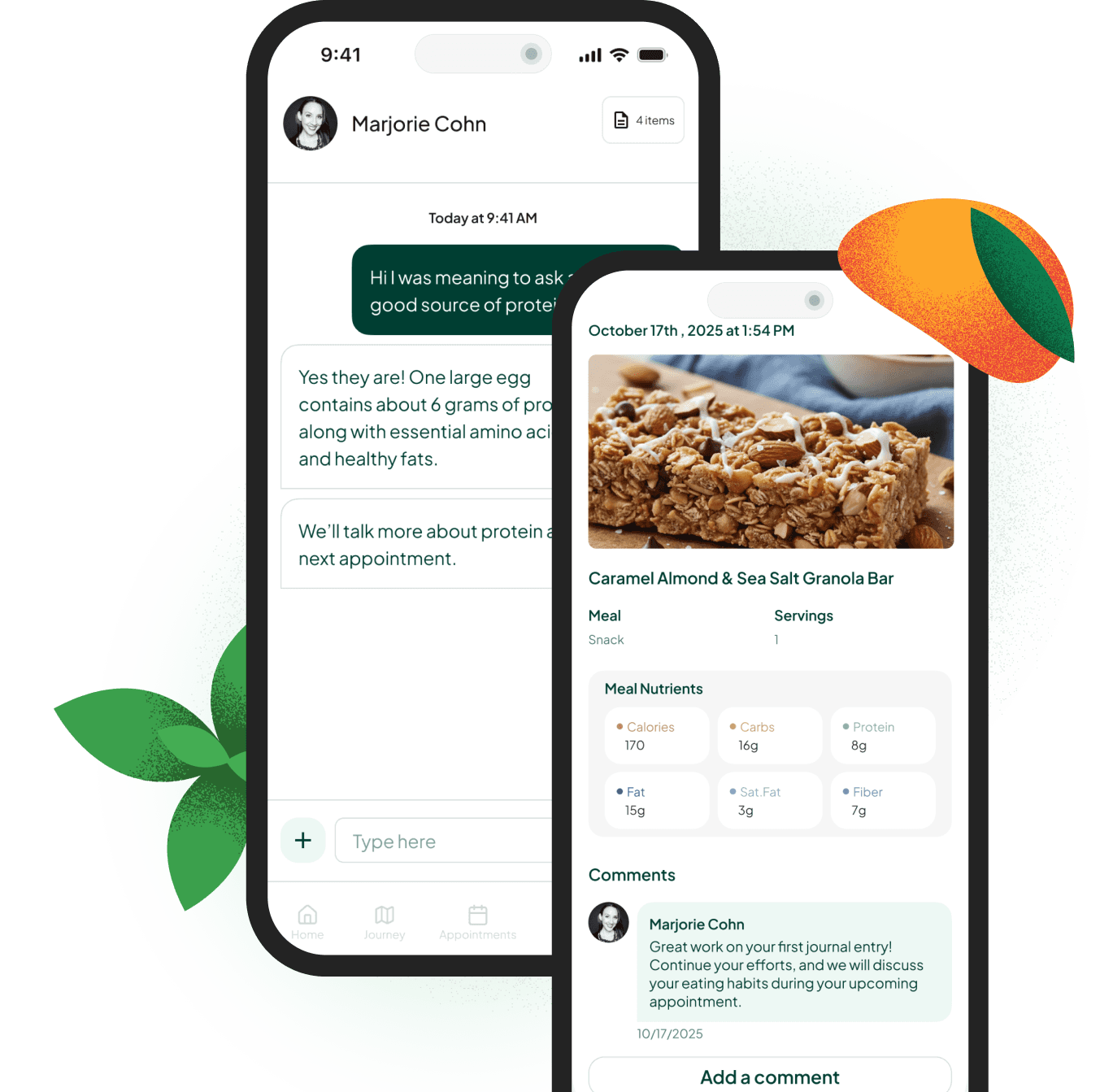
From there, you book video visits on your schedule, message your dietitian between sessions, and adjust your plan as your life changes. There is no commute, no waiting room, and no pressure. When you feel ready, you can check your coverage and connect with a dietitian, or explore our weight loss dietitians to see how this care works.

Frequently Asked Questions
Is it worth seeing a dietitian for weight loss?
For many people, yes. A 2023 systematic review in the Journal of the Academy of Nutrition and Dietetics found that RD-delivered weight management significantly improved BMI, waist circumference, and the likelihood of achieving at least 5% weight loss. Beyond the scale, a dietitian personalizes care to your health history in a way apps and generic plans cannot.
What does the best online dietitian program actually include?
A strong program includes a thorough first assessment, a personalized and flexible plan, and regular follow-ups that adjust over time. It also offers condition-aware care and medication support when relevant, such as GLP-1 nutrition guidance. Most importantly, it focuses on sustainable habits rather than restriction.
Is an online dietitian covered by insurance?
It depends on your plan. Many plans cover nutrition counseling, and with Berry Street care is in-network with 1,250+ plans and 95% of members pay $0. You can check your coverage in about 60 seconds with no commitment.
How much does an online weight-loss dietitian cost?
Your cost depends on your insurance plan. With Berry Street, care is in-network with 1,250+ plans and 95% of members pay $0 out of pocket. Checking your specific coverage takes about a minute and shows exactly what you would pay before you commit.
Will an online dietitian give me a meal plan?
Often, yes, but it is a flexible framework rather than a rigid menu. Your dietitian builds recommendations around your preferences, budget, culture, and health needs, and no foods are treated as off-limits. The goal is a personalized approach you can actually maintain.
Dietitian vs. nutritionist — which is better for weight loss?
For clinical care, a registered dietitian offers more assurance. The Academy of Nutrition and Dietetics notes that “RDN” is a legally protected title requiring graduate training, supervised practice, and a national exam, while “nutritionist” has no standardized meaning in many states. Some states recognize the Certified Nutrition Specialist (CNS) as an advanced credential. When a medical condition is involved, that credential matters.
How long does it take to see results with a dietitian?
It varies from person to person, depending on your goals, health history, and starting point. Because the focus is on sustainable change, progress tends to build gradually rather than all at once. Consistent follow-up is a bigger driver of lasting results than any quick fix.
Can an online dietitian help with GLP-1 medications like Ozempic or Wegovy?
Yes, and this pairing is a core part of good care. When appetite drops on a GLP-1, a dietitian helps you get enough protein, manage side effects, and protect muscle so you stay nourished. You can learn more through our GLP-1 dietitians resources.
Can a dietitian help me lose weight if I have PMOS or another condition?
Yes. A registered dietitian is trained to account for conditions like PMOS, prediabetes, and thyroid disorders that affect how your body responds to food. Care is tailored to your condition, so the plan works with your body rather than against it.
Is a virtual dietitian as effective as seeing one in person?
Research suggests that for many people, the results are comparable. Evidence-based guidelines from the Academy of Nutrition and Dietetics found that in-person and blended (in-person plus telehealth) nutrition therapy produced similar outcomes for most measures, with contact frequency mattering more than format, though in-person care may offer additional benefits. Virtual care also removes barriers like commuting and waiting rooms.
How often do I meet with my online dietitian?
It depends on your needs and your plan. Some people meet weekly at first and then space visits out, while others prefer a steadier cadence. Your dietitian personalizes the schedule with you, and consistent contact tends to support better results.
Do I need a doctor’s referral to see an online dietitian?
It depends on your plan. Many plans allow direct access, and with Berry Street you can usually book without a referral, though some plans require one, so check yours. You can confirm this and check your coverage here in about a minute.
Last Reviewed by Bridget Isaacs, MS, RD — October 2026.