Key Takeaways
Your body already makes GLP-1, a hormone that supports fullness, steadies blood sugar, and slows digestion. Certain foods help you make more of your own.
The biggest food levers are soluble and fermentable fiber, protein, and healthy unsaturated fats. Together they nudge your gut to release more GLP-1 after meals.
Food raises GLP-1 modestly and briefly compared with a GLP-1 medication. “Nature’s Ozempic” is a marketing phrase, not a fair comparison.
How you eat matters too. Leading with fiber and protein, slowing down, and building meals around balance can support satiety and blood sugar without any restriction.
There is no single right plan. A registered dietitian can personalize this to your body, your health history, and conditions like diabetes, PMOS, or a sensitive gut.
If you have searched “foods that boost GLP-1 naturally,” you have probably run into the phrase “nature’s Ozempic.” It is catchy, and it is also misleading. Food will not replicate a prescription medication, and that is not the goal here. What food can do is support your body’s own GLP-1 response along with the everyday things that come with it: steadier energy, fewer sharp cravings, and a calmer relationship with meals. This guide walks through what GLP-1 actually is, which foods help your body make more of it, how the way you eat plays a role, and how to make all of it personal to you.
In 30 seconds: No food contains GLP-1, but fiber, protein, and healthy fats help your body release more of its own after meals, supporting fullness and steadier blood sugar. The effect is real but modest and short-lived compared with medication, so the smart move is to build balanced, satisfying meals rather than chase a “natural Ozempic.”
What is GLP-1, and what does it actually do?
GLP-1, short for glucagon-like peptide-1, is a hormone your gut releases when you eat. Specialized cells lining your intestine, called L-cells, sense the nutrients coming through and respond by sending GLP-1 into circulation. It is one of your body’s built-in signals for managing food and blood sugar, and you have been making it your whole life.
GLP-1 and appetite, satiety, and blood sugar
GLP-1 does a few useful things at once. It prompts your pancreas to release insulin in a glucose-dependent way, which helps keep blood sugar steady after meals. It slows how quickly your stomach empties, so food stays with you longer. And it signals fullness, which is part of why a balanced meal can leave you satisfied rather than reaching for more an hour later. In other words, the hormone that weight-management medications are designed around is one your own gut produces every day in response to what you eat.

Can food really raise GLP-1, and how much?
Yes, food can raise GLP-1, and researchers have measured it. A review in Nutrition & Metabolism describes how the makeup of a meal, including its fiber, protein, and fat, shapes how much GLP-1 your gut releases (Bodnaruc et al., 2016). The honest caveat is about scale. A food-related rise in GLP-1 is modest and lasts a matter of hours, tied to the meal you just ate. A GLP-1 medication produces a much larger and more sustained effect by design. Both can matter, but they are not the same tool, and setting that expectation up front tends to make food feel more useful, not less.


Can you boost GLP-1 naturally with food? (Setting honest expectations)
Food is a foundation, not a substitute. When you eat in a way that supports your own GLP-1, you are working with your body’s normal machinery rather than overriding it. That is worth doing for the everyday benefits, even though it will not match a prescription.
Why “nature’s Ozempic” is misleading
Calling any single food “nature’s Ozempic” sets you up for disappointment and, often, for restriction. It implies that one food is a shortcut and that eating is mainly a tool for shrinking your body. Neither is true. No broccoli, oat, or supplement matches a medication, and framing food that way tends to push people toward rigid rules that are hard to keep and easy to feel bad about. A more useful frame is simple: certain foods support your own GLP-1 response as part of a balanced, satisfying pattern of eating.
Bridget’s note on setting expectations:
“When someone comes in wanting a ‘natural Ozempic,’ I never dismiss the goal, I just get honest about what is going on. Food can genuinely help you feel fuller and keep your blood sugar steadier, and that is worth a lot. What I tell people is that we are working with your body’s own signals, not trying to mimic a medication. When we build meals around fiber and protein instead of chasing one magic food, people feel better and actually stick with it.” — Bridget Isaacs, MS, RD
Do any foods actually contain GLP-1? (No, here’s what’s really happening)
This is a common point of confusion, so it is worth being clear. No food contains GLP-1, and eating a food does not deliver the hormone into your body. What happens instead is that nutrients in your meal signal your gut to make and release more of its own GLP-1. The food is the trigger, not the hormone itself. That distinction matters because it explains why the type and combination of foods you eat, not any single “GLP-1 food,” is what makes the difference.
The foods that help your body make more GLP-1
A handful of nutrients stand out in the research for supporting your body’s GLP-1 response. The theme across all of them is “add, don’t subtract.” None of these foods are magic, and nothing else is off-limits. You are simply building meals that give your gut more to work with.
Soluble and fermentable fiber
Fiber is arguably the biggest food lever for your own GLP-1, and the mechanism is elegant. Certain fibers, the soluble and fermentable kinds found in oats, barley, legumes, and resistant starch, travel to your large intestine where gut bacteria ferment them into short-chain fatty acids. Those short-chain fatty acids, in turn, stimulate your L-cells to release GLP-1. Researchers showed that short-chain fatty acids trigger GLP-1 secretion through a specific gut receptor called FFAR2 (Tolhurst et al., 2012). Barley is a standout example. A 2022 study in Biochemistry and Biophysics Reports (volume 32) found that both the beta-glucan and arabinoxylan in barley increased short-chain fatty acid production and promoted GLP-1 secretion (Mio et al., 2022). Good everyday sources include oats, barley, beans and lentils, and cooled cooked potatoes or rice, which develop resistant starch.

Protein
Protein is the second big lever, and it supports both satiety and GLP-1. A narrative review in Advances in Nutrition summarizes how protein, and in some cases protein paired with calcium, can meaningfully stimulate GLP-1 release (Watkins et al., 2021). Practically, that means anchoring meals and snacks around a protein source. Eggs, Greek yogurt, cottage cheese, fish, poultry, and plant proteins like legumes, tofu, and tempeh all work well. How much you need depends on your body, your activity, and your health, and there is no single number that fits everyone. If you want a fuller picture, our expert guide to protein needs walks through how to think about it. The simplest habit is to make sure protein shows up at each meal rather than loading it all into dinner.
Healthy unsaturated fats
Fats are not the enemy of GLP-1. In fact, certain unsaturated fats appear to support it. A study in Diabetologia found that raising monounsaturated fats in the blood increased GLP-1 more than saturated fats did (Beysen et al., 2002). The takeaway is not to pour on oil, but to include moderate amounts of healthy fats like olive oil, avocado, nuts, and fatty fish such as salmon. These fats also make meals more satisfying and help you absorb certain vitamins, so a little goes a long way.

Fermented foods and probiotics
Because so much of the fiber story runs through your gut bacteria, the health of your microbiome is part of the picture. Fermented foods like yogurt, kefir, kimchi, and sauerkraut add live cultures and support a diverse gut environment, which is the same environment that ferments fiber into the short-chain fatty acids that stimulate GLP-1. The evidence here is still developing and effects vary from person to person, so think of fermented foods as a supportive, enjoyable addition rather than a guaranteed GLP-1 booster. If your gut is sensitive, introduce them slowly.
It’s not just what you eat, it’s how you eat
Two people can eat the same foods and get different results based on how the meal is put together and paced. These habits cost nothing and can support both satiety and blood sugar.
Meal sequence (fiber and protein first)
The order you eat your food in can influence your blood sugar and fullness. Leading with vegetables and protein, and saving refined carbohydrates for later in the meal, tends to blunt the post-meal blood sugar rise (Shukla et al., 2015) and can support your GLP-1 response. You do not have to be rigid about it. Simply starting with the salad, the vegetables, or the protein on your plate before the bread or the pasta is enough to matter for many people. If steadier energy and fewer cravings are a goal, our guide on how to balance blood sugar naturally goes deeper.
Pace, chewing, and meal timing
GLP-1 and other fullness signals take time to build, generally rising over the 30 to 60 minutes after you start eating (Watkins et al., 2021). When you eat quickly, you can finish a large meal before those signals catch up. Slowing down, chewing thoroughly, and giving yourself a pause before deciding on seconds gives your body’s own satiety cues a chance to do their job. Regular, balanced meals across the day also tend to serve people better than long gaps followed by a single large meal.
A sample day of GLP-1-supportive eating
This is one example, not a prescription. The point is to show how fiber, protein, and healthy fat can show up at each meal in a way that feels satisfying. Adjust portions and foods to your own appetite, preferences, and needs.
Balanced-plate template (fiber + protein + healthy fat)
A simple template makes this easy to repeat. Aim for a plate that is roughly half non-starchy vegetables or fruit for fiber, a quarter protein, and a quarter whole-food carbohydrates, with a small amount of healthy fat for flavor and staying power. This is a baseline to build from, not a strict rule, and it flexes to fit your day.
Meal and snack ideas
Breakfast: Oatmeal made with milk or a fortified alternative, topped with berries, chia seeds, and a spoon of nut butter. The oats bring fermentable fiber, and the nut butter adds protein and healthy fat.
Lunch: A grain bowl with lentils or grilled chicken, plenty of vegetables, barley or quinoa, and a drizzle of olive oil. Start with the vegetables and protein.
Snack: Greek yogurt with a handful of nuts, or hummus with vegetable sticks.
Dinner: Salmon with a big side of roasted vegetables and a small portion of cooled-then-reheated potatoes, which adds resistant starch.
If you want something sweet: Have it. No food is off-limits, and a square of dark chocolate or fruit with yogurt fits comfortably into a balanced day.
Making it personal: conditions and life stages
The general principles hold for most people, but the details should flex to your body and health history. This is exactly where working with a dietitian pays off, because a plan built for one person may look different from a plan built for another.
Diabetes and pre-diabetes
If you are managing diabetes or pre-diabetes, the fiber, protein, and meal-sequencing strategies here do double duty, supporting GLP-1 and helping steady blood sugar. The right carbohydrate amounts and timing depend on your medications, your glucose patterns, and your goals, so this is worth personalizing with your care team. Berry Street’s diabetes nutrition support is built around that kind of individualized care.
PMOS and women’s health
For people with PMOS, blood sugar and insulin often sit at the center of how they feel day to day, so a fiber-forward, protein-anchored pattern can be especially supportive. As always, weight is not the measure of health here, and the goal is steadier energy and a sustainable way of eating rather than restriction. Because PMOS shows up differently from person to person, a personalized plan tends to work better than any generic template.
Gut sensitivity and IBS (building fiber tolerance)
Here is the tension: fiber is a top lever for GLP-1, but a sudden jump in fiber can leave a sensitive gut bloated and uncomfortable. The answer is not to skip fiber, it is to build tolerance gradually.
“With clients who have IBS or bloat easily, we never go from zero to a giant salad. We add fiber in small steps, lean on gentler cooked sources like oats and well-cooked lentils first, and pair every increase with more water. We give the gut a week or two to adjust before adding more. Going slow is the whole strategy, and it keeps people from feeling GI discomfort and giving up.” — Bridget Isaacs, MS, RD
For a practical starting point on getting more fiber comfortably, see our guide on how much fiber per day.
What about supplements? (berberine, psyllium, green tea, and more)
Supplements come up constantly in this conversation, so here is a grounded take. Psyllium is a soluble fiber, so it works through the same fiber-to-short-chain-fatty-acid pathway as food and can be a reasonable way to add fiber, especially paired with plenty of water. Berberine and green tea are often marketed as GLP-1 boosters, but the evidence in people is limited and mixed, and supplements are not tightly regulated the way medications are. None of them replace a food-first, whole-diet approach, and some can interact with medications or conditions. If you are considering a supplement, it is worth talking it through with your dietitian and medical team rather than relying on a label’s claim.
Already on a GLP-1 medication? How food still matters
If you are taking a GLP-1 medication, food does not become less important, it becomes more so. These medications are FDA-approved, prescribed and monitored by a medical team, and at Berry Street a registered dietitian is included in that care to help you eat well while your appetite is quiet.
Eating to manage side effects and protect muscle
When your appetite drops, every bite has to work harder to deliver the protein, fiber, and fluids your body still needs. Leading with protein helps protect muscle, gentle fiber supports digestion, and steady hydration helps with common side effects. The same fiber-and-protein-first habits in this guide apply, just scaled to a smaller appetite. For a full walkthrough, see our dietitian’s guide to what to eat on a GLP-1 medication like Ozempic.
The bottom line: food is the foundation, personalized to you
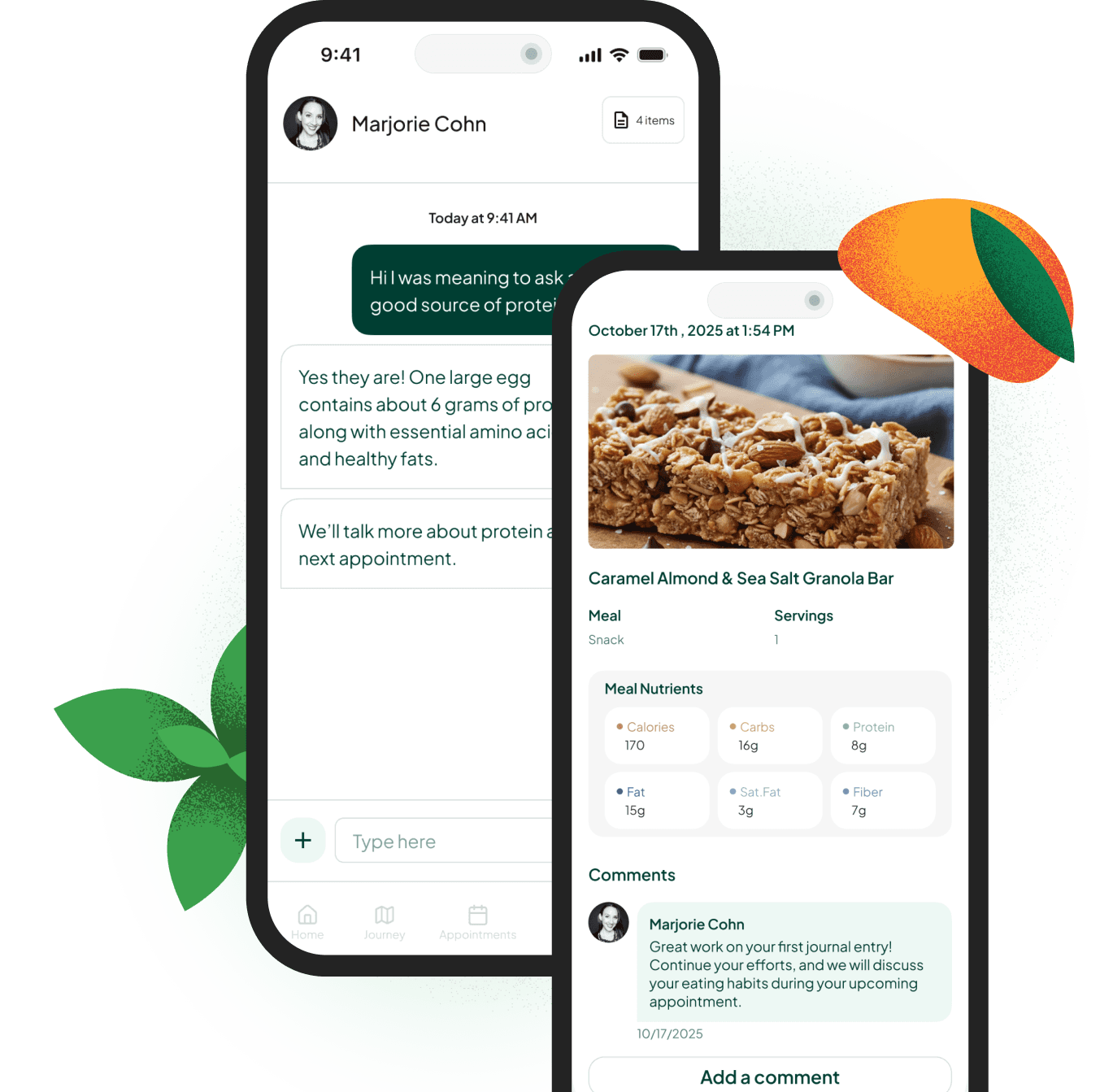
Food will not turn into a medication, and it does not need to. Eating more fiber, anchoring meals with protein, including healthy fats, and paying attention to how you eat all support your body’s own GLP-1 along with steadier blood sugar and better satiety. The most useful version of this is the one built around your body, your preferences, and your health history rather than a one-size-fits-all rule. If you want help making it personal, a Berry Street registered dietitian can work with you, and nutrition counseling is often covered by insurance. You can connect with a dietitian when you are ready.

Frequently Asked Questions
What foods boost GLP-1 naturally?
The foods most associated with supporting your body’s own GLP-1 are soluble and fermentable fiber (oats, barley, legumes, resistant starch), protein (eggs, dairy, fish, legumes), and healthy unsaturated fats (olive oil, avocado, nuts, fatty fish). No food contains GLP-1 itself. These foods signal your gut to release more of its own, especially when you build balanced meals around them.
Does fiber increase GLP-1? Which type of fiber works best?
Yes. Soluble and fermentable fibers work best because gut bacteria ferment them into short-chain fatty acids, which stimulate GLP-1 release. Good sources include oats, barley, beans, lentils, and resistant starch from cooled cooked potatoes or rice. Add fiber gradually and with plenty of water so it stays comfortable.
Does protein increase GLP-1, and how much protein do I need?
Protein does support GLP-1 release and adds strong satiety. The amount you need depends on your body, activity, and health, so there is no single number that fits everyone. A practical habit is to include a protein source at each meal and snack rather than saving it all for dinner, and a dietitian can help you set a target that fits you.
Can you increase GLP-1 as much as Ozempic with food? Is “nature’s Ozempic” real?
No. Food raises GLP-1 modestly and briefly compared with a medication, which is designed to produce a much larger and more sustained effect. “Nature’s Ozempic” is a marketing phrase, not an accurate comparison. Food is still worth it for steadier blood sugar, better satiety, and overall health.
Do probiotics or fermented foods increase GLP-1?
They may help indirectly by supporting a diverse gut microbiome, which is what ferments fiber into the short-chain fatty acids that stimulate GLP-1. Foods like yogurt, kefir, kimchi, and sauerkraut are a reasonable addition, though the direct evidence is still developing and results vary by person. Introduce them slowly if your gut is sensitive.
Does the order you eat food in (veggies and protein first) affect GLP-1?
For many people, yes. Starting a meal with vegetables and protein before refined carbohydrates tends to blunt the post-meal blood sugar rise (Shukla et al., 2015) and can support your GLP-1 response. You do not need to be rigid, simply lead with the fiber and protein on your plate.
Do supplements like berberine, psyllium, or green tea raise GLP-1?
Psyllium is a soluble fiber, so it can work through the same fiber pathway as food. Evidence for berberine and green tea raising GLP-1 in people is limited and mixed, and supplements are not tightly regulated. Talk with your dietitian and medical team before adding a supplement, especially if you take medications.
Does coffee, caffeine, or cinnamon increase GLP-1?
The evidence for coffee, caffeine, and cinnamon meaningfully raising GLP-1 in people is limited and not consistent. They can be part of a healthy diet, but they are not reliable GLP-1 boosters. Focus your energy on fiber, protein, and healthy fats, which have the stronger support.
Are there foods that actually contain GLP-1?
No. No food contains GLP-1, and eating one does not deliver the hormone to your body. Certain foods simply prompt your gut to make and release more of its own GLP-1, which is why the combination of foods you eat matters more than any single item.
How can I support GLP-1 naturally while on a GLP-1 medication and protect muscle?
Keep leading with protein to protect muscle, include gentle fiber for digestion, and stay hydrated, all scaled to your smaller appetite. The under-eating that can come with a quiet appetite is the main risk to watch. A dietitian, included in Berry Street’s GLP-1 care, can help you get enough nutrition while your medical team manages the medication.
How long does a food-related GLP-1 boost last?
A food-related rise in GLP-1 is tied to the meal you just ate and generally lasts a few hours before returning toward baseline. This is why regular, balanced meals matter more than any single “GLP-1 meal.” It is also part of why food supports, rather than replaces, a medication.
Can eating for GLP-1 help with blood sugar and cravings?
For many people, yes. The same fiber, protein, and meal-sequencing habits that support GLP-1 also help steady blood sugar, which can mean more even energy and fewer sharp cravings. Individual results vary, and weight is not the measure of success here, so it helps to personalize the approach with a dietitian.