Weight loss can feel frustrating when most advice centers on workouts that don’t fit your life. Standing routines, long gym sessions, or high-impact classes aren’t always realistic. Limited mobility, joint discomfort, a busy schedule, or even a small living space can all get in the way.
Chair exercises for weight loss offer a more practical starting point. They make movement feel doable again. As Registered Dietitians, we focus on sustainable habits, and that includes finding ways to stay active that actually fit into your routine. This article breaks down how chair exercises support weight loss, what results you can expect, and how to build a simple, consistent plan that works for you.
Key Takeaways
Chair exercises for weight loss offer a low-impact, accessible way to increase daily movement, especially for those with limited mobility or busy schedules.
Weight loss still depends on creating a calorie deficit, so exercise works best when paired with consistent, supportive nutrition habits.
Chair workouts can burn a moderate number of calories and help build strength, but results improve with consistency and progression.
Simple seated exercises like marching, punches, and sit-to-stands can be combined into effective routines at home or at work.
Over time, adding intensity, resistance, or other forms of movement can help enhance results and support long-term progress.

What Are Chair Exercises for Weight Loss?
Chair exercises for weight loss are structured movements you do while seated or while using a chair for balance and support. They’re designed to help you move more, raise your heart rate, and strengthen muscles in a way that feels manageable. That can be especially helpful if long workouts, standing routines, or crowded gyms feel unrealistic right now.
Some chair exercises focus on cardio, while others build strength or improve mobility. Together, they can support a more active lifestyle and increase daily calorie burn.
As Registered Dietitians, we look at the full picture. Chair workouts aren’t a magic fix, but they can be a practical part of a sustainable weight loss plan.
What Counts as a Chair Exercise
Chair exercises include any planned movement done sitting down or using a chair to support part of your body weight. That can mean seated marching, fast arm punches, leg extensions, seated twists, knee lifts, or sit-to-stands from the edge of a chair.
Some movements are more cardio-based and help raise your heart rate. Others challenge your muscles and support strength, posture, and control. The chair adds stability, which can help you focus on form and feel more confident as you move. That’s a big deal.
When exercise feels safer and more approachable, it’s easier to stay consistent. And for weight loss, regular movement done well matters more than chasing perfection.
Who These Workouts Are Best For
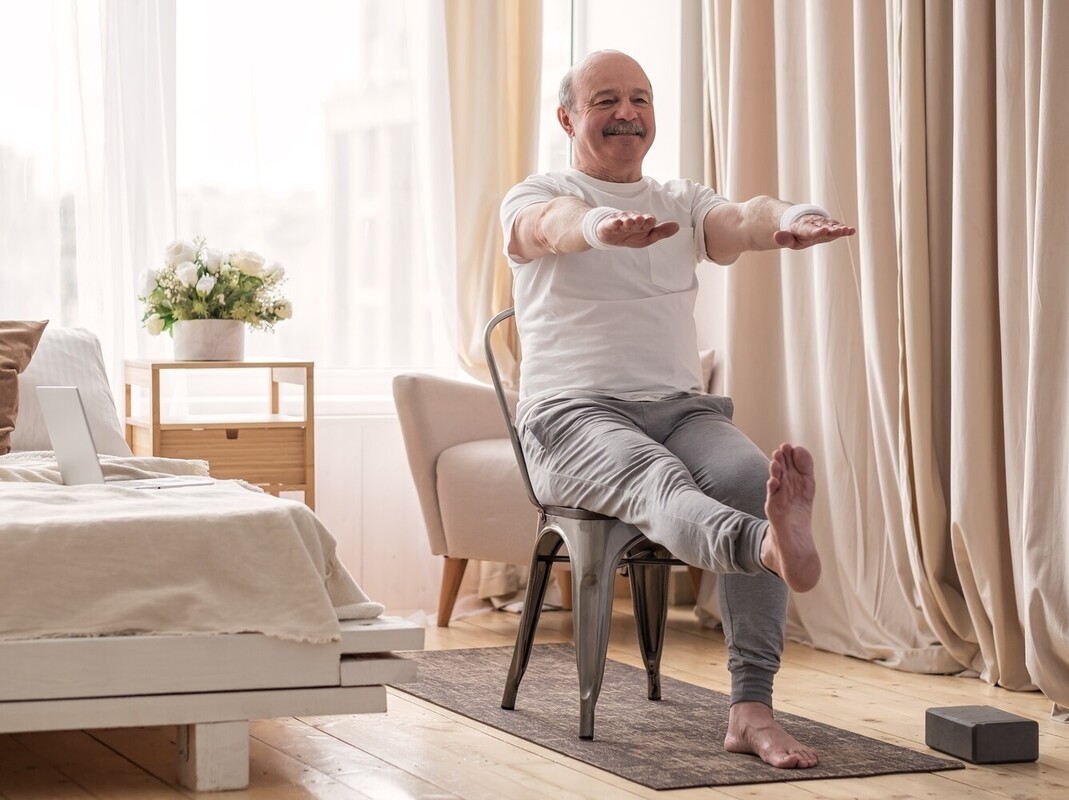
Chair workouts are a strong option for people who want exercise to feel more doable. They can work well for beginners, older adults, people with joint pain, those recovering from injury, or anyone with limited mobility. They’re also useful for people with demanding schedules, small apartments, or long workdays spent sitting at a desk.
Sometimes, convenience is the difference between doing something and doing nothing. From our experience, that matters a lot. A short seated routine at home can feel far less intimidating than driving to a gym or starting a demanding program. When movement feels realistic, people are more likely to repeat it. That consistency can create meaningful progress over time.
How They Compare to Standing or Gym Workouts
Chair exercises usually burn fewer calories than brisk walking, running, or a full gym strength session, but that doesn’t make them ineffective. They still help increase movement, engage major muscle groups, and support better stamina over time.
For many people, the lower-impact nature is a real advantage. It can reduce stress on the knees, hips, and back while making exercise feel less overwhelming. That can help you stick with it. A harder workout only helps if you can do it consistently.
Chair routines may be gentler, but they can still be challenging when you add speed, longer intervals, or light resistance. In many cases, a sustainable routine beats an intense plan you can’t maintain.

Can You Lose Weight Doing Chair Exercises?
You can absolutely lose weight doing chair exercises, but they need to fit into a bigger routine that supports a calorie deficit over time. Chair workouts can help you burn calories, build strength, and move more consistently, which all matter. They can also make exercise feel more approachable when standing workouts are uncomfortable, tiring, or unrealistic for your schedule.
That said, the workout itself is only one piece of the puzzle. Weight loss depends on your overall habits across the day, including how often you move and what your meals look like.
We encourage people to see chair exercises as a useful tool. They work best when paired with steady, realistic habits you can maintain.
How Weight Loss Actually Happens
Weight loss happens when your body uses more energy than it takes in over time. That’s the foundation. Exercise can raise the number of calories you burn, but food choices have a major impact on whether a calorie deficit actually happens.
A 20-minute chair workout can help, yet it usually won’t outweigh frequent overeating, skipped meals followed by grazing, or portions that don’t match your needs.
As Registered Dietitians, we help people build habits that support progress without making life miserable. Chair workouts can absolutely be part of that plan.
If you want more personalized support, connect with a Registered Weight Loss Dietitian through Berry Street for a personalized 7-day meal plan that fits your goals, routine, and preferences.
How Many Calories Do Chair Exercises Burn?
Chair exercises usually burn a moderate number of calories, not an extreme amount. In many cases, a 30-minute session may burn roughly 120 to 250 calories, depending on your body size, pace, and the type of movements you choose.
Faster routines with punching, marching, knee lifts, or timed intervals tend to raise energy use more than slower mobility work. Adding light weights or resistance bands can also increase the challenge.
Still, calorie burn varies from person to person, so it helps to keep expectations realistic. Chair workouts are most useful when they help you stay active consistently. A moderate burn repeated often can support progress far better than an intense plan you only do once in a while.
What Chair Exercises Can and Can’t Do
Chair exercises can do a lot. They can raise your heart rate, strengthen your arms and legs, improve core control, and help you break up long periods of sitting.
For some people, that makes regular movement feel possible again. That matters. They can also build confidence and create a routine that feels manageable instead of punishing.
At the same time, chair workouts have limits. They usually won’t burn as many calories as brisk walking, full-body strength training, or higher-intensity cardio.
They also won’t lead to fast results if the rest of your routine stays the same. Think of them as a practical starting point or a strong supplement to other healthy habits, not a standalone shortcut.
When Chair Workouts Are Most Effective
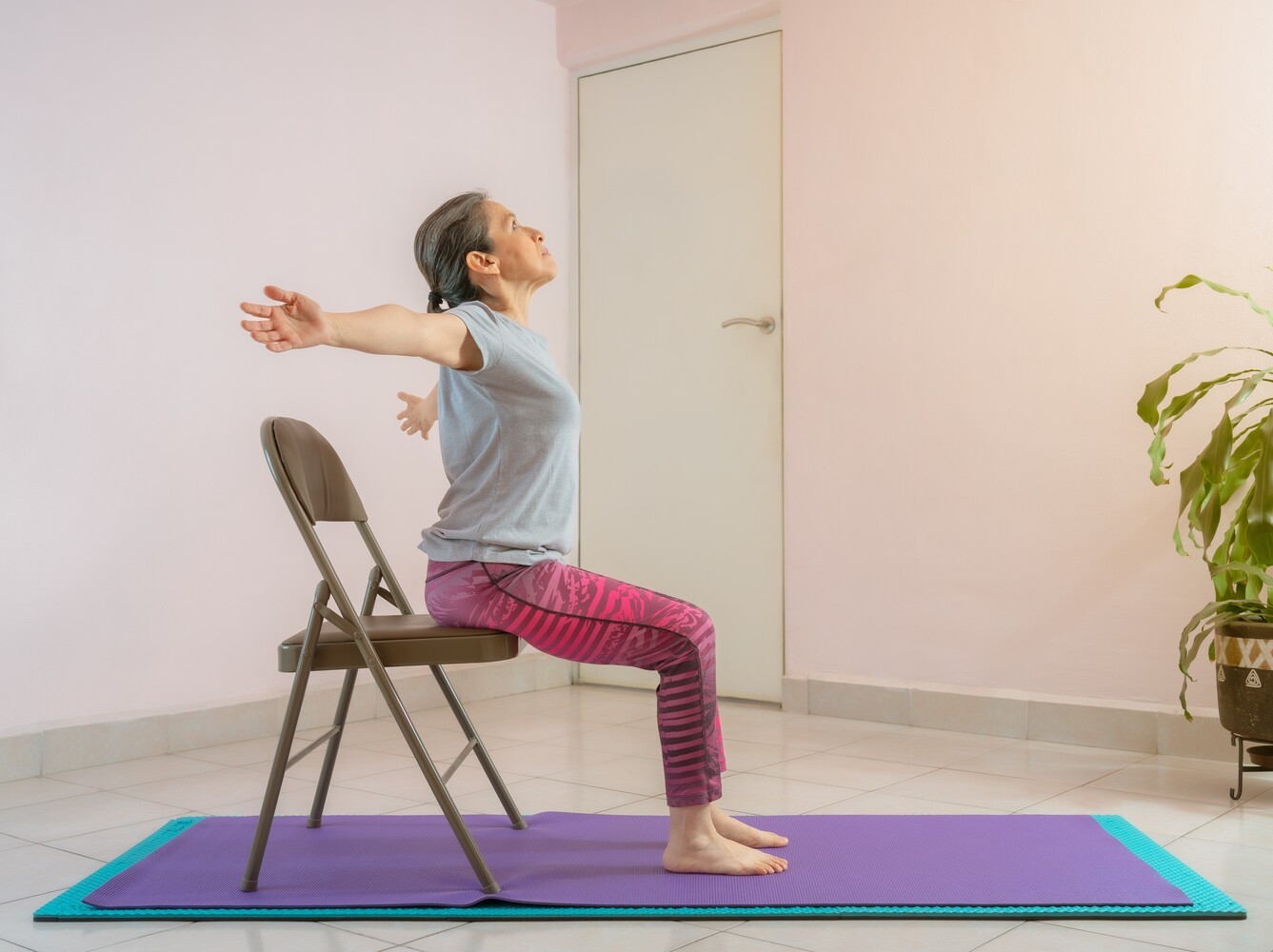
Chair workouts are most effective when you do them consistently and treat them as part of your daily routine instead of an occasional extra.
Frequency matters. A 10-minute session before work, a few seated moves during an afternoon break, and another short workout in the evening can add up quickly.
These routines also work better when you slowly increase the challenge with faster pacing, longer intervals, or light resistance. Pairing movement with supportive eating habits makes the biggest difference.
From our experience, simple habits repeated often beat ambitious plans that fall apart after a week. Chair workouts can be especially effective for people who need low-impact exercise that fits easily into home life, office routines, or limited space.
When You Might Need More Than Seated Exercise
Chair exercises can be a great place to start, but there are times when adding more types of movement makes sense. If your goal is faster weight loss, improved endurance, or bigger strength gains, you may benefit from gradually including walking, standing exercises, or resistance training.
That doesn’t mean chair workouts stop being useful. They can still support recovery days, short movement breaks, or lower-impact sessions when your body needs something gentler.
The goal is progress, not jumping into a routine that feels overwhelming. As your stamina improves, adding variety can help challenge more muscle groups and increase calorie burn. For many people, a mix of chair exercise and other movement creates the most sustainable path forward.

Benefits of Chair Exercises Beyond Weight Loss
Chair exercises can support much more than just weight loss when done consistently. They offer practical benefits that make daily movement feel easier, more comfortable, and more sustainable over time:
1. Low-Impact and Joint-Friendly Movement
Chair exercises are a lower-impact way to stay active, which can be especially helpful if your knees, hips, back, or ankles need a little more support. Instead of pounding the pavement or jumping through a fast workout, you can keep your body moving with less strain on your joints.
That can make exercise feel more realistic on days when soreness, stiffness, or recovery is part of the picture. It also helps reduce the stop-and-start cycle that happens when a workout feels too hard and leaves you hurting afterward.
Gentle doesn’t mean useless. When movement feels comfortable enough to repeat several times a week, it becomes much easier to build the kind of consistency that supports long-term progress.
2. Accessibility for Beginners and Limited Mobility
Chair workouts make exercise feel far more approachable for people who are new to movement or working with limited mobility. You do not need a gym membership, a big open room, or complicated equipment to get started.
Often, all you need is a sturdy chair and a few minutes. That simplicity lowers the pressure and makes it easier to begin, even if exercise has felt frustrating or intimidating in the past.
After years of experience, we’ve seen how important an accessible starting point can be. People are more likely to follow through when a routine feels manageable. Chair exercises give beginners a clear, practical option that can fit into daily life without creating another obstacle to work around.
And if chair exercises are too difficult to start out with, it can be helpful to learn how to lose weight without exercise by relying on diet. It may be slower, but it can get you to the point where moving around feels easier.

3. Improved Strength, Posture, and Circulation
Chair exercises can do more than help you burn calories. They also support the muscles that help you move through everyday life with more ease. Seated marches, leg extensions, twists, and arm movements can strengthen your core, upper body, and lower body over time. That added strength can improve stability and make daily tasks feel easier.
Posture can improve, too, especially when you practice sitting tall, engaging your midsection, and moving with control instead of collapsing into the back of the chair.
Regular movement also supports circulation, which is especially helpful if you spend long hours sitting at work or at home. Better blood flow can help reduce stiffness and keep your body feeling more refreshed.
4. Convenience for Home, Office, or Small Spaces
One of the biggest advantages of chair exercises is how easy they are to fit into real life. You can do them in a bedroom, living room, office, or any small space where a sturdy chair fits. This makes a big difference when time feels tight or your day keeps changing. A quick session before work, a few seated moves during lunch, or a short routine while dinner is in the oven can all count.
It doesn’t need to be complicated. Convenience often shapes consistency more than motivation does. When movement is easy to access, people are more likely to keep doing it. And that steady repetition is what helps healthy habits stick.
5. Supports Mental Focus and Energy
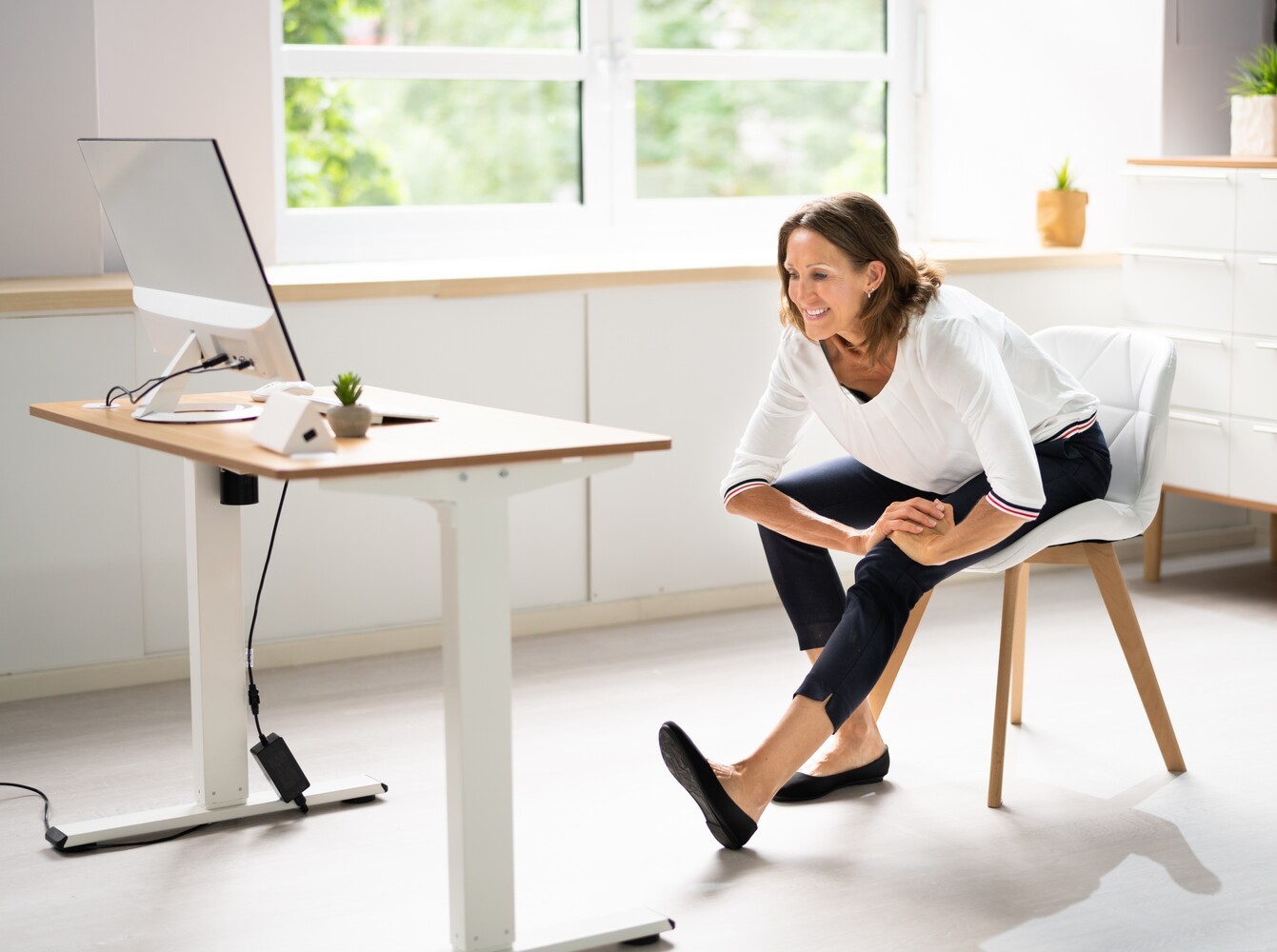
Chair exercises can help improve your focus and energy levels, especially during long periods of sitting. A short burst of movement can wake up your body and help you feel more alert. This can make a noticeable difference during a workday or when your weight loss motivation feels low.
Simple movements like seated marching or arm punches increase blood flow, which can support better concentration and reduce that sluggish, heavy feeling that builds over time. Even a five-minute session can shift your mindset and help you feel more capable of continuing your day. That boost in energy can also make it easier to stay consistent with both movement and daily habits.
6. Can Help Break Up Sedentary Time
Long stretches of sitting can leave you feeling stiff, sluggish, and mentally checked out. Chair exercises can help interrupt that pattern in a simple, realistic way. A few minutes of seated movement during the day can wake up your muscles, get your blood flowing, and make long hours at a desk feel less draining.
Breaking up sedentary time may also help you feel more energized and less likely to stay inactive for the rest of the day.
Small movement breaks often feel more doable than setting aside a full hour for exercise. Chair workouts give you a way to stay engaged with movement even when your schedule is packed and your energy is limited.
7. Builds Confidence Around Exercise
Chair exercises can help rebuild confidence, especially if exercise has felt discouraging, uncomfortable, or hard to stick with in the past. When people feel like they can complete a workout safely and successfully, they’re more likely to do it again.
Simple seated movements can create early wins, whether that means finishing a full routine, moving with less discomfort, or noticing that your stamina is improving.
Those changes may seem small at first, but they can shift how you feel about exercise overall. After years of experience, we’ve seen that confidence often grows through repetition, not perfection. Chair workouts give people a realistic way to start, improve, and feel more capable over time.
Best Chair Exercises for Weight Loss
Not sure where to start or which movements actually make a difference? These chair exercises are simple, effective, and easy to mix into your routine, whether you’re aiming to build strength, raise your heart rate, or stay consistent:
1. Seated Marching
Seated marching is one of the easiest chair exercises for weight loss to start with, and it works well for nearly any fitness level.
Sit upright with your feet flat on the floor, engage your core, and lift one knee at a time as if you’re marching in place. Swing your arms if you want to make it more dynamic.
This movement helps raise your heart rate while also working your hip flexors, lower abs, and thighs. It may look simple, but it can become surprisingly challenging when you keep a steady pace for one to three minutes. Seated marching is a great warm-up, cardio interval, or active break during the day when you need movement fast.

2. Seated Jumping Jacks
Seated jumping jacks bring a familiar cardio move into a lower-impact format that feels much more manageable for many people.
Sit tall near the front of the chair, open your legs out to the sides, and bring them back in while raising your arms overhead and then lowering them. Keep the motion controlled but quick enough to elevate your heart rate.
This exercise works your shoulders, upper back, inner thighs, and core while also challenging coordination. It’s especially helpful when you want a movement that feels energetic without requiring impact on your knees or ankles.
Try doing seated jumping jacks for 30 to 60 seconds at a time, then rest and repeat for several rounds.
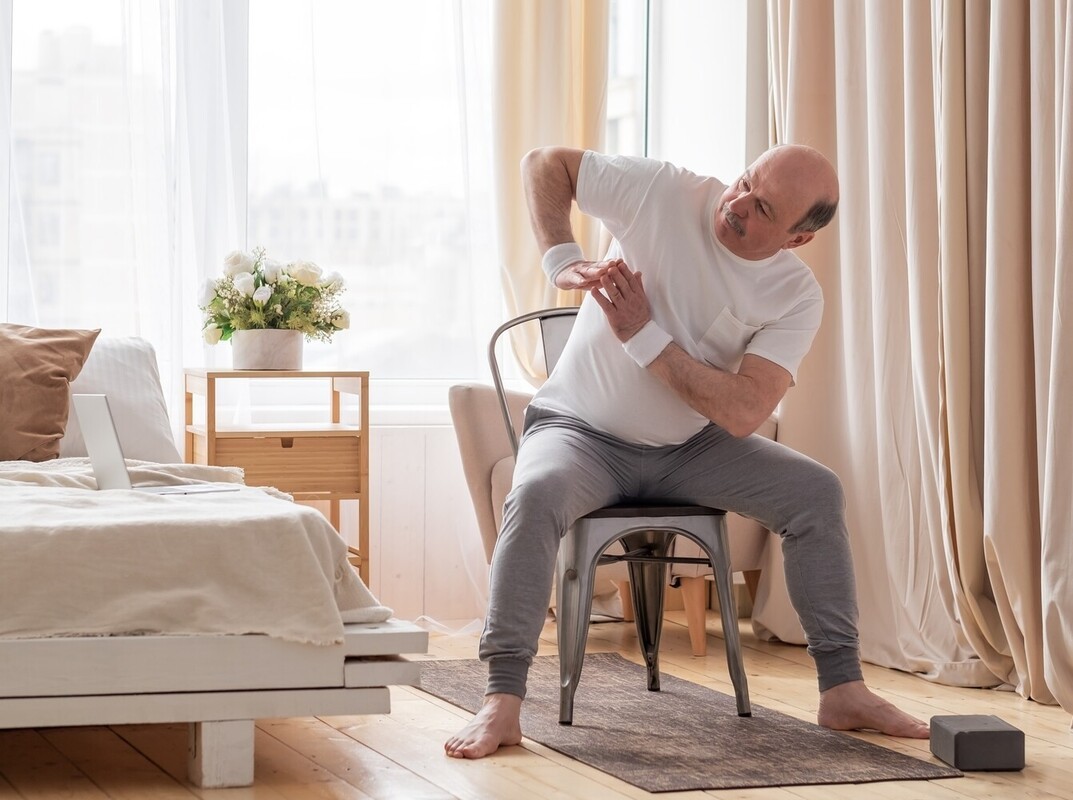
3. Seated Twists
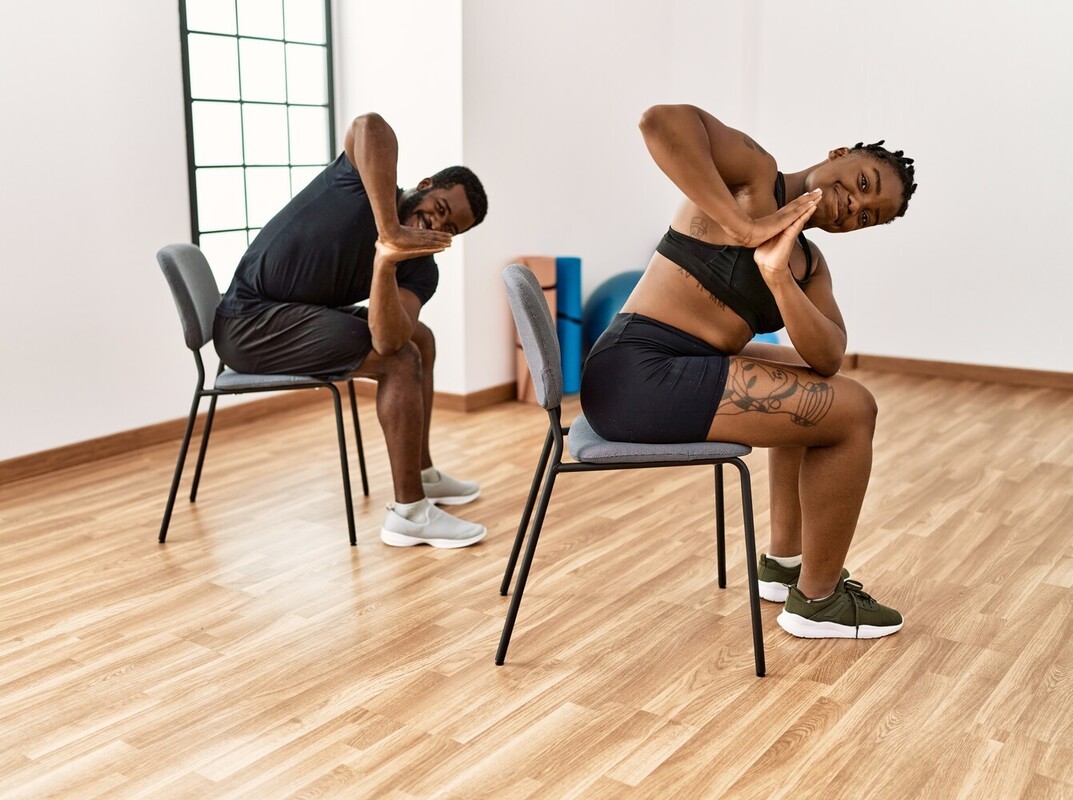
Seated twists are a simple but effective way to work your core while also improving spinal mobility and body awareness.
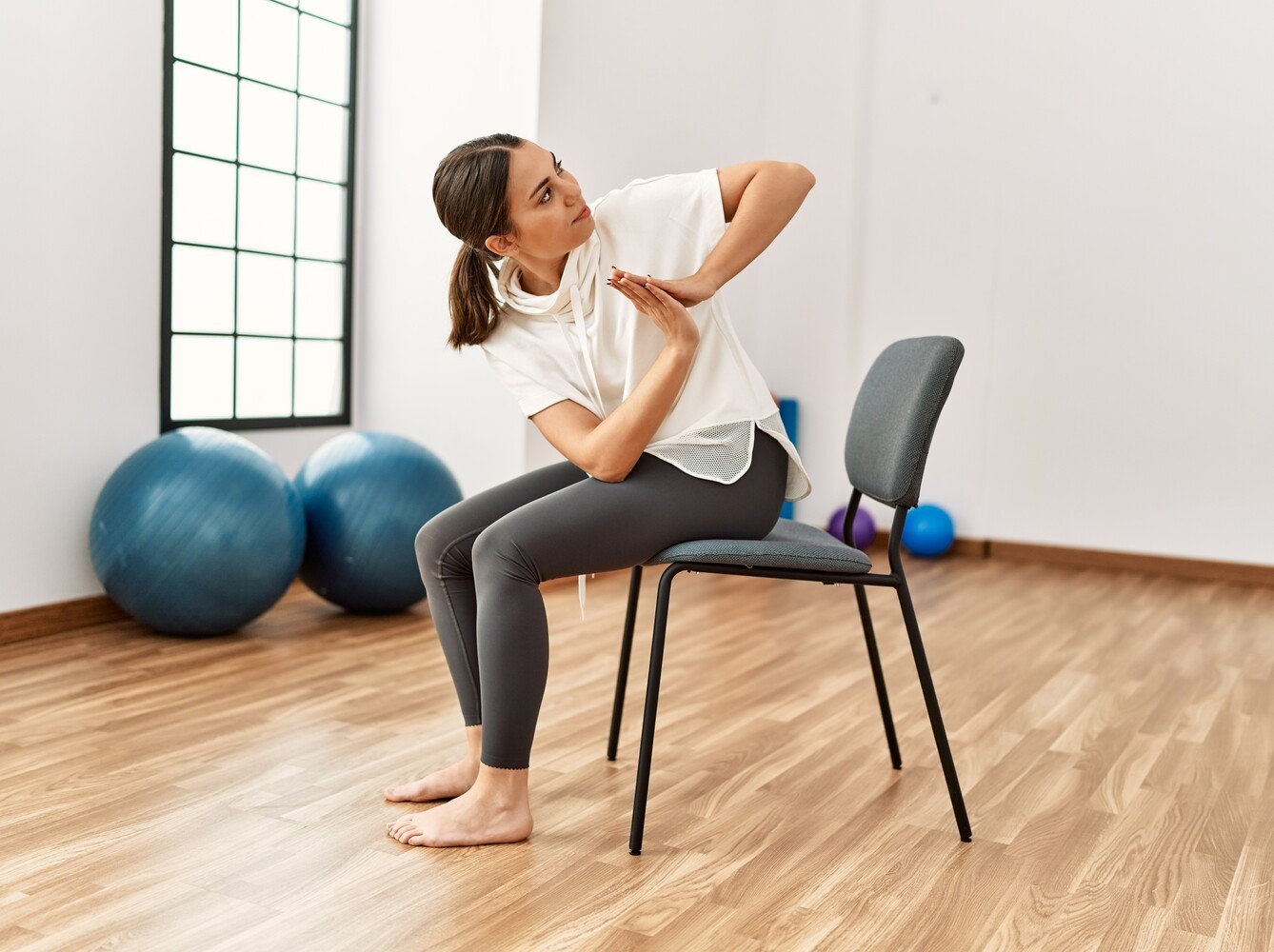
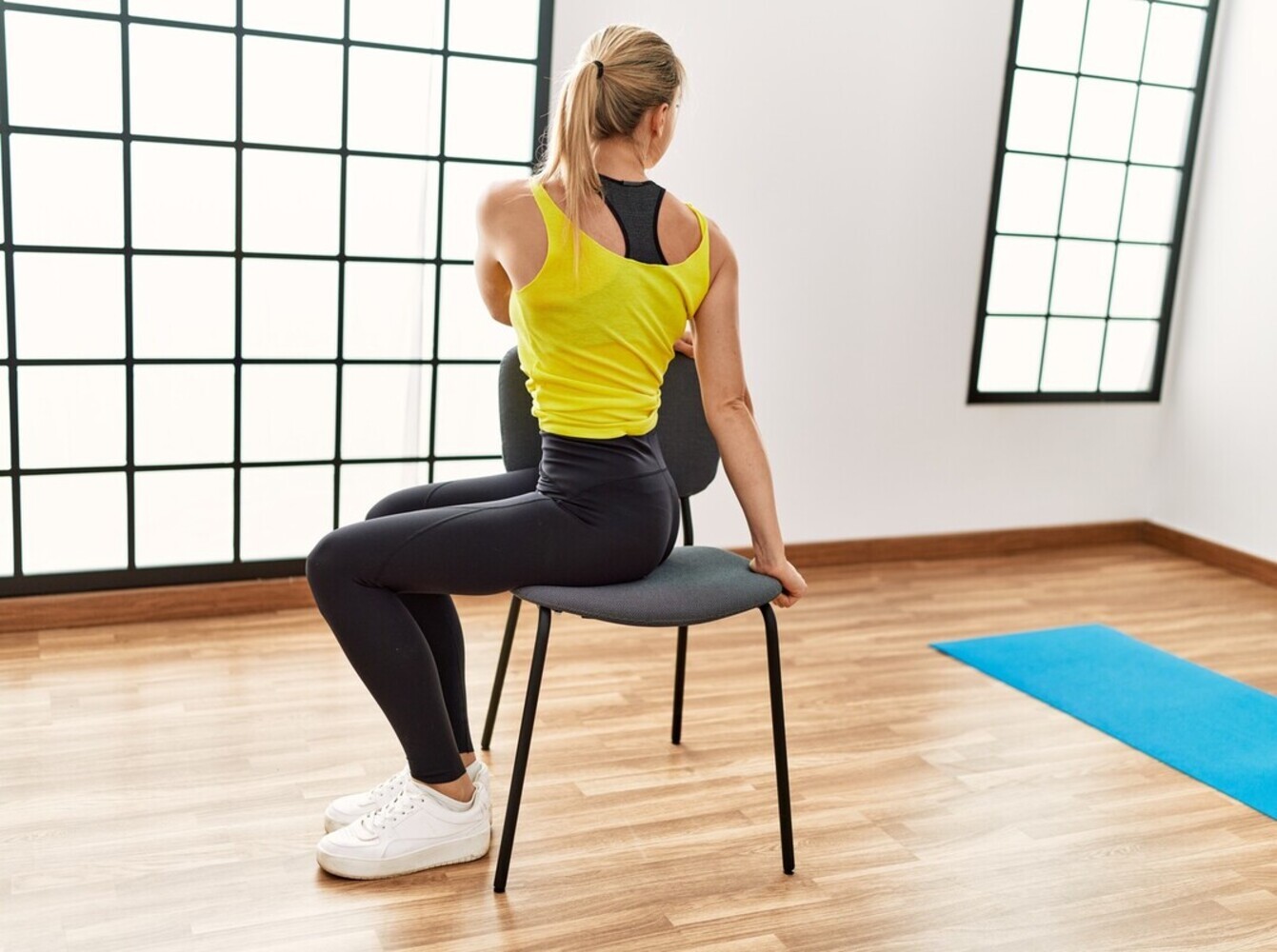
Sit tall with your feet grounded and your shoulders relaxed. From there, rotate your torso to one side, return to center, and then twist to the other side. The movement should come from your waist and upper body, not from swinging your arms around carelessly.
This exercise targets your obliques and deep core muscles, which support balance, posture, and everyday movement. It can also help break up stiffness from long periods of sitting. To make it more challenging, move a little faster or hold a light object in your hands while twisting from side to side.

4. Chair Mountain Climbers
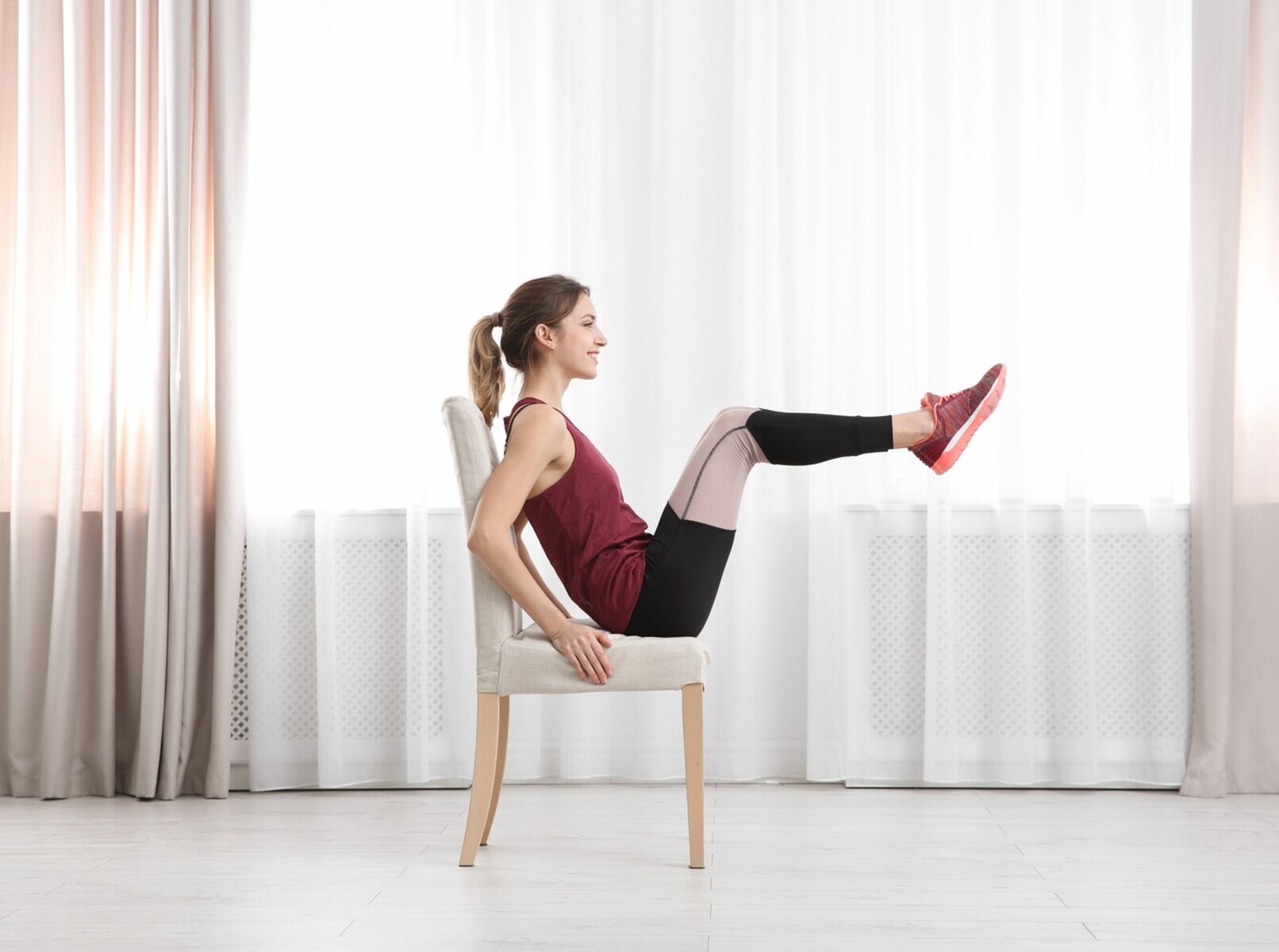
Chair mountain climbers are a faster-paced seated exercise that can add real intensity to your routine.
Sit near the edge of a sturdy chair, lean back slightly while keeping your chest lifted, and alternate driving your knees upward in a quick, controlled rhythm. You can place your hands lightly on the sides of the chair for balance if needed.
This move targets your core, hip flexors, and legs while also pushing your heart rate higher than many basic seated exercises. It works well in short intervals, especially if you want a cardio challenge without standing.
Start with 20 to 30 seconds, focus on good form, and build from there as your stamina improves over time.
5. Knee Lifts
Knee lifts are a useful chair exercise for weight loss because they help wake up your core and lower body without requiring complicated coordination.
Sit tall near the edge of the chair, brace your midsection, and lift one knee at a time or bring both knees up together if that feels comfortable. Moving slowly increases the challenge because your abdominal muscles have to work harder to control each lift. You’ll also feel your hip flexors and upper thighs joining in.
For some people, alternating sides feels more stable, while others prefer lifting both knees for a bigger core challenge. Start with a steady rhythm and focus on posture. A rounded back can make the move less effective and less comfortable.
6. Oblique Crunch Variations
Oblique crunch variations are great for adding rotation and side-body work to a chair workout. Sit upright, place your hands lightly behind your head or at your temples, and bring one elbow toward the opposite knee as you twist through your torso. Then switch sides.
That cross-body pattern helps target the obliques, which are the muscles along the sides of your waist, while also engaging deeper core muscles that support balance and posture. You don’t need to rush it. A controlled pace often helps you feel the muscles working more clearly.
To make the move easier, keep the knee lift small. To make it harder, increase the range of motion and keep your core tight throughout each repetition.
7. Chair Push-Ups
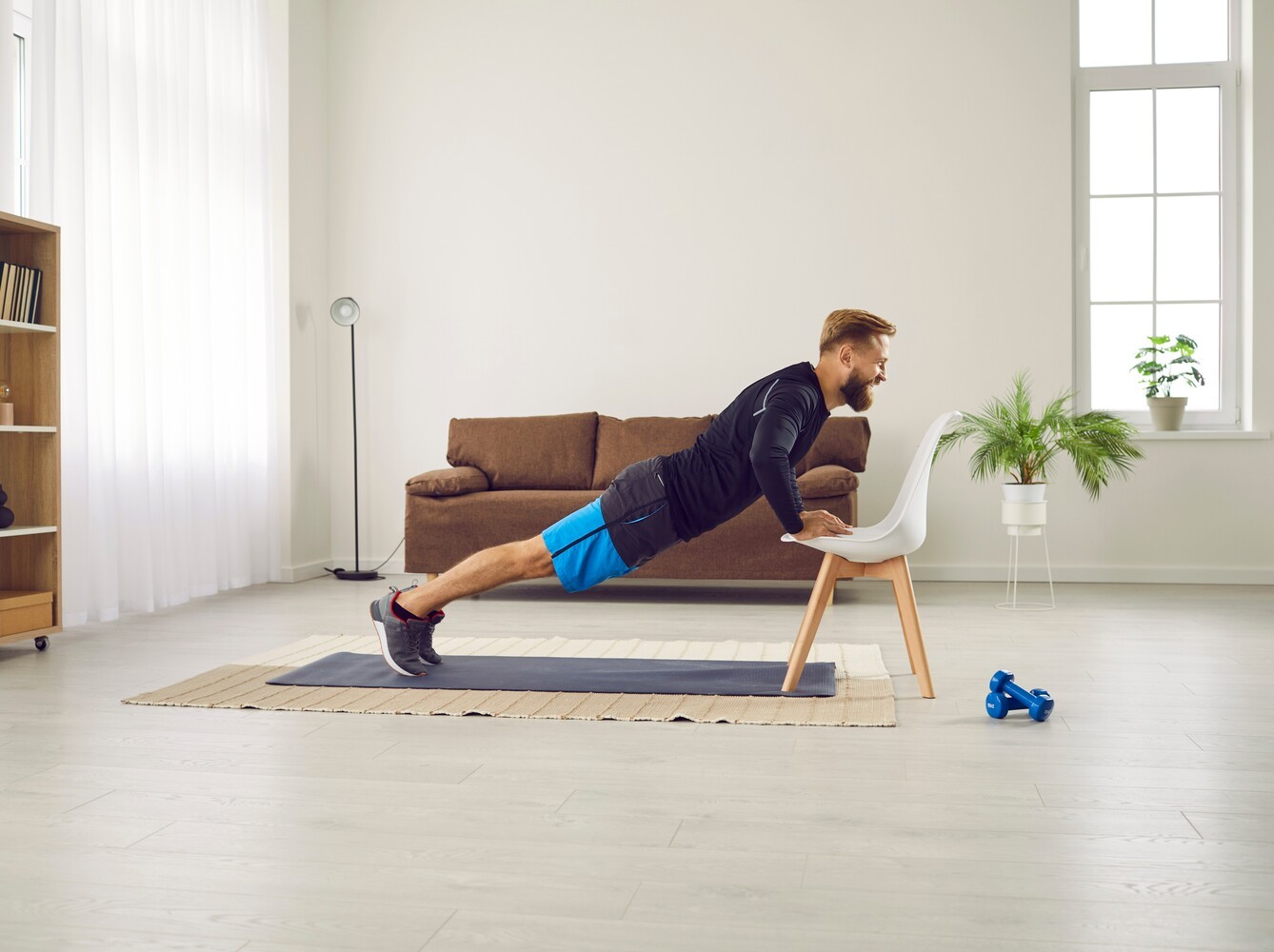
Chair push-ups are a solid way to build upper-body strength while keeping the movement approachable.
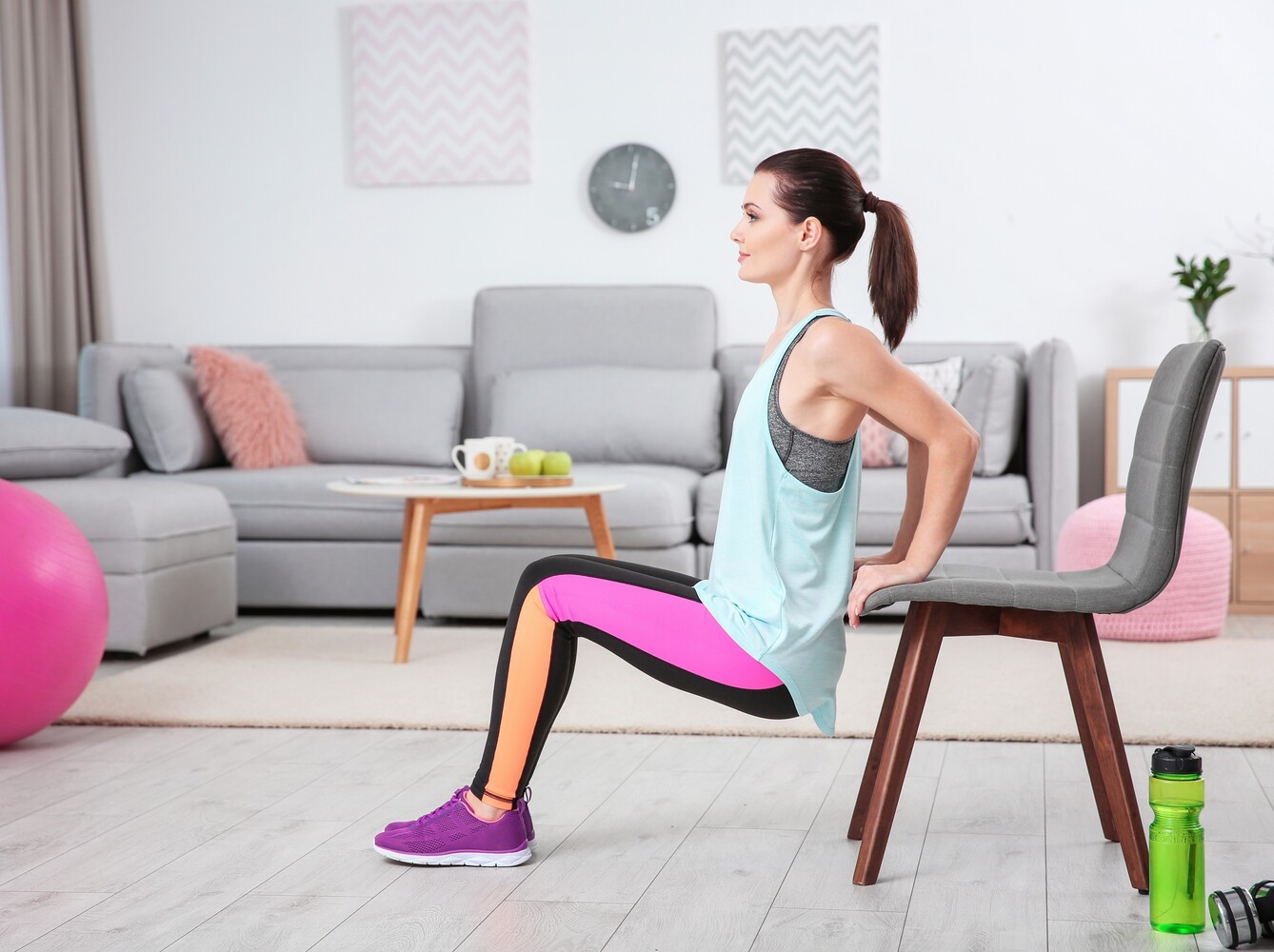
Place your hands on a sturdy chair, position your body at an angle, and bend your elbows to lower yourself with control before pressing back up. Depending on the chair height and your setup, the move can feel easier or more challenging.
You’ll primarily work your chest, shoulders, and triceps, while your core helps keep you stable. Stronger upper-body muscles can support everyday tasks like pushing up from a seat, carrying groceries, or getting up from the floor.
Focus on a steady tempo rather than speed. Good form matters here. Keep your body aligned and avoid letting your shoulders shrug up toward your ears.
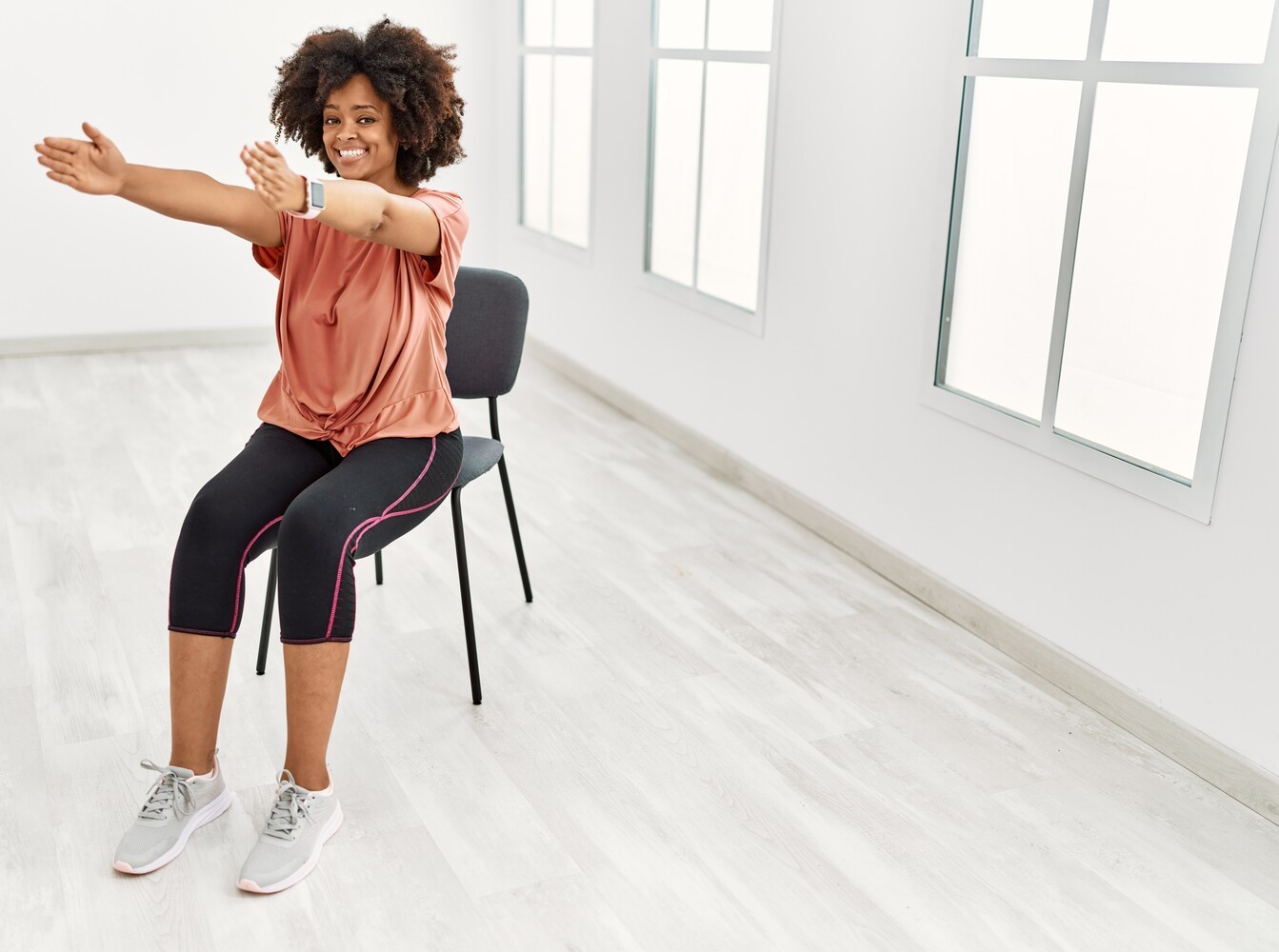
8. Punches or Boxing Movements
Punches or boxing movements can bring energy to a chair workout fast. Sit tall, tighten your core, and punch straight ahead, upward, or diagonally across your body in a quick but controlled rhythm.
You can keep it simple with single punches or mix patterns together for more variety. Fast arm work helps raise your heart rate, making this a strong cardio option when you want something that feels lively.
Your shoulders, arms, upper back, and core all get involved, especially when you rotate slightly through the torso with cross-body punches.
Keep your posture strong as you go. Slouching can reduce the benefit. Short intervals, like 30 to 45 seconds, can add intensity without making the routine feel overwhelming.
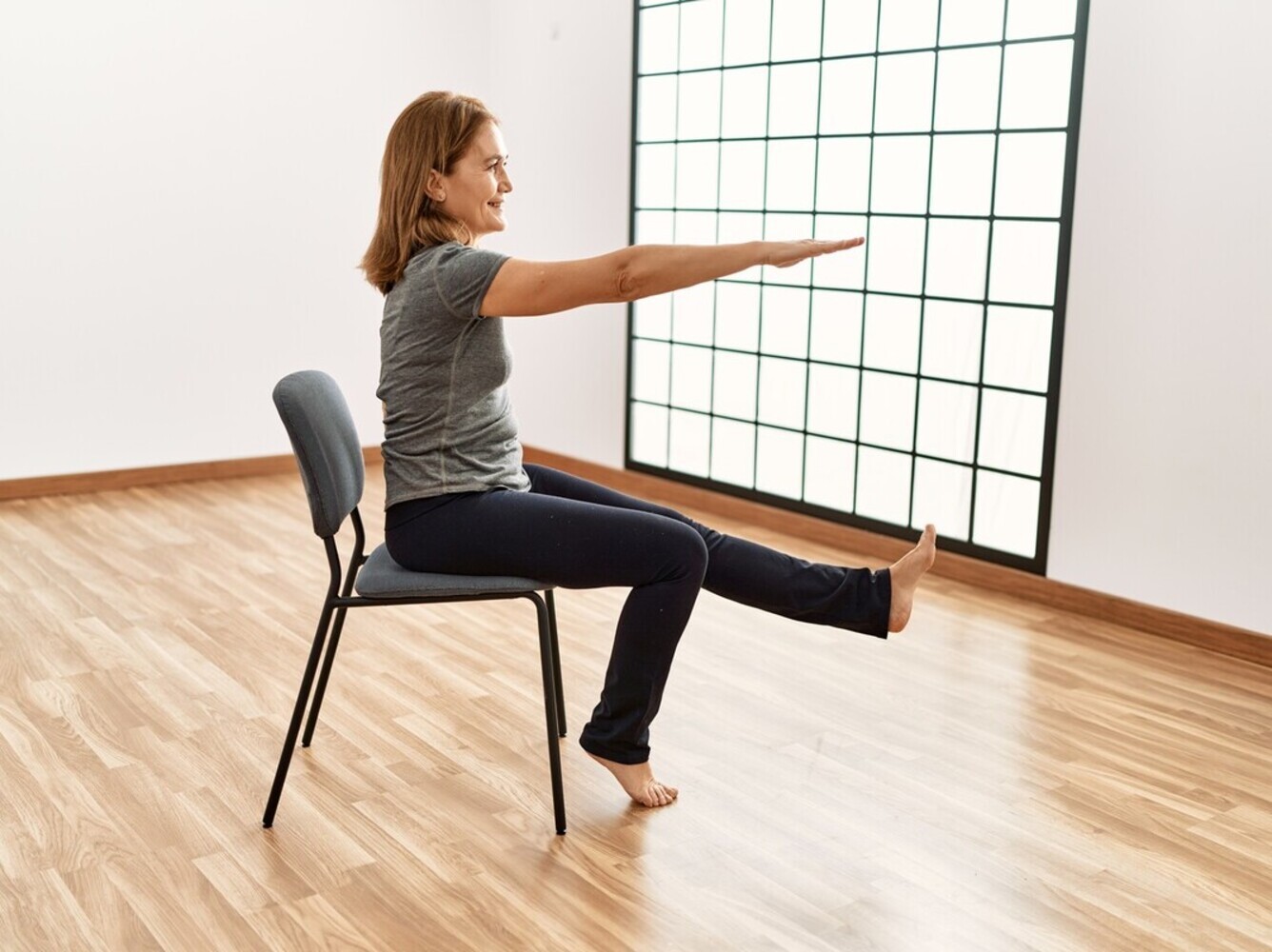
9. Leg Extensions
Leg extensions are simple, but they can do a lot for lower-body strength and control. Sit tall with both feet on the floor, then extend one leg straight out in front of you and lower it back down with control. Alternate sides or finish all reps on one leg before switching.
You’ll feel this most in your quadriceps, the muscles on the front of your thighs, which help support the knees during walking, standing, and climbing stairs. That makes this move especially useful for people who want to improve leg strength without impact.
Slow reps tend to work best here. They help you stay in control and keep the muscles engaged instead of rushing through the motion without much benefit.
10. Sit-to-Stands
Sit-to-stands are one of the most practical chair exercises for weight loss because they closely match a movement you already do every day.
Start seated with your feet planted firmly on the floor. Lean slightly forward, press through your heels, and stand up. Then lower yourself back down slowly with control. Your glutes, thighs, and core all have to work together to make that happen.
The full-body effort of this exercise can make sit-to-stands feel more challenging than they look. They also help build functional strength, which matters for daily independence and confidence.
If standing fully feels too difficult at first, partial stands can still help. Over time, improving this movement can make everyday tasks feel smoother and less tiring.
11. Compound Seated Exercises
Compound seated exercises combine two or more actions into one movement pattern, which helps you get more done in less time.
A simple example is marching while punching, or twisting your torso while lifting one knee. These combinations ask multiple muscle groups to work together, which can increase the challenge and raise your heart rate faster than doing one move at a time. They also make a routine feel less repetitive, which helps with consistency.
Coordination becomes part of the workout, too. That’s useful for balance, focus, and body awareness.
Keep the combinations simple at first, so your form stays solid. Once you feel comfortable, you can build longer intervals or add light resistance to make the routine more demanding.

12. Kick-and-Punch Combos
Kick-and-punch combos bring cardio and coordination together in one fast-paced seated drill. Sit tall near the front of the chair, extend one leg into a controlled kick, and pair it with a punch from the opposite or same-side arm. Then switch sides and keep the pattern going.
The exact sequence can vary, which helps keep the routine more interesting. Your core works to stabilize your body, while your legs, shoulders, and arms all stay active. This can help raise your heart rate more than isolated seated moves.
Start at a moderate pace so you can stay coordinated. Once the pattern feels smooth, speed it up a little. Short intervals work well and can make the routine feel energetic and fun.

Chair Workouts for Weight Loss: Simple Routines You Can Follow
Ready to put these exercises into a routine that actually feels doable? These simple chair workouts give you a clear starting point, whether you have 10 minutes or want a longer, more structured session.
Beginner 10-Minute Chair Workout
This beginner chair workout is designed to feel approachable, not exhausting. It works well for days when you want structure without a lot of pressure.
Use a sturdy chair, sit tall, and keep your feet planted when needed for support. Move at a pace that feels steady but manageable. If you need a short pause, take it. The goal is to finish feeling accomplished, not wiped out.
1 minute seated marching: Lift one knee at a time and swing your arms naturally.
1 minute arm punches: Punch forward at shoulder height, alternating sides with control.
1 minute leg extensions: Straighten one leg at a time and squeeze the front of the thigh.
1 minute seated twists: Rotate gently side to side, keeping your core engaged.
Repeat the circuit twice for a full 8 minutes of work.
Rest as needed between rounds for 30 to 60 seconds.
Finish with deep breathing and slow marching to cool down.
20–30 Minute Fat-Burning Routine
This longer chair workout is a solid option when you want more intensity and a bigger cardio challenge. It combines rhythmic movement with strength-focused intervals so you can raise your heart rate while keeping the routine chair-friendly.
Keep a water bottle nearby, sit near the front of the chair when needed, and focus on strong posture from start to finish. If one round feels like enough, start there and build over time.
3 minutes warm-up marching: Begin at an easy pace, then gradually move faster.
2 minutes seated jumping jacks: Open your legs and lift your arms overhead in rhythm.
2 minutes punches: Mix forward punches with cross-body punches to keep it engaging.
2 minutes knee lifts: Alternate knees and keep your core tight.
2 minutes chair push-ups: Use a sturdy chair and move slowly with control.
1 minute rest: Sip water and reset your posture.
Repeat 2 to 3 rounds based on your energy level.
Cool down with slower movement and deep breaths.
Interval Training with Chair Exercises
This interval routine is great when you want a workout that feels efficient and a little more energizing. Short bursts of effort can help raise your heart rate without requiring a long session, which makes this a useful option for busy days.
During each work interval, aim for strong, controlled movement rather than rushing. During each rest period, let your breathing settle before starting again. A timer helps. So does good posture.
30 seconds high-intensity punches: Punch quickly forward or across your body.
30 seconds rest: Relax your shoulders and take a few steady breaths.
30 seconds fast marching: Lift your knees quickly while staying tall through your torso.
30 seconds rest: Reset and prepare for the next round.
30 seconds seated jumping jacks: Move your arms and legs together at a brisk pace.
30 seconds rest: Recover fully before repeating.
Repeat for 10 to 15 minutes, depending on your stamina.
Finish with slower marching and gentle twists.
How Often You Should Do Chair Workouts
How often you do chair workouts depends on your routine, energy levels, and overall goals. For many people, three to five structured sessions per week is a realistic place to start. Shorter sessions done daily can also work well, especially if you break them into smaller blocks throughout the day.
Consistency matters more than intensity. A 10 to 15-minute routine repeated regularly can support better progress than longer workouts done occasionally.
Pay attention to how your body responds and adjust your pace or frequency if needed. As you build the habit, it becomes easier to stay consistent.
Keep in mind that this guidance supports general wellness, so it’s important to check with your doctor before starting or changing your routine and to stop if you notice pain, dizziness, or unusual symptoms.
Chair Exercises for Seniors and Limited Mobility
Chair exercises can be especially helpful for people who need a safer, more supportive way to stay active. With the right approach, they can improve strength, mobility, and confidence without adding unnecessary strain.
Why Chair Exercises Are Ideal for Seniors
Chair exercises are a practical option for seniors who want to stay active without increasing their risk of injury. Sitting provides added stability, which can help reduce concerns about balance or falling during movement. That often makes it easier to stay consistent.
Many seated exercises also support joint health by encouraging gentle, controlled movement through a comfortable range of motion. This can help reduce stiffness and maintain mobility over time.
Chair workouts can also be adjusted easily, which allows seniors to move at their own pace and build strength gradually. Even short sessions can support circulation, energy levels, and overall function, making daily activities feel more manageable and less physically demanding.

Safe Exercises for Beginners or Reduced Mobility
If you’re just getting started or need a gentler approach, the right exercises can help you move safely while still building strength and confidence. Focus on controlled, steady movements and take breaks when needed.
Seated marching: Lift one knee at a time at a comfortable pace to improve circulation and gently raise your heart rate.
Arm circles: Extend your arms out to the sides and make small circles to support shoulder mobility and upper-body strength.
Leg extensions: Straighten one leg at a time to strengthen your thighs and support knee stability.
Seated twists: Rotate slowly side to side to engage your core and improve spinal mobility.
Heel-to-toe taps: Tap your toes and heels on the floor to support coordination and lower-leg movement.
Tips to Reduce Injury Risk
Staying safe during movement is key, especially when you’re building a new routine or working with limited mobility. A few simple adjustments can help you reduce injury risk and make each workout feel more comfortable and controlled:
1. Start Slow
Starting slow can make chair workouts safer and more sustainable, especially if you are new to exercise, returning after time off, or dealing with limited mobility. Short sessions give your muscles, joints, and cardiovascular system time to adjust without creating unnecessary soreness or fatigue.
Trying to do too much too soon can leave you discouraged or uncomfortable, which makes it harder to stay consistent. A good starting point might be five to 10 minutes at an easy pace, two to four times per week.
From there, you can build gradually as your stamina improves. Pay attention to how your body feels during and after each session. Mild effort is expected. Sharp pain, dizziness, or unusual shortness of breath are signs to stop.
2. Use a Stable Chair
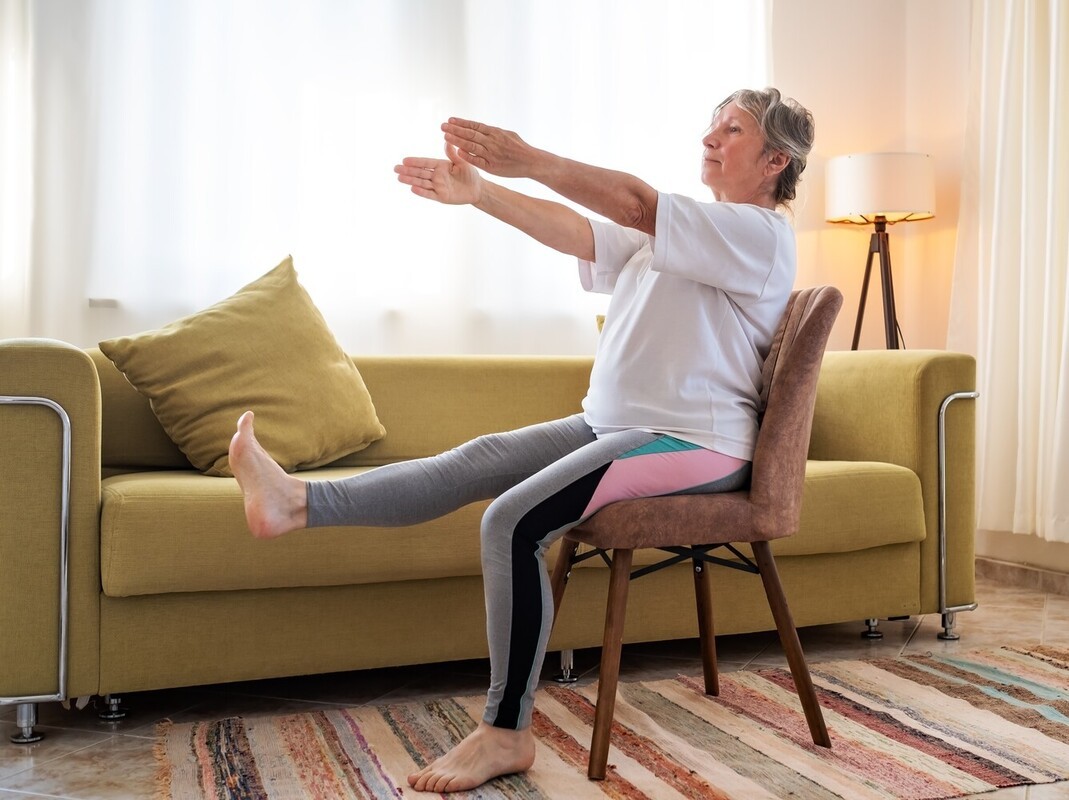
Using a stable chair creates a safer setup and helps you move with more confidence. Choose a sturdy chair with a firm seat and a solid base that stays in place as you exercise. Avoid chairs with wheels, uneven legs, or deep cushions that can shift under your weight.
A simple dining or kitchen chair often works best. Before you start, check that it doesn’t wobble and sits securely on a flat surface.
Positioning is also important. Keep the chair against a wall if you need extra stability.
Wearing supportive shoes can help during movements like sit-to-stands. Small adjustments like these reduce risk and make each exercise feel more controlled and comfortable.
3. Focus on Form
Focusing on form helps you get more benefit from each movement while reducing the risk of strain. Sit tall with your feet grounded when needed, keep your shoulders relaxed, and gently engage your core for support.
Try to avoid slouching or rushing through exercises, as that can shift stress into your neck, back, or hips. Slower, controlled movements often work better because they keep the right muscles engaged.
Pay attention to your breathing as well. Steady breathing helps you stay relaxed and focused. Take a moment between exercises to reset your posture if needed. Paying attention to how your body moves can make a big difference in how effective and comfortable your workout feels.

4. Clear the Area Around You
A clear workout space can help prevent small accidents that interrupt your routine. Before you begin, take a minute to move anything that could get in your way, such as bags, cords, footstools, or loose rugs. Even seated workouts need a little room, especially for leg extensions, side steps, or sit-to-stands.
It also helps to make sure pets and small children aren’t moving around your chair while you exercise. That extra awareness can lower the risk of bumping into something or losing focus mid-movement.
Good lighting matters as well. When you can clearly see your setup, it becomes easier to move with confidence and stay focused on the workout instead of worrying about your surroundings.
5. Wear Supportive Shoes When Needed
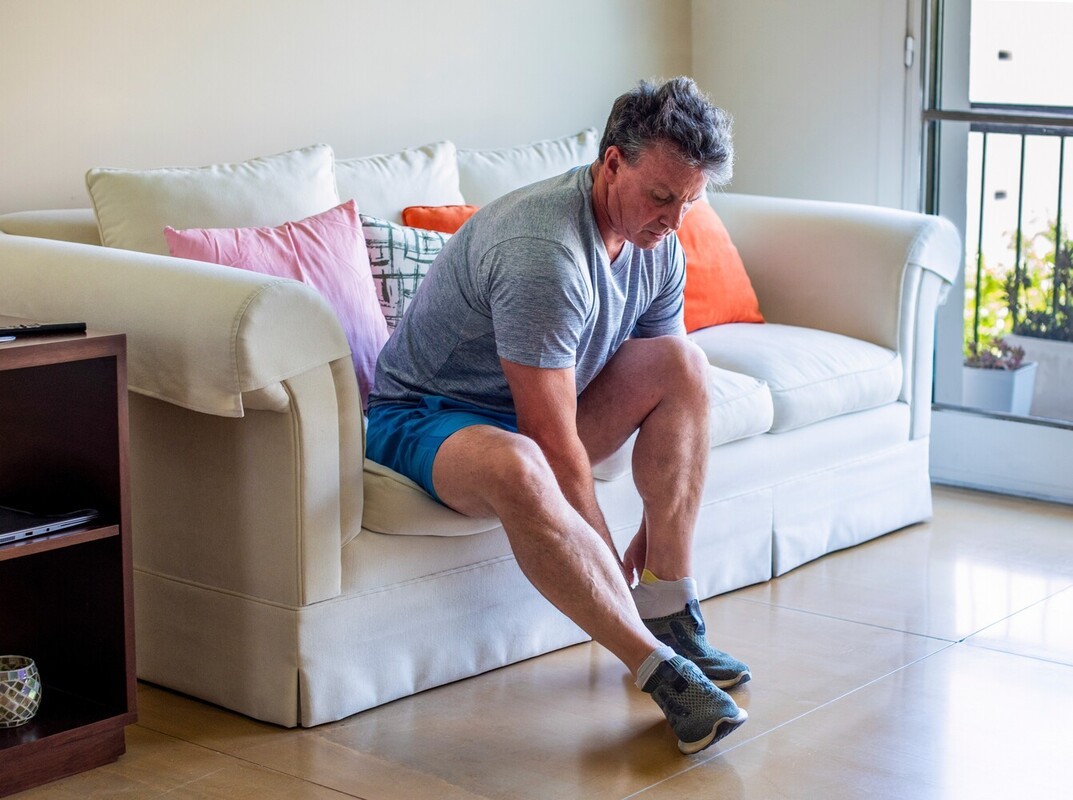
Supportive shoes can make certain chair exercises feel more stable, especially if your routine includes sit-to-stands, fast seated cardio, or any movement where your feet press firmly into the floor. Shoes with a secure fit and non-slip soles can help reduce shifting and improve traction. This can be especially helpful on smooth floors like tile or hardwood.
For fully seated upper-body or core work, shoes may not always be necessary, but they are often a smart choice for routines with more lower-body involvement. Avoid slippery socks or backless slippers that can slide around.
6. Keep Your Range of Motion Comfortable
You don’t need to move through the biggest possible range to get benefits from chair exercises. A comfortable range of motion is often the safer choice, especially if you have joint stiffness, limited mobility, or pain with certain positions.
For example, a smaller twist, lower knee lift, or shorter leg extension can still challenge your muscles without pushing your body into discomfort. This approach helps you stay in control and reduces the chance of aggravating sensitive areas.
As your strength and confidence improve, your range may naturally increase over time. Let that happen gradually. The goal is controlled movement that feels steady and manageable, not forcing your body into positions that leave you tense, strained, or hesitant to keep going.
Progressing Safely Over Time
Progressing safely helps you build strength, stamina, and confidence without increasing your risk of injury. Start by keeping your routine simple, then add small challenges as your body adapts. That could mean extending your workout by a few minutes, increasing your pace slightly, or adding light resistance like hand weights or bands.
Pay attention to how each change feels. If something causes discomfort or fatigue that lingers, scale it back and give your body time to adjust. Rest days or lighter sessions can also support recovery and steady progress. Over time, these gradual steps can lead to meaningful improvements.
For more personalized guidance, connect with a Registered Healthy Aging Dietitian through Berry Street to build a plan that supports your long-term health.
How to Make Chair Exercises More Effective for Weight Loss
Once you’ve built a basic routine, the next step is getting more out of it without making things complicated. Small changes in how you move, how often you train, and how you support your body can make a noticeable difference over time:
1. Increase Intensity Without Standing
You can make chair workouts more challenging without ever leaving your seat. One of the easiest ways is to increase your pace during moves like seated marching, punches, or jumping jacks.
Short intervals help too. Try 30 seconds at a faster pace, followed by 15 to 30 seconds of easier movement or rest. You can also combine exercises, such as marching while punching or twisting while lifting one knee, to keep more muscle groups working at once. Small changes like these can raise your heart rate and increase calorie burn without making the workout feel complicated. The goal is to stay controlled while asking your body to do a little more. That extra effort adds up over time.
2. Add Resistance
Adding resistance can make chair exercises more effective by helping your muscles work harder during each movement. This helps with strength, and it can also support a higher calorie burn over time.
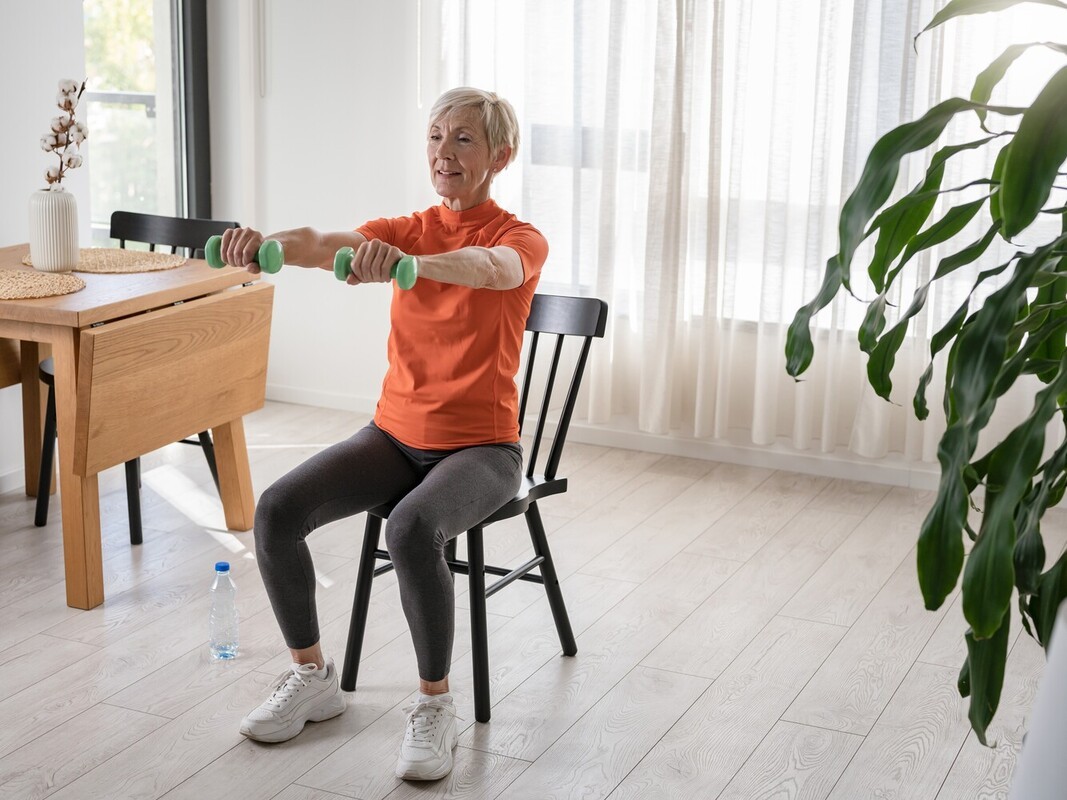
Light dumbbells, resistance bands, or even household items like water bottles can work well, depending on the exercise. You might hold weights during punches, loop a band around your thighs for seated marches, or use ankle weights during leg extensions.
Start light and focus on control. More resistance is not always better if your form starts to slip. It helps to add one challenge at a time so your body can adjust safely. Done well, resistance can make a familiar routine feel more productive without changing everything.

3. Consistency vs Intensity
When it comes to weight loss, consistency usually matters more than intensity. A shorter chair workout done several times a week can be more effective than one long, demanding session followed by days without movement. Regular activity helps build a routine, improves stamina, and keeps exercise from feeling overwhelming.
Intensity still has a role, especially if you want to raise your heart rate or challenge your muscles more, but it should fit into a plan you can realistically maintain. Think about what you can repeat week after week without burning out. A routine that feels manageable is more likely to stick, and that steady effort supports long-term progress and more sustainable results over time.
4. Combine Chair Workouts With Diet
Chair workouts can support weight loss, but food choices still play a major role in your overall results. Exercise helps increase energy use, while your eating habits shape whether a calorie deficit is realistic and sustainable. Pairing regular movement with balanced meals can make progress feel steadier and more manageable.
That might look like building meals around protein, fiber-rich carbs, and satisfying fats so you stay fuller longer and feel less tempted to snack mindlessly later.
Portion awareness matters too, especially when activity levels are lower. A thoughtful routine works better than extremes. When chair workouts and eating habits support each other, it becomes easier to build momentum and keep going, even when life feels busy or stressful.
If you’re unsure how to balance your meals with your activity level, working with a Registered Health Dietitian through Berry Street can help you build a plan that supports both your movement routine and your weight loss goals.

5. Track Your Progress in Simple Ways
Tracking your progress can make chair workouts feel more motivating and more effective over time. It does not need to be complicated. A note on your phone, a calendar check mark, or a simple workout log can help you stay accountable and spot patterns.
You might track how many minutes you moved, how many rounds you completed, or whether certain exercises feel easier than they did a few weeks ago. Those changes matter. They can show improvements in stamina, strength, and consistency even before the scale changes much.
Keeping track can also help you notice when it may be time to increase the challenge. A simple system makes progress easier to see and easier to maintain.
6. Shorten Rest Periods Gradually
Shortening your rest periods is a simple way to make chair workouts more effective without changing the exercises themselves. Less rest can keep your heart rate higher and make the session feel more active from start to finish.
For example, if you usually rest for 60 seconds between rounds, try reducing that to 45 seconds, then 30 seconds as your stamina improves. Small adjustments work best. Cutting rest too quickly can leave you feeling overly fatigued or make the routine harder to stick with.
A gradual approach is usually more realistic. This can be especially helpful when you want a bigger cardio challenge but are not ready to add new exercises, faster pacing, or more resistance.
7. Use Longer Work Intervals
Longer work intervals can increase the challenge of a chair workout without making the routine more complicated. If you usually perform an exercise for 30 seconds, try building up to 45 seconds or even one full minute before resting.
The extra time keeps your muscles active longer and can raise your heart rate more, especially during seated marching, punches, or jumping jacks. It also helps improve stamina.
The key is to increase gradually so your posture and control stay strong throughout the interval. If your form starts to break down, shorten the time and work back up slowly. Extending active intervals is a practical way to make familiar exercises feel more demanding while keeping the routine simple.
8. Create a Weekly Routine You Can Repeat
Chair workouts become much more effective when they are part of a routine you can repeat week after week. Picking specific days and times helps movement feel more automatic and less like a daily decision. Structure can make a big difference.
You might schedule short sessions on Monday, Wednesday, and Friday mornings, or fit in a quick routine during afternoon breaks on workdays. The exact plan matters less than having one you can follow consistently.
Repetition helps exercise become a habit instead of something you keep postponing. It also makes progress easier to measure. When your week has a clear rhythm, you are more likely to stay consistent and keep chair workouts part of your overall weight loss routine.
9. Prioritize Rest and Recovery
Rest plays an important role in making chair workouts more effective over time. Your body needs time to recover so muscles can repair, energy levels can reset, and you can return to your next session feeling ready.
That doesn’t always mean doing nothing. Active recovery can still support your routine. Gentle stretching, slower movement days, or relaxing options like a sauna for weight loss or a steam room for weight loss can help you unwind after a workout. Some people also enjoy an Epsom salt bath for weight loss as a way to ease muscle tension and make recovery feel more intentional.
Building in recovery time can make your routine more sustainable and more enjoyable to stick with.
Chair Exercises vs Other Weight Loss Methods
Chair exercises fit into the bigger picture of weight loss, but how do they stack up against other common approaches? Looking at the differences can help you choose a routine that feels both effective and realistic for your day-to-day life:
Chair Workouts vs Walking
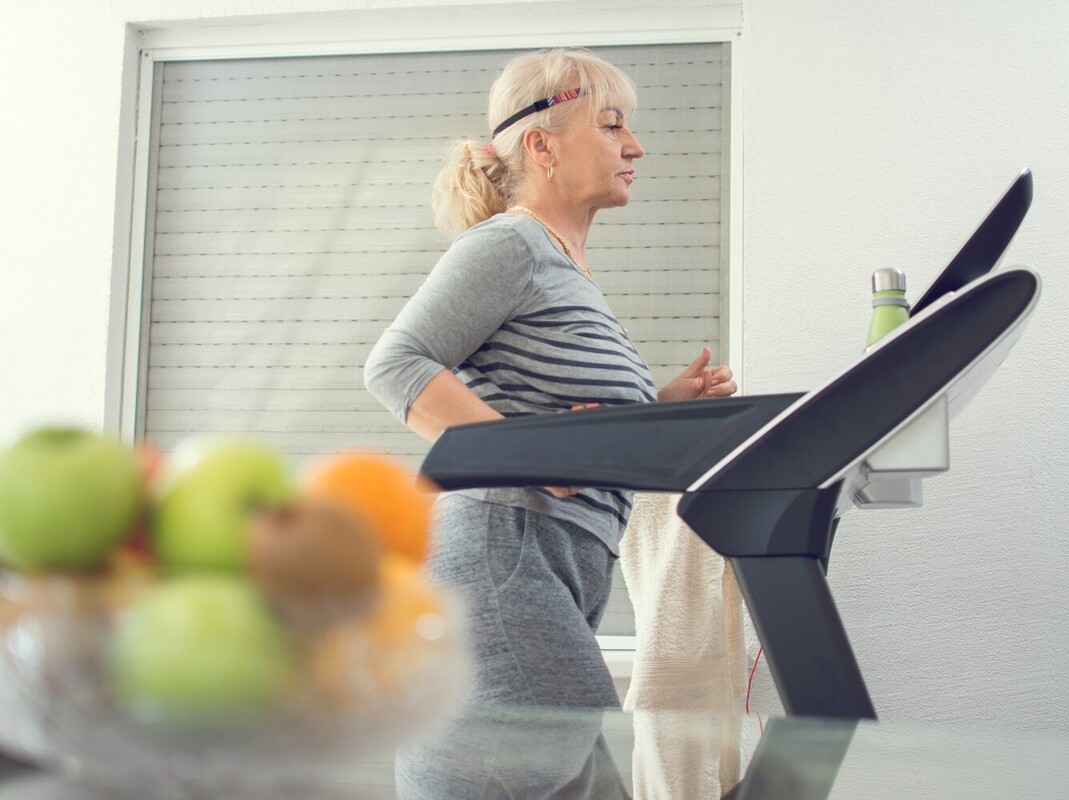
Walking for weight loss often burns more calories than chair workouts, especially if you keep a brisk pace and go for longer periods. It also helps build endurance and can be a great option for overall cardiovascular health.
Chair workouts, though, offer something walking doesn’t always provide: easier access. If balance issues, joint pain, limited mobility, bad weather, or a packed schedule make walking hard to do consistently, seated exercise may be the more realistic choice.
A workout you can actually do several times a week is far more useful than a plan that stays on your to-do list. In many cases, both can be valuable. The better option is the one that fits your body, routine, and current ability level.
Chair Workouts vs Strength Training
Strength training usually has a bigger impact on muscle growth and long-term metabolic support because it places more demand on the muscles, especially when resistance increases over time. That can make it especially helpful for body composition and overall strength.
Chair workouts can still play an important role, though. They can build a foundation of movement, improve control, and help you strengthen muscles in a lower-impact way. For someone who feels intimidated by weights or cannot tolerate standing workouts well, that starting point can be very useful.
Seated routines may not replace a full strength program, but they can help prepare your body for one. They also make movement more approachable, which can improve consistency and confidence over time.
When to Combine Methods for Better Results
Combining chair workouts with other forms of movement can create a more balanced and effective weight loss routine. For example, you might use chair exercises for low-impact cardio and core work, then add short walks a few times a week for extra calorie burn.
Light strength training can also help by building muscle and improving overall function. That mix gives your body different kinds of challenges without making the routine feel too intense all at once. It can also help prevent boredom.
Start with what feels manageable, then build from there as your stamina and confidence improve. A routine does not have to be complicated to work well. It just needs enough variety, structure, and consistency to support long-term progress.
Curious about other options for adding intensity? Read our guide on vibration plates for weight loss.

Weight Loss Chair Exercises FAQs
How long does it take to see results from chair exercises?
Most people notice improvements in energy, mobility, and strength within a few weeks. Weight loss typically takes longer and depends on consistency, overall activity, and eating habits.
Are chair exercises enough on their own?
They can support weight loss, especially if you’re increasing your overall movement. For best results, pair them with supportive nutrition and consider adding other forms of activity over time.
Can you do chair exercises every day?
Yes, you can do chair exercises daily, especially at a moderate intensity. It’s still important to listen to your body and include rest or lighter days if you feel fatigued.
How often should I do chair workouts?
Aim for 3–5 structured sessions per week or shorter sessions spread throughout the day. Consistency matters more than intensity when it comes to seeing progress.
Conclusion
Chair exercises for weight loss can be a practical and effective way to stay active, especially when traditional workouts feel out of reach. They help increase daily movement, build strength, and support consistency, which plays a major role in long-term progress. Results depend on how often you move and how well your overall habits support a calorie deficit.
As Registered Dietitians, we focus on helping you pair realistic movement with nutrition habits that you can actually maintain. If you’re ready for more personalized support, connect with a Registered Dietitian covered by insurance through Berry Street to build a plan that fits your life.