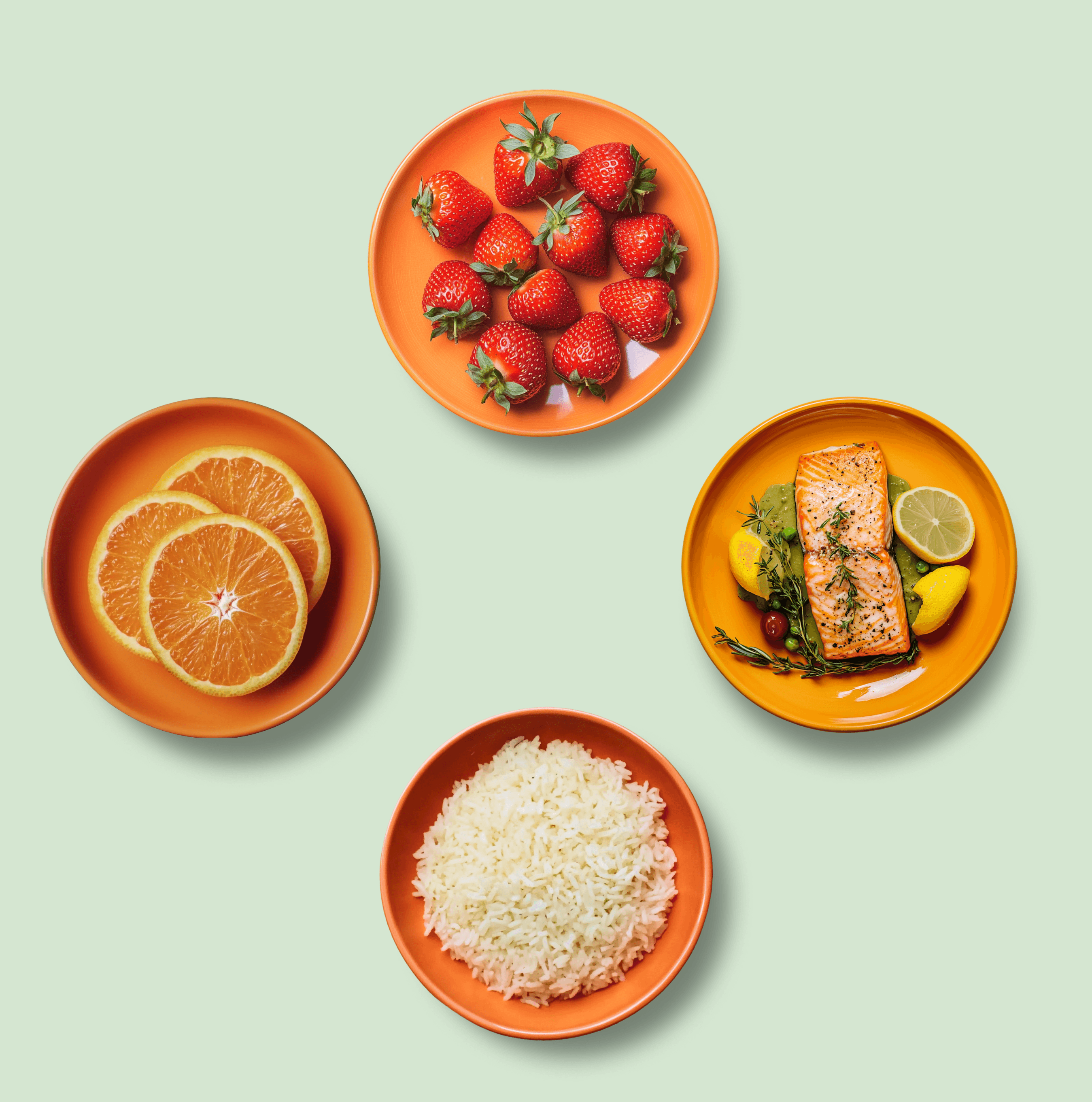
Open any social media app, and you’ll see it: … A reel calling bread “toxic,” a post saying fruit has “too much sugar,” a fitness influencer saying this food is “bad” and the other thing “good, ” a wellness influencer swearing you must cut potatoes, pasta, or chocolate if you care about your health. Meanwhile, the next swipe shows a “What I Eat in a Day” filled with smoothies, protein bars, collagen coffee, and a whole handful of supplements.
It’s a lot to take in, and it’s no wonder so many people feel confused or frustrated. All of this noise makes it almost impossible to answer a simple, honest question:
What does eating healthy actually look like for a real human with a real schedule, budget, and appetite?
In this guide, we’re going to zoom out from all of this noise and look at what healthy really means (and doesn’t mean) with help from Registered Dietitians Jessica Kelly, MS, RDN, LDN and Bridget Isaacs, MS, RD.
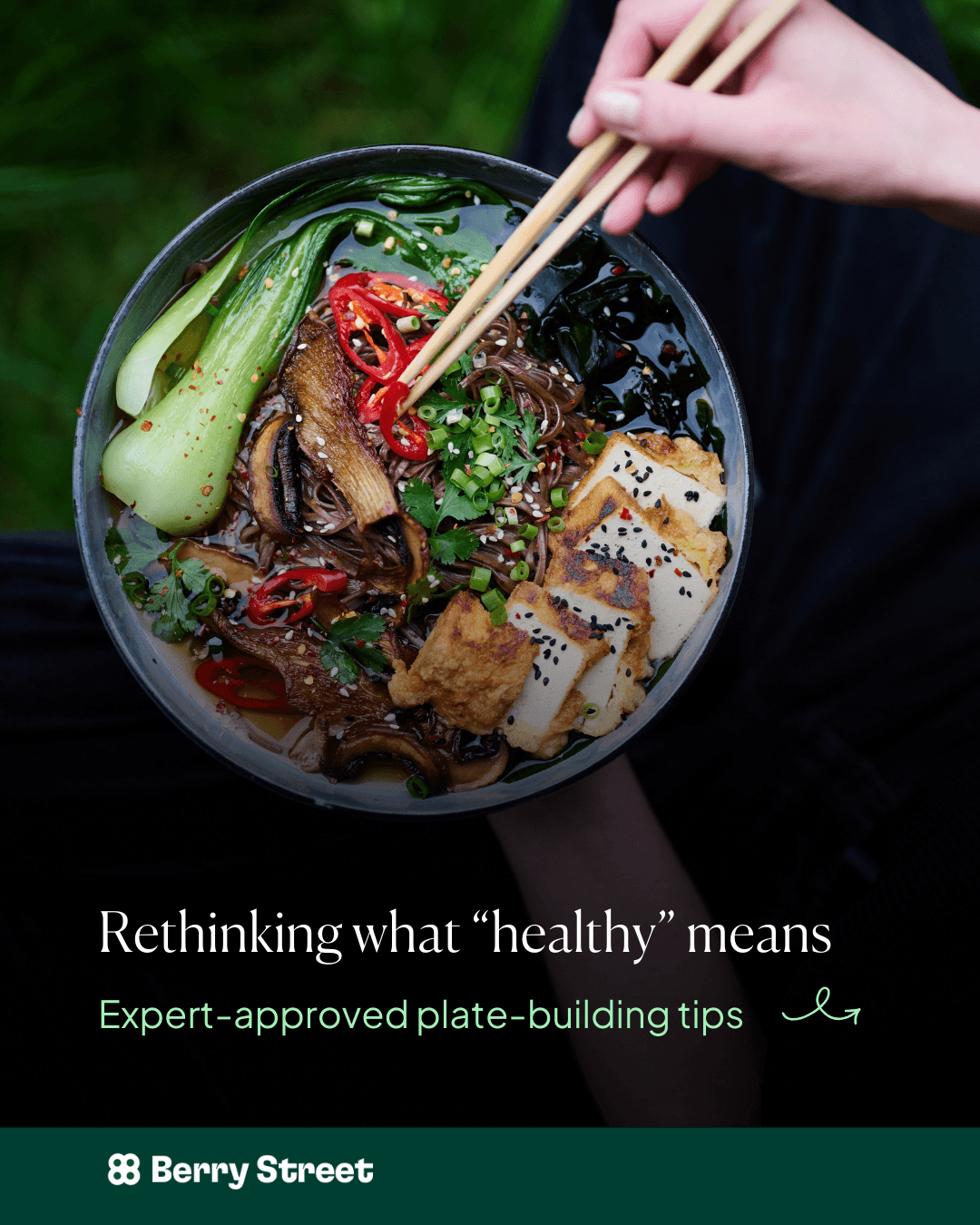
We’ll also look at 9 surprisingly nutritious foods that diet culture loves to demonize, but your body quietly loves. And along the way, you’ll find links to deeper dives on protein, fiber, hormones, digestion, blood sugar, and more, so you can explore the topics that matter most to you.

So…What Does “Healthy” Actually Mean?
Most people are taught some version of “healthy” that boils down to:
Good foods vs. bad foods
Being “on track” vs. “falling off”
Success = willpower, failure = weakness
That way of thinking might sound simple, but it creates a lot of stress, and it doesn’t reflect how the body actually works.
Healthy eating isn’t some kind of moral scorecard. It’s a pattern of choices that, over time, supports your energy, mood, digestion, hormones, and long-term health without taking over your thoughts or your life.
Jessica often reminds her patients that health has far more to do with patterns than perfection:
“One salad doesn’t fix everything, and one dessert doesn’t ruin everything. What matters is the pattern you come back to most of the time,” says Jessica Kelly, MS, RDN, LDN, a Registered Dietitian.
Let’s break that rhythm down into something more concrete.
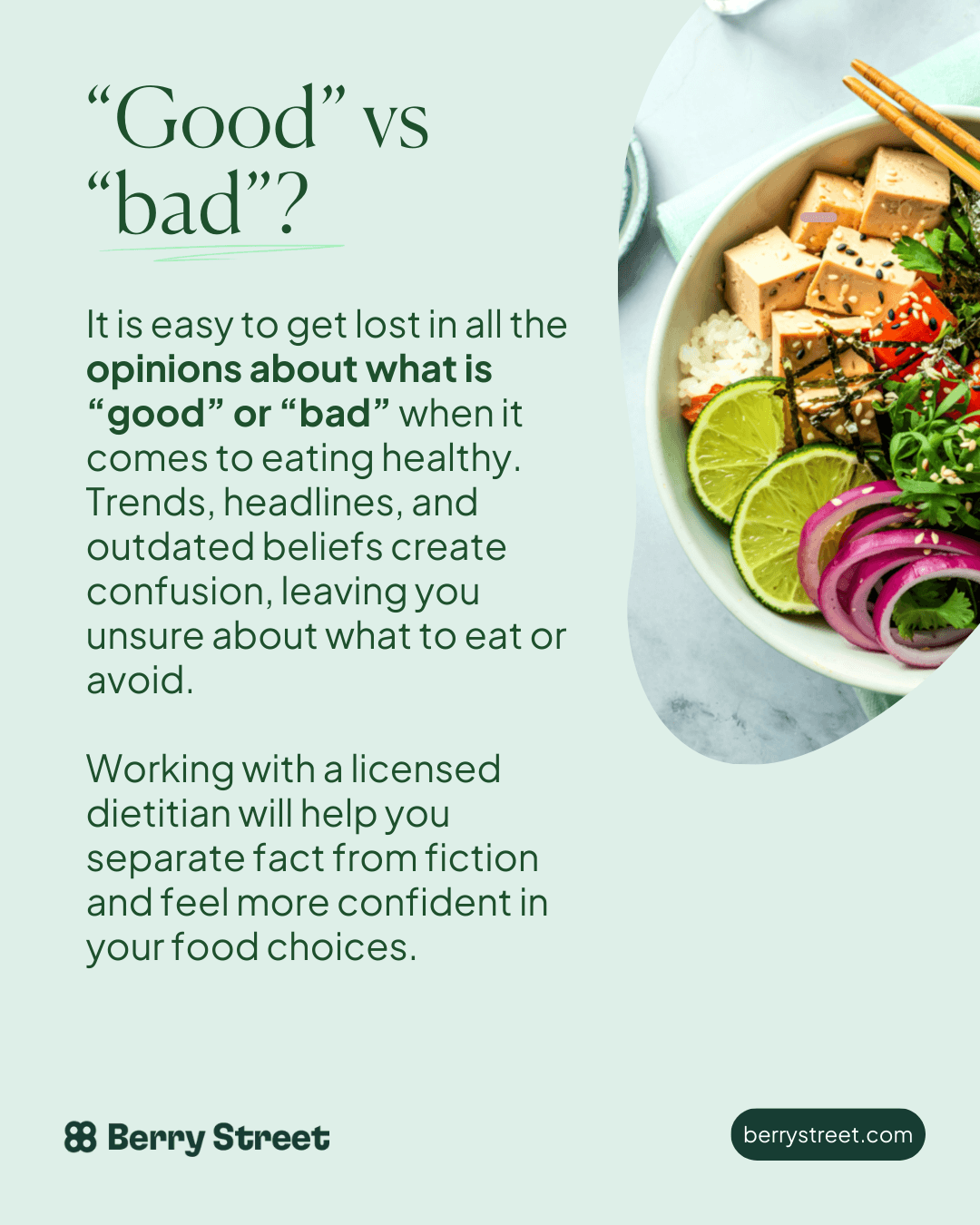
Four Pillars of a Truly Healthy Eating Pattern
1. You’re eating enough - not just “clean”
Undereating can look disciplined from the outside, but your body experiences it as a form of stress. Too few calories over time can:
Tank your energy
Ramp up cravings (especially at night)
Disrupt your cycle and hormones
Make it hard to lose weight in a sustainable way
If you’ve been stuck in low-calorie plans that leave you feeling drained, Why Low-Calorie Meal Plans Backfire (and What to Do Instead) and Weight Loss: A Comprehensive Guide are worth a read.
2. Your physical and mental health are both in the picture
You can technically hit every macro perfectly and still have a not-so-healthy relationship with food if you:
Feel guilty after almost every meal
Panic any time you eat something off-plan
Avoid social events because you can’t control the menu
Bridget sees this a lot in practice.
“When someone is so stressed about doing food ‘perfectly’ that they can’t enjoy a meal with their family, we haven’t won—we’ve just traded one problem for another,” says Bridget Isaacs, MS, RD.
If you’re ready to loosen that grip, From Guilt to Confidence: The Science Behind Intuitive Eating and Mindful Eating vs. Intuitive Eating are good companions.
3. Your habits are realistic for your actual life
A certain way of eating is only “healthy” if you can actually live with it, and it works for you. That means it fits:
Your budget
Your cooking skills
Your schedule
Your family or roommates
Your cultural foods
This is where practical tools matter a whole lot more than rigid rules. A stocked pantry and a few easy meals can do more for your health than any fancy “detox.”
If that sounds appealing, look into these helpful resources:
Lunchbox 101 for kids and on-the-go meals
4. You’re adding nourishment, not just cutting things out
Endless lists of “don’ts” are demoralizing and completely exhausting. A more helpful question is:
What can I add that would make this meal more satisfying and more supportive of my health?
Often, that looks like:
Adding fiber (veggies, beans, whole grains)
Adding protein (eggs, fish, tofu, chicken, Greek yogurt)
Adding healthy fats (olive oil, avocado, nuts, seeds)
If you like numbers, you can go deeper by checking out these resources:
So…what does a healthy pattern look like in practice?
Most people feel best when their day includes:
Regular meals and snacks (no 8-hour stretches of “surviving on coffee”)
A balance of carbs, protein, and fat at each meal
Color somewhere on the plate (from fruits and vegetables)
Enough hydration to keep your energy and digestion steady
If you want help building days around those ideas, you might like to read:
Now let’s talk about those “forbidden” foods that you might actually want to keep around.
9 Surprisingly Nutritious Foods Diet Culture Gets Wrong
These are the foods people often apologize for eating in front of a dietitian. Most of the time they don’t need to.
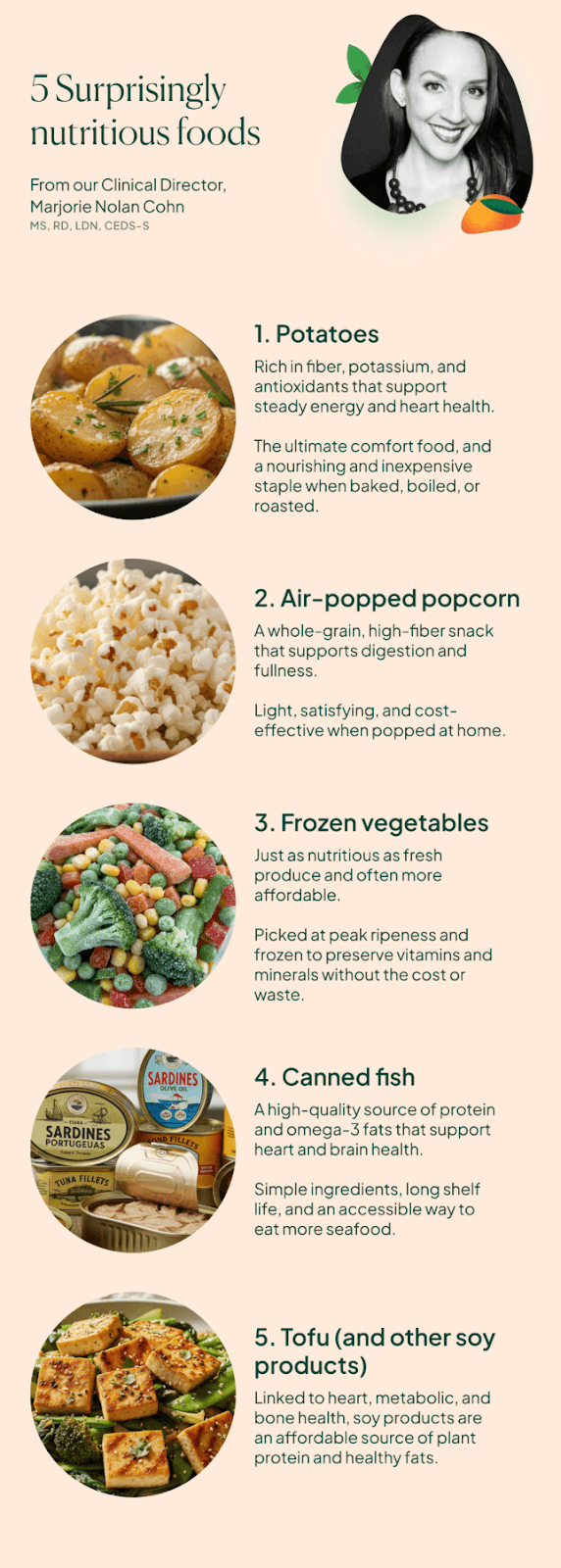
1. Potatoes
Potatoes are often pushed aside in low-carb spaces, but nutritionally, they offer fiber, potassium, vitamin C, and antioxidants. They’re also affordable, filling, and incredibly versatile.
Try them:
Roasted with olive oil, garlic, and herbs
Baked and topped with beans, salsa, and a spoonful of Greek yogurt
Boiled and chilled as a potato salad with olive oil and herbs (cooling creates some “resistant starch” that supports your gut)
If you’re working on healthy carbs overall, Nutrition Guide to Pasta and Why the Oatmeal Diet Might Backfire both show how carbs can fit into a realistic plan.

2. Air-popped popcorn
Popcorn is a whole grain that offers fiber and volume, making it a very satisfying snack. Preparation matters here, but lightly seasoned popcorn can absolutely fit into a balanced pattern.
Easy upgrades:
Toss with olive oil spray, salt, and smoked paprika
Add a sprinkle of parmesan or nutritional yeast
Mix with a few nuts and dark chocolate chips for a simple trail mix
The catch is the preparation: when popcorn is swimming in butter flavor and heavy oils, you’re getting a very different snack that suddenly isn’t so healthy anymore.
3. Frozen vegetables
Frozen veggies are one of the most practical “healthy hacks” out there. They’re:
Picked at peak ripeness and quickly frozen
Comparable in nutrition to fresh (sometimes better)
Often more affordable
Already washed and chopped
That last point is the real magic. On a night when you’re tired and tempted to skip vegetables entirely, having a bag of frozen broccoli or mixed veg in the freezer can be the difference between “no plants” and “some plants.”
Jessica loves using frozen produce this way:
“Keep a couple of bags of frozen vegetables in the freezer so there’s always something green you can toss into pasta, stir-fries, or eggs,” says Jessica Kelly, MS, RDN, LDN.
Try adding frozen vegetables to:
Soups, stews, and curries
Pasta dishes or grain bowls
Scrambles and omelets
If digestion has been tricky, Gut Health and Digestion: An Expert’s Guide to What Really Matters and IBS and the Low-FODMAP Diet can help you choose veggies your gut tolerates best.
4. Canned fish
Canned tuna, salmon, sardines, and mackerel are genuinely nutrient-dense. You get:
High-quality protein
Omega-3 fats that support heart and brain health
Vitamin D and B12
They’re also affordable and shelf-stable, which means they’re there for you when you haven’t grocery shopped.
Quick meals:
Salmon or tuna mixed with Greek yogurt, mustard, lemon, and herbs on whole-grain toast
Sardines on toast with tomato and red onion
Canned salmon formed into fish cakes and pan-seared
If heart health is on your mind, How to Lower Cholesterol Naturally and How to Strengthen Your Immune System Naturally pair well with this topic.
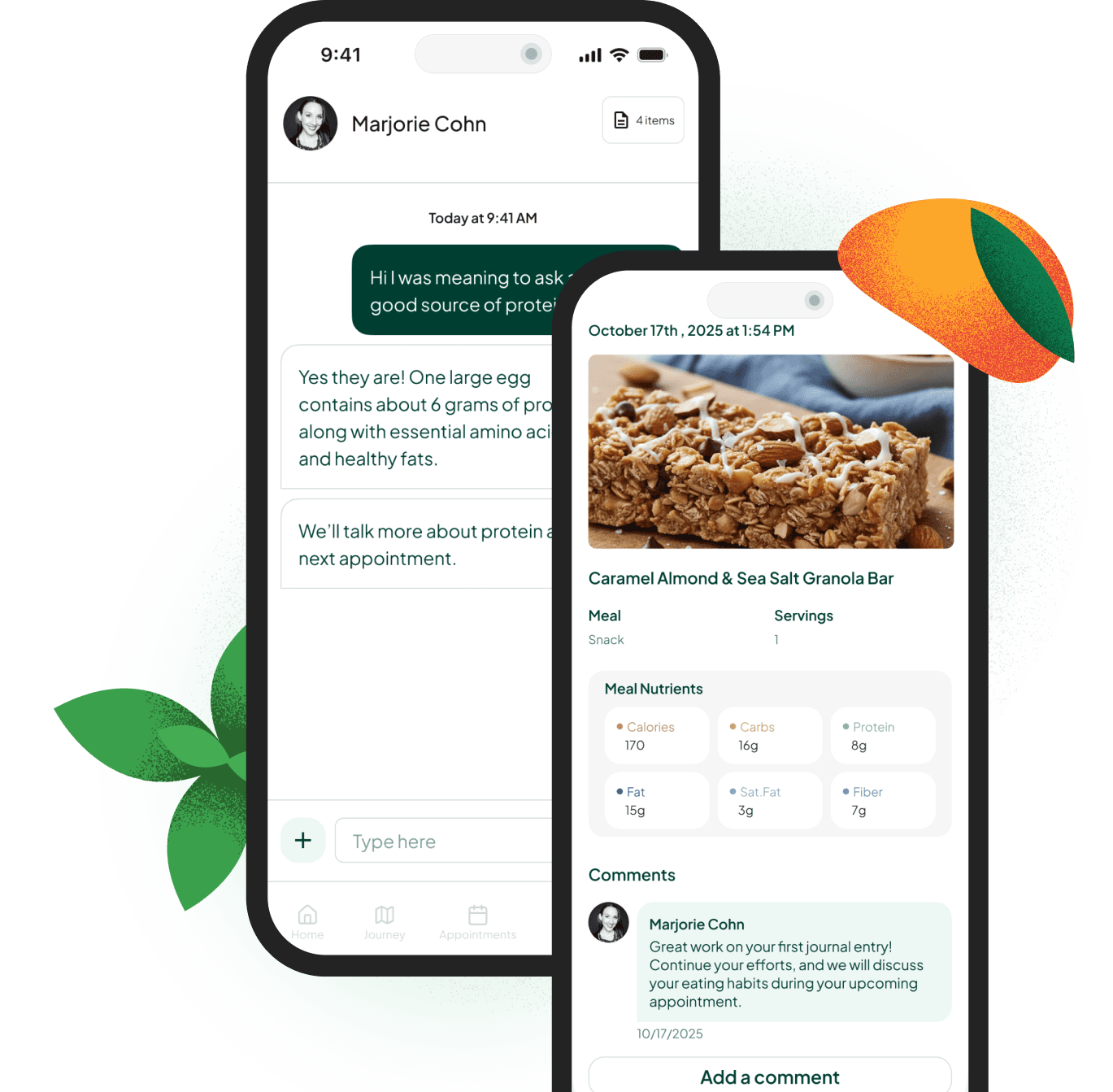
5. Tofu (and other soy foods)
Despite lingering myths, soy foods are well-supported by research for heart and bone health. They’re an accessible plant protein that fits easily into everyday meals. They are
Excellent sources of plant-based protein
Providers of healthy fats
Linked in research to heart and bone health
Bridget sees soy as a practical protein option:
“For a lot of people, soy is simply an easy way to get more plant protein into the week without making dinner complicated or expensive,” says Bridget Isaacs, MS, RD.
Use soy foods:
Crispy baked tofu cubes in stir-fries or bowls
Tempeh marinated and pan-seared for tacos or sandwiches
Edamame tossed into salads or eaten as a snack with sea salt
If you’re thinking about hormone health, you should check out these blog posts:
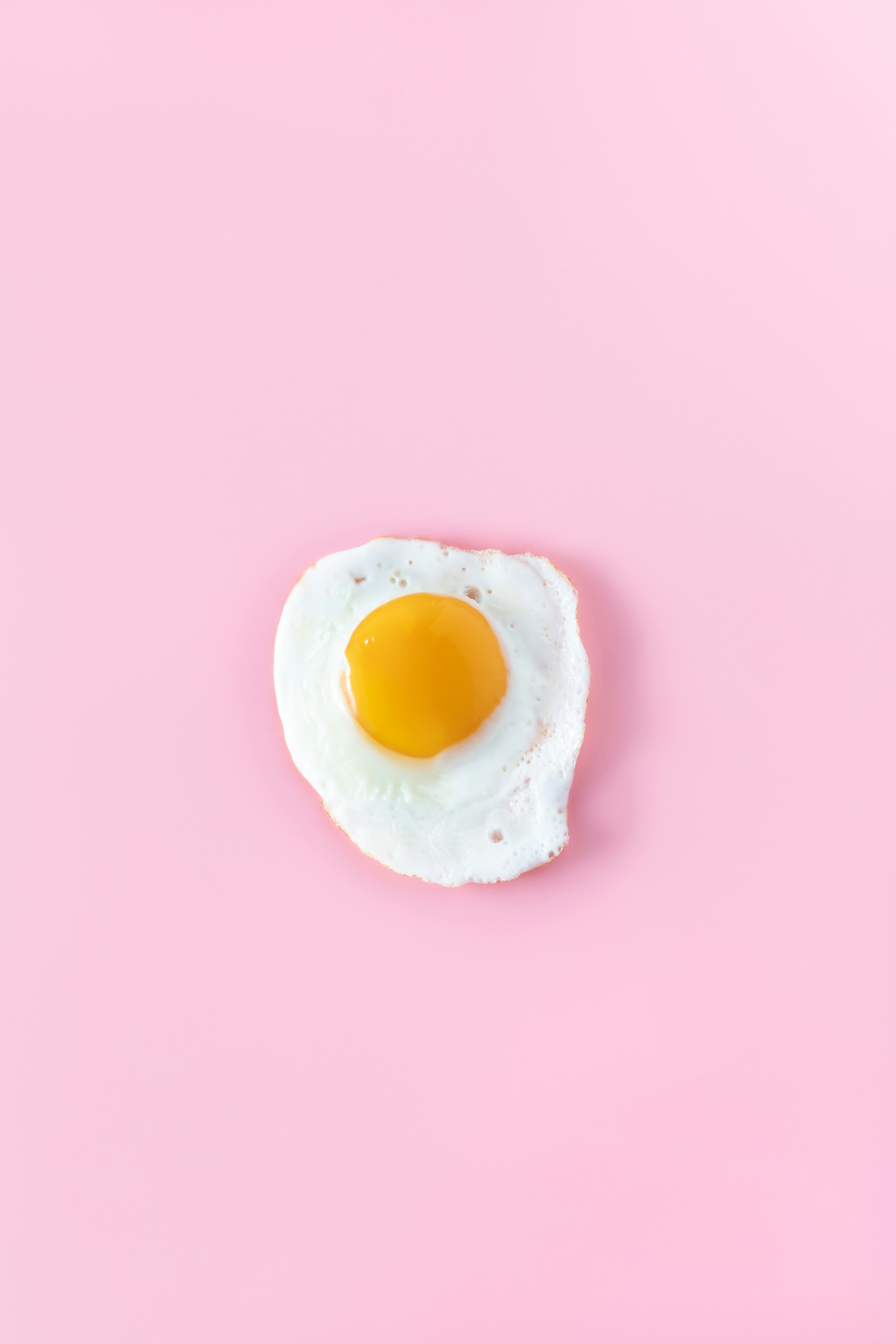
6. Eggs
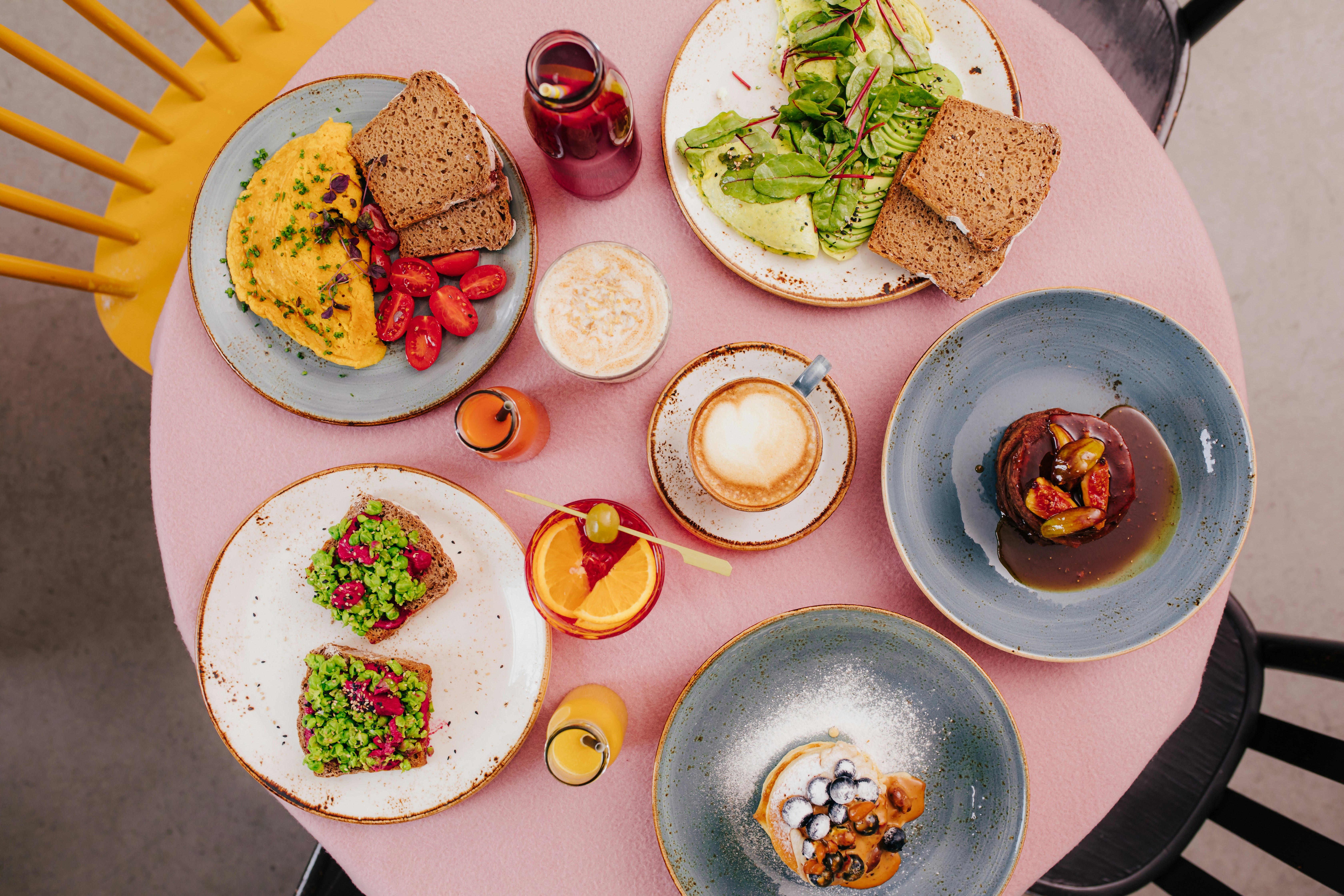
Eggs have bounced around in the headlines for decades, but current research suggests that for many people, they can absolutely fit into a healthy eating pattern. They provide:
Complete protein with all essential amino acids
Choline, which is important for brain and nervous system function
Lutein and zeaxanthin, which support eye health
For a deeper look at cholesterol and blood sugar, check out Are Eggs Healthy?.
Quick ways to use them:
Veggie-filled omelets or frittatas
Hard-boiled eggs with fruit or whole-grain toast
Poached eggs over sautéed greens and potatoes
7. Whole-grain pasta
Pasta has been labeled “bad” in a lot of diet spaces, but whole-grain pasta has a ton of fiber, micronutrients, and helps to make your meals feel complete and satisfying.
The problem is rarely the pasta itself; it’s huge portions with little protein or vegetables. A big bowl of plain pasta is very different from:
A moderate portion of pasta
Plus frozen veggies
Plus cannellini beans or chicken
Plus olive oil and parmesan
If you’re a pasta lover, Nutrition Guide to Pasta and Easy Lunch Recipes from Registered Dietitians will be right up your alley.
8. Peanut butter (and other nut butters)
Peanut butter often gets side-eyed for being “calorie-dense,” but it’s important to remember that it is also packed with healthy fats, is a decent source of protein and fiber, and is very satisfying, which can help curb cravings and constant nibbling.
Look for jars where the ingredient list is mostly just peanuts (and maybe salt). Then enjoy it:
On whole-grain toast with banana
With apple slices or celery sticks
Swirled into oatmeal or yogurt
If you’re sorting through protein options, Are Protein Bars Healthy? and What Is in Your Protein Powder? can help you compare.
9. Dark chocolate
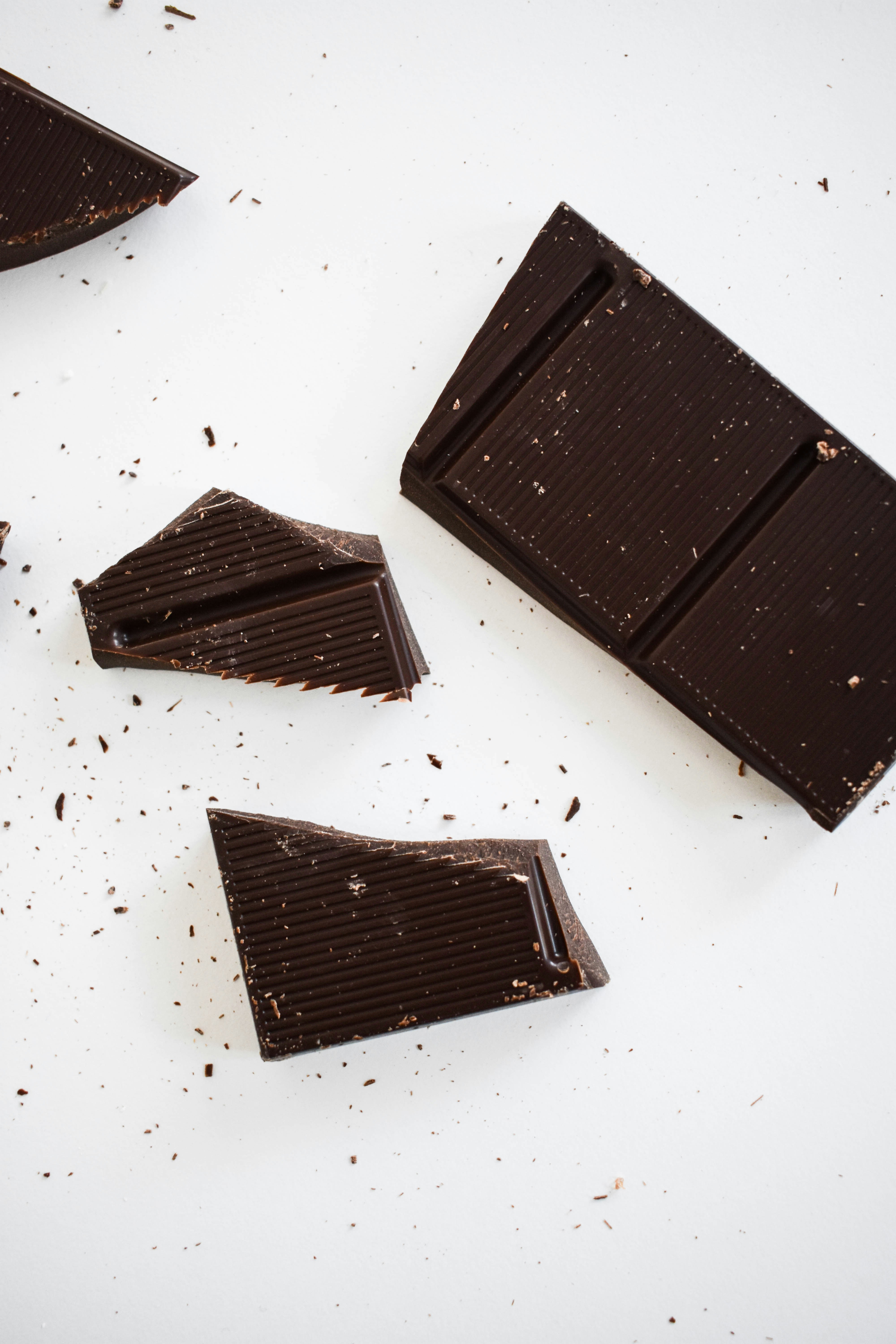
Dark chocolate isn’t a “superfood cure-all,” but it does contain flavonoids, which are plant compounds with antioxidant properties, and it has a rich flavor that makes a little go a long way.
A square or two of dark chocolate after dinner can absolutely fit into a balanced eating pattern, especially when you’re also getting fruits, veggies, and high-fiber foods in your day.
When patients whisper about their chocolate habit like a confession, Jessica often reassures them:
“If a little chocolate at the end of the day helps you feel satisfied, that’s not a problem—that’s a smart strategy,” says Jessica Kelly, MS, RDN, LDN.
If you’d like more reassurance on that front, Chocolate Isn’t the Enemy walks you through the details.
When “healthy” starts to feel…unhealthy
Sometimes the biggest sign that your eating pattern needs a tweak isn’t your lab work, it’s how much space food is taking up in your brain.
You might notice:
You’re anxious about foods not on your “safe” list
You feel guilty after most meals
You avoid restaurants or travel because you can’t control the menu
You’re constantly chasing the next diet, cleanse, or “rule set”
If any of that resonates, you’re not failing. You’re bumping up against the limits of rule-based eating.
This is where working with a registered dietitian can help you zoom out and see the bigger picture. Together, you can look into your current patterns and routines without any judgment, identify all of the things that are working (and the things that aren’t), and create a plan that supports your health goals and your life.
If you want some science-backed myth-busting while you consider that step, you might enjoy:
Remember
Frequently Asked Questions
What does “healthy eating” actually mean?
Healthy eating is a long-term pattern where you:
Eat enough to fuel your body
Get a mix of carbs, protein, and fat
Include plants (fruits, veggies, whole grains, beans, nuts, seeds) regularly
Make room for enjoyment and flexibility
Feel physically and mentally better overall
If you want to match that pattern to specific conditions—like PCOS, endometriosis, IBS, or diabetes—Know Exactly the Right Foods to Eat Based on Your Health Conditions is a great overview.
Are potatoes and pasta okay if I’m trying to lose weight?
Yes. Potatoes and pasta are carbohydrate sources that are neither magical nor evil. What matters is:
Overall portions across the day
What you eat with them (protein, fiber, fats)
Your total pattern over weeks and months
If you’re aiming for fat loss specifically, Fat Loss vs. Weight Loss and How Many Calories Should I Eat to Lose Weight? can help you set realistic targets.
Isn’t popcorn just junk food?
Not when it’s air-popped or lightly seasoned. Then it’s a whole-grain snack with fiber and a satisfying crunch. It becomes less healthy or a “treat food” when it’s drowned in butter flavor and heavy oils.
If you’re rethinking snack choices more broadly, How to Lower Your Risk of Type 2 Diabetes has helpful snack ideas that support blood sugar, and How to Eat Out Without Sabotaging Your Health Goals covers restaurant situations.
Are canned foods unhealthy?
Not by default. Canned beans, tomatoes, corn, and fish can be very nutritious and budget-friendly. Just be sure that you choose low-sodium options when you can, rinse any beans and canned vegetables before eating them, and watch out for added sugars, especially in canned fruit and sauces.
If labels overwhelm you, How to Read Food Labels Without Getting Overwhelmed walks you through exactly what to look for (and what you can ignore).
Is soy safe for hormone health?
For most people, yes. Tofu, tempeh, and edamame can be part of a hormone-supportive diet. Research generally links soy with neutral or positive effects on heart and bone health.
If you’re navigating PCOS, endometriosis, or menopause, you might find these helpful:
Always talk with your healthcare team if you have specific medical concerns.
How often can I have chocolate, chips, or dessert?
There’s no universal rule. What usually works better than strict limits is planned permission:
A small dessert most days, if that works for you
A couple of “fun snack” moments each week
Or simply: If I truly want it and can enjoy it mindfully, it fits.
If you struggle with all-or-nothing thinking around these foods, Portion Distortion and Chocolate Isn’t the Enemy both offer gentle, practical strategies.
What if I can’t afford a lot of fresh produce?
You can absolutely eat well on a budget. Some MVPs:
Frozen vegetables and fruit
Canned beans, tomatoes, and corn
Potatoes, carrots, onions, cabbage
Oats, rice, and pasta
Peanut butter, eggs, and canned fish
To see how this looks in real meals, How to Stock a Healthy Pantry and Fall Recipes from Nutrition Experts are packed with ideas.
How do I stop thinking of foods as “good” or “bad”?
Some starting points:
Try calling them “everyday foods” and “sometimes foods” instead.
Notice when guilt shows up and gently remind yourself: one meal doesn’t define your health.
Focus on the adds (protein, fiber, color) rather than obsessing about “less nutritious” foods.
If you’d like more structure around this, Mindful Eating vs. Intuitive Eating and Building Healthy Habits go step by step.
When should I consider seeing a registered dietitian?
It might be time to reach out if:
You’re overwhelmed by conflicting nutrition advice
You’re managing conditions like PCOS, endometriosis, IBS, gastroparesis, high cholesterol, or prediabetes
You’re not sure how to eat after starting or stopping medications (like GLP-1s—see Life After Ozempic)
You’d like a plan tailored to your symptoms, labs, and lifestyle, not just general tips
Registered dietitians specialize in turning all this information into realistic, calm routines that work in your actual life, not just on Instagram.
Do You Want Extra Support Sorting Through All of the Nutrition Noise?
If you’re feeling overwhelmed by conflicting nutrition advice, you’re not alone. Eating well has become unnecessarily complicated these days, and it can be hard to know what actually applies to your body, lifestyle, and unique goals.
That’s where Berry Street can lend a helping hand.
Berry Street connects you with registered dietitians who take the time to understand your full picture, like your health history, preferences, budget, schedule, and relationship with food. There’s no judgment, no one-size-fits-all plans, and no pressure to eat “perfectly.” Instead, you’ll get science-backed guidance that helps you build habits that feel realistic, flexible, and sustainable for the long-term.
Whether you’re working on energy, digestion, hormones, blood sugar, weight changes, or simply wanting a calmer relationship with food, Berry Street dietitians meet you where you are.
Book a session with a Berry Street dietitian today and get personalized support that actually fits your life.
Healthy eating should feel supportive…not stressful.